Copyright © 2026 Yorke Antique Textiles
.avif)

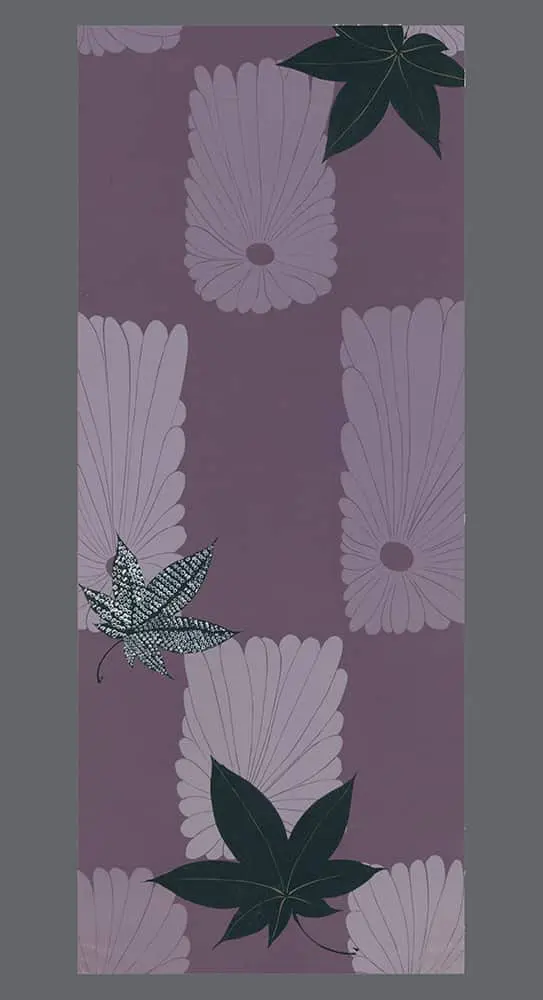
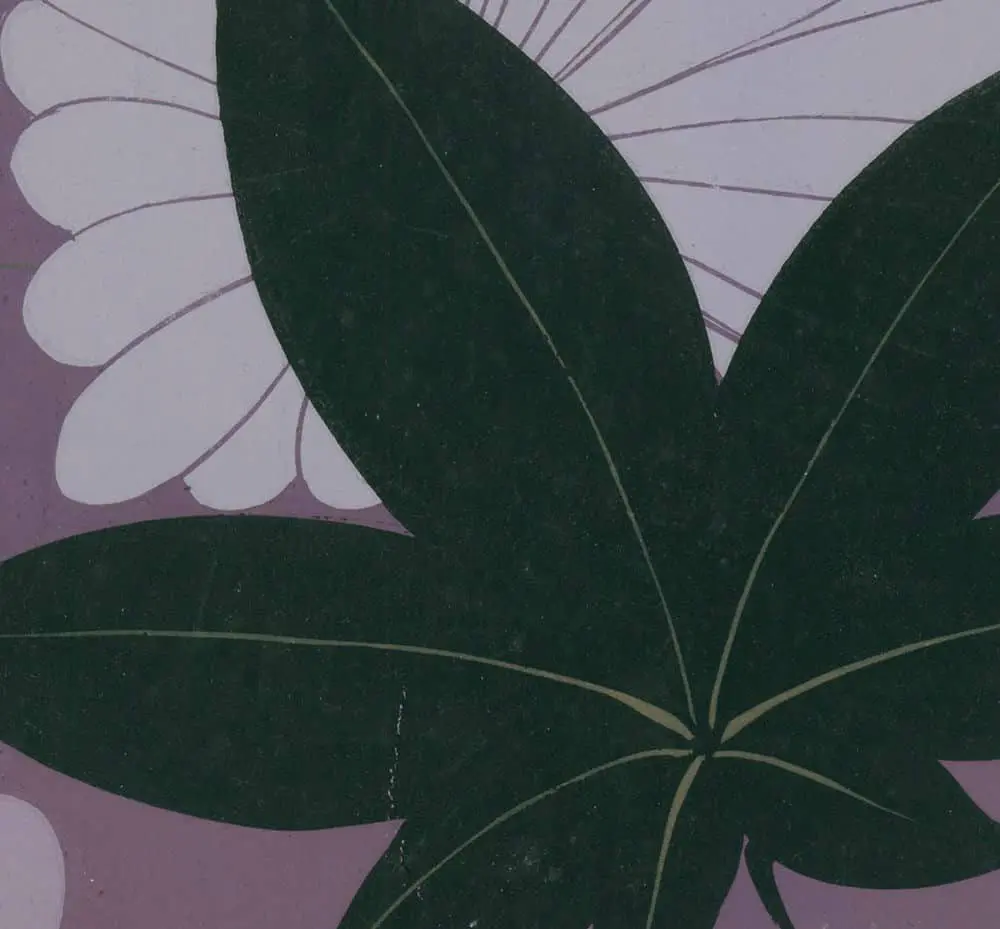
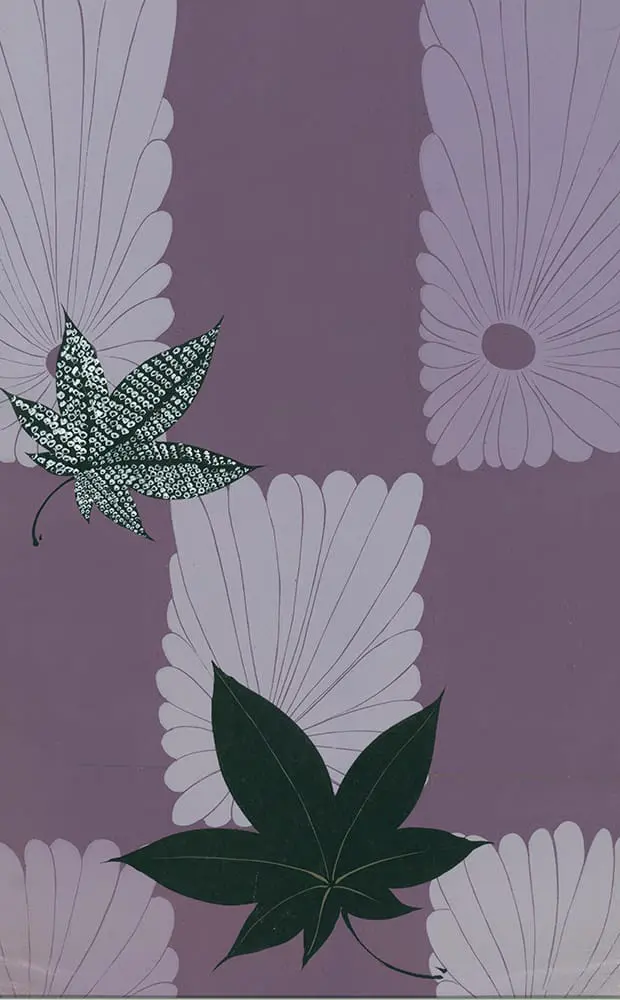
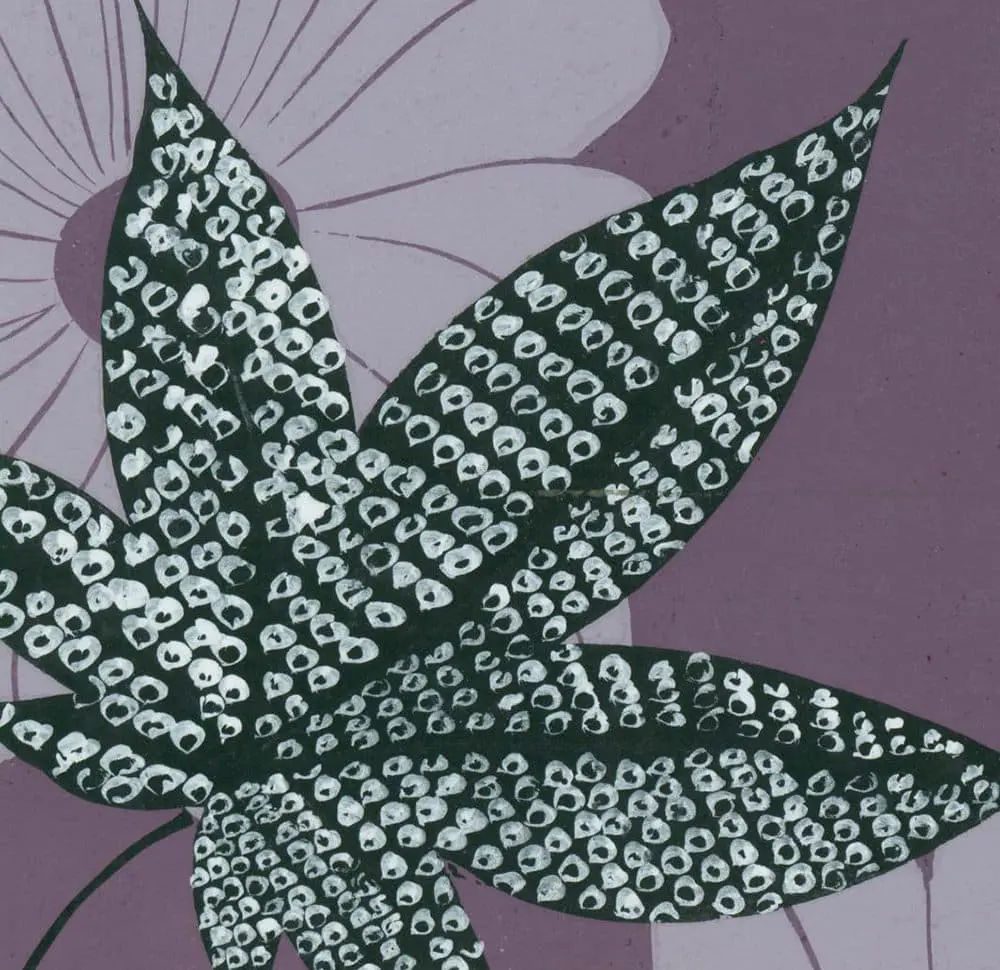

This striking hand-painted watercolor is an original and distinct artwork from Japan, dating to the Late Taisho to Early Showa period (1920–1940). Measuring 32 inches by 11 inches (81 cm x 28 cm), this large-scale piece was specifically crafted by a Japanese artist to serve as a high-fidelity blueprint for yuzen resist-dye work on a silk kimono. The artwork remains in very good condition, showcasing the bold geometric abstraction and sophisticated tonal play that defined pre-war textile modernism.
The composition is set against a deep, muted plum-purple ground, organized around a rhythmic series of large, stylized floral blocks. These rectangular "windows" contain radiating, petal-like lines in a soft lavender-grey, suggesting the abstracted form of a chrysanthemum (kiku). Floating across this structured field are three dramatic maple leaves (momiji); two are rendered in a deep, solid forest green, while the central leaf is intricately detailed with a white kanoko (dappled) pattern, creating a point of brilliant textural contrast. The elongated vertical format allowed the artist to demonstrate how the pattern would gracefully repeat and flow along the length of a finished garment.

Payment Options: We primarily accept PayPal for all transactions. Credit and debit cards are not accepted. If you prefer to pay by personal check instead of PayPal, please note this preference in the "Additional comments" field when placing your order.Ordering Process
To receive your PayPal invoice, simply fill out the form.
Shipping Details: We ship all orders to the address associated with your PayPal payment. Please ensure your PayPal shipping address is current and accurate.A phone number is required during checkout, as our shipping carrier may need to contact you regarding delivery questions.Shipping RatesUnited States and Canada: $20International destinations (air mail): $40
