Copyright © 2026 Yorke Antique Textiles
.avif)

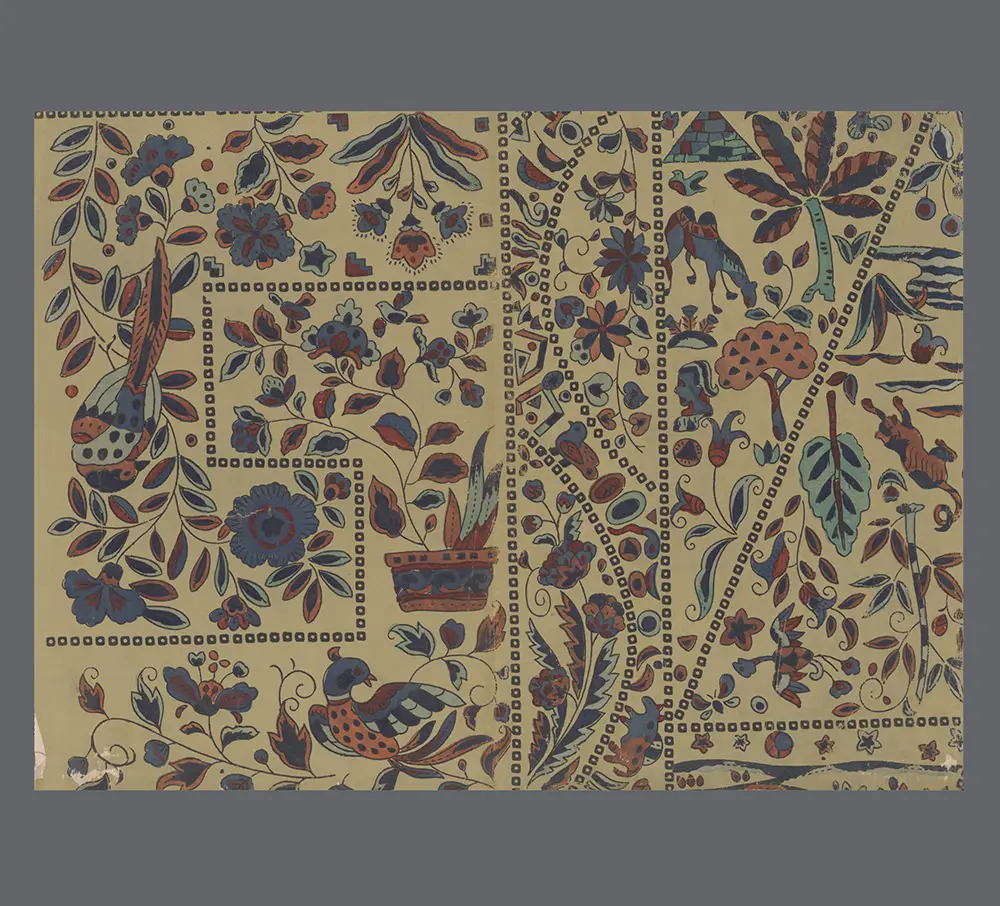
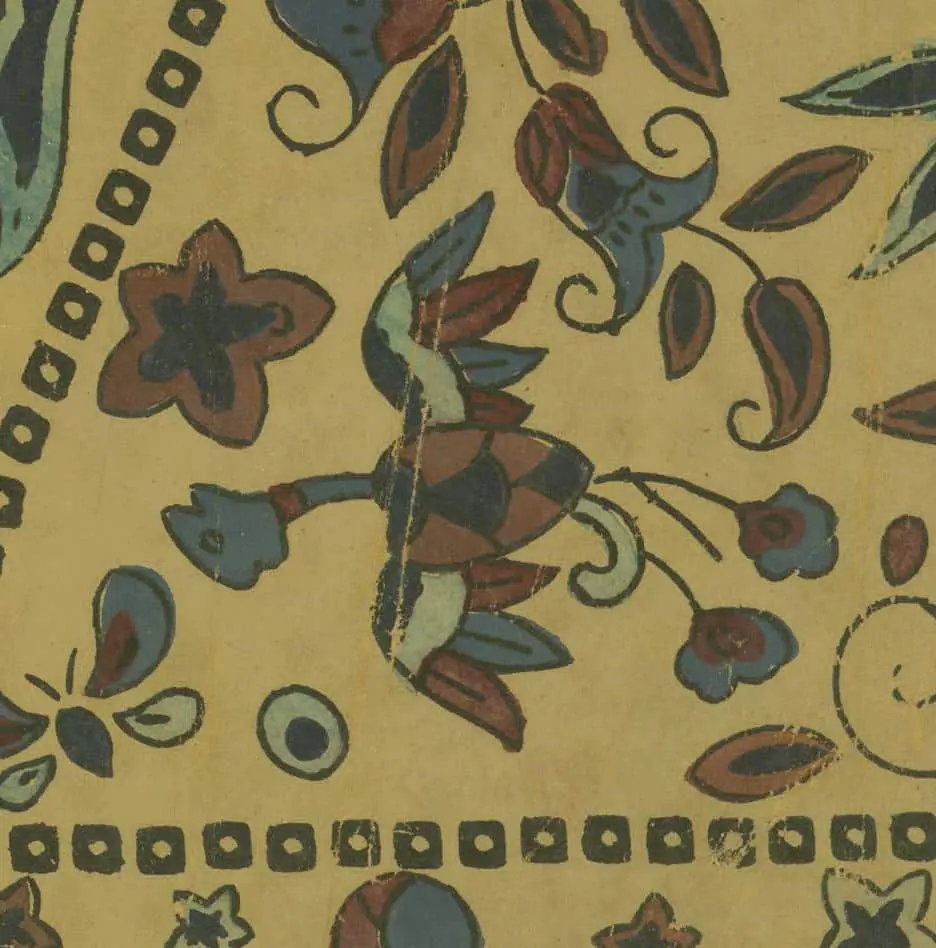
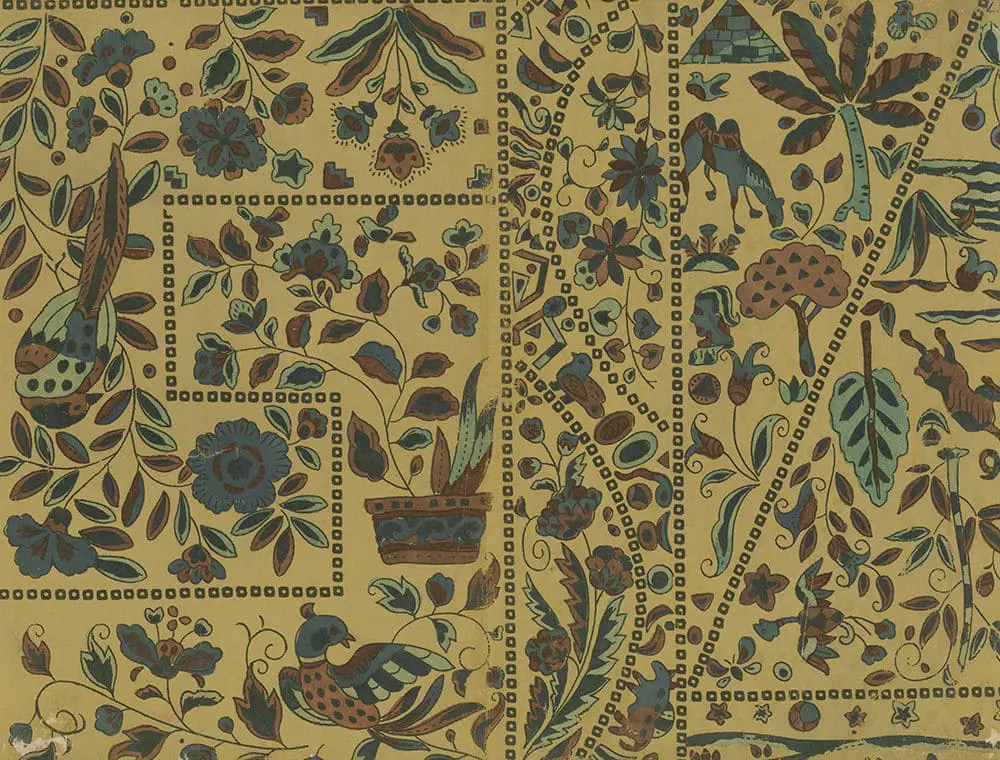
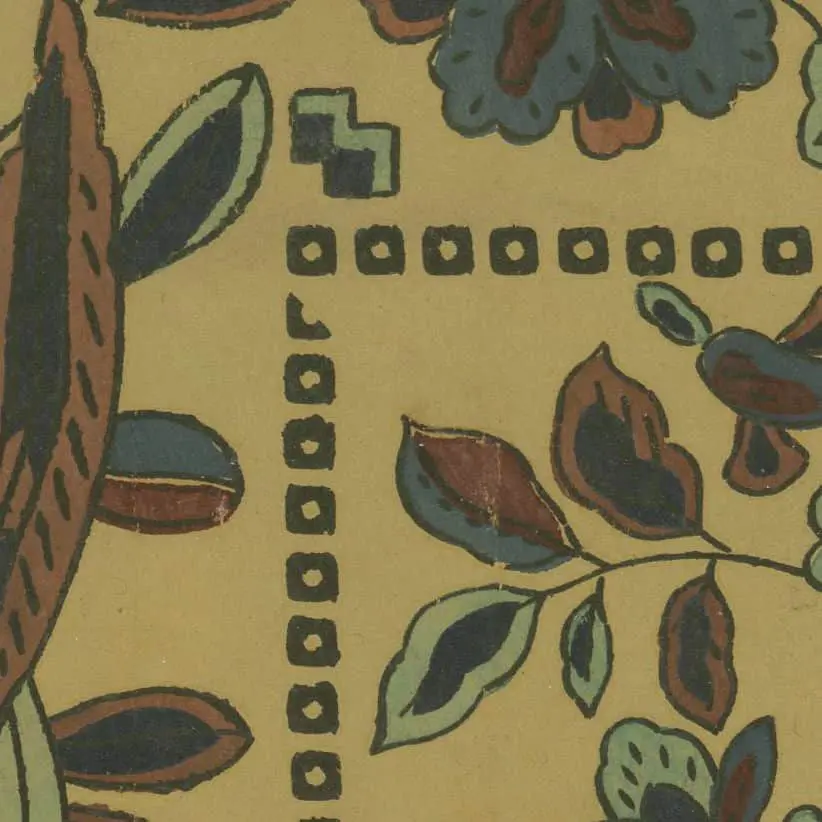
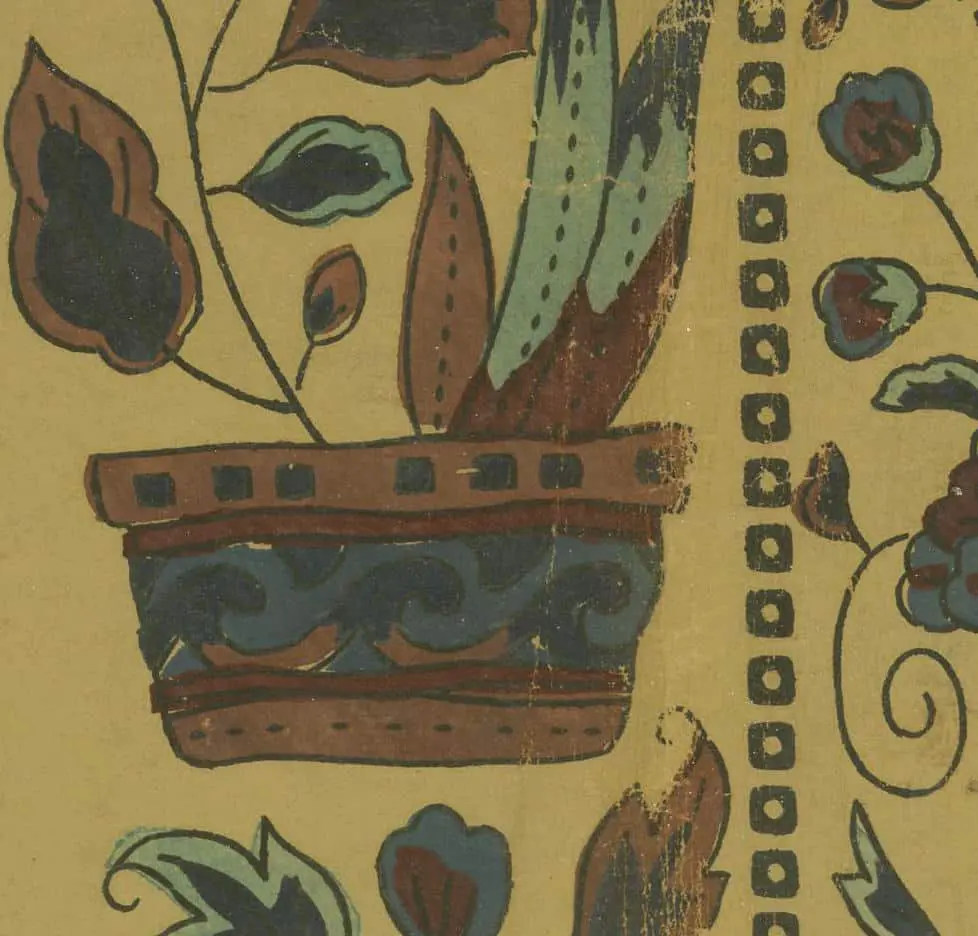
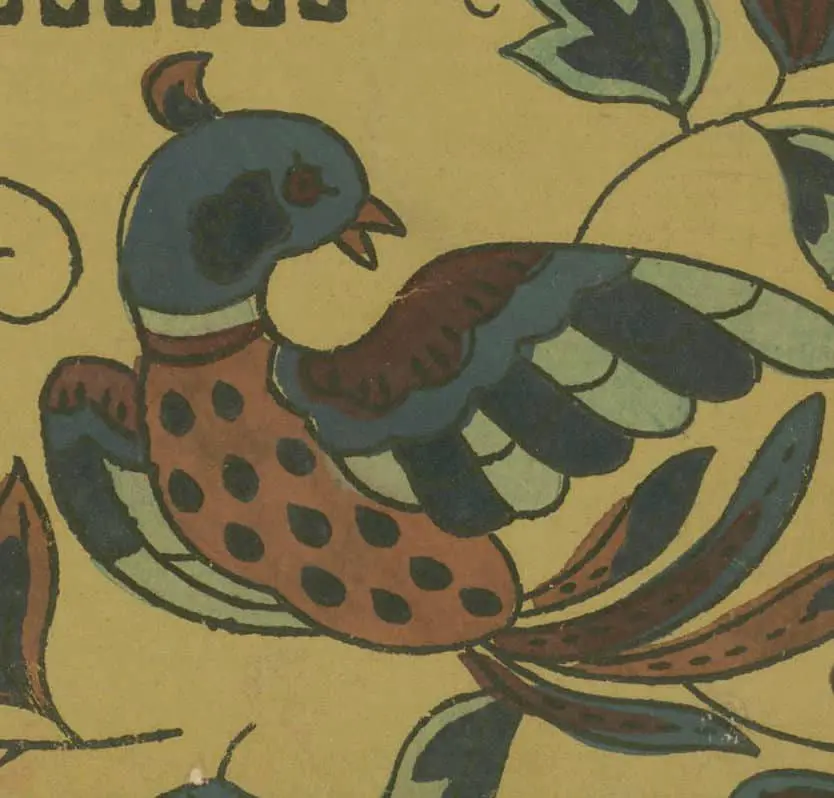
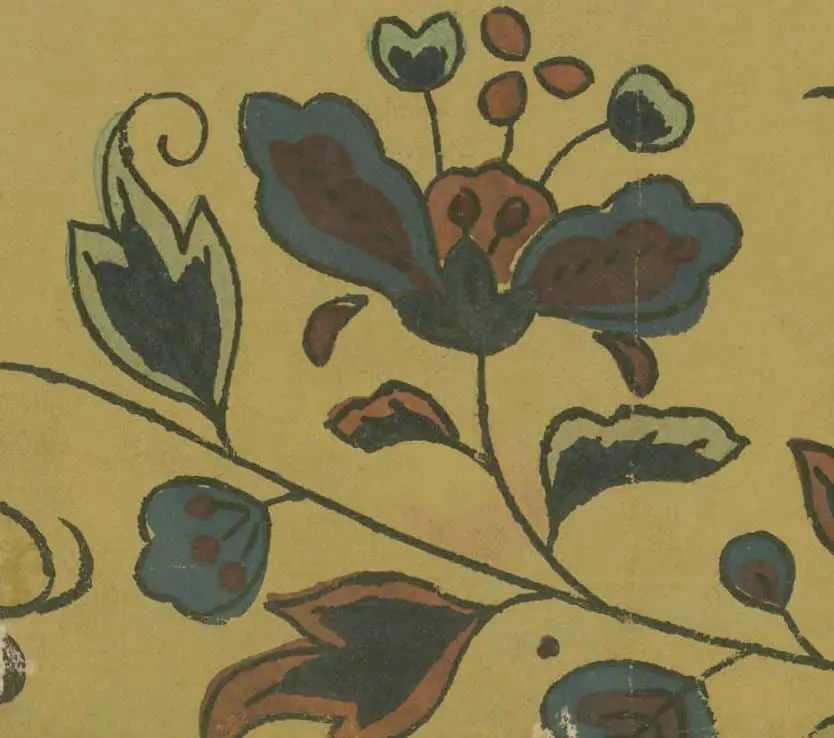
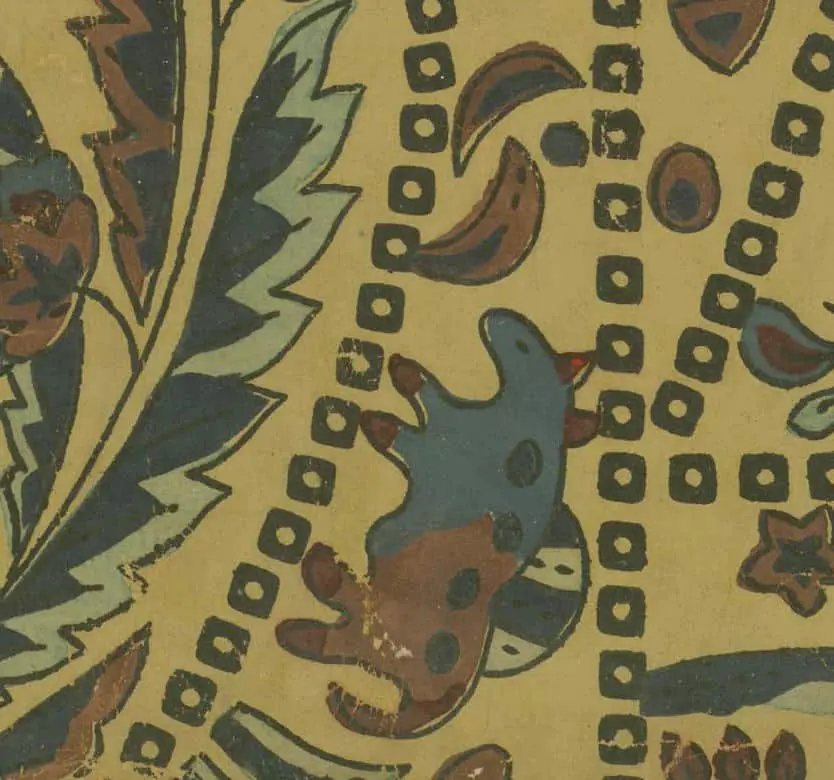
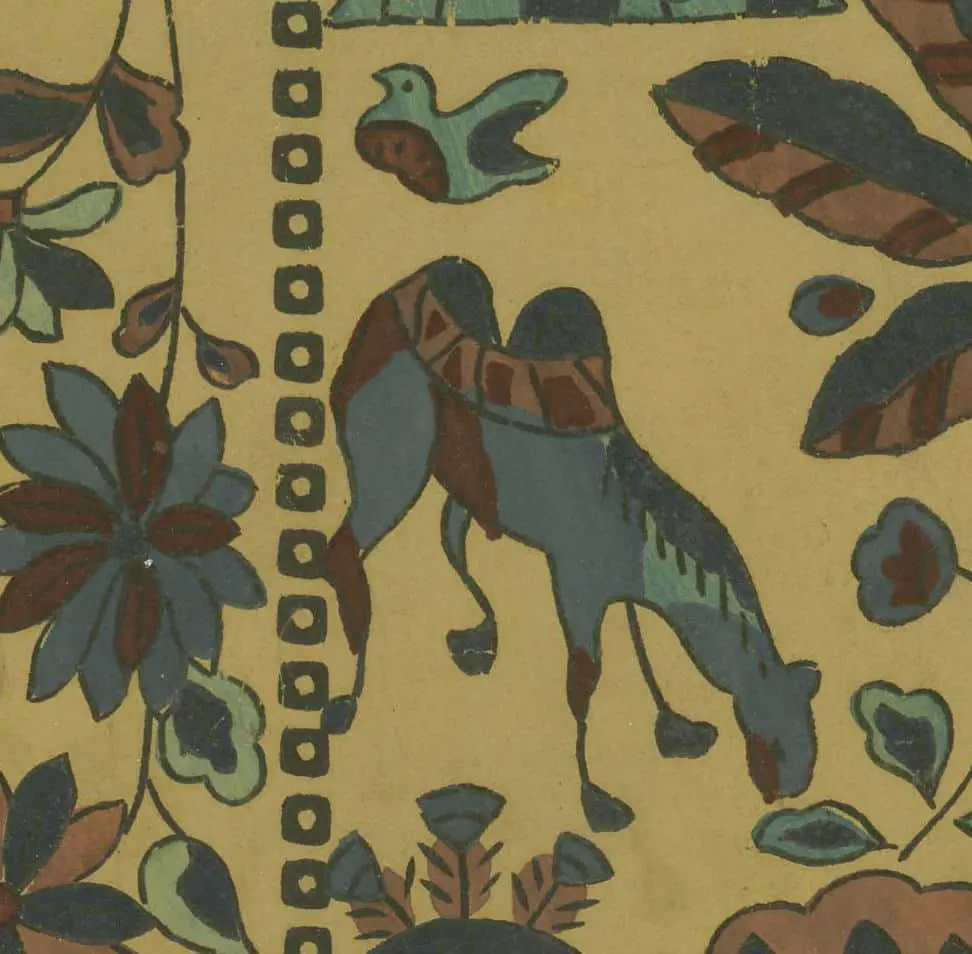
This fascinating hand-painted watercolor is an original and distinctive artwork from Japan, dating to the Late Taisho to Early Showa period (1920–1940). Measuring 17 inches by 12 inches (43 cm x 30 cm), this piece was meticulously crafted for the purpose of transposing its design to yūzen resist-dye work on a silk kimono. The artwork remains in very good condition, showcasing a rare and whimsical "Globalist" aesthetic that emerged during the pre-war era, blending traditional Japanese line-work with exotic imagery inspired by world travel and folk art.
The composition is densely packed with a playful array of motifs set against a warm, mustard-ochre ground. Organized within a geometric framework of dotted borders, the design features an eclectic mix of floral sprays, potted plants, and diverse fauna, including birds with patterned plumage, a stylized camel, and a leaping rabbit. Most notably, the right side of the piece includes exotic architectural and natural elements like a pyramid and a tropical palm tree. The color palette is sophisticated and muted, utilizing dusty blues, terra cotta reds, and sage greens, all defined by the crisp, dark outlines characteristic of a technical yūzen blueprint.

Payment Options: We primarily accept PayPal for all transactions. Credit and debit cards are not accepted. If you prefer to pay by personal check instead of PayPal, please note this preference in the "Additional comments" field when placing your order.Ordering Process
To receive your PayPal invoice, simply fill out the form.
Shipping Details: We ship all orders to the address associated with your PayPal payment. Please ensure your PayPal shipping address is current and accurate.A phone number is required during checkout, as our shipping carrier may need to contact you regarding delivery questions.Shipping RatesUnited States and Canada: $20International destinations (air mail): $40
