Copyright © 2026 Yorke Antique Textiles
.avif)

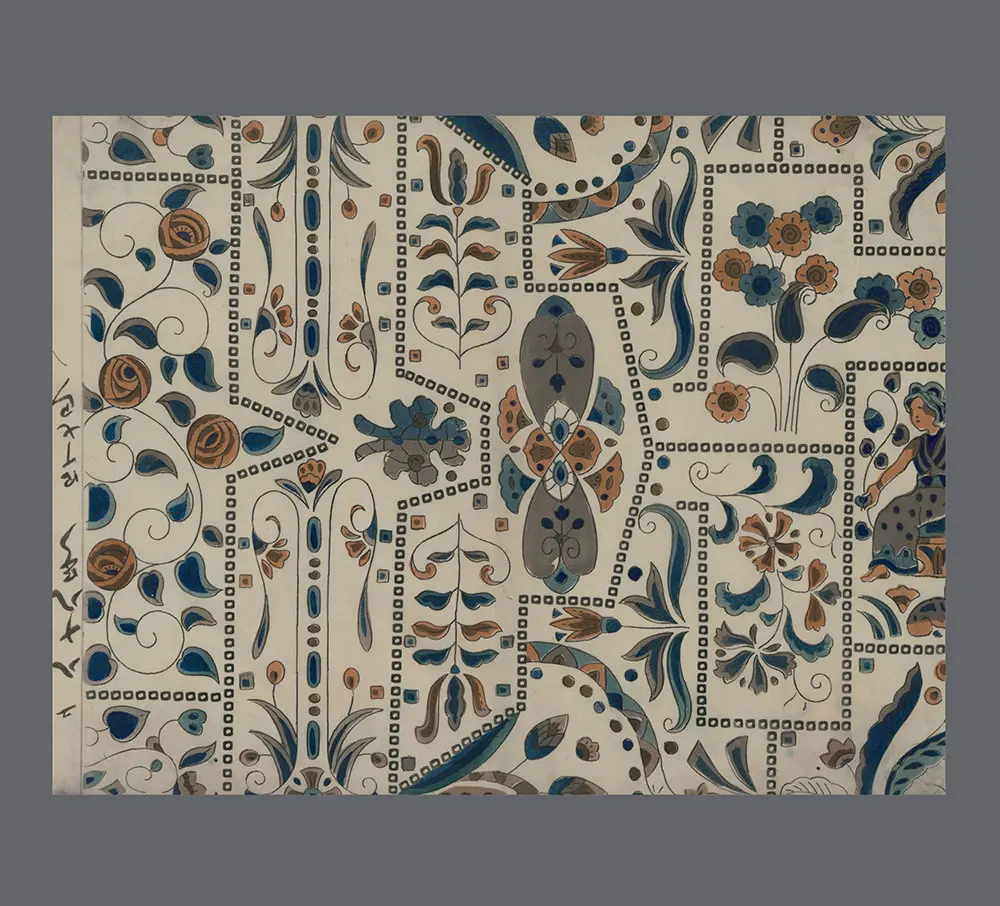
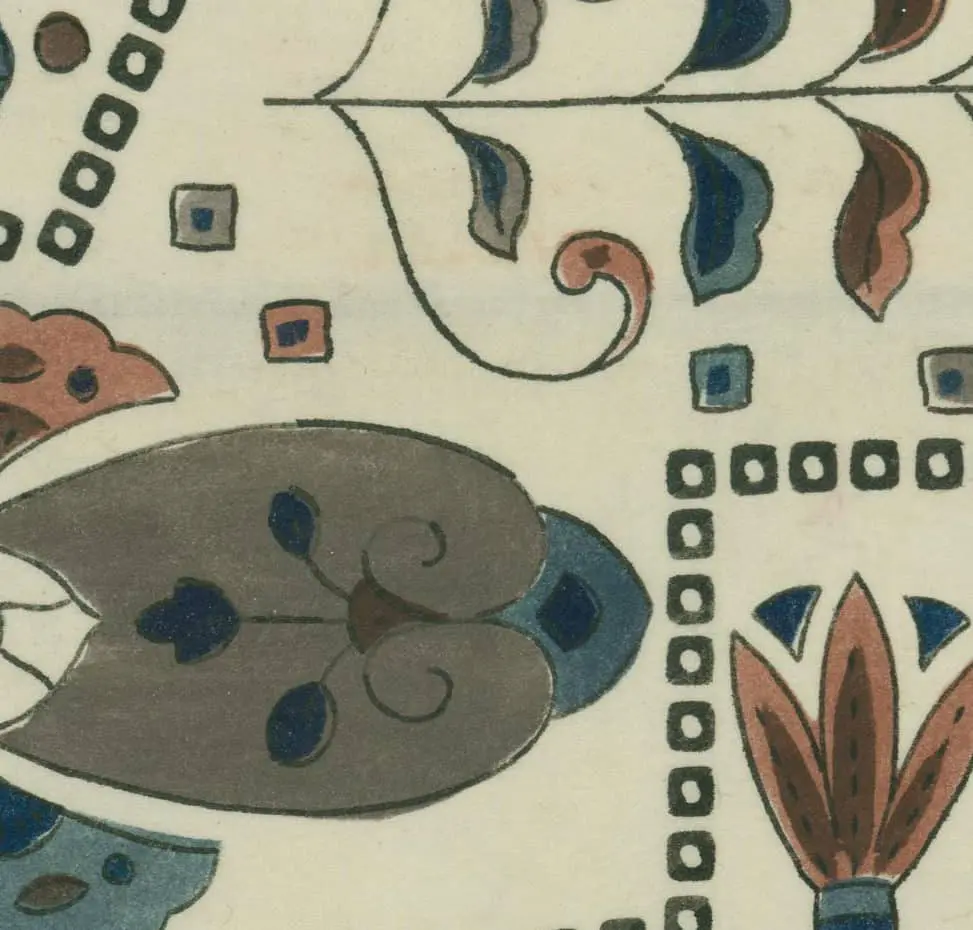
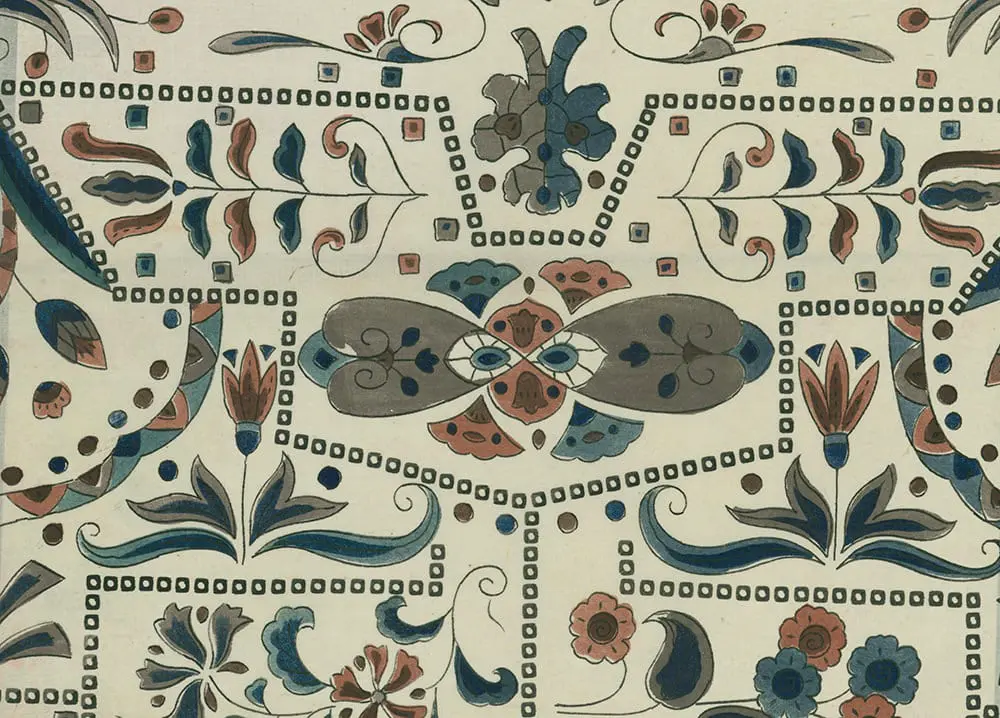

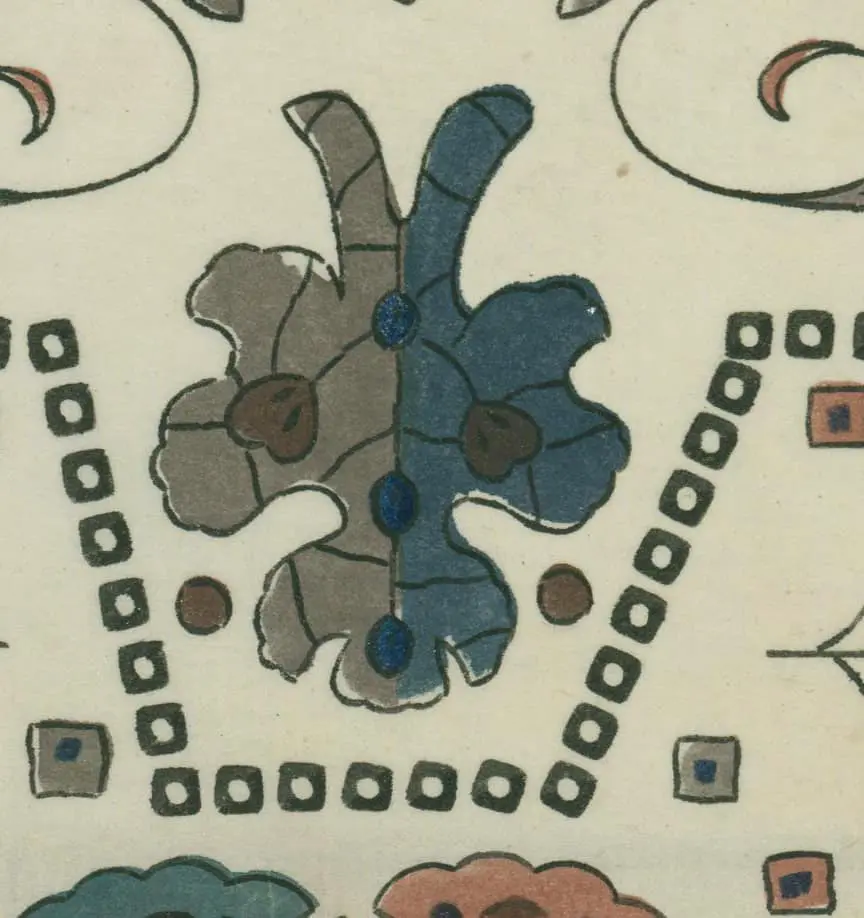
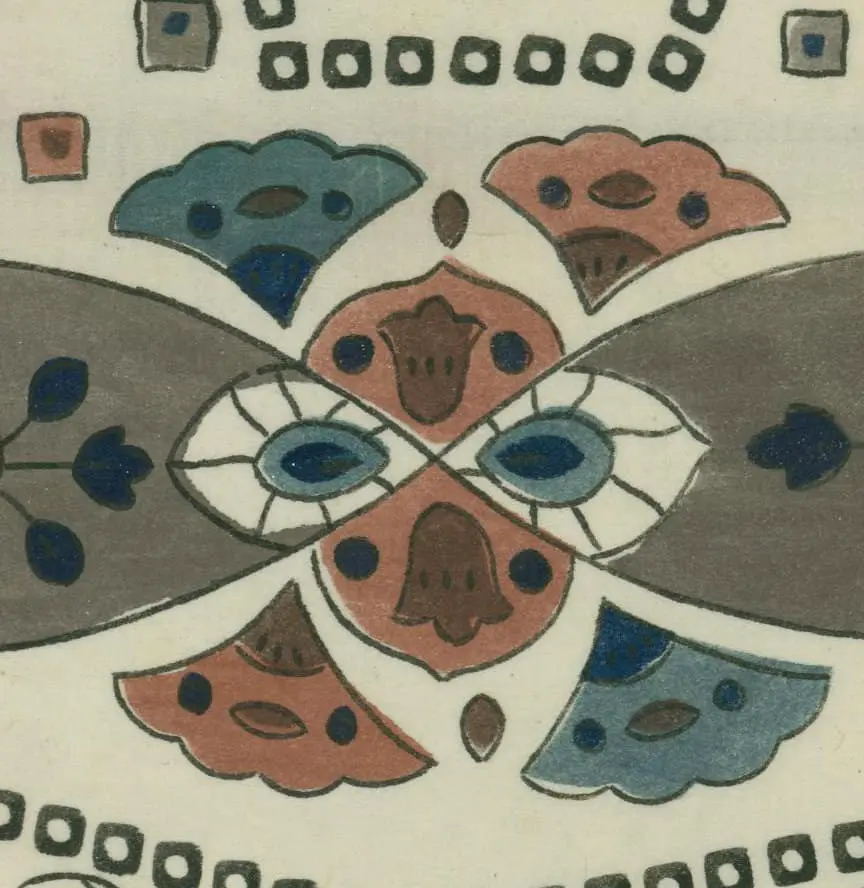
This intricate hand-painted watercolor is an original and distinctive artwork from Japan, dating to the Late Taisho to Early Showa period (1920–1940). Measuring 17 inches by 12 inches (43 cm x 30 cm), this piece was meticulously crafted for the purpose of transposing its design to yūzen resist-dye work on a silk kimono. The artwork remains in very good condition, showcasing a sophisticated "Sarasa" (chintz) inspired aesthetic that was highly fashionable during the "Taisho Roman" era, blending traditional Japanese dyeing precision with exotic, foreign-influenced decorative motifs.
The composition is organized into a series of structured vertical panels and geometric compartments defined by dotted "bead" borders. Against a clean, cream-colored ground, the artist has rendered an eclectic mix of floral sprays, stylized scrolling vines, and central kaleidoscopic medallions. A notable figural element appears on the far right, depicting a seated woman in a blue and grey patterned garment, adding a narrative charm to the botanical layout. The color palette is refined and earthy, utilizing shades of slate blue, burnt orange, and muted ochre, all executed with the sharp, rhythmic linework necessary for a technical yūzen blueprint.

Payment Options: We primarily accept PayPal for all transactions. Credit and debit cards are not accepted. If you prefer to pay by personal check instead of PayPal, please note this preference in the "Additional comments" field when placing your order.Ordering Process
To receive your PayPal invoice, simply fill out the form.
Shipping Details: We ship all orders to the address associated with your PayPal payment. Please ensure your PayPal shipping address is current and accurate.A phone number is required during checkout, as our shipping carrier may need to contact you regarding delivery questions.Shipping RatesUnited States and Canada: $20International destinations (air mail): $40
