Copyright © 2026 Yorke Antique Textiles
.avif)

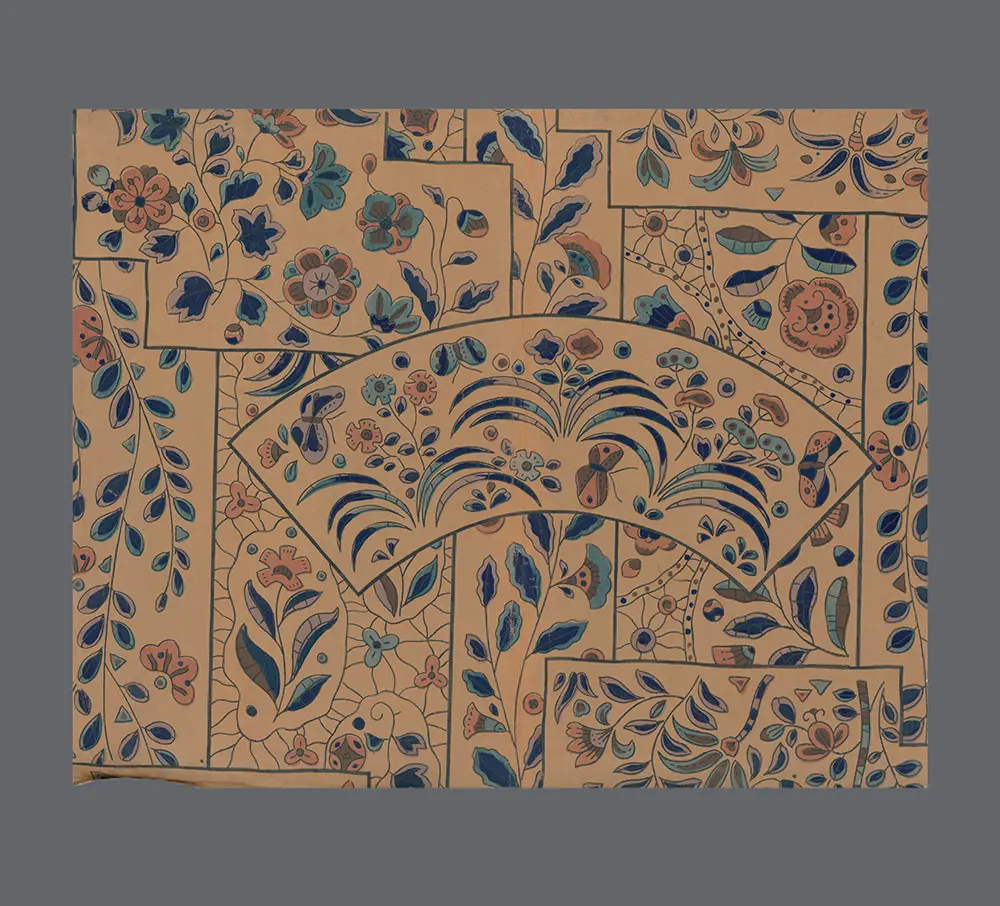
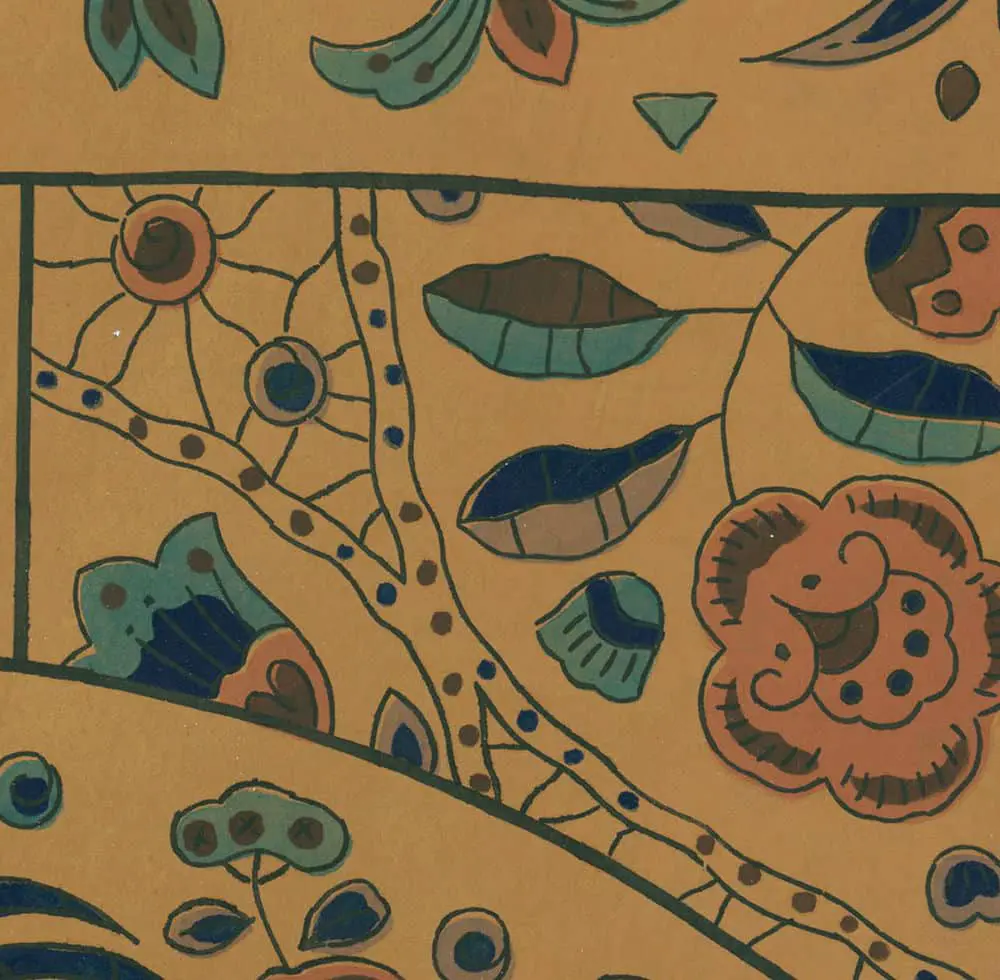
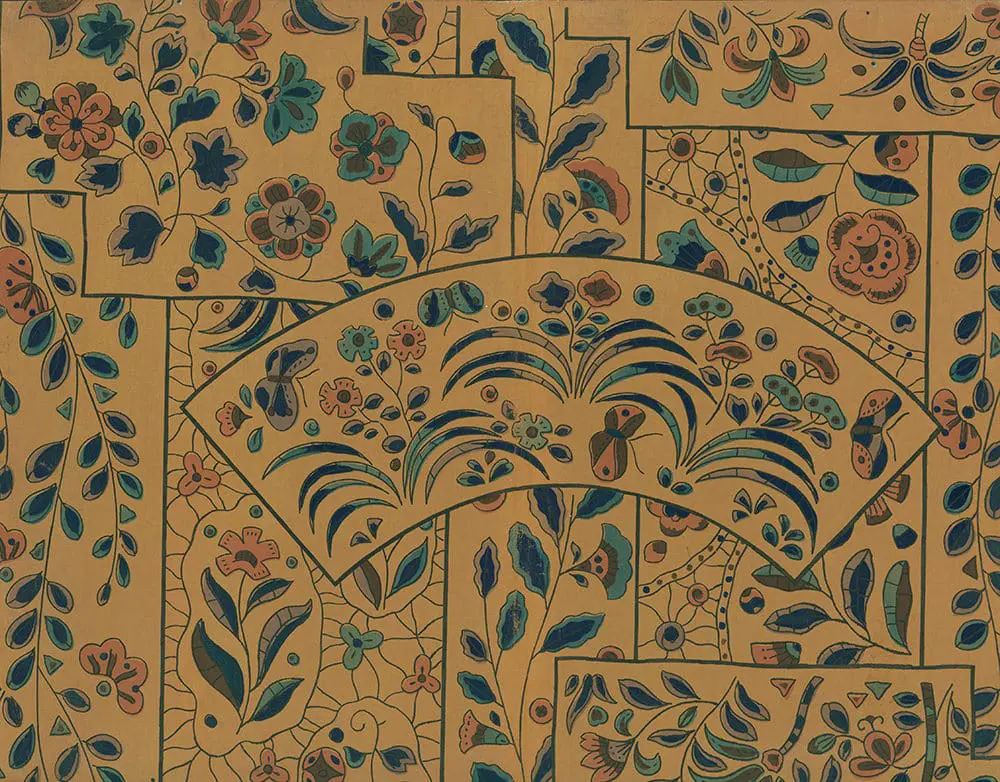

This exquisite hand-painted watercolor is an original and distinctive artwork from Japan, dating to the Late Taisho to Early Showa period (1920–1940). Measuring 17 inches by 12 inches (43 cm x 30 cm), this piece was meticulously crafted for the purpose of transposing its design to yūzen resist-dye work on a silk kimono. The artwork remains in very good condition, showcasing a vibrant "Sarasa" (chintz) aesthetic that reflects the cosmopolitan and adventurous spirit of the "Taisho Roman" era.
The composition is organized into a dynamic patchwork of rectangular panels and a prominent central folding fan (sensu) motif. Against a warm, apricot-toned ground, the artist has rendered a lush garden of stylized wild blossoms, climbing vines, and delicate butterflies. The central fan is decorated with rhythmic, arched grasses and small floral sprays, while the surrounding panels feature intricate, lace-like background patterns and winding botanical borders. The color palette is earthy yet lively, utilizing deep indigo blues, coral pinks, and olive greens, all harmonized by the crisp, dark outlines necessary for a technical yūzen dyeing blueprint.

Payment Options: We primarily accept PayPal for all transactions. Credit and debit cards are not accepted. If you prefer to pay by personal check instead of PayPal, please note this preference in the "Additional comments" field when placing your order.Ordering Process
To receive your PayPal invoice, simply fill out the form.
Shipping Details: We ship all orders to the address associated with your PayPal payment. Please ensure your PayPal shipping address is current and accurate.A phone number is required during checkout, as our shipping carrier may need to contact you regarding delivery questions.Shipping RatesUnited States and Canada: $20International destinations (air mail): $40
