Copyright © 2026 Yorke Antique Textiles
.avif)

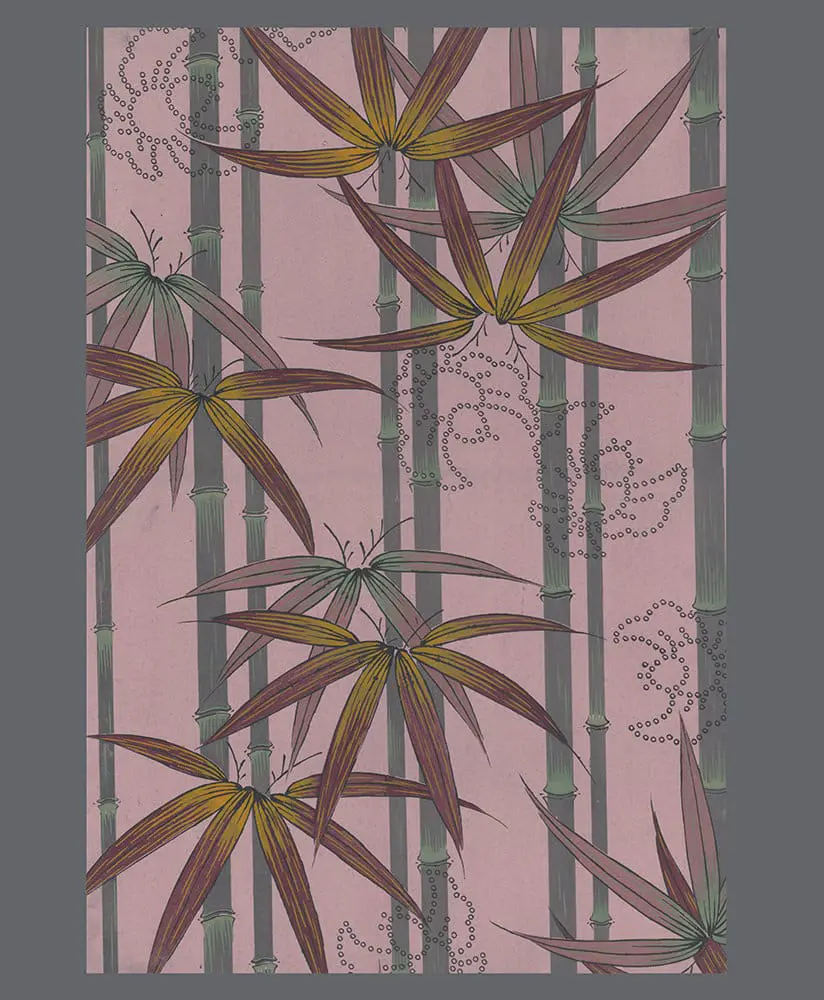


This elegant hand-painted watercolor is an original and distinctive artwork from Japan, dating to the Late Taisho to Early Showa period (1920–1940). Measuring 22 inches by 17 inches (56 cm x 43 cm), this piece was meticulously created to serve as a high-fidelity template for yūzen resist-dye work on a silk kimono. The artwork remains in very good condition and demonstrates a sophisticated, graphic interpretation of traditional forest motifs popular during the pre-war era.
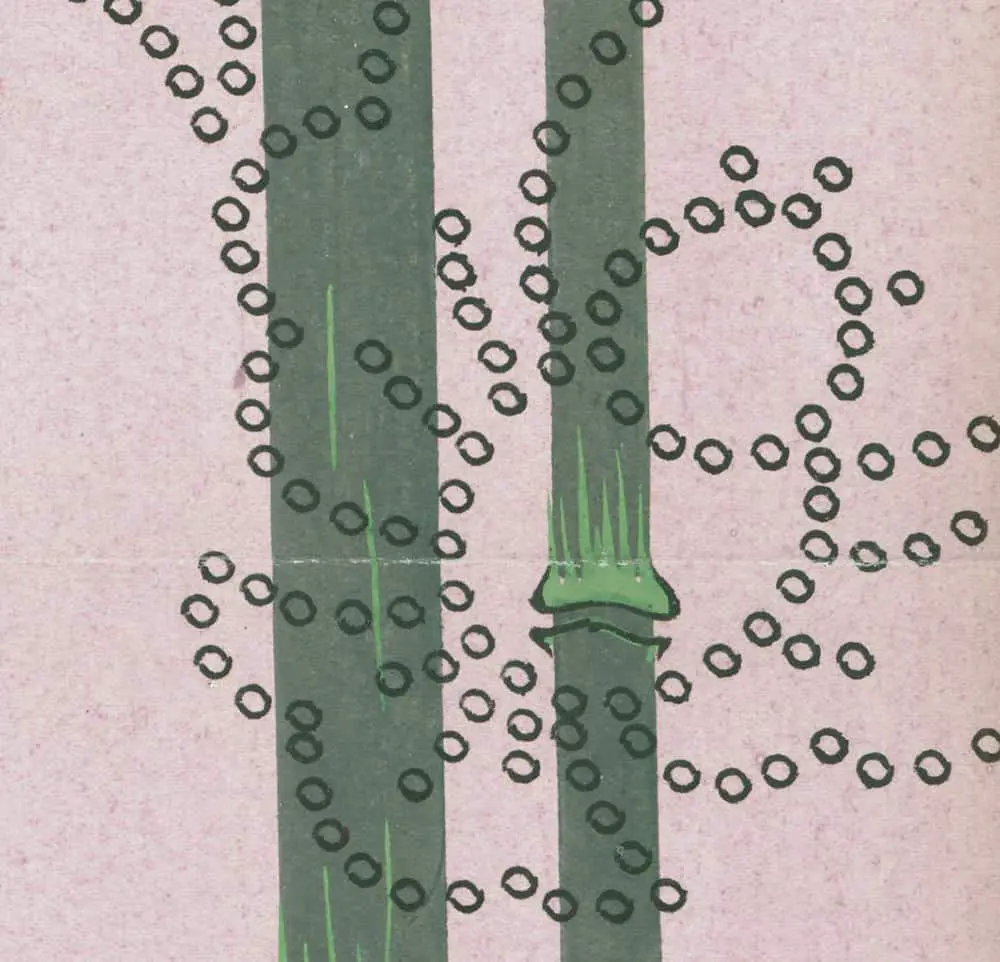
The composition is set against a soft, dusty rose ground, featuring a vertical forest of bamboo stalks rendered in a muted slate-grey with green nodal accents. Arranged rhythmically across the stalks are clusters of sharp, elongated bamboo leaves. These leaves showcase a beautiful tonal transition, with centers of warm ochre-yellow fading into deep plum and violet edges. Floating behind and between the organic forms are ethereal, swirling patterns created entirely from minute, stippled grey dots. While these stippled elements function as atmospheric mist or clouds, their peculiar, symmetrical shapes closely resemble the silhouettes of moths or winged insects, a common surrealist touch in "Taisho Roman" design where nature is rendered with a dreamlike, slightly abstract quality.

Payment Options: We primarily accept PayPal for all transactions. Credit and debit cards are not accepted. If you prefer to pay by personal check instead of PayPal, please note this preference in the "Additional comments" field when placing your order.Ordering Process
To receive your PayPal invoice, simply fill out the form.
Shipping Details: We ship all orders to the address associated with your PayPal payment. Please ensure your PayPal shipping address is current and accurate.A phone number is required during checkout, as our shipping carrier may need to contact you regarding delivery questions.Shipping RatesUnited States and Canada: $20International destinations (air mail): $40
