Copyright © 2026 Yorke Antique Textiles
.avif)

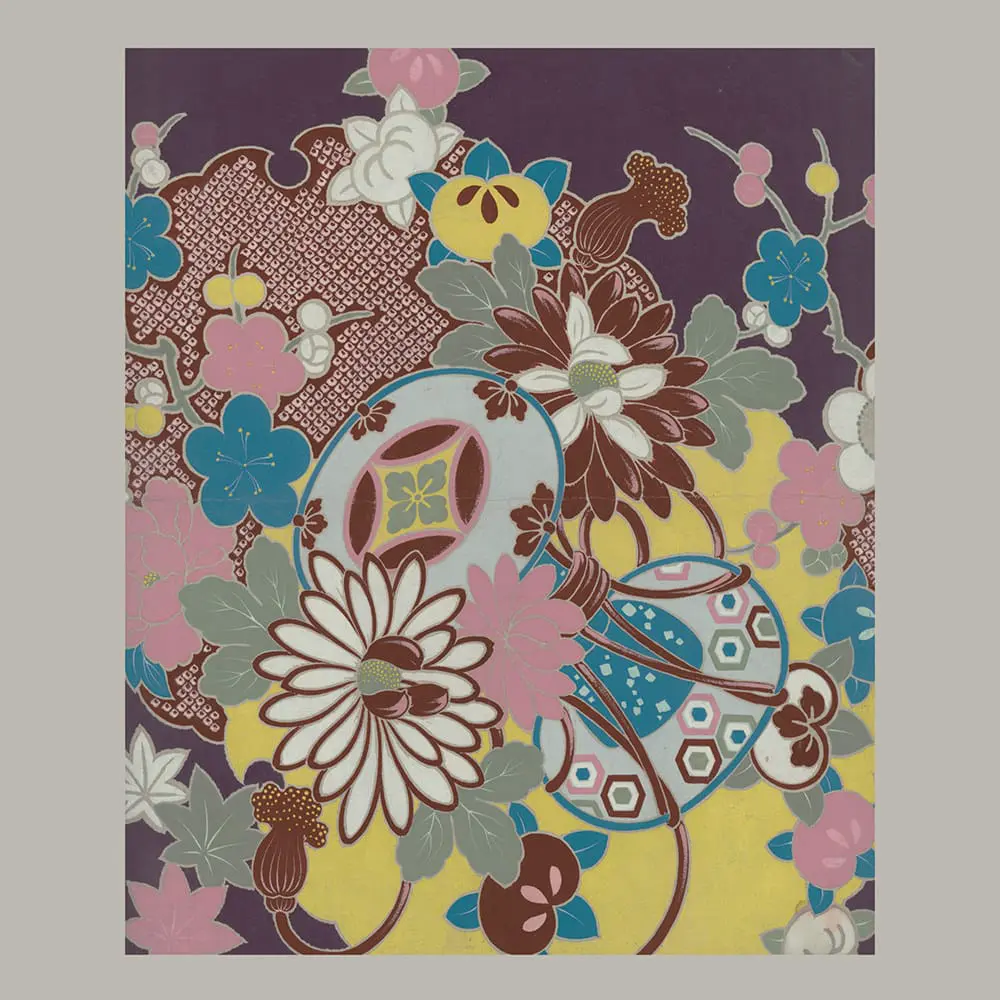
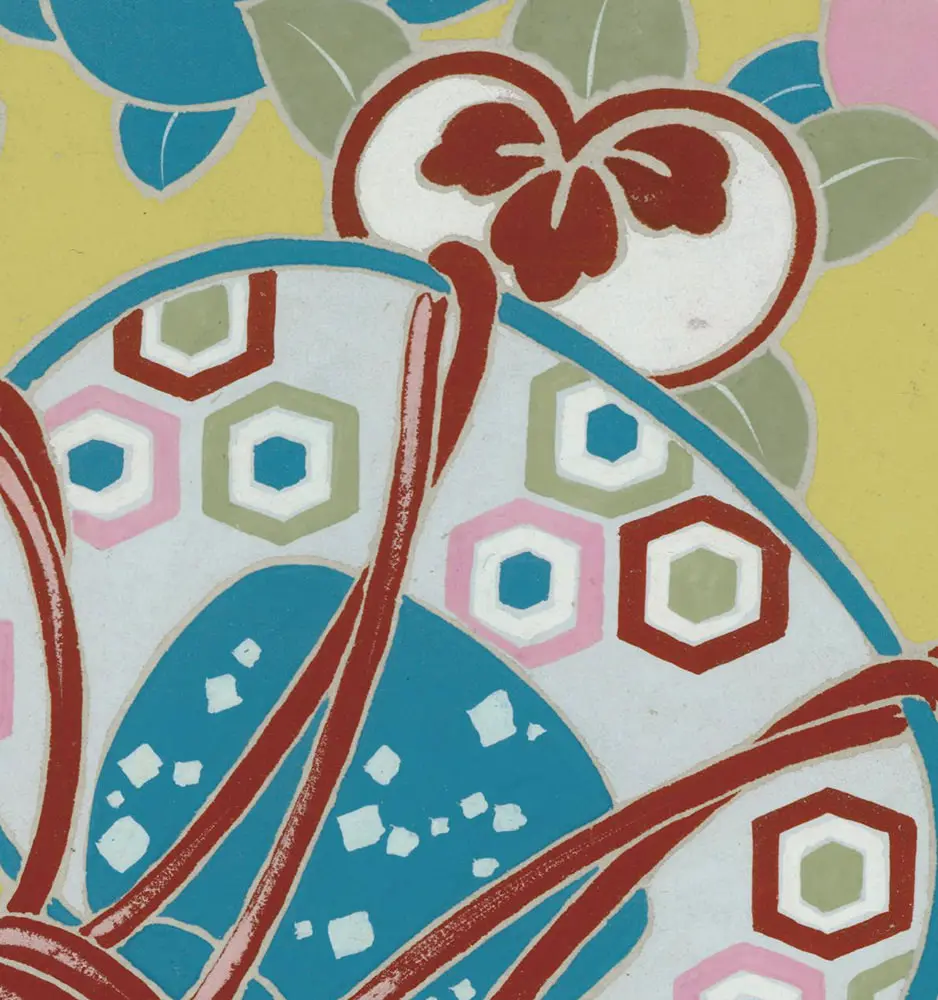
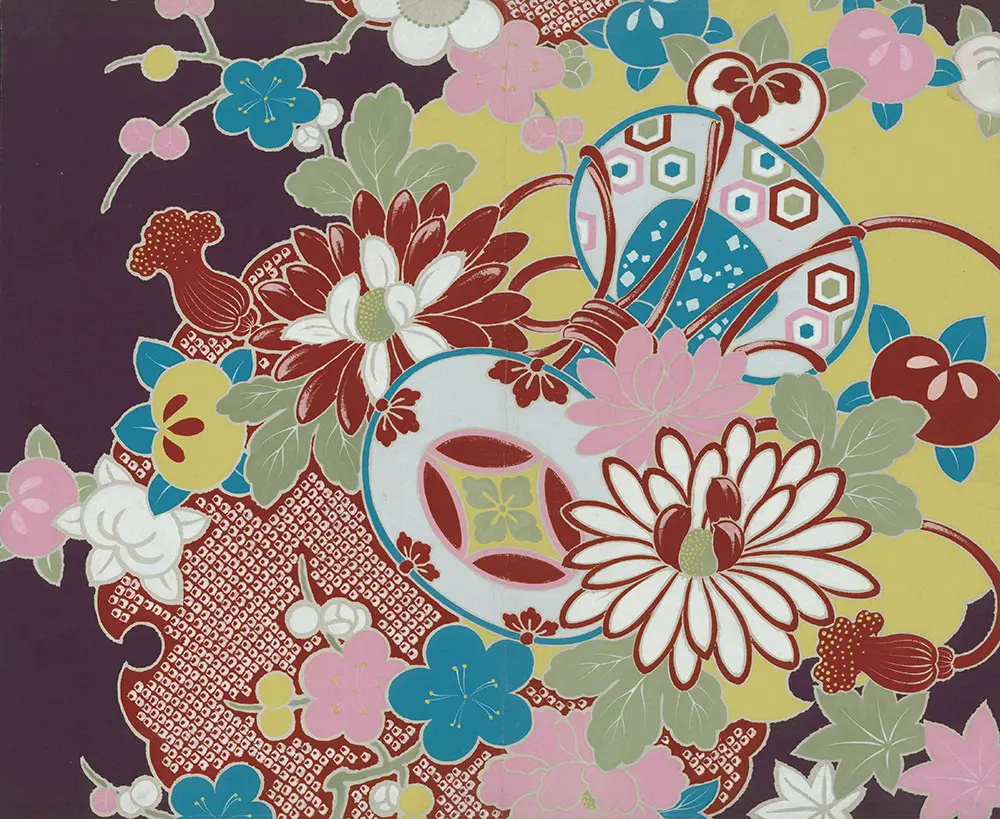
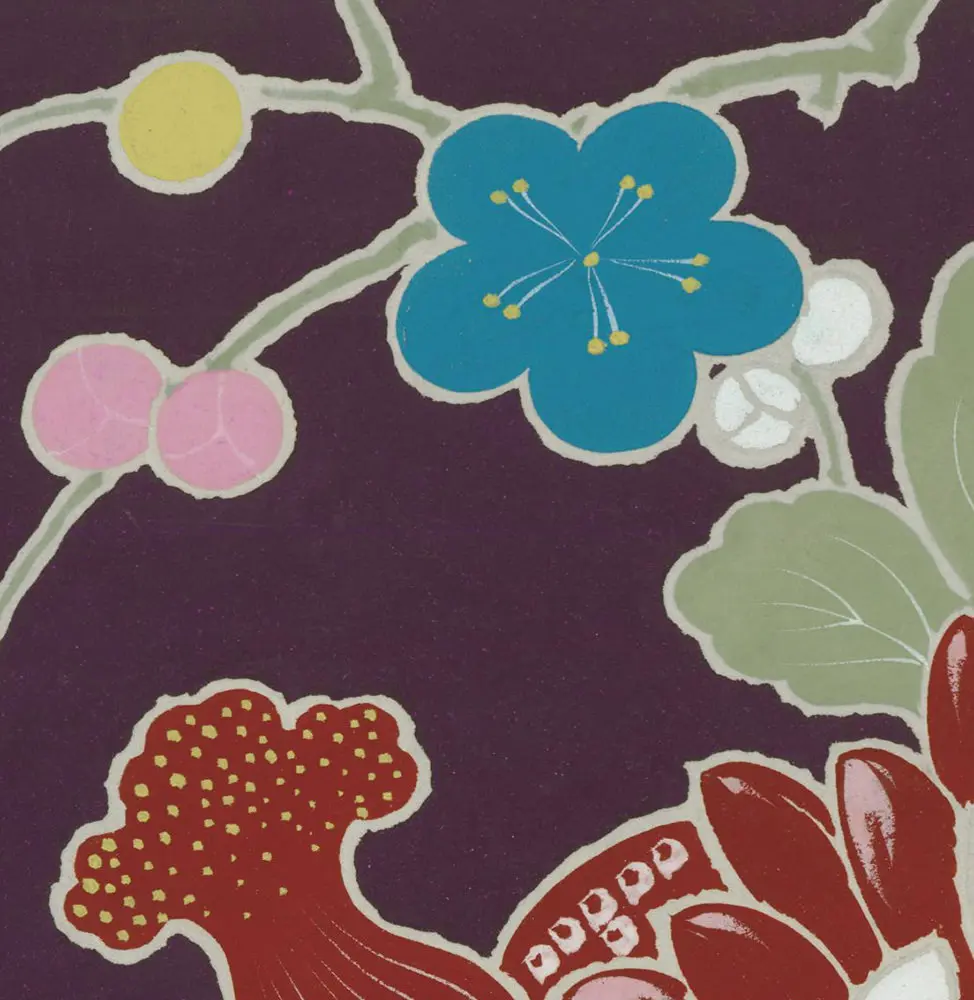
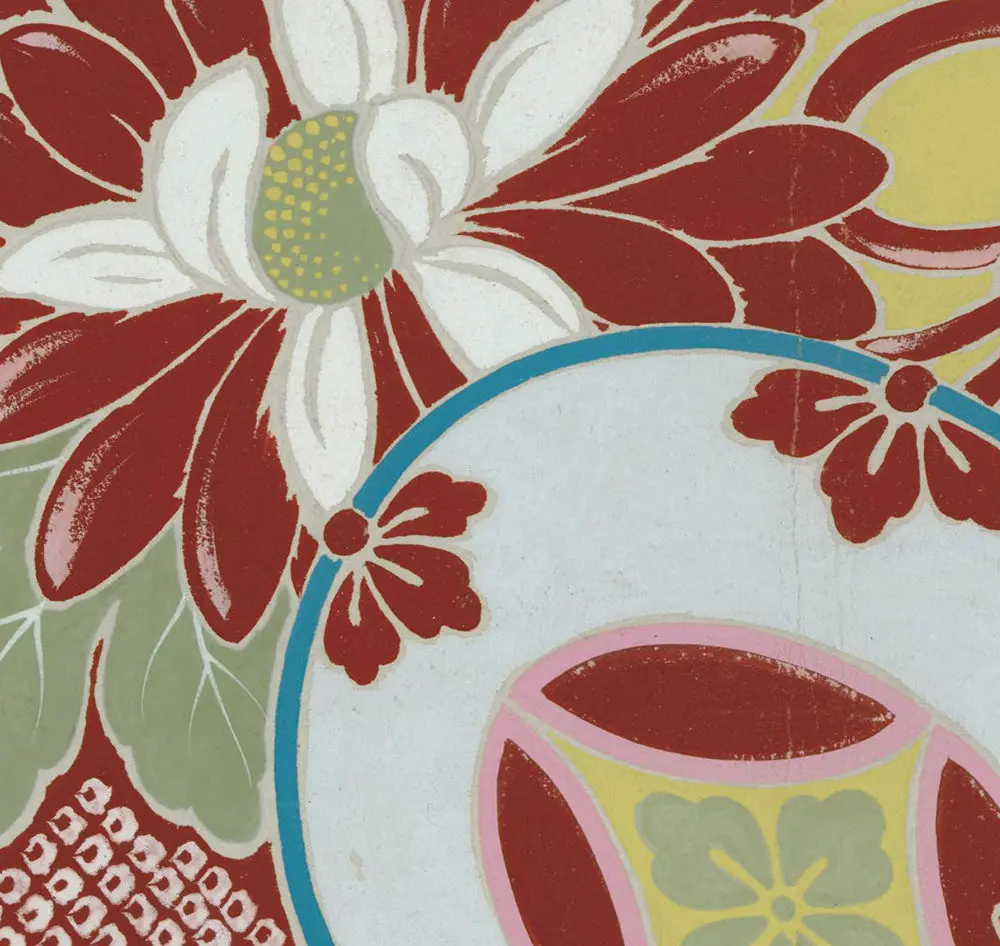
This exquisite hand-painted watercolor is an original and distinct artwork from Japan, dating to the Late Taisho to Early Showa period (1920–1940). Measuring 16 inches by 12 inches (41 cm x 30 cm), this piece was specifically crafted by a Japanese artist to serve as a technical blueprint for yuzen resist-dye work on a silk kimono. The artwork remains in very good condition, showcasing a sophisticated composition that balances bold celebratory symbols with delicate seasonal flora.
The central focal point of the design is a highly detailed tsuzumi (traditional Japanese hand drum), rendered with intricate cords and wood-grain textures that signify joy and the refined atmosphere of the Noh theater. Surrounding this musical centerpiece is a lush arrangement of chrysanthemums (kiku), a symbol of longevity and regal beauty, alongside other seasonal blossoms. The palette is a refined mix of warm autumnal tones and cool accents, with the artist utilizing fine linework and soft gradients to create a sense of three-dimensional depth within the floral clusters.

Payment Options: We primarily accept PayPal for all transactions. Credit and debit cards are not accepted. If you prefer to pay by personal check instead of PayPal, please note this preference in the "Additional comments" field when placing your order.Ordering Process
To receive your PayPal invoice, simply fill out the form.
Shipping Details: We ship all orders to the address associated with your PayPal payment. Please ensure your PayPal shipping address is current and accurate.A phone number is required during checkout, as our shipping carrier may need to contact you regarding delivery questions.Shipping RatesUnited States and Canada: $20International destinations (air mail): $40
