Copyright © 2026 Yorke Antique Textiles
.avif)

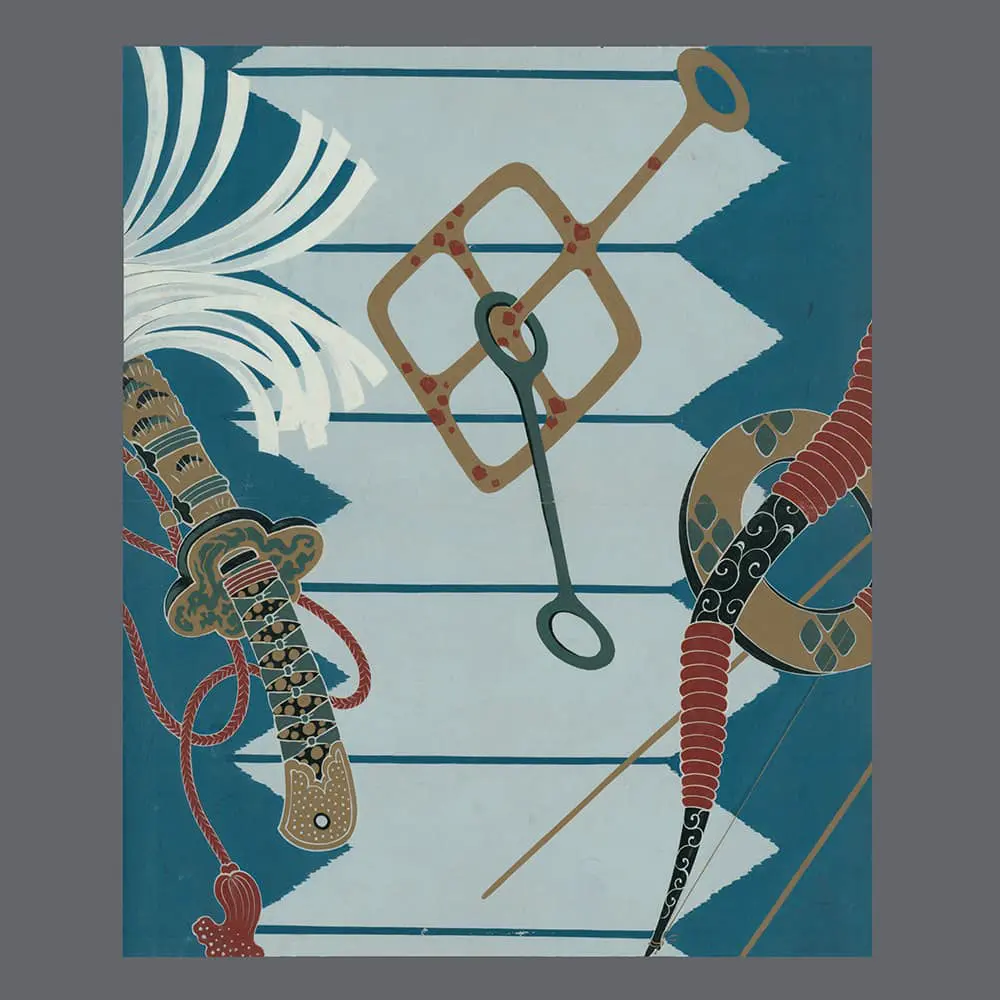
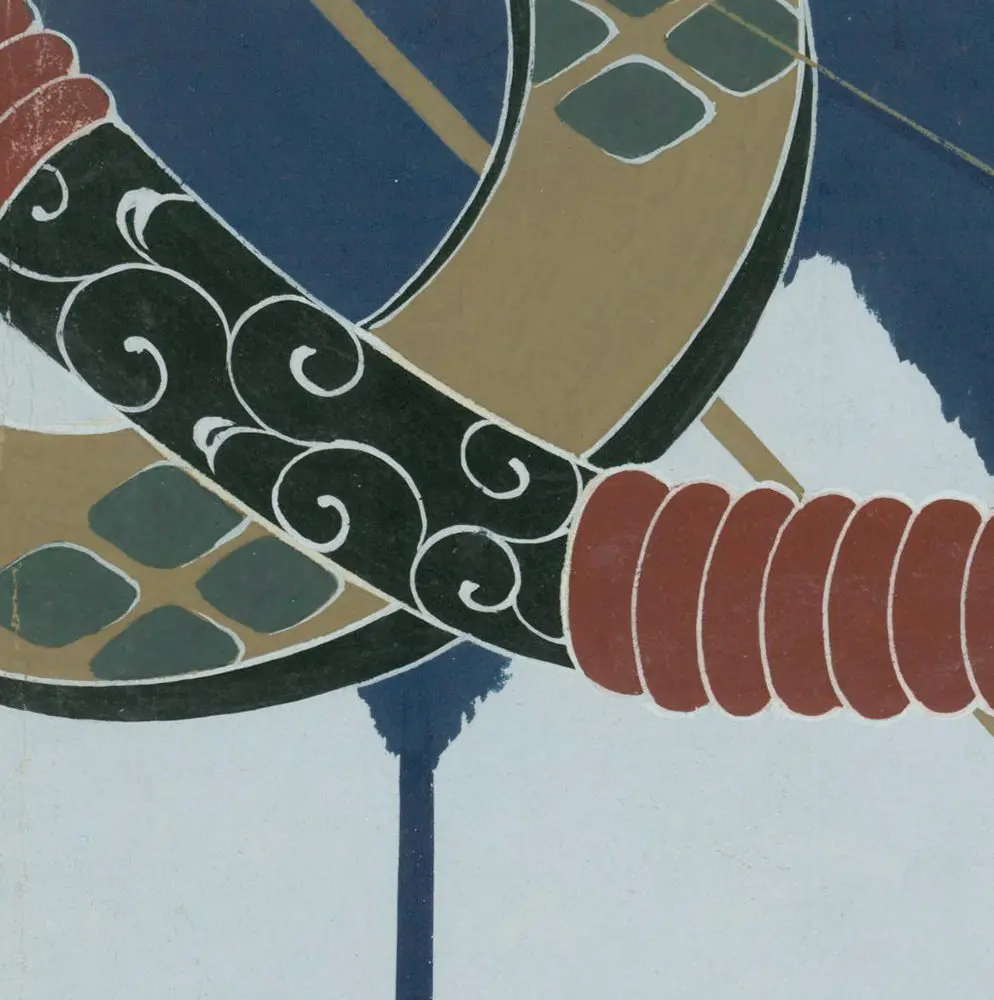
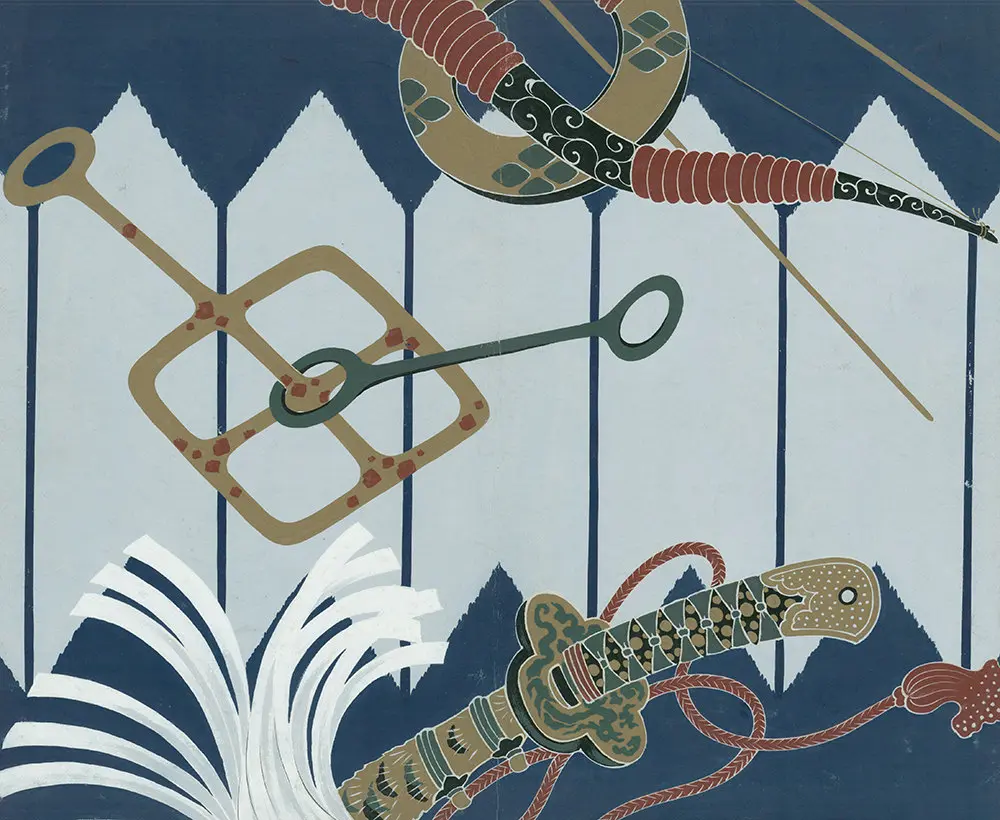
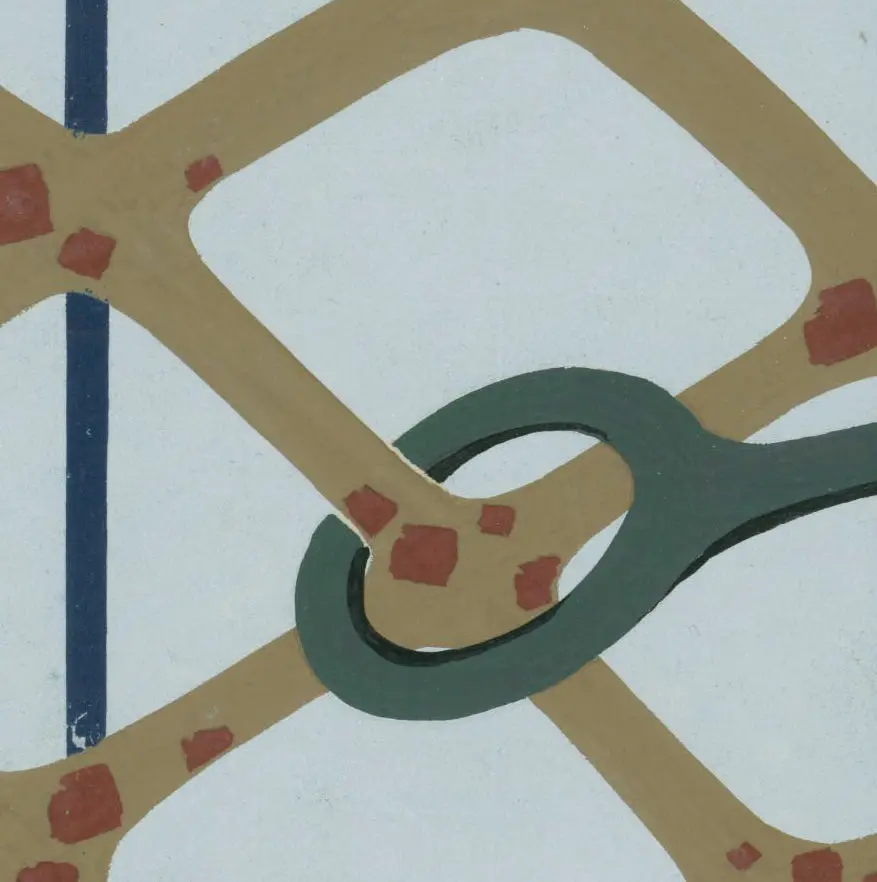
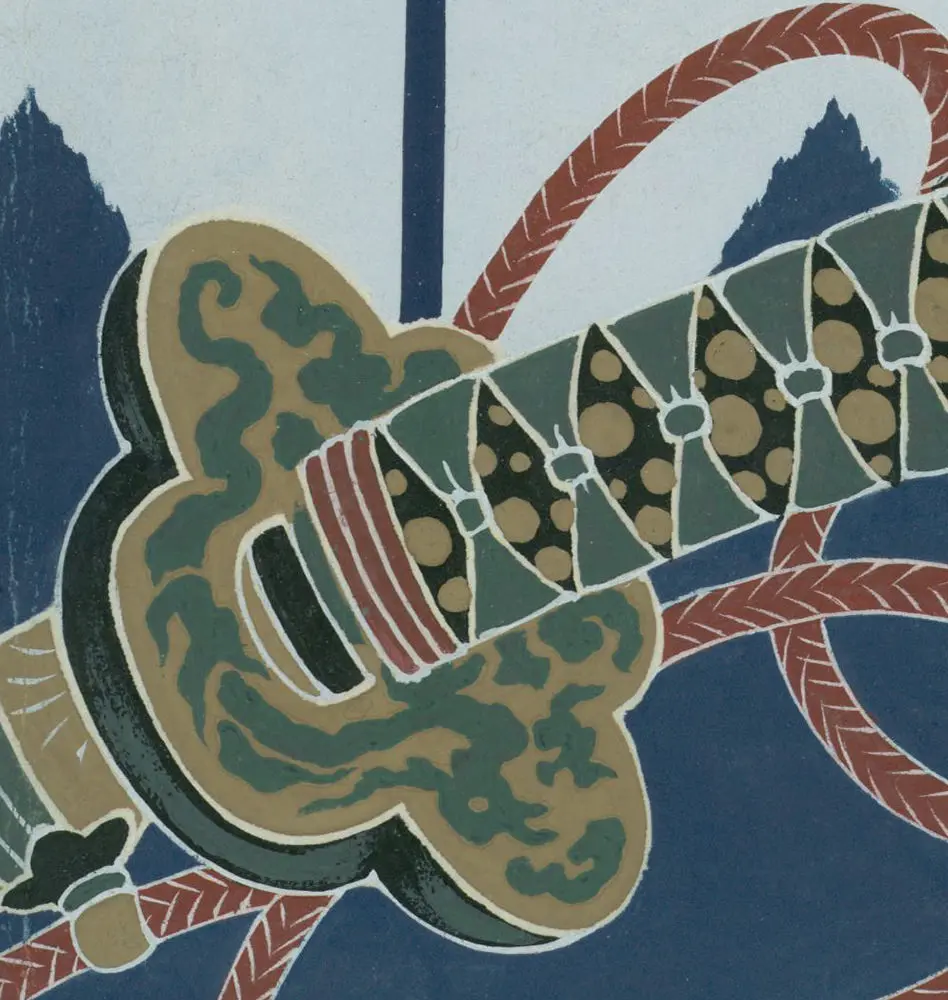
This dynamic hand-painted watercolor is an original and distinct artwork from Japan, dating to the Late Taisho to Early Showa period (1920–1940). Measuring 16 inches by 12 inches (41 cm x 30 cm), this piece was specifically crafted by a Japanese artist to serve as a high-fidelity technical blueprint for yuzen resist-dye work on a silk kimono. The artwork remains in very good condition and exemplifies the bold, graphic "modern-heroic" style that reimagined traditional warrior symbols for early 20th-century textile fashion.
The composition is set against a striking teal-blue ground featuring a large, central zig-zag or saw-toothed band in pale grey, reminiscent of traditional heraldic patterns. Floating across this architectural field are various samurai accoutrements, including a highly detailed katana hilt with a decorative tsuba (guard) and sweeping white tassels, a ceremonial bow wrapped in red cord, and a large diamond-shaped bit or horse trapping. The palette is sophisticated and masculine, utilizing rust-red, ochre, and olive green, while fine stippling and geometric patterns within the hilt and bow provide a sense of artisanal texture.

Payment Options: We primarily accept PayPal for all transactions. Credit and debit cards are not accepted. If you prefer to pay by personal check instead of PayPal, please note this preference in the "Additional comments" field when placing your order.Ordering Process
To receive your PayPal invoice, simply fill out the form.
Shipping Details: We ship all orders to the address associated with your PayPal payment. Please ensure your PayPal shipping address is current and accurate.A phone number is required during checkout, as our shipping carrier may need to contact you regarding delivery questions.Shipping RatesUnited States and Canada: $20International destinations (air mail): $40
