Copyright © 2026 Yorke Antique Textiles
.avif)

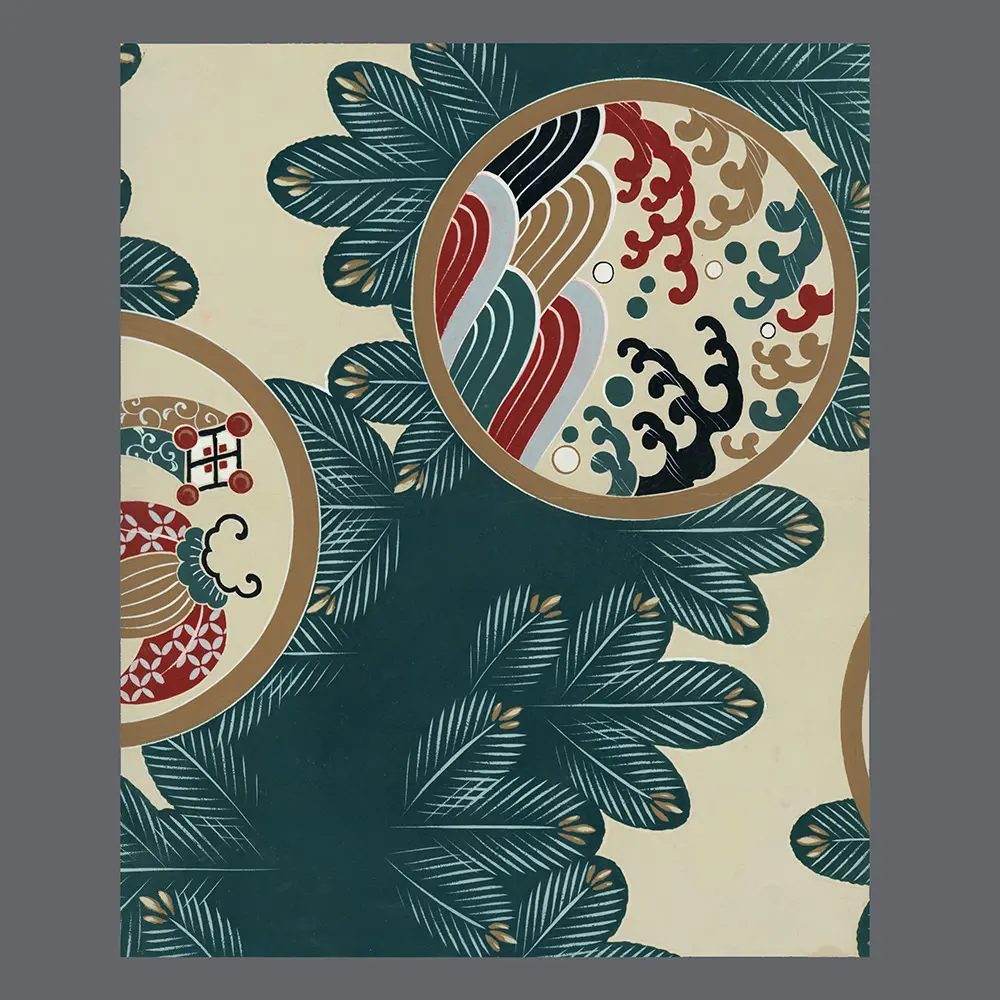
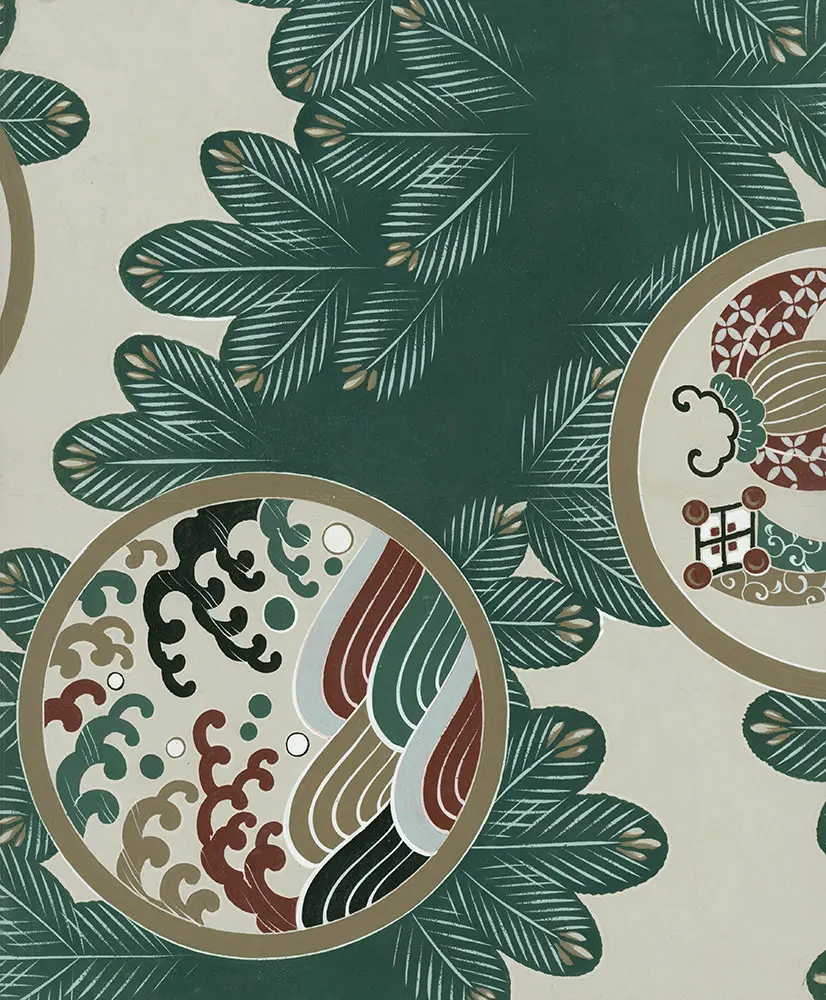

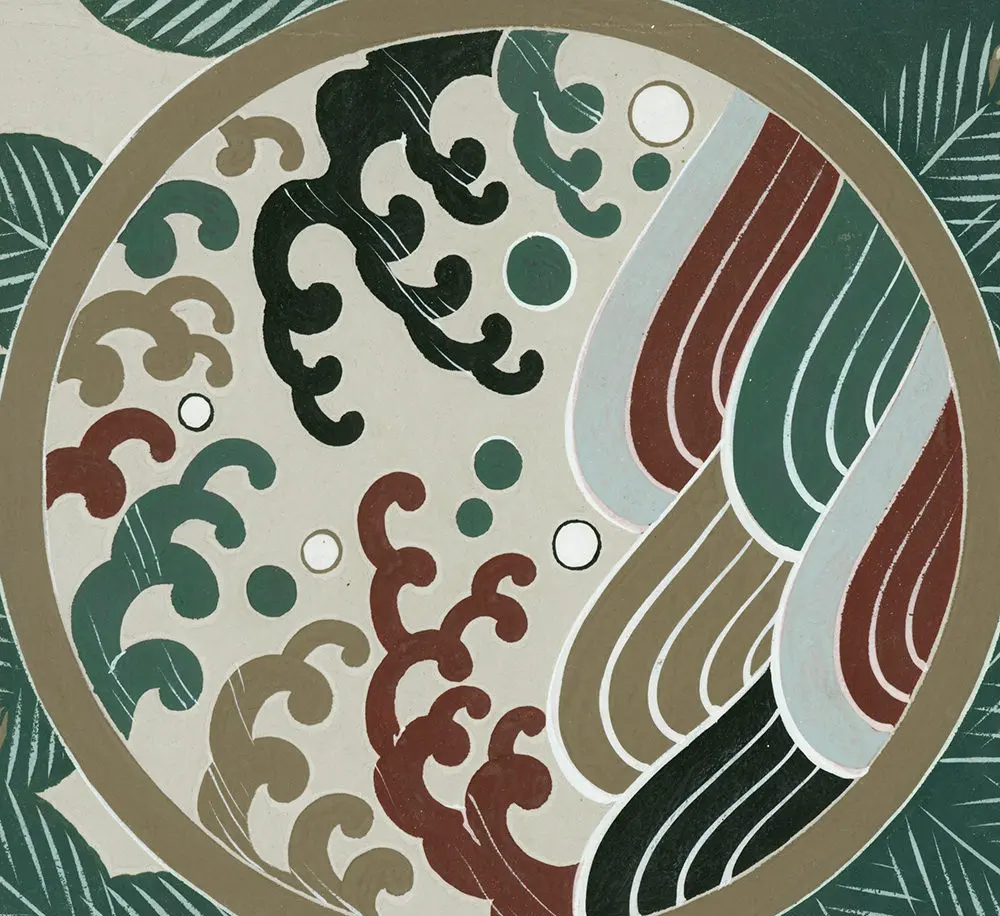
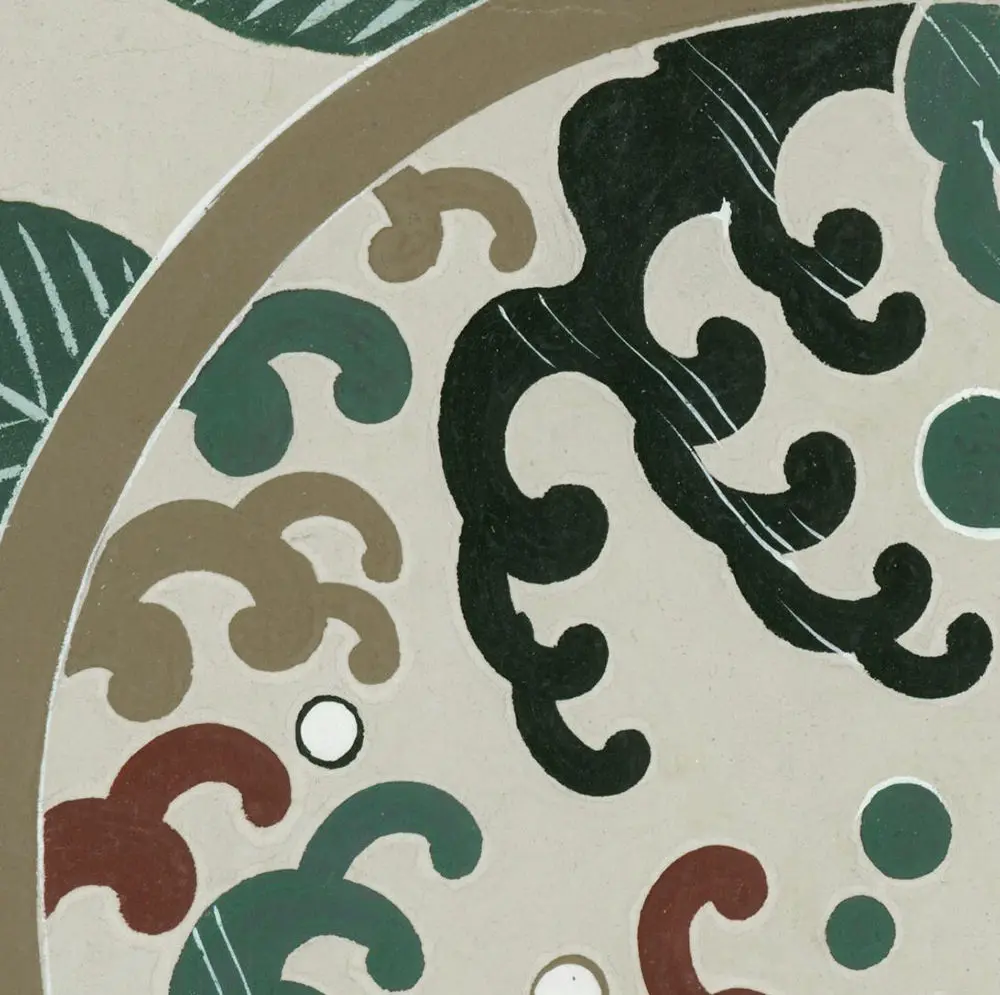
This masterful hand-painted watercolor is an original and distinctive artwork from Japan, dating to the Late Taisho to Early Showa period (1920–1940). Measuring 16 inches by 12 inches (41 cm x 30 cm), this piece was meticulously crafted for the purpose of transposing its design to yūzen resist-dye work on a silk kimono. The artwork remains in very good condition, showcasing a bold and graphic "Taisho Roman" aesthetic that revitalizes classical auspicious motifs with a modern sense of scale and color.
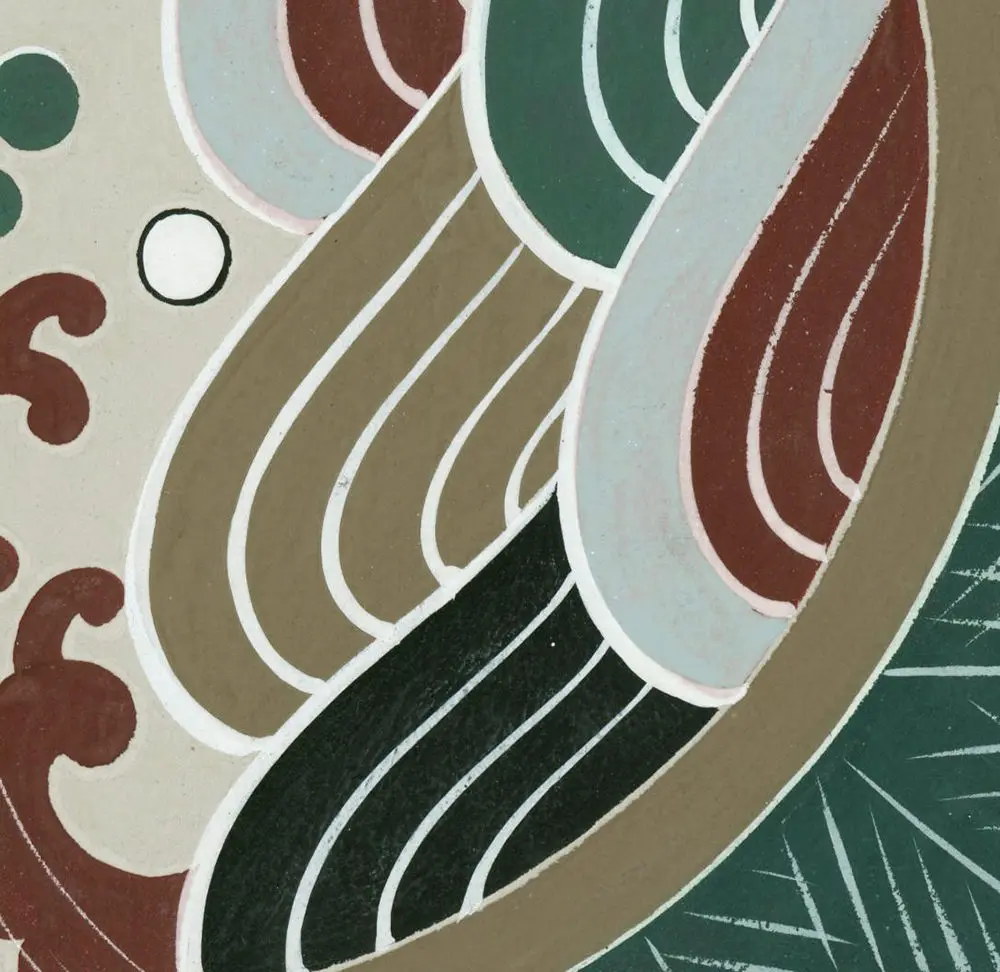
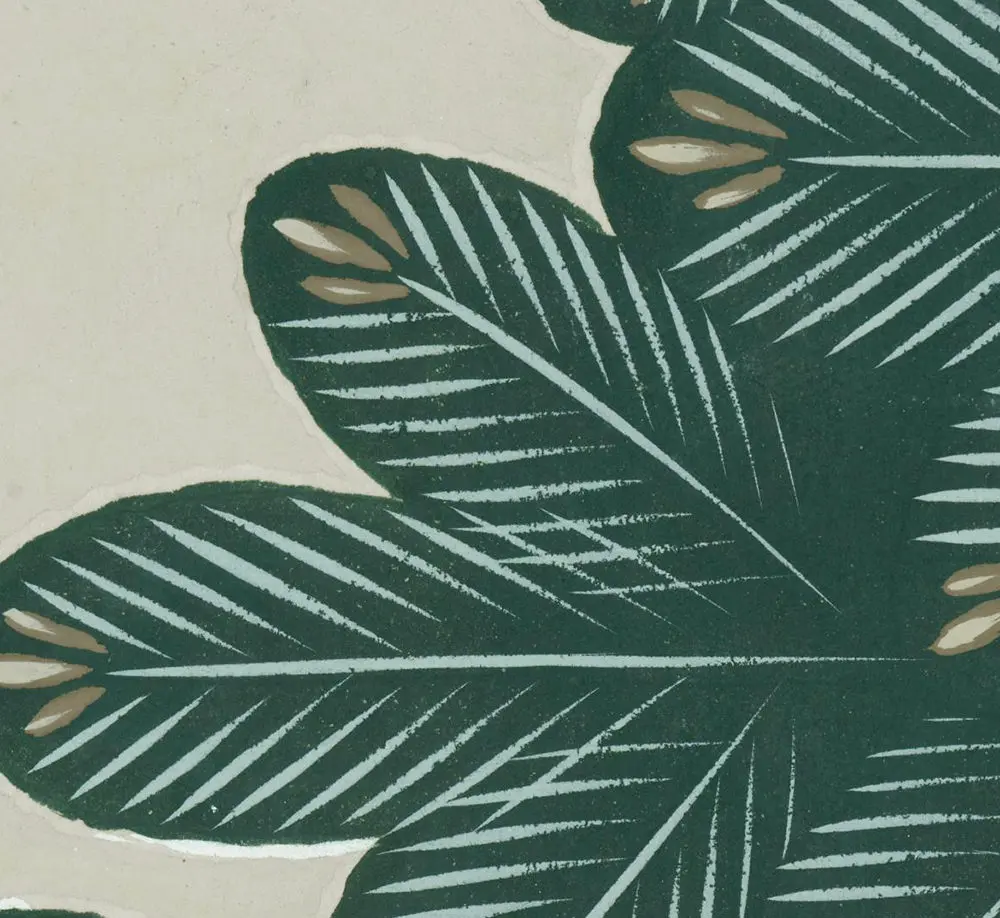
The composition is dominated by large, stylized pine branches (matsu) rendered in a deep, saturated forest green. The pine needles are depicted with sharp, white calligraphic linework, creating a sense of crystalline texture against the cream-colored ground. Overlaid upon the greenery are two large, circular medallions outlined in gold-toned pigment. One medallion contains a rhythmic arrangement of multi-colored waves (seigaiha) and swirling water motifs in shades of crimson, teal, and ochre, while the other features a patterned "shippo" (seven treasures) geometric design. These circular vignettes act as "windows" into traditional decorative worlds, providing a sophisticated contrast to the bold, organic form of the pine.

Payment Options: We primarily accept PayPal for all transactions. Credit and debit cards are not accepted. If you prefer to pay by personal check instead of PayPal, please note this preference in the "Additional comments" field when placing your order.Ordering Process
To receive your PayPal invoice, simply fill out the form.
Shipping Details: We ship all orders to the address associated with your PayPal payment. Please ensure your PayPal shipping address is current and accurate.A phone number is required during checkout, as our shipping carrier may need to contact you regarding delivery questions.Shipping RatesUnited States and Canada: $20International destinations (air mail): $40
