Copyright © 2026 Yorke Antique Textiles
.avif)


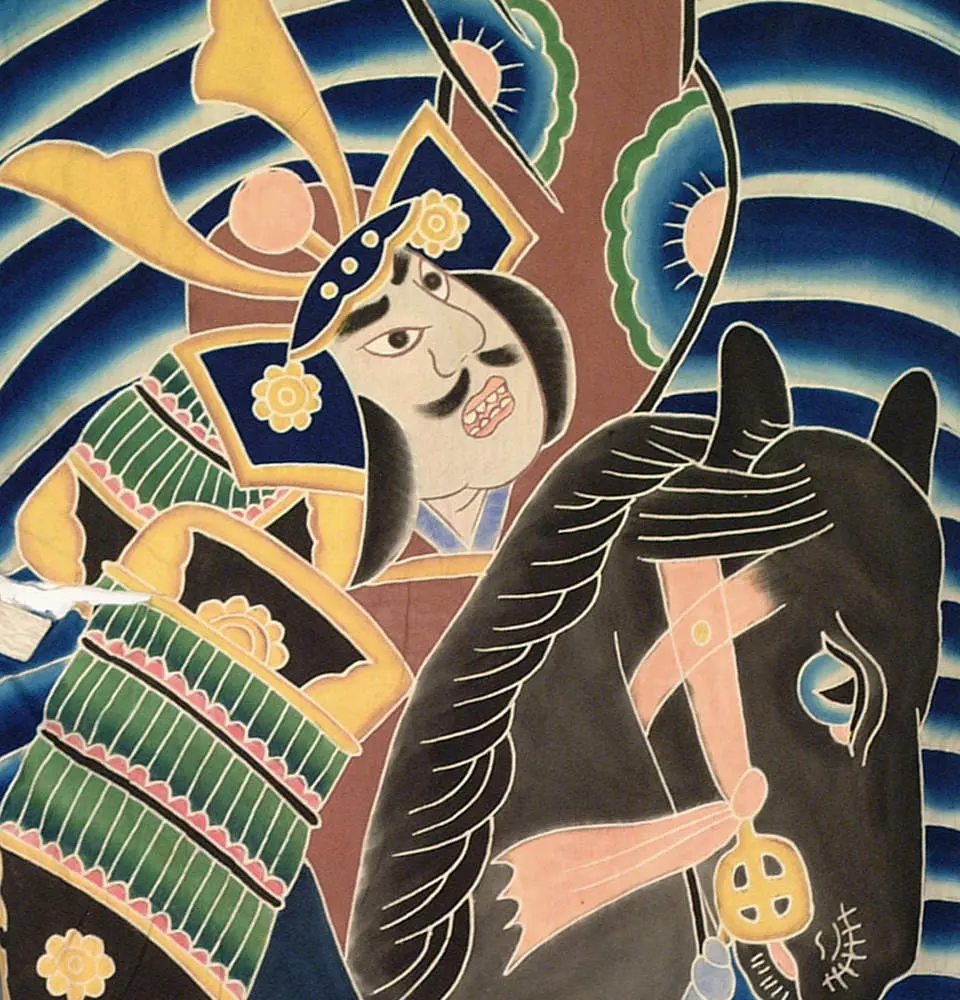
This monumental cotton banner from Japan dates to the late Meiji or early Taisho period (1900–1920). Measuring 32 inches wide and reaching a significant height of 15 feet (81 cm x 457 cm), this textile was originally designed as a vertical outdoor display for the Boys' Day festival (Tango no Sekku). The banner is partially complete, lacking the upper 25% where the family crest (mon) would traditionally have been located. It remains in fair condition, exhibiting several tears and small stains that reflect its historical use and outdoor exposure.
The hand-painted imagery features a heroic samurai warrior clad in intricate green, brown, and gold armor, mounted upon a powerful black horse. The warrior is depicted amidst a dramatic scene of cresting blue and white waves, set against a dark sky with a pale peach-colored sun or moon at the top. This composition likely references a famous historical or legendary battle, intended to inspire courage and strength in the young boys of the household. The banner retains its original white fabric attachment loops along the left side, used for securing the cloth to a tall bamboo pole.

Payment Options: We primarily accept PayPal for all transactions. Credit and debit cards are not accepted. If you prefer to pay by personal check instead of PayPal, please note this preference in the "Additional comments" field when placing your order.Ordering Process
To receive your PayPal invoice, simply fill out the form.
Shipping Details: We ship all orders to the address associated with your PayPal payment. Please ensure your PayPal shipping address is current and accurate.A phone number is required during checkout, as our shipping carrier may need to contact you regarding delivery questions.Shipping RatesUnited States and Canada: $20International destinations (air mail): $40
