Copyright © 2026 Yorke Antique Textiles
.avif)

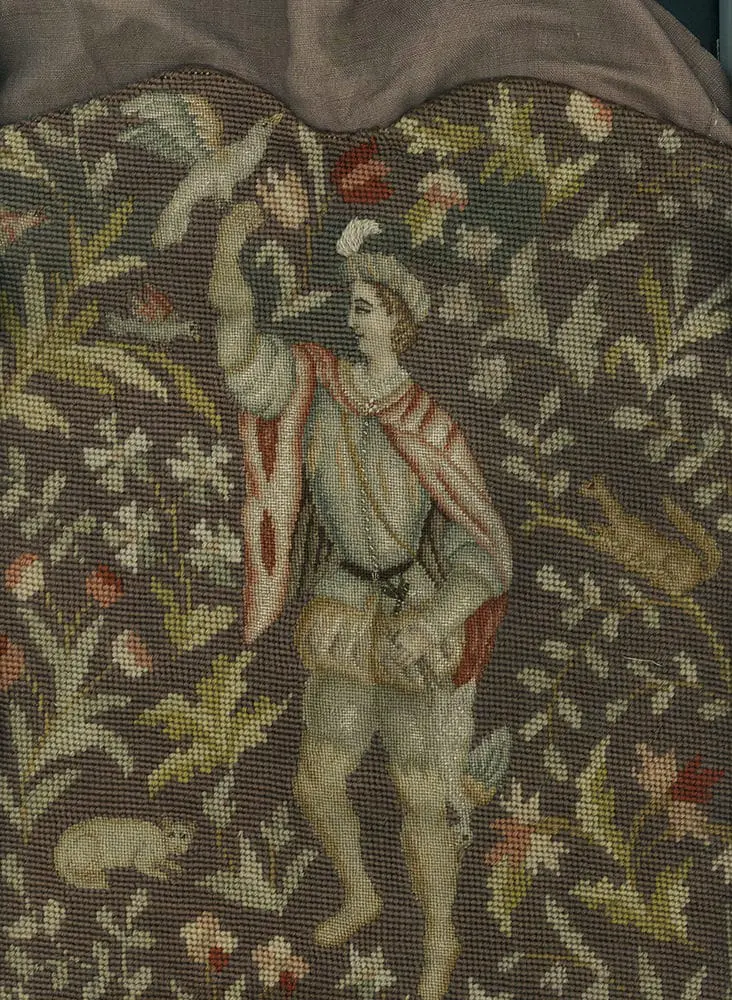
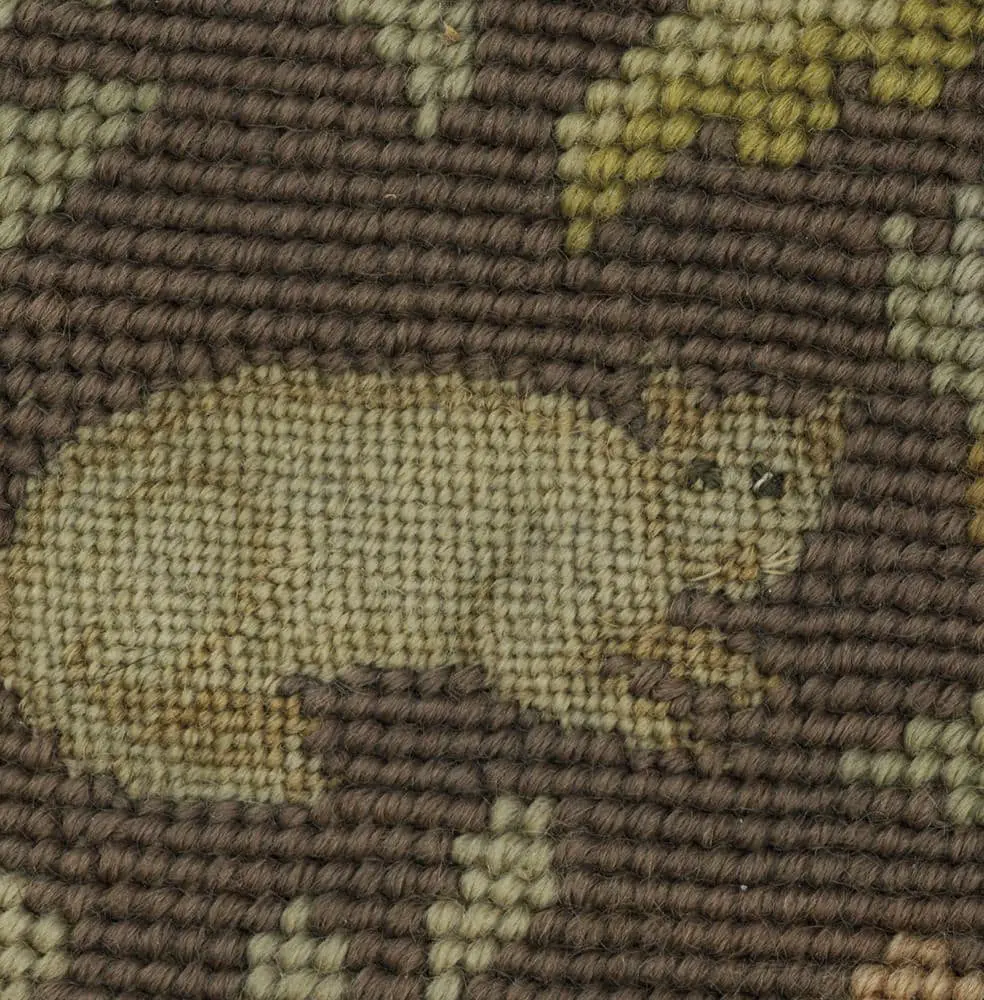
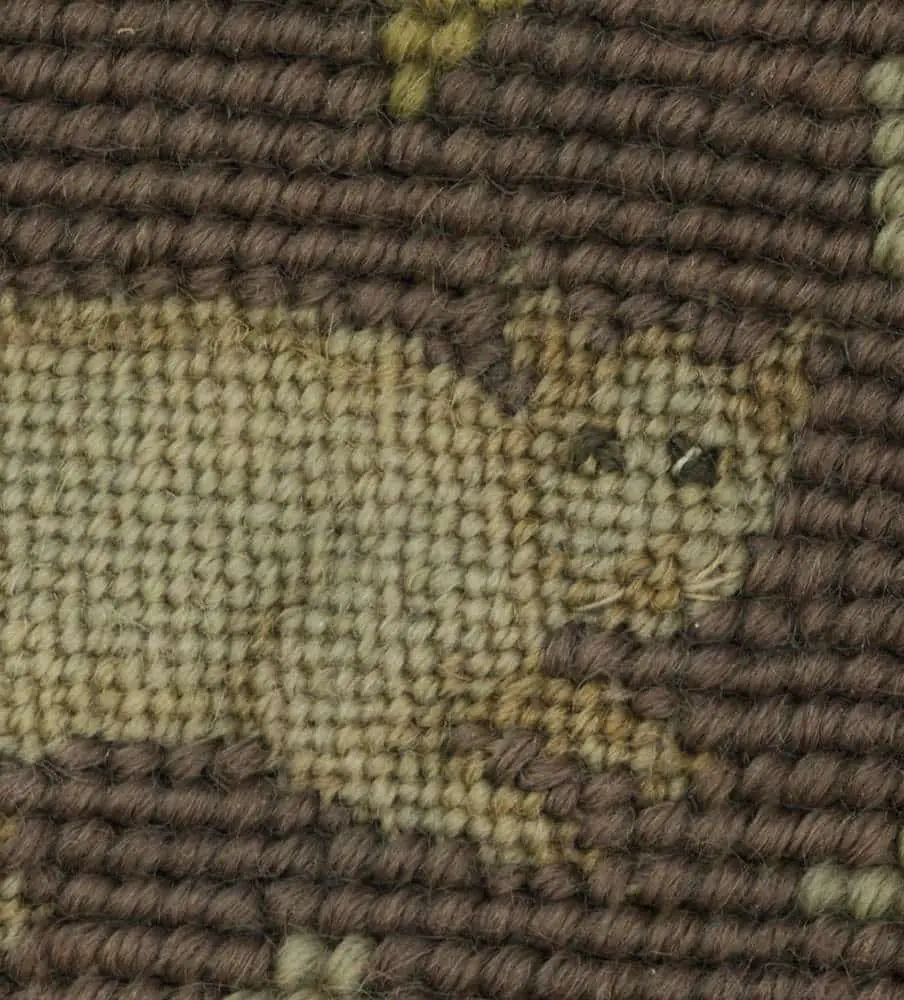
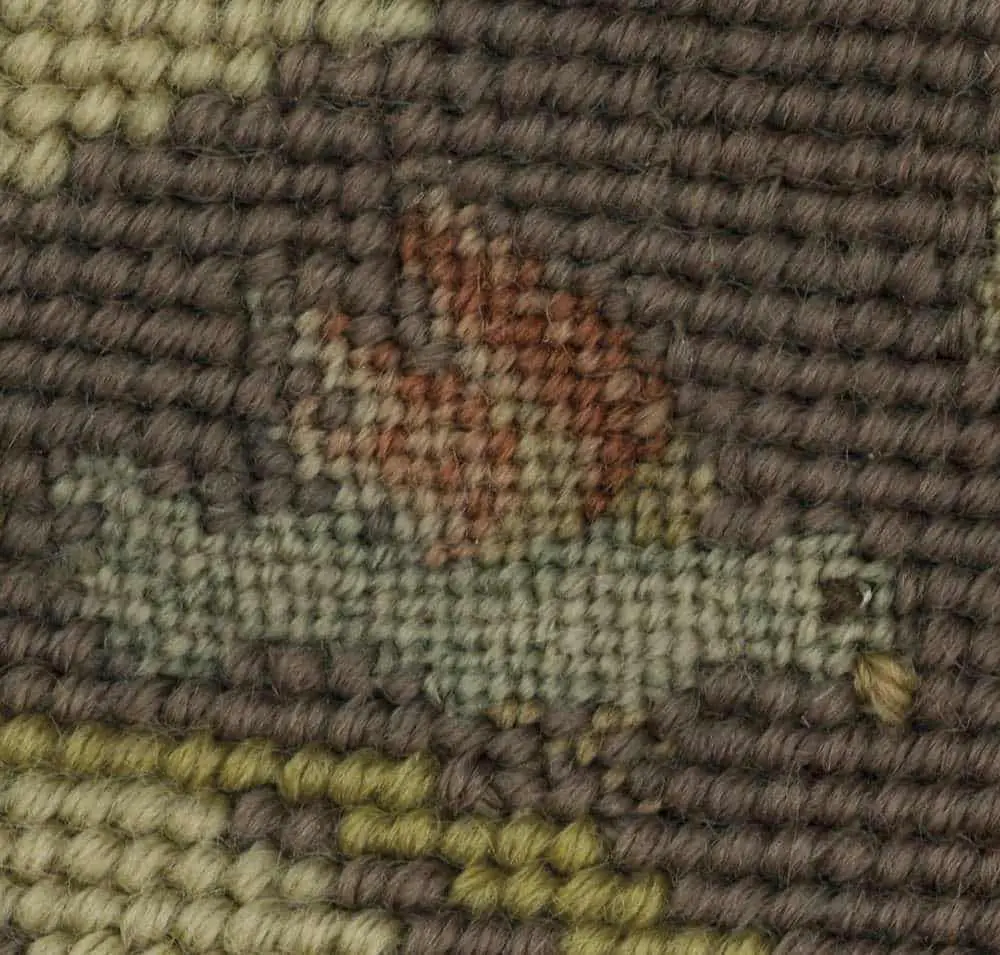
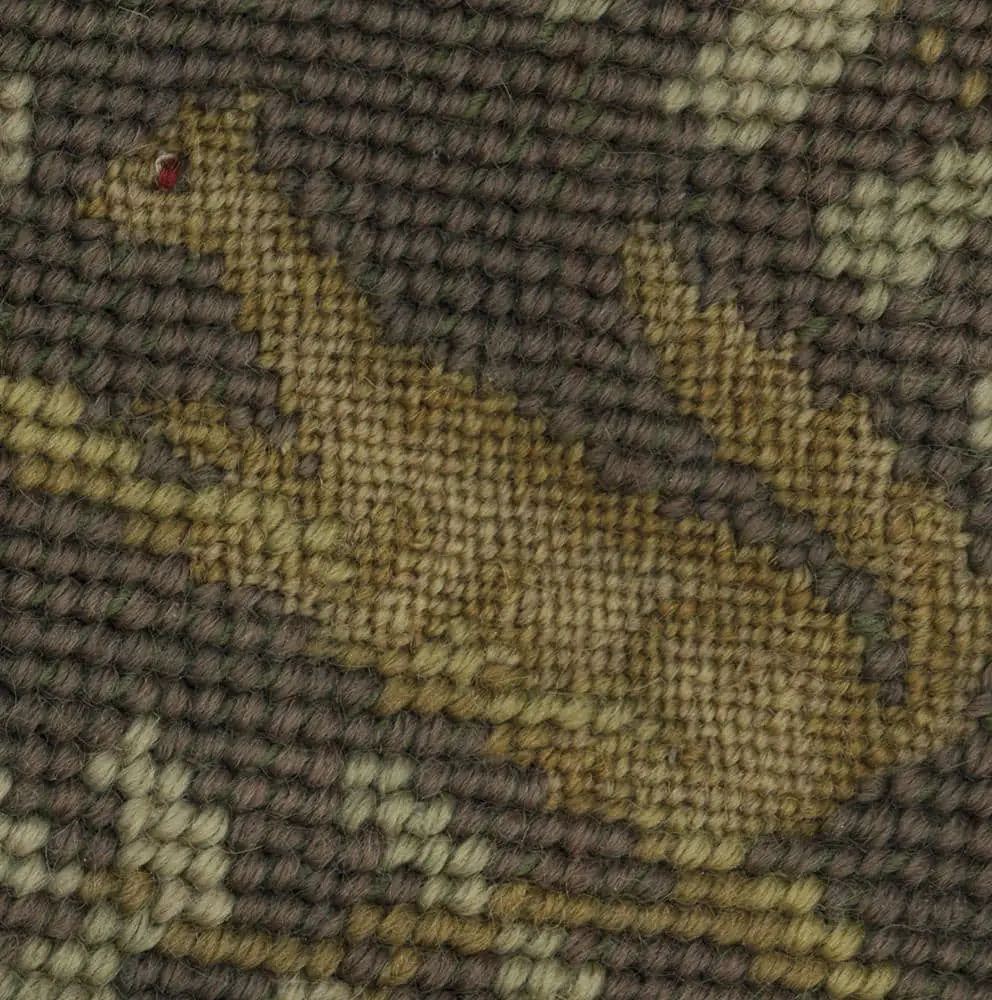
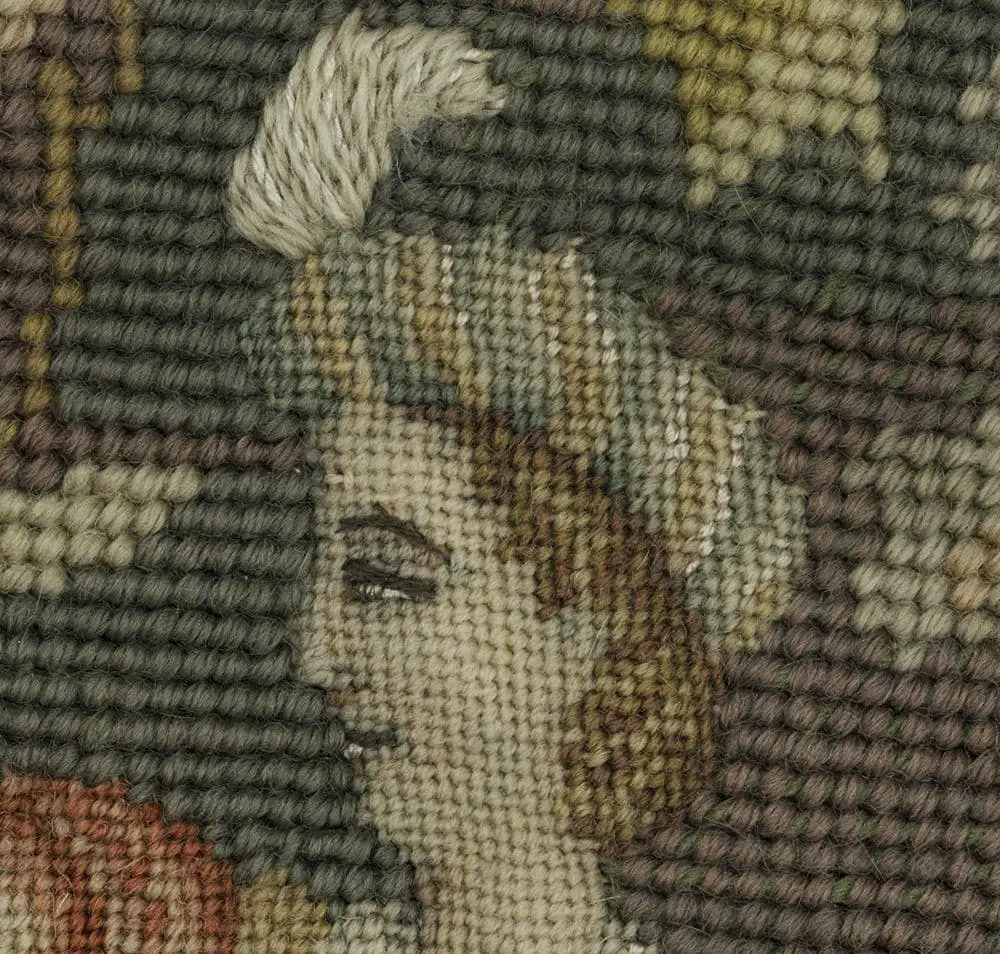
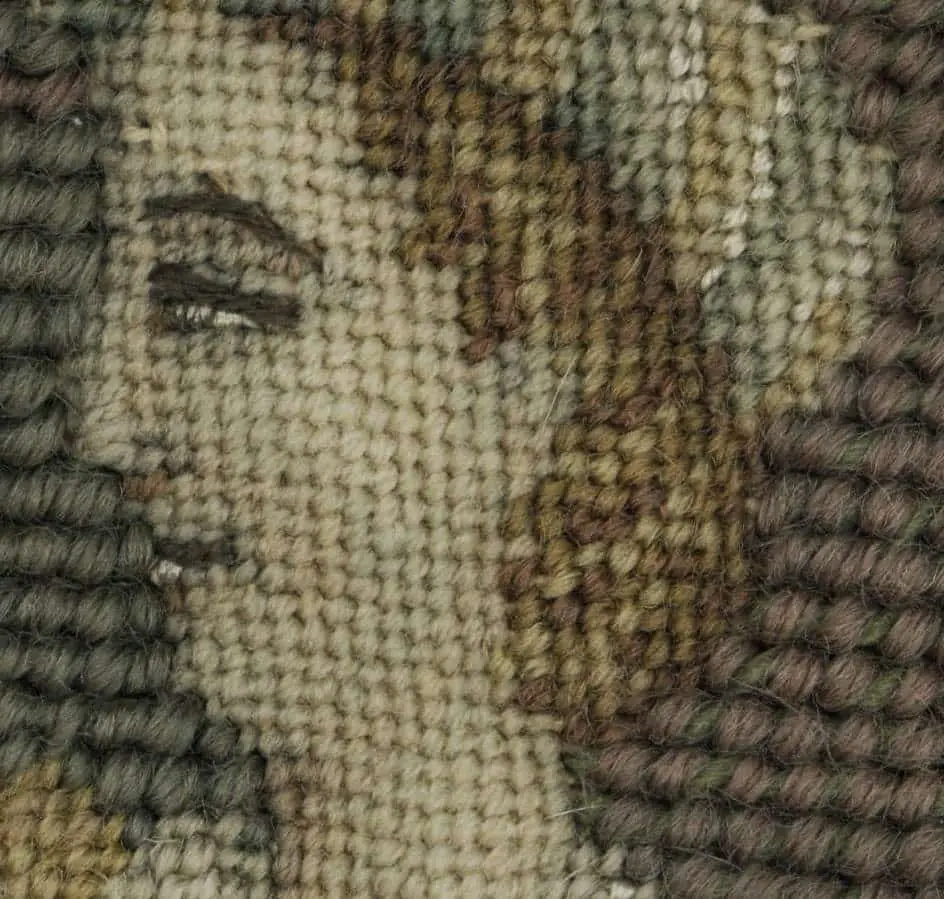
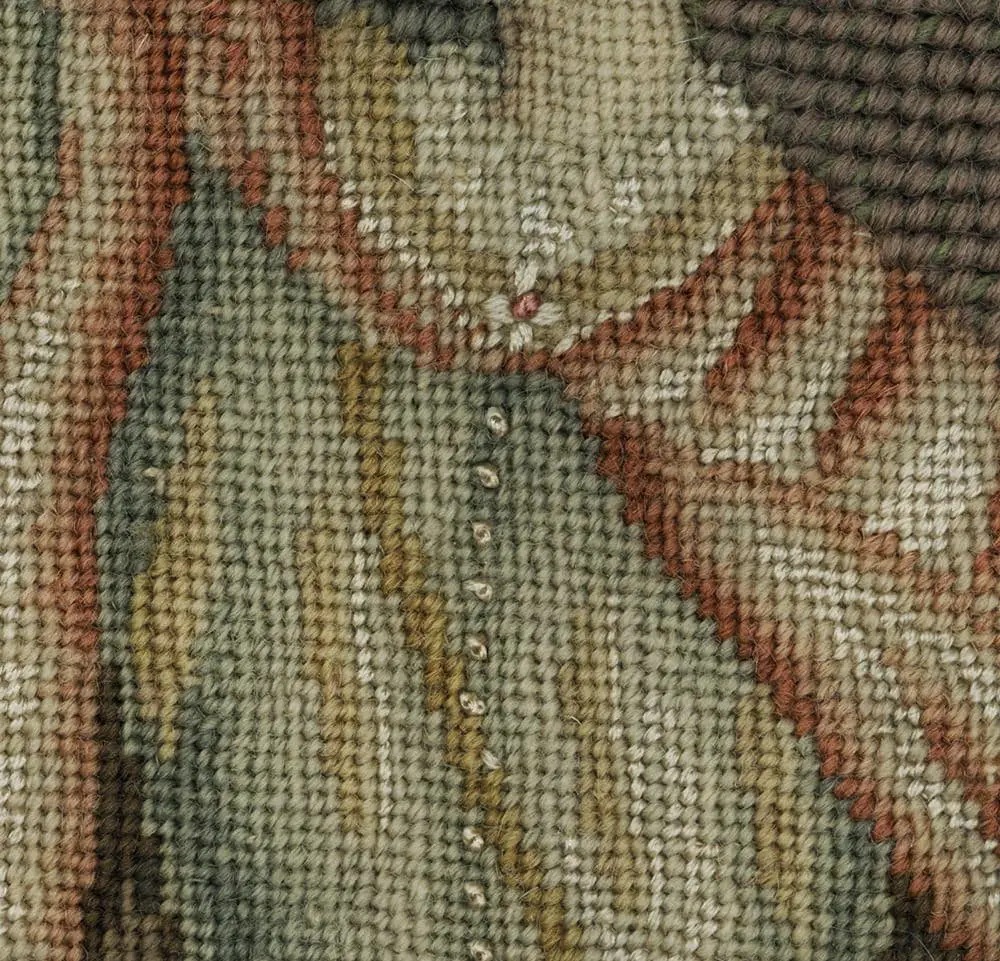
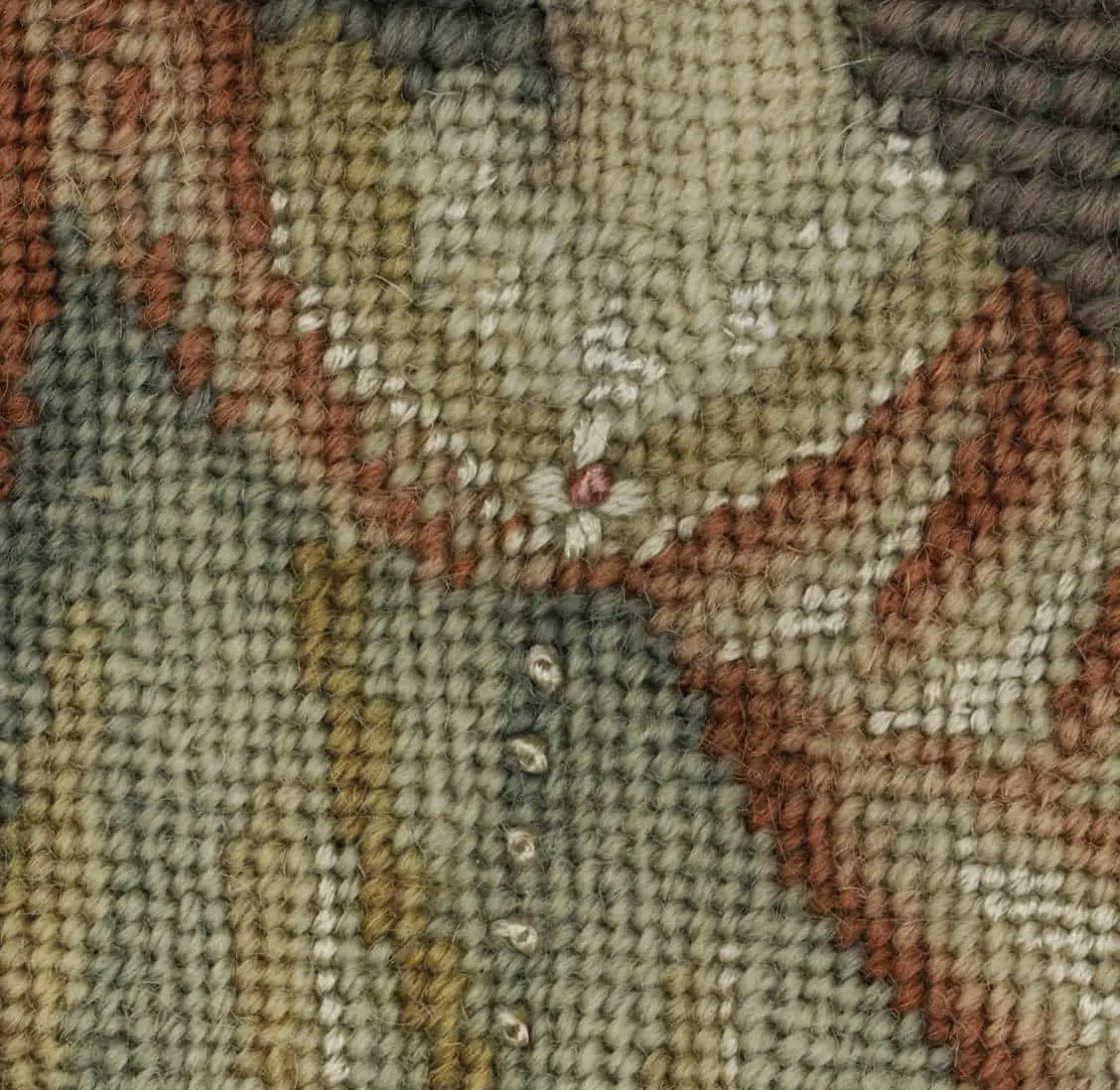
This engaging needlepoint fragment, dating from the 18th to the first quarter of the 19th century (1725–1825), likely originated in Europe or the United States. The composition features a central huntsman or falconer dressed in a period doublet with a striped cape, holding his arm aloft to interact with a bird in flight. He is set against a densely patterned background of stylized forest foliage, accompanied by small animals including a rabbit and a leaping hound.
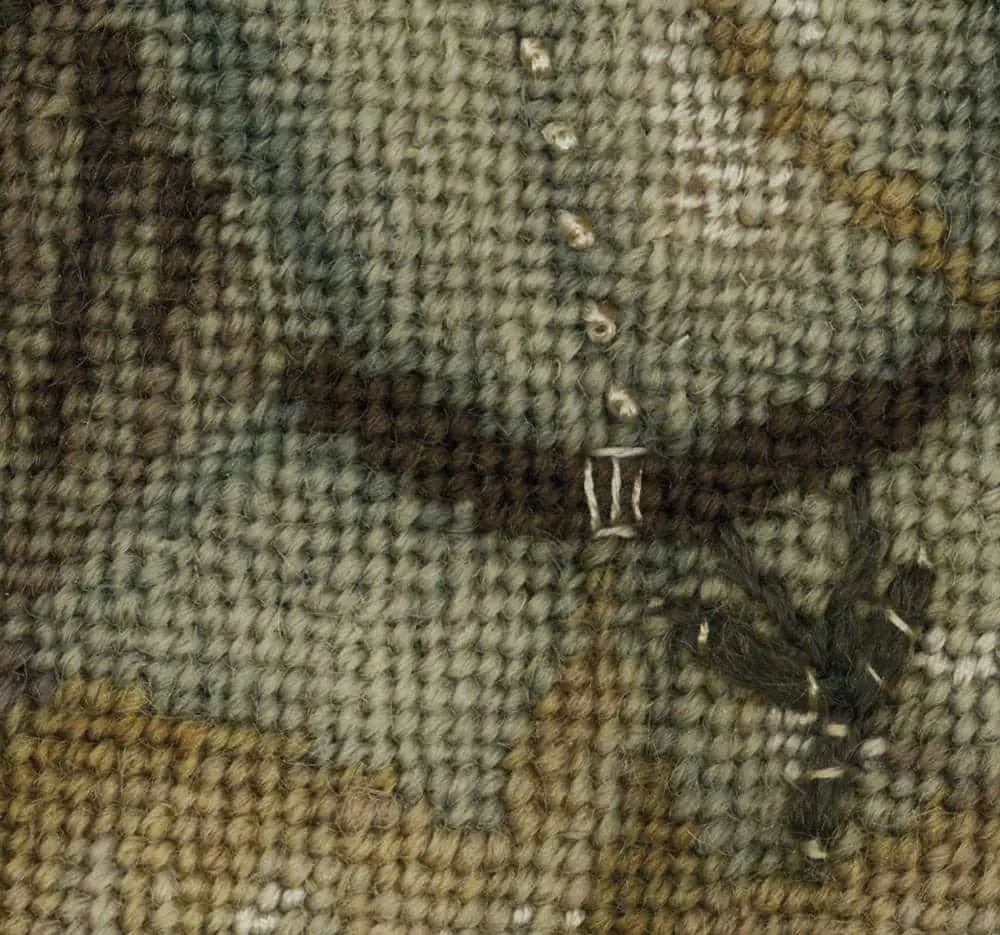
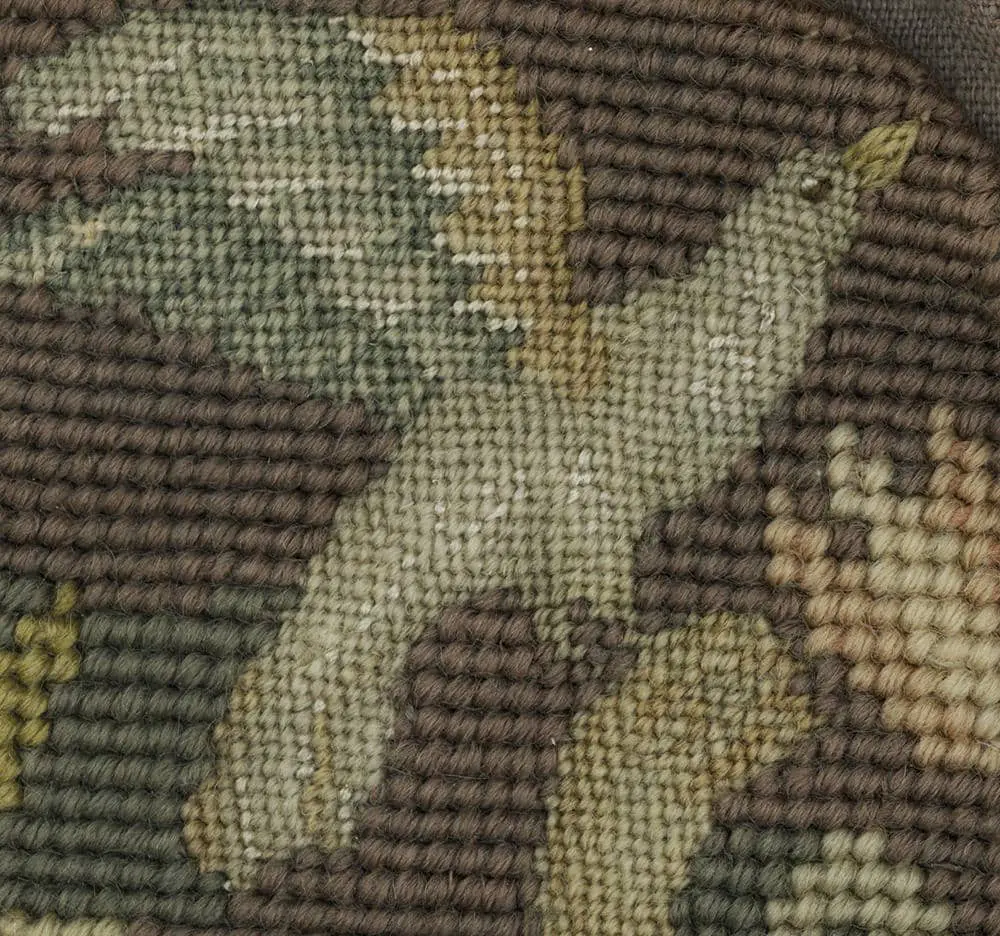
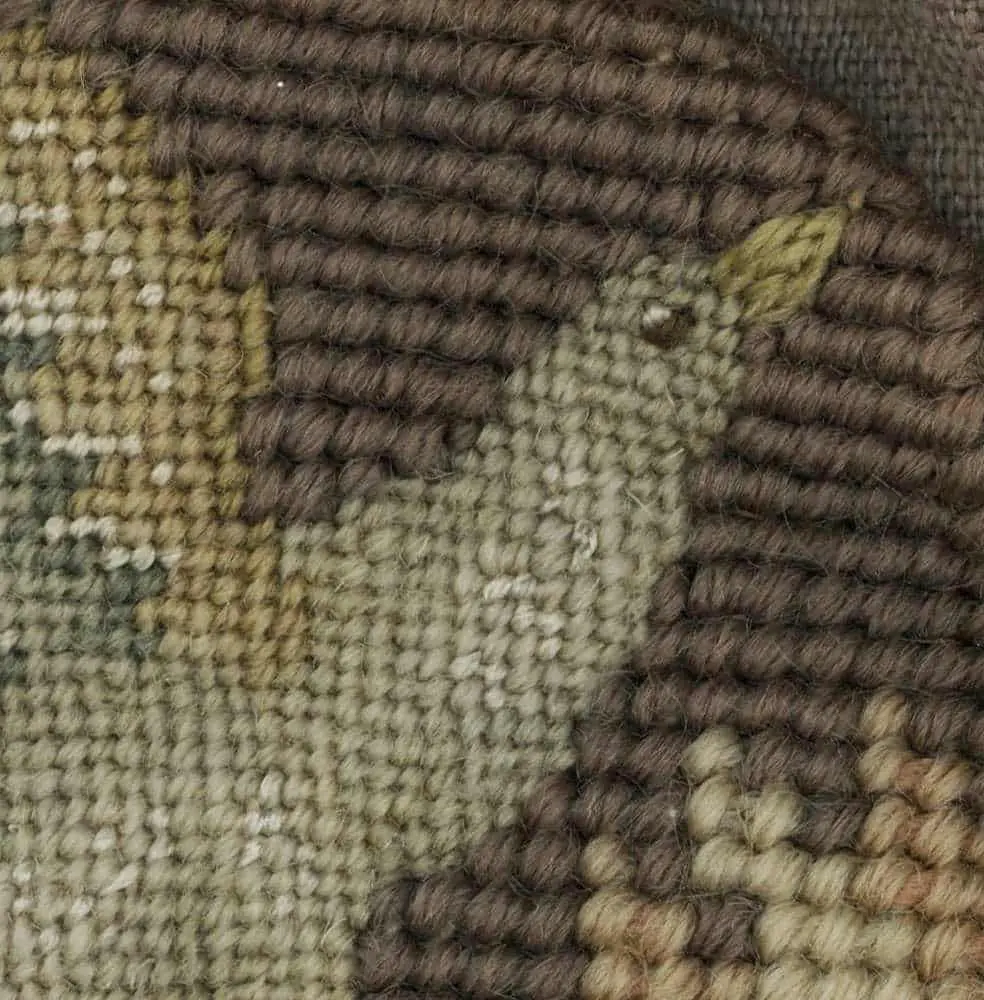
The textile showcases a skillful blend of gros point for the background and finer petitpoint for the figure and floral details. The huntsman exhibits a slightly three-dimensional quality created by the use of shiny silk highlights on his clothing and small, raised buttons. Originally intended as a decorative covering—possibly for the back of a chair—the piece now features an irregular, shaped cut. Measuring 21 inches by 14 inches (53 cm x 36 cm), this fragment remains in good condition, preserving its rich textures and narrative charm.

Payment Options: We primarily accept PayPal for all transactions. Credit and debit cards are not accepted. If you prefer to pay by personal check instead of PayPal, please note this preference in the "Additional comments" field when placing your order.Ordering Process
To receive your PayPal invoice, simply fill out the form.
Shipping Details: We ship all orders to the address associated with your PayPal payment. Please ensure your PayPal shipping address is current and accurate.A phone number is required during checkout, as our shipping carrier may need to contact you regarding delivery questions.Shipping RatesUnited States and Canada: $20International destinations (air mail): $40
