Copyright © 2026 Yorke Antique Textiles
.avif)

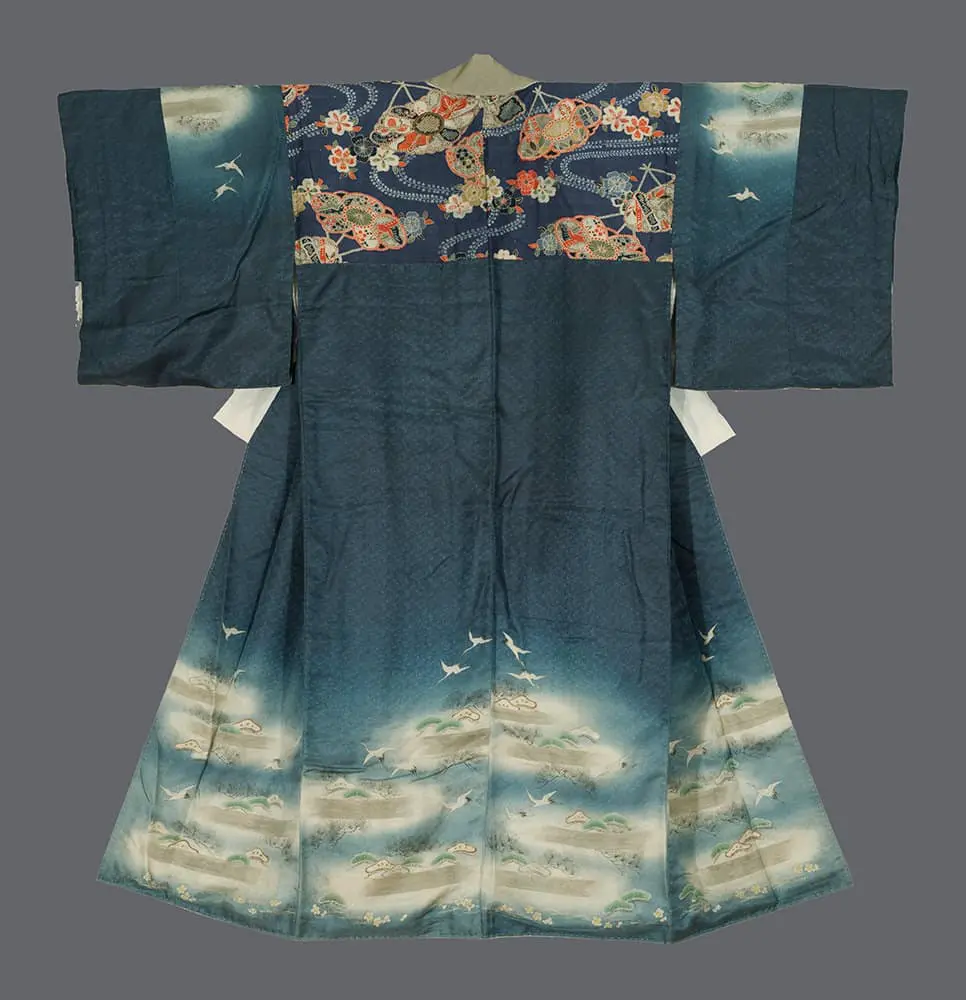


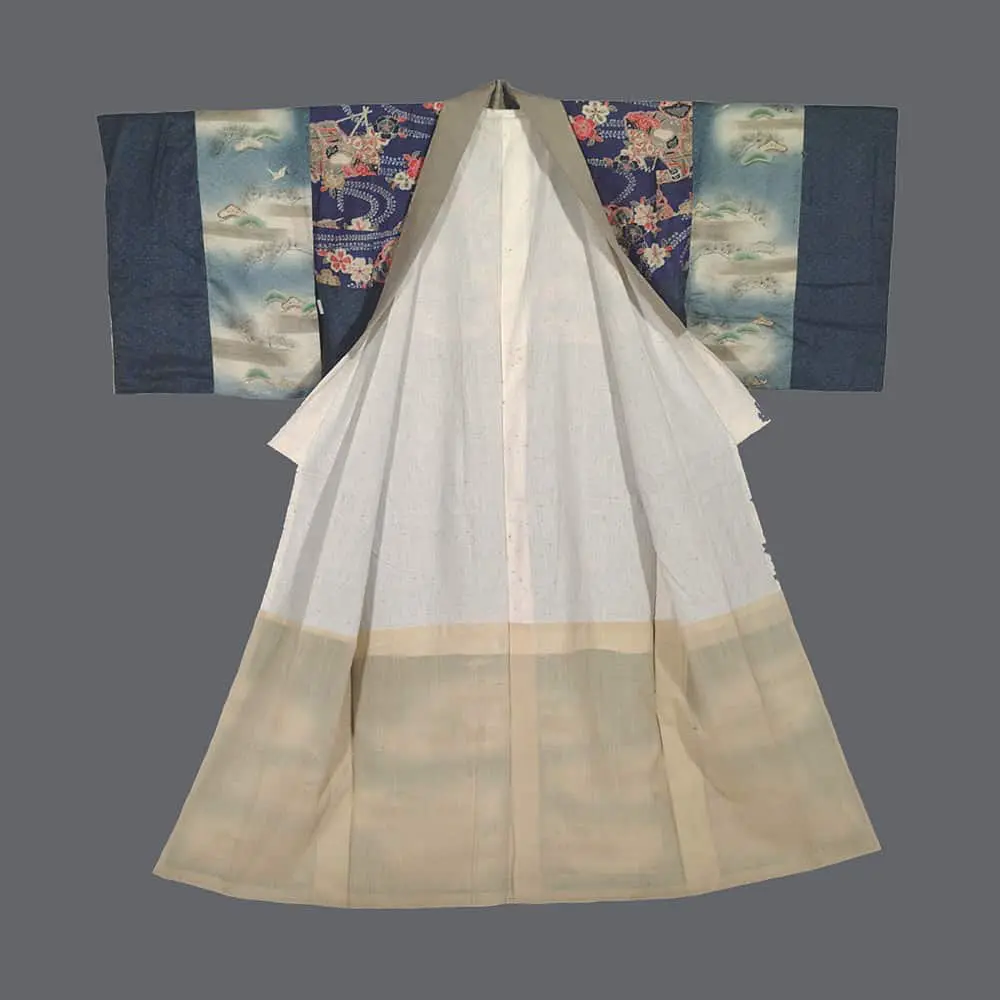



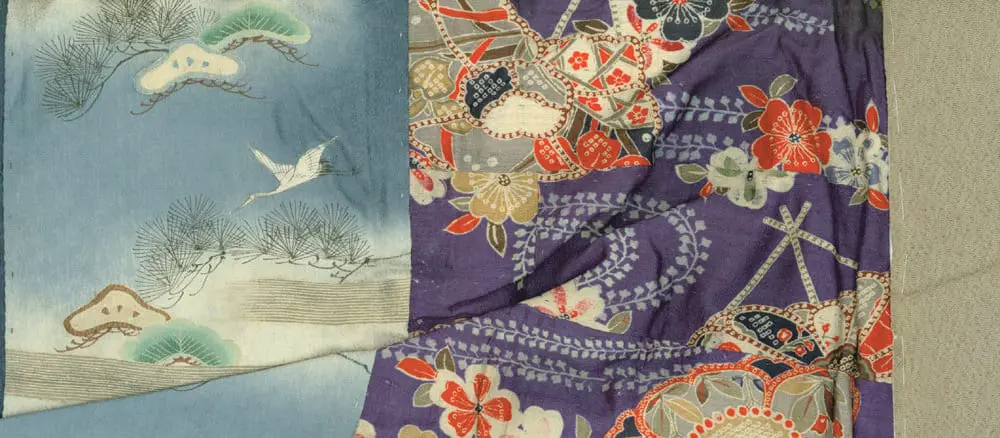
This silk juban is a fascinating example of historical repurposing, featuring a body of 19th-century Meiji era rinzu (damask) silk integrated with later components. The garment utilizes the dounuki construction method, where older, high-quality textiles are pieced together with newer materials to extend their utility. The deep indigo-blue silk serves as a canvas for a serene, misty landscape at the hem and sleeves, populated by flying cranes. These cranes (tsuru) are quintessential Japanese symbols of longevity, fidelity, and good fortune, often depicted in auspicious garments to invoke a long and prosperous life.
The upper back section features a contrasting, densely patterned yoke filled with vibrant floral motifs, likely executed through a combination of hand-painting and fine embroidery. The two large mon (family crests) on the front emphasize the garment's role in documenting lineage and providing spiritual protection to the wearer. The juxtaposition of the misty, atmospheric landscape with the structured, repetitive damask weave of the rinzu creates a sophisticated interplay between literal representation and geometric texture. This undergarment reflects a cultural ethos of valuing precious materials while showcasing the enduring elegance of Meiji-era artistry.
It's in excellent condition, measuring 49 inches (124 cm) from sleeve-end to sleeve-end and standing at a height of 49 inches (124 cm).

Payment Options: We primarily accept PayPal for all transactions. Credit and debit cards are not accepted. If you prefer to pay by personal check instead of PayPal, please note this preference in the "Additional comments" field when placing your order.Ordering Process
To receive your PayPal invoice, simply fill out the form.
Shipping Details: We ship all orders to the address associated with your PayPal payment. Please ensure your PayPal shipping address is current and accurate.A phone number is required during checkout, as our shipping carrier may need to contact you regarding delivery questions.Shipping RatesUnited States and Canada: $20International destinations (air mail): $40
