Copyright © 2026 Yorke Antique Textiles
.avif)

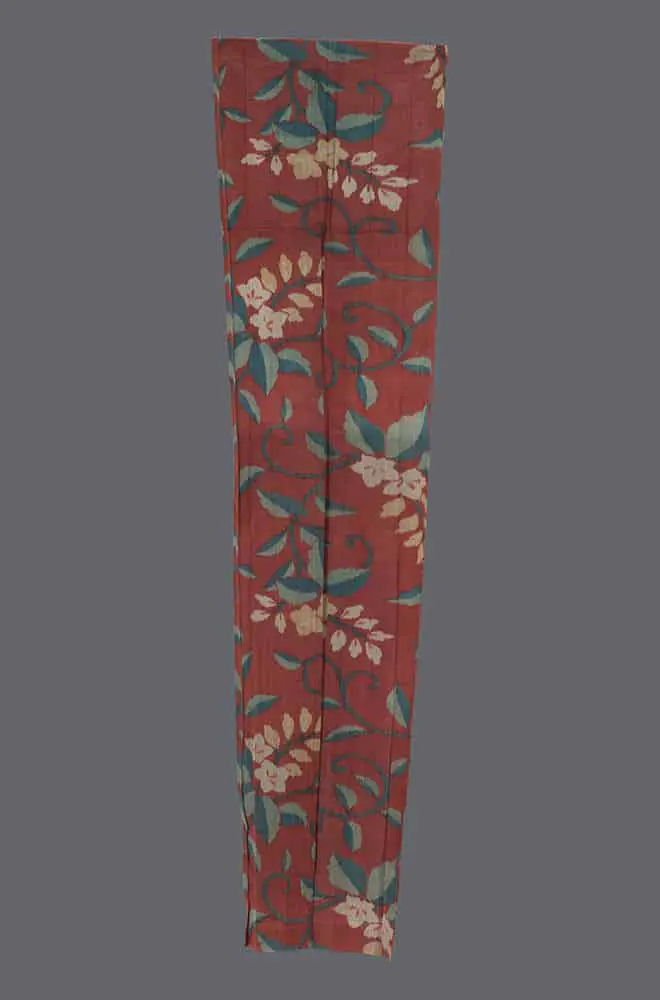

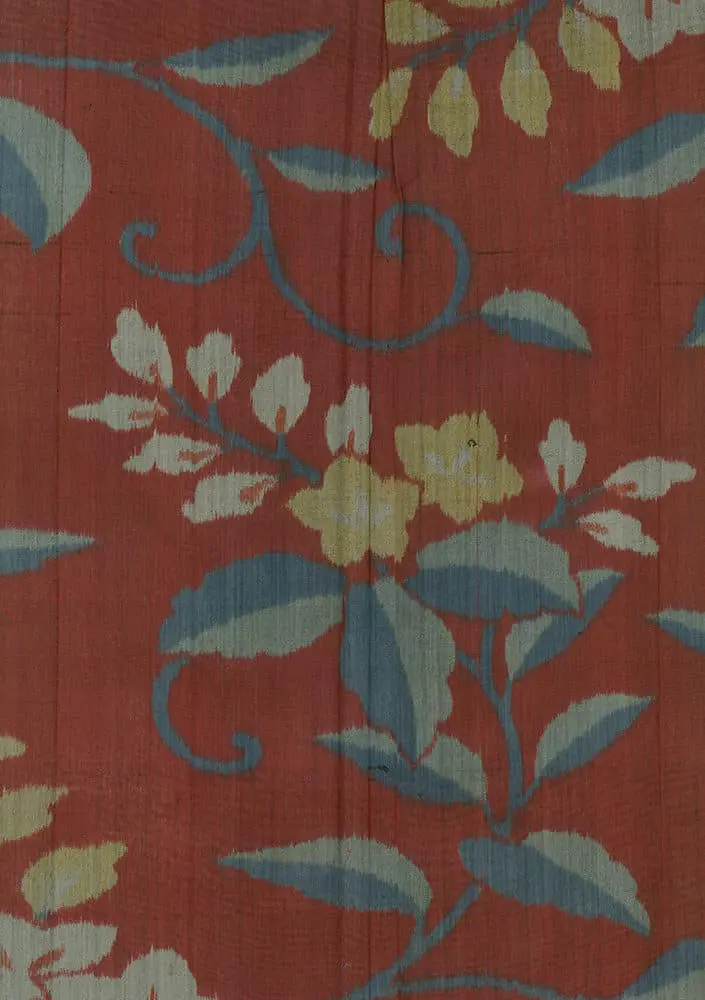

This striking silk panel originates from Japan and dates to the early Showa period (1926–1940). Measuring 14 inches by 54 inches (35.6 cm x 137.2 cm), the textile was originally part of a larger kimono and is crafted from meisen silk, a fabric celebrated for its bold colors and slightly blurred patterns achieved through the ikat-style dyeing of threads before weaving. The panel is in very good condition, though it retains minor imperfections consistent with its history as a functional garment.
The visual narrative features a vibrant, rhythmic design of trailing wisteria (fuji) vines set against a deep terracotta or brick-red ground. In Japanese culture, wisteria is a deeply symbolic plant associated with love, longevity, and the transience of spring. The motif is rendered with a modern, almost graphic sensibility characteristic of the early 20th century, utilizing cool teal-blue leaves and cream-colored blossoms that "pop" against the warm background. The slightly jagged edges of the floral patterns are a hallmark of the kasuri (ikat) technique used in meisen production, which gave these textiles a "vibrating" quality that appealed to the cosmopolitan women of the era.

Payment Options: We primarily accept PayPal for all transactions. Credit and debit cards are not accepted. If you prefer to pay by personal check instead of PayPal, please note this preference in the "Additional comments" field when placing your order.Ordering Process
To receive your PayPal invoice, simply fill out the form.
Shipping Details: We ship all orders to the address associated with your PayPal payment. Please ensure your PayPal shipping address is current and accurate.A phone number is required during checkout, as our shipping carrier may need to contact you regarding delivery questions.Shipping RatesUnited States and Canada: $20International destinations (air mail): $40
