Copyright © 2026 Yorke Antique Textiles
.avif)

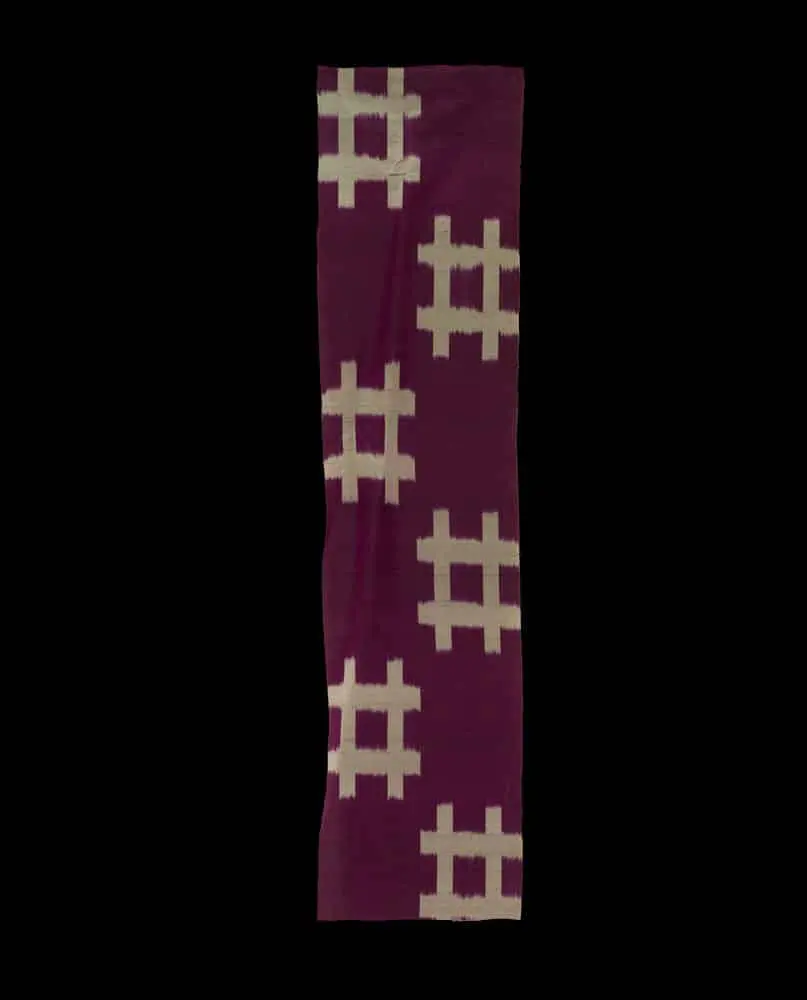
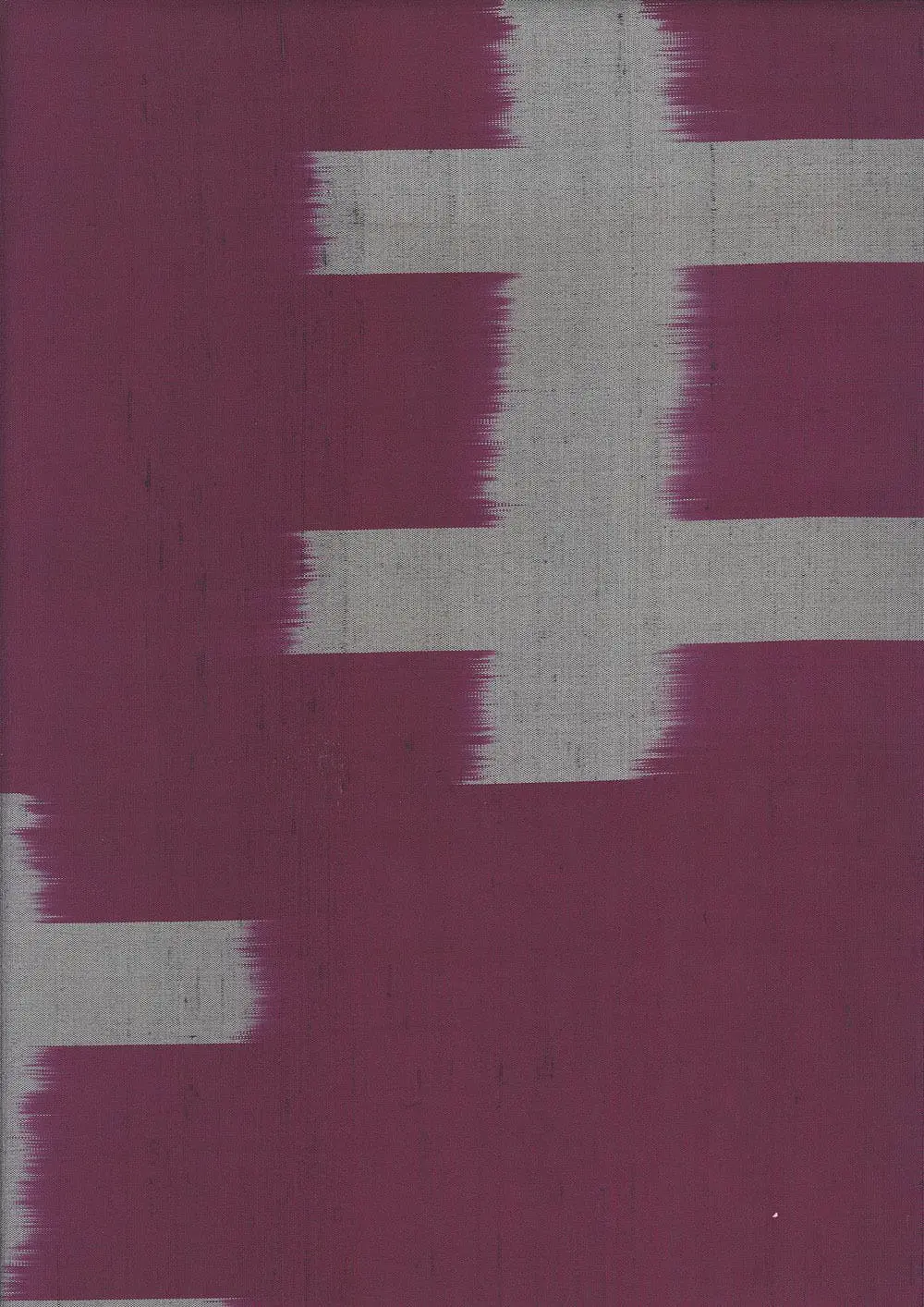
This distinctive textile originates from Japan’s Early Showa period (1926–1940) and is a scholarly example of the bold, graphic style popularized by meisen silk. Measuring 13.5 inches by 54 inches (34 cm x 137 cm), the panel features a deep, saturated plum or aubergine field that provides a dramatic contrast for the oversized geometric patterns. The piece remains in very good condition, showcasing the durable yet supple nature of meisen weave, which was often favored for its modern and accessible aesthetic in pre-war Japan.
The visual narrative is defined by prominent, large-scale igeta (well-frame) or "hash" motifs rendered in a soft cream tone. These symbols, traditionally representing a well-crib, were reimagined during the Early Showa era with exaggerated proportions and slightly blurred edges, a hallmark of the kasuri (ikat) dyeing process used in meisen production. The rhythmic, staggered arrangement of these blocks creates a strong vertical movement, reflecting the period's interest in combining ancient folk-art symbols with contemporary, abstract sensibilities.

Payment Options: We primarily accept PayPal for all transactions. Credit and debit cards are not accepted. If you prefer to pay by personal check instead of PayPal, please note this preference in the "Additional comments" field when placing your order.Ordering Process
To receive your PayPal invoice, simply fill out the form.
Shipping Details: We ship all orders to the address associated with your PayPal payment. Please ensure your PayPal shipping address is current and accurate.A phone number is required during checkout, as our shipping carrier may need to contact you regarding delivery questions.Shipping RatesUnited States and Canada: $20International destinations (air mail): $40
