Copyright © 2026 Yorke Antique Textiles
.avif)

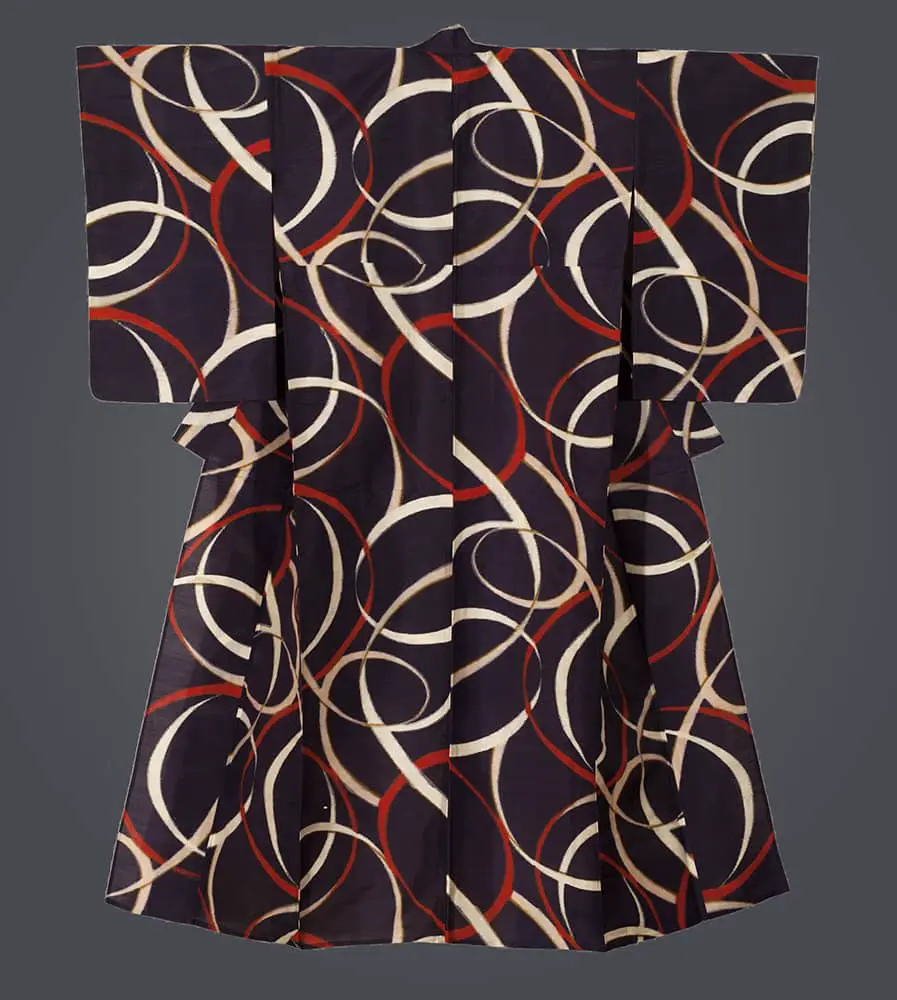
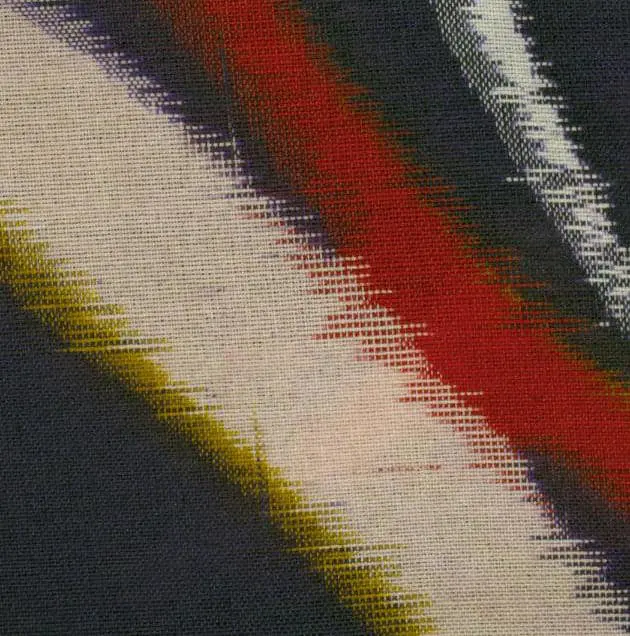
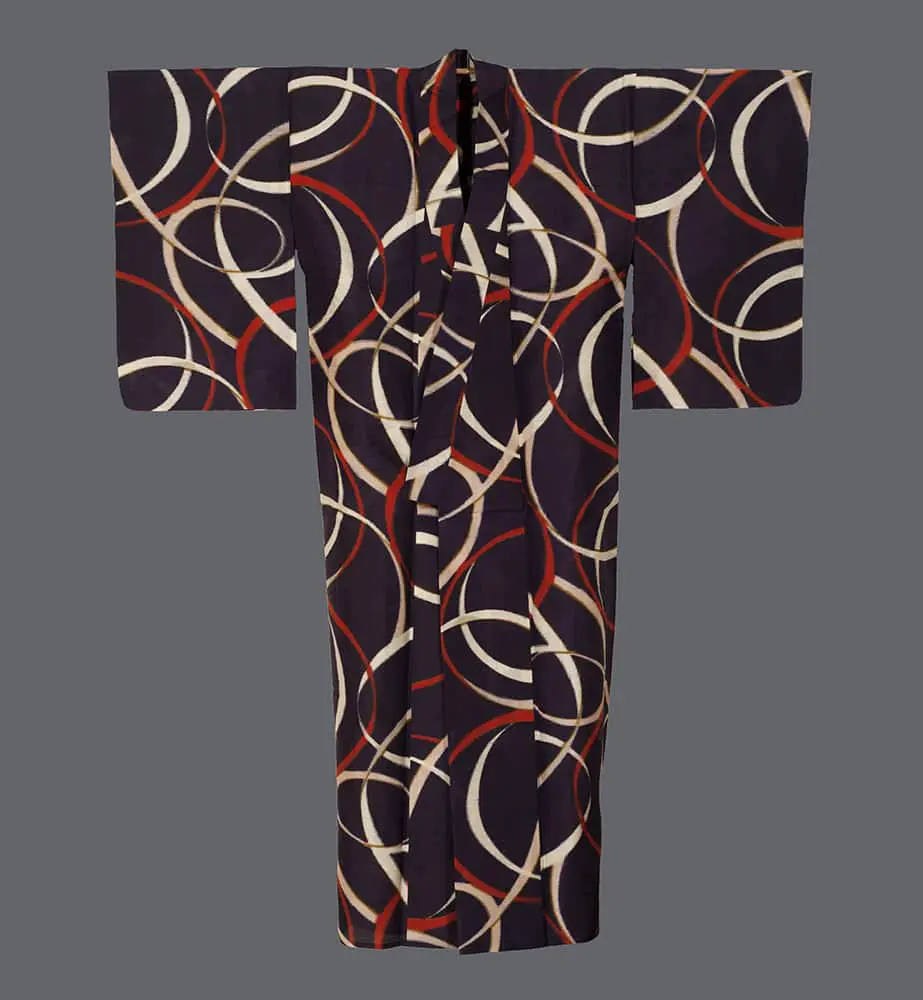
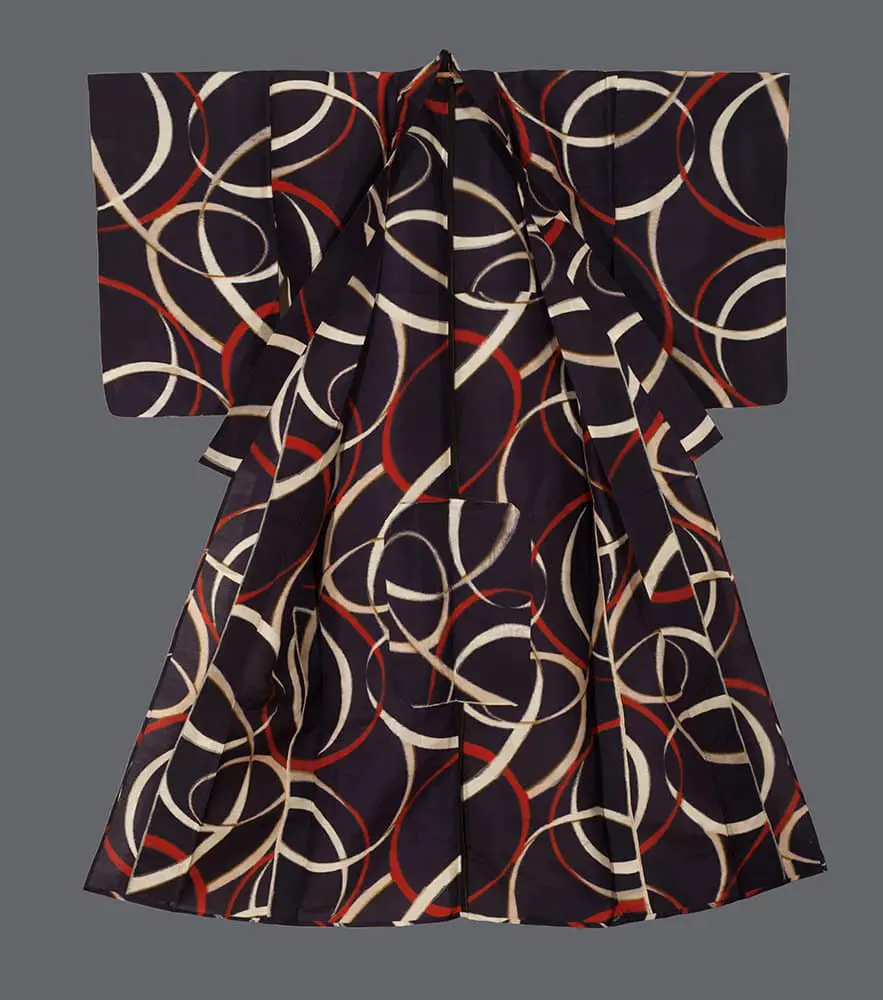
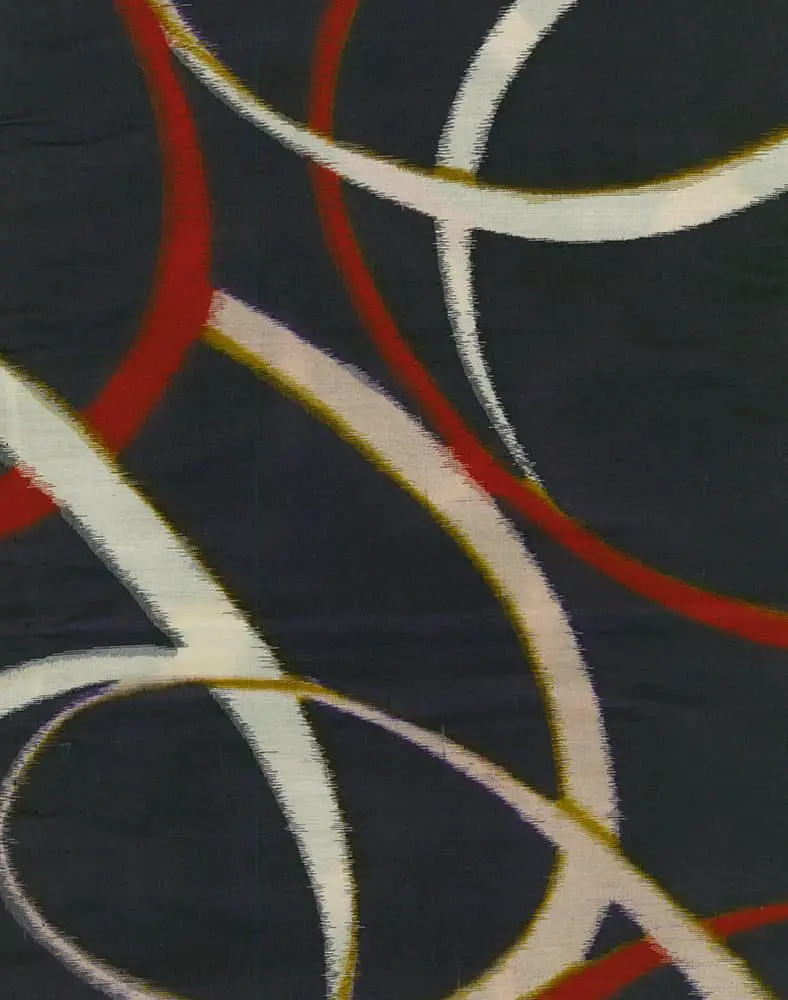
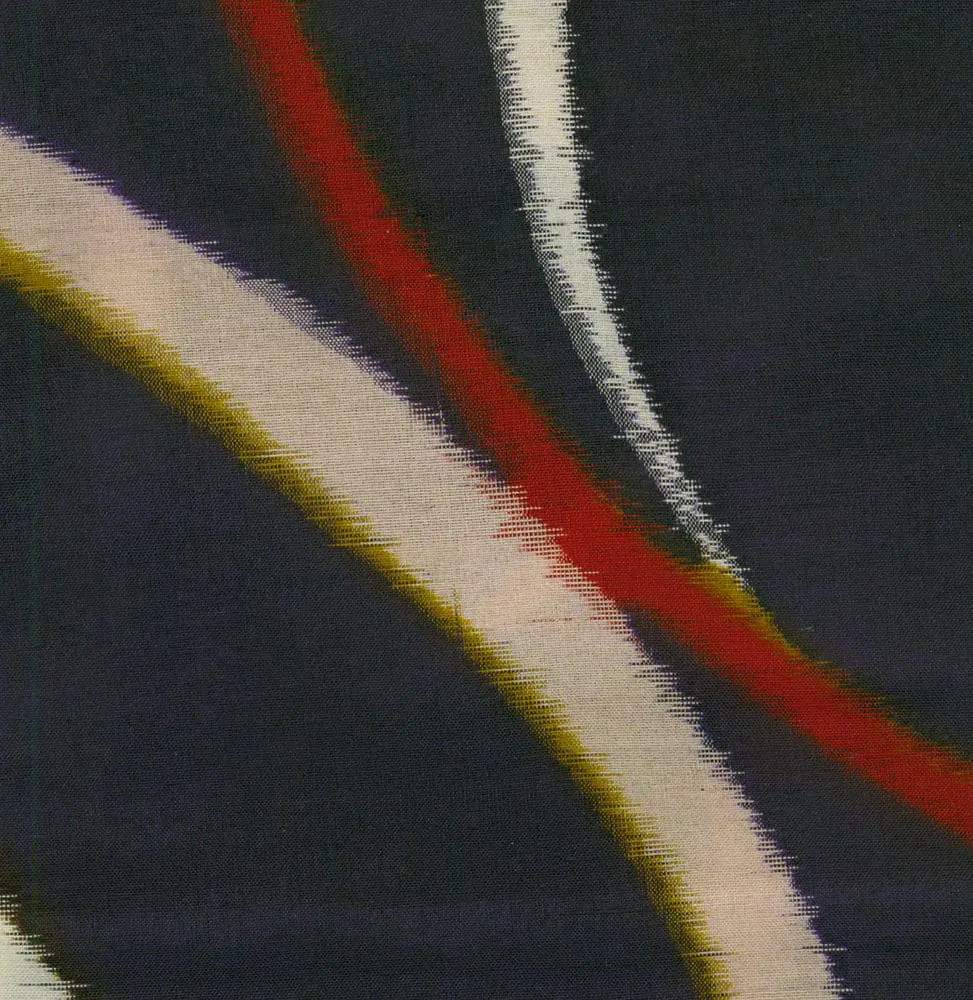
This striking 1920–1940 artwork showcases the bold and experimental aesthetic characteristic of meisen silk, a fabric that revolutionized affordable, fashionable kimono wear in the early 20th century. The textile features a dynamic, all‑over pattern of intersecting circles and swirling loops set against a deep, dark aubergine or midnight background. The motif is rendered in high‑contrast strokes of cream and crimson red, creating a sense of three‑dimensional depth and rhythmic movement. The lines vary in thickness, resembling calligraphic brushstrokes or floating ribbons, which lends the design an organic, fluid quality despite its geometric basis.
Artistically, this design reflects the modan sensibilities of prewar Japan, a period when urban consumers embraced modern art, new technologies, and Western‑influenced visual culture. The energetic overlapping of rings evokes the dynamism of early abstract art, Futurism, and the geometric playfulness seen in interwar European design movements. Rather than drawing on classical nature motifs, the pattern expresses speed, motion, and modernity—qualities celebrated in Japan’s rapidly industrializing cities.
While the circle, or enso, is a traditional symbol of enlightenment, infinity, and unity in Japanese culture, its application here is reimagined through a modernist lens. The red and white palette, loosely echoing the auspicious kohaku combination, suggests vitality and sophistication, making this a statement piece for a fashionable woman of the interwar period.
Its measurements span 48 inches (122 cm) from sleeve-end to sleeve-end and stand at 59 inches (150 cm) in height.
This artwork is featured on page 294 of Art Kimono: Aesthetic Revelations of Japan, 1905-1960. This book, published by Yorke Antique Textiles, can be previewed or purchased on our website here.


Payment Options: We primarily accept PayPal for all transactions. Credit and debit cards are not accepted. If you prefer to pay by personal check instead of PayPal, please note this preference in the "Additional comments" field when placing your order.Ordering Process
To receive your PayPal invoice, simply fill out the form.
Shipping Details: We ship all orders to the address associated with your PayPal payment. Please ensure your PayPal shipping address is current and accurate.A phone number is required during checkout, as our shipping carrier may need to contact you regarding delivery questions.Shipping RatesUnited States and Canada: $20International destinations (air mail): $40
