Copyright © 2026 Yorke Antique Textiles
.avif)

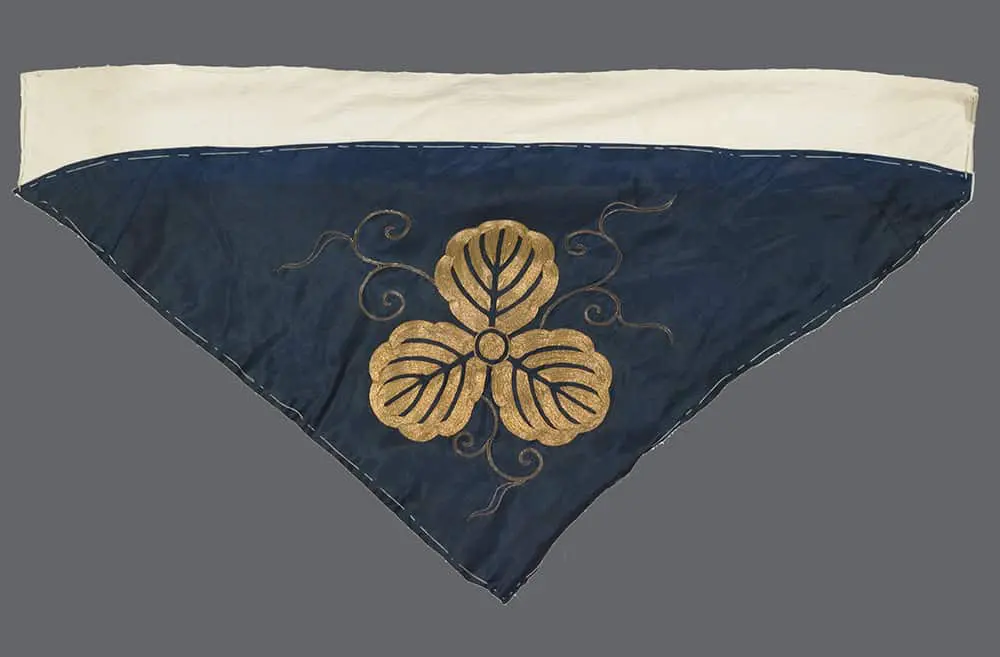
This elegant shushu (satin-weave) silk uchishiki (Buddhist altar cloth), dating to the Meiji period (1868–1912), features a powerful and expertly executed central motif. Measuring 32 inches by 19 inches (81 cm x 48 cm), the cloth is composed of a deep indigo-blue silk field topped with a broad band of cream-colored silk.
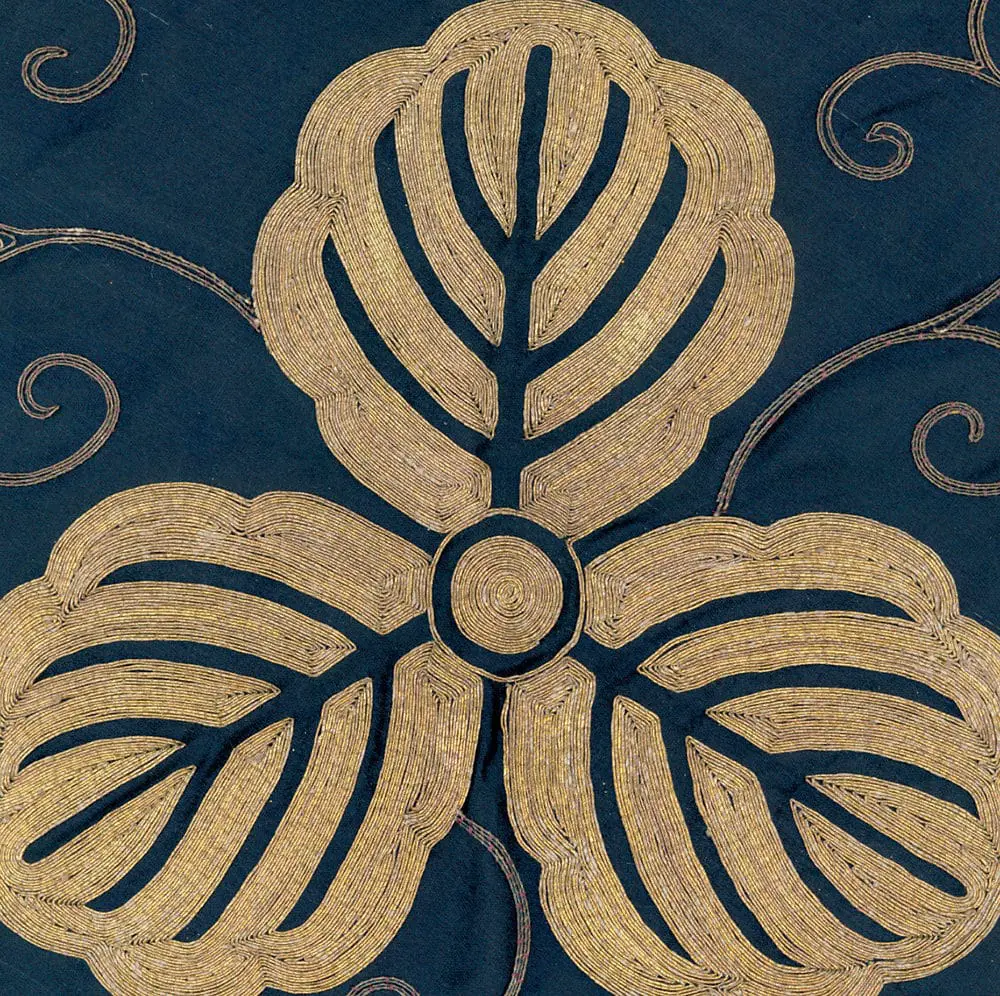
The central artwork is an intricate oak leaf family crest (kashiwa-mon), realized through the technique of metallic couching. In this process, gold-wrapped threads are laid onto the surface and secured with tiny silk stitches, creating a high-relief, shimmering effect. The design features three primary oak leaves radiating from a central point, surrounded by delicate, swirling vine-like tendrils.
Historically, the oak leaf carries deep spiritual weight in Japan; because oak leaves were used as vessels for food offerings to the gods in ancient times, the leaf became a symbol of reverence. It is a significant emblem for several major Shinto shrines and was a favored crest among the warrior caste and the Matsura family of Kyushu. The piece is in very good condition, though it exhibits a few small stains and some loose stitching consistent with its age and ritual use.

Payment Options: We primarily accept PayPal for all transactions. Credit and debit cards are not accepted. If you prefer to pay by personal check instead of PayPal, please note this preference in the "Additional comments" field when placing your order.Ordering Process
To receive your PayPal invoice, simply fill out the form.
Shipping Details: We ship all orders to the address associated with your PayPal payment. Please ensure your PayPal shipping address is current and accurate.A phone number is required during checkout, as our shipping carrier may need to contact you regarding delivery questions.Shipping RatesUnited States and Canada: $20International destinations (air mail): $40
