Copyright © 2026 Yorke Antique Textiles
.avif)

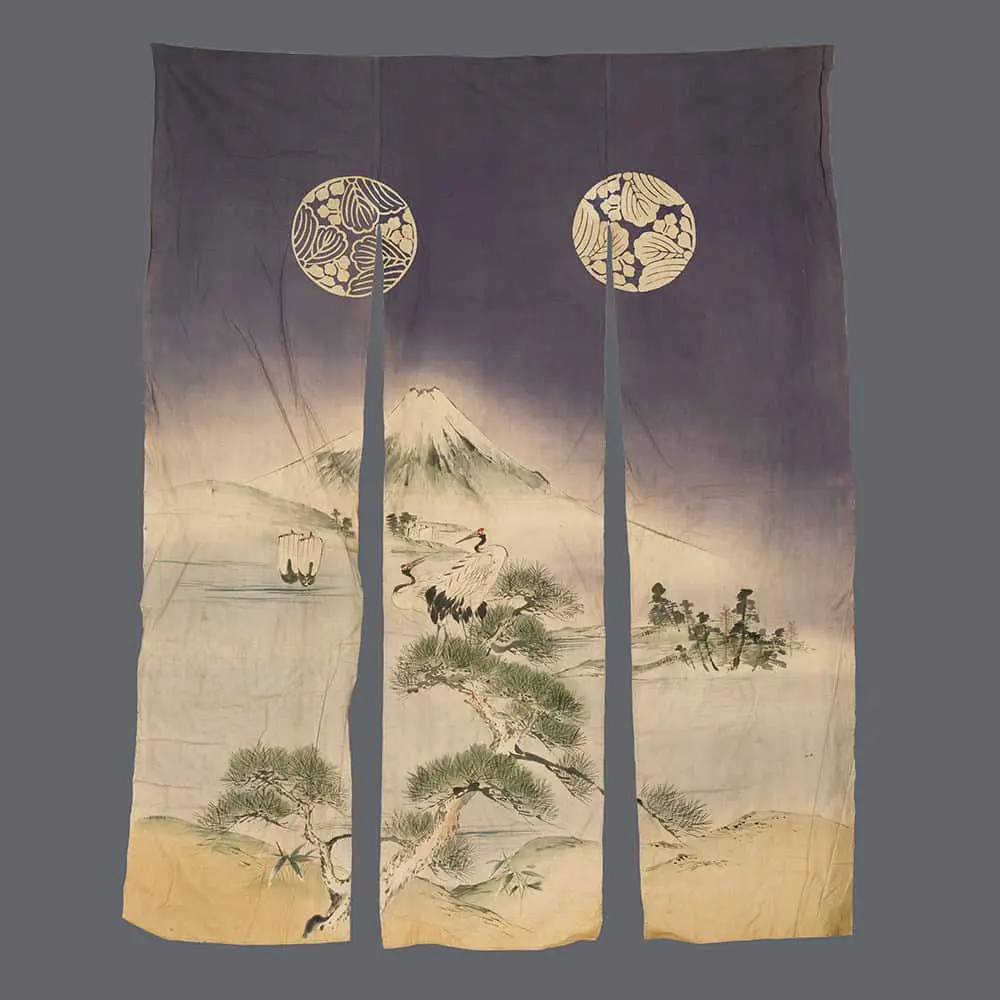
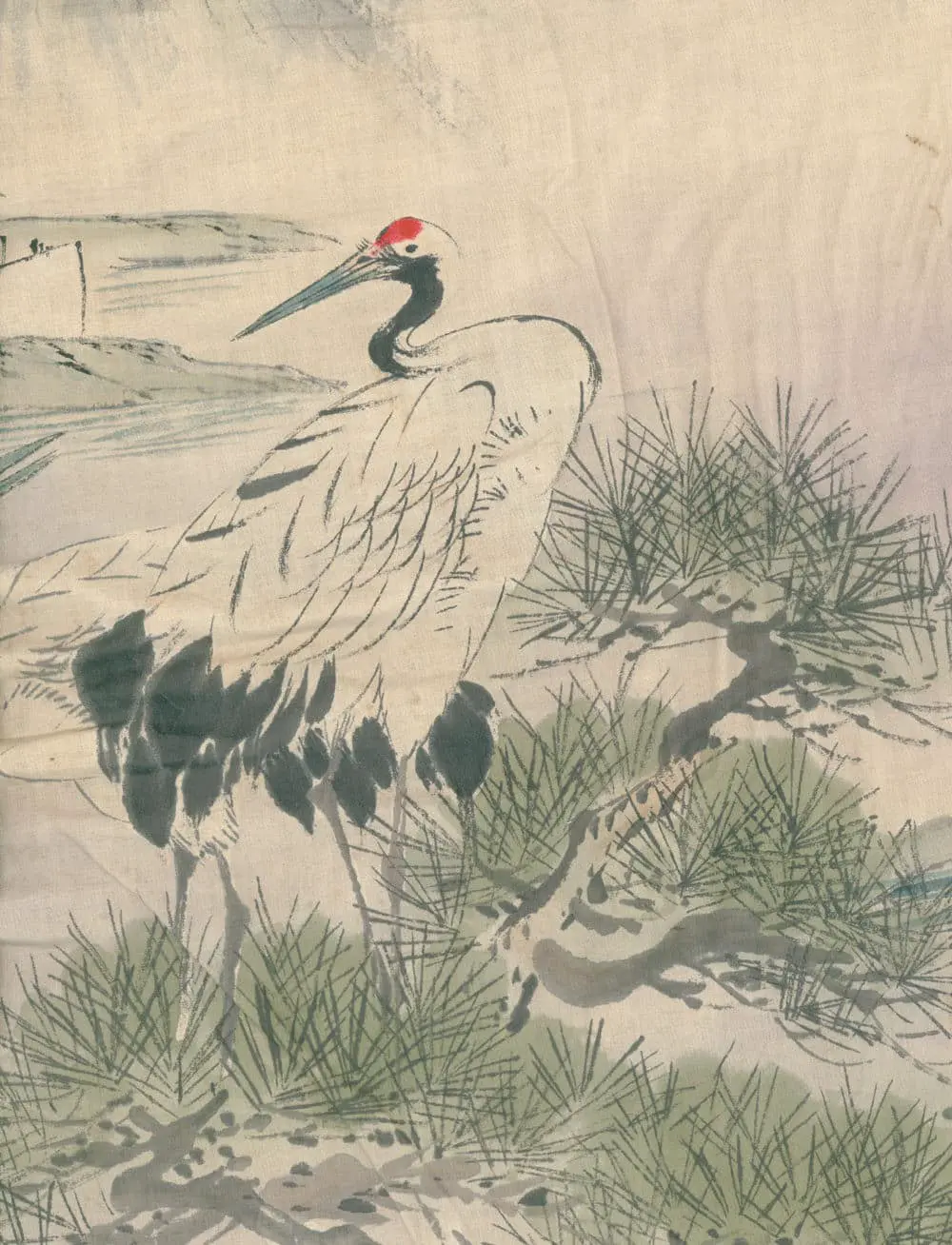
This monumental cotton Kaga noren, a split doorway curtain dating from the late Edo to early Meiji period (1840–1900), is a profound expression of Japanese wedding traditions. Measuring 51 inches by 66 inches (130 cm x 168 cm), the three-panel curtain features a masterful sumi-e (ink wash) painting of Mount Fuji rising above a coastal landscape.
The iconography is rich with auspicious meaning: a mandarin crane perched upon a pine tree symbolizes longevity and a prosperous life together. Mount Fuji represents the "state of perfect meditation" (zenjo) and is revered as the home of the Buddha of All-Illuminating Wisdom. At the top of the outer panels, two large, resist-dyed family crests (mon) represent the groom's lineage. Traditionally, this curtain was hung at the entrance of the groom's family Buddhist room; the bride's act of bowing as she passed through symbolized her transition into her new family and her obedience to both Buddha and her husband's household.

Payment Options: We primarily accept PayPal for all transactions. Credit and debit cards are not accepted. If you prefer to pay by personal check instead of PayPal, please note this preference in the "Additional comments" field when placing your order.Ordering Process
To receive your PayPal invoice, simply fill out the form.
Shipping Details: We ship all orders to the address associated with your PayPal payment. Please ensure your PayPal shipping address is current and accurate.A phone number is required during checkout, as our shipping carrier may need to contact you regarding delivery questions.Shipping RatesUnited States and Canada: $20International destinations (air mail): $40
