Copyright © 2026 Yorke Antique Textiles
.avif)


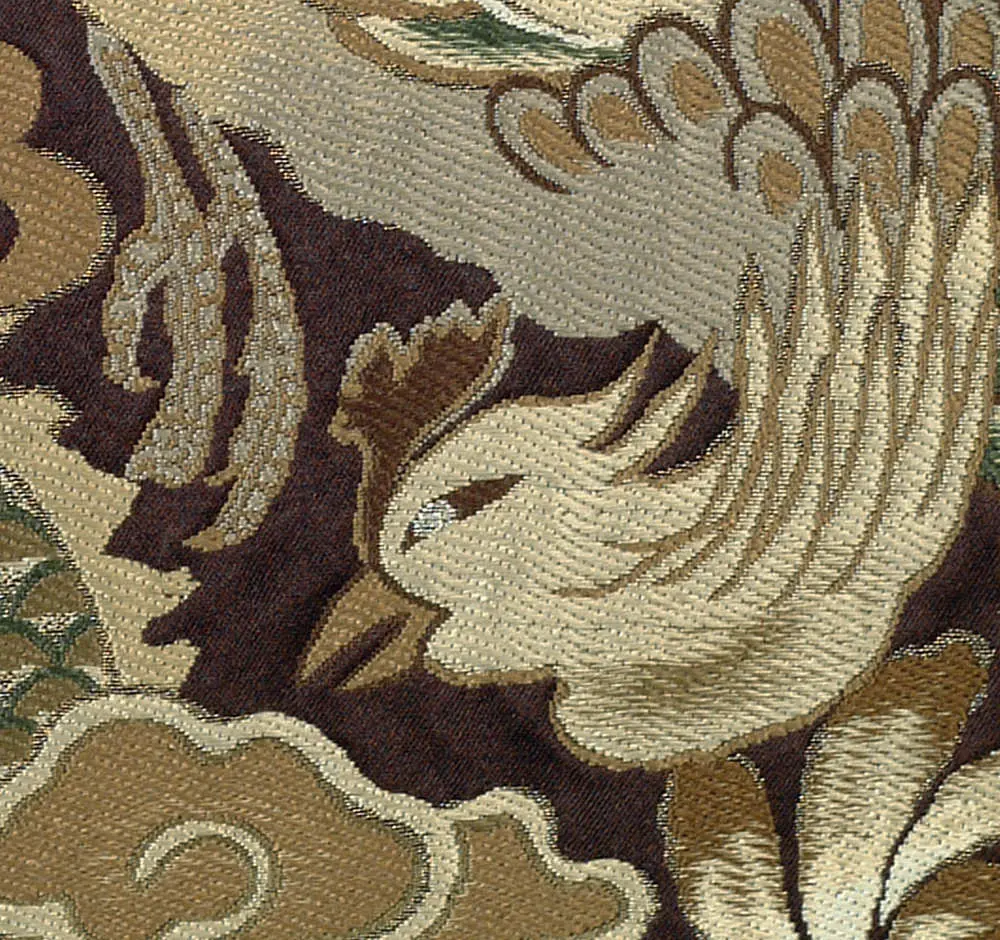
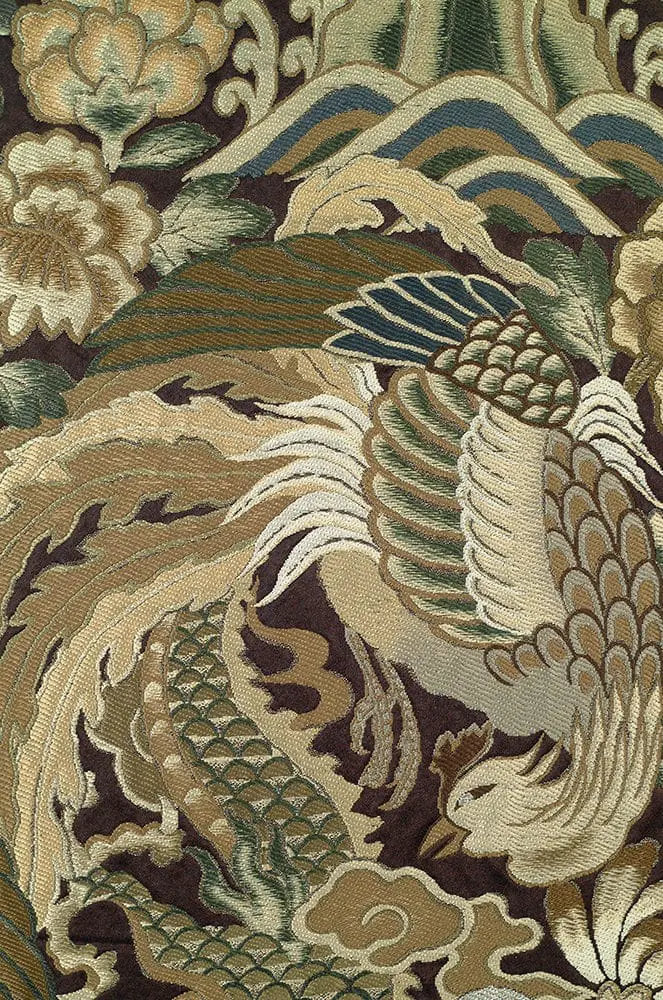
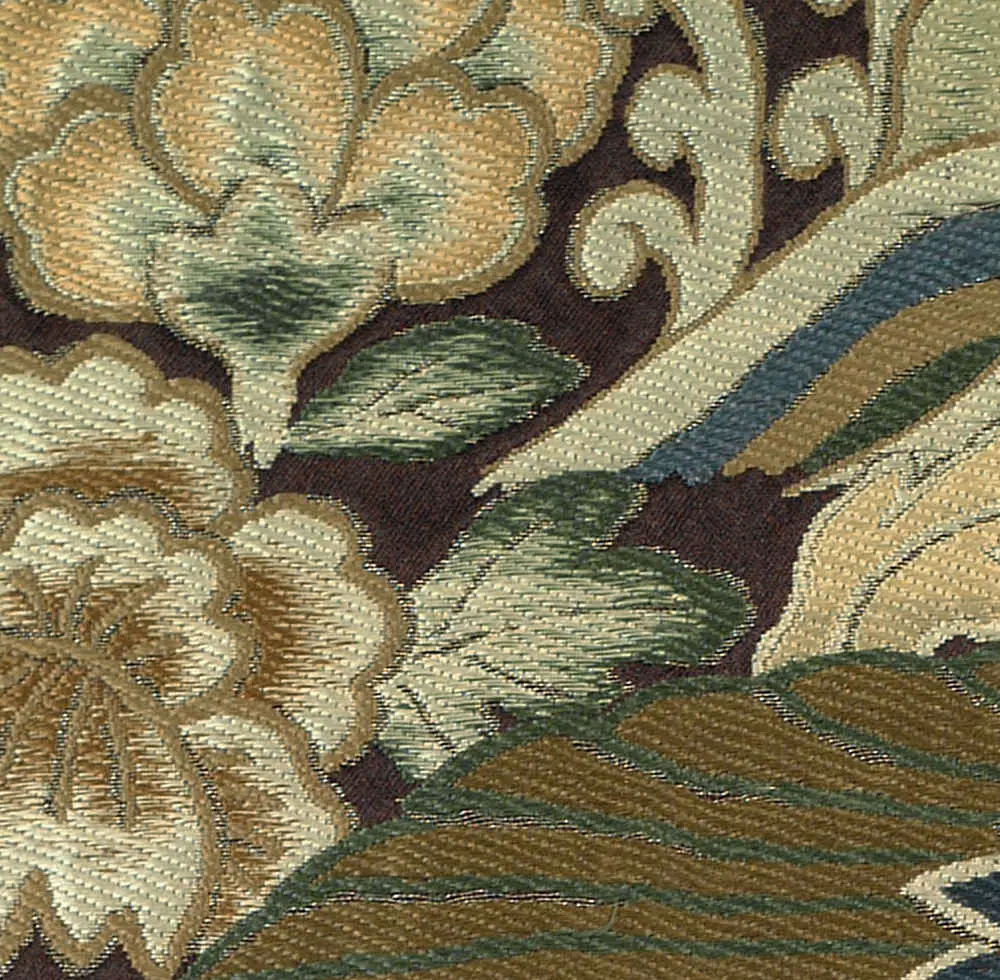

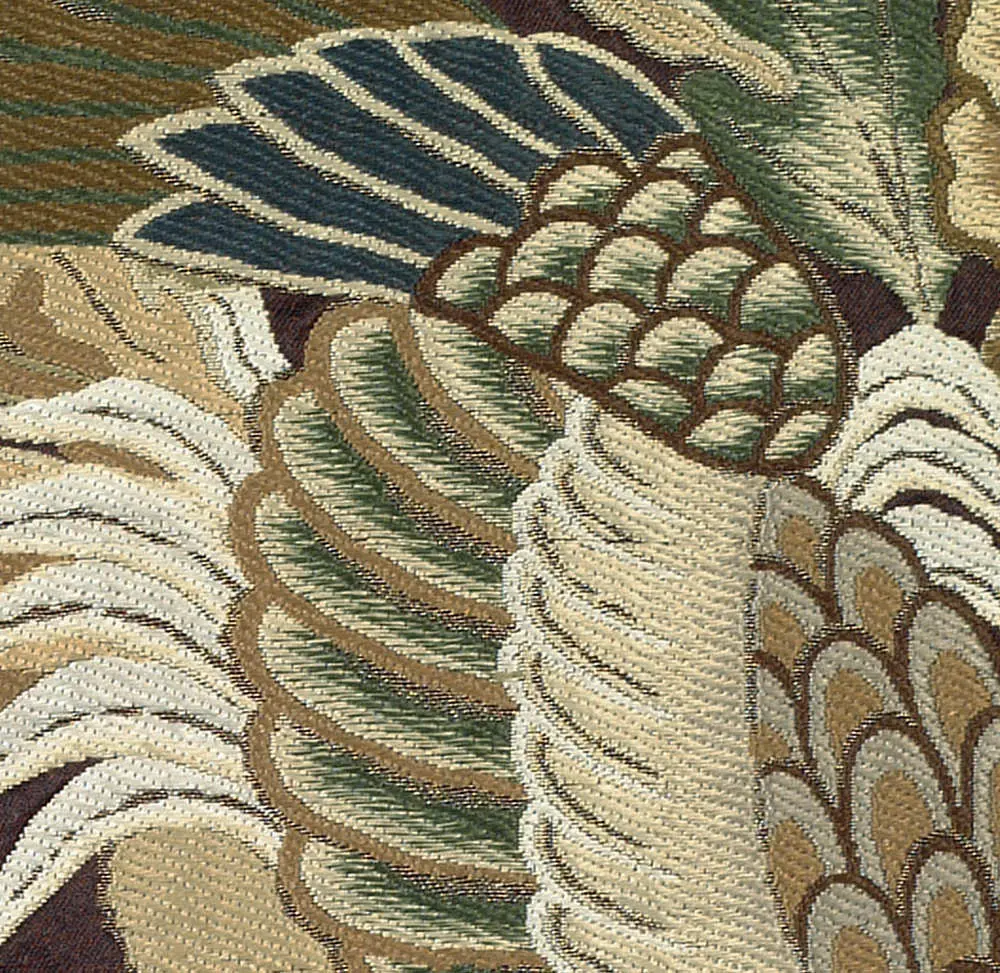
This impeccable formal obi, dating to the early to mid-Meiji period (1868–1900), is a masterpiece of Japanese textile weaving. Measuring 156 inches by 12.5 inches (396 cm x 31.7 cm) when folded, the garment features dense, intricate silk brocade work on both sides, utilizing the highest quality silk threads. The complex pattern is a continuous landscape of mythical power, depicting green and gold dragons weaving through stylized clouds and auspicious phoenixes (hō-ō) with long, trailing tail feathers. These primary figures are interspersed with large, blooming chrysanthemums and sacred mountains rising from scrolling waves.
The pairing of the dragon and phoenix is one of the most significant motifs in East Asian iconography, representing the ultimate balance of Yin and Yang. In a Japanese context, these creatures are deeply associated with the Imperial family—the dragon symbolizing the Emperor and the phoenix representing the Empress. Their union signifies success, enlightenment, and a harmonious partnership. Consequently, such an obi would have been worn at prestigious wedding festivities, where the motif serves as a powerful blessing for a marriage characterized by luck, love, and financial prosperity.

Payment Options: We primarily accept PayPal for all transactions. Credit and debit cards are not accepted. If you prefer to pay by personal check instead of PayPal, please note this preference in the "Additional comments" field when placing your order.Ordering Process
To receive your PayPal invoice, simply fill out the form.
Shipping Details: We ship all orders to the address associated with your PayPal payment. Please ensure your PayPal shipping address is current and accurate.A phone number is required during checkout, as our shipping carrier may need to contact you regarding delivery questions.Shipping RatesUnited States and Canada: $20International destinations (air mail): $40
