Copyright © 2026 Yorke Antique Textiles
.avif)

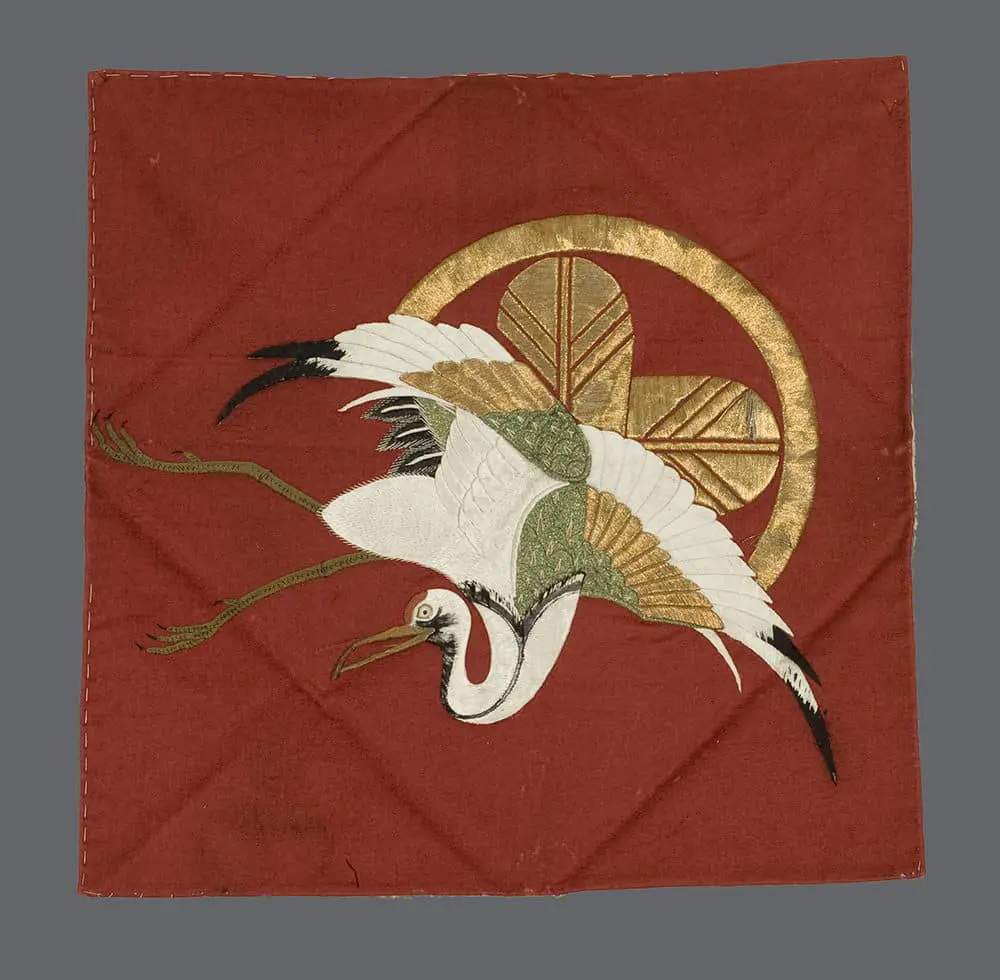
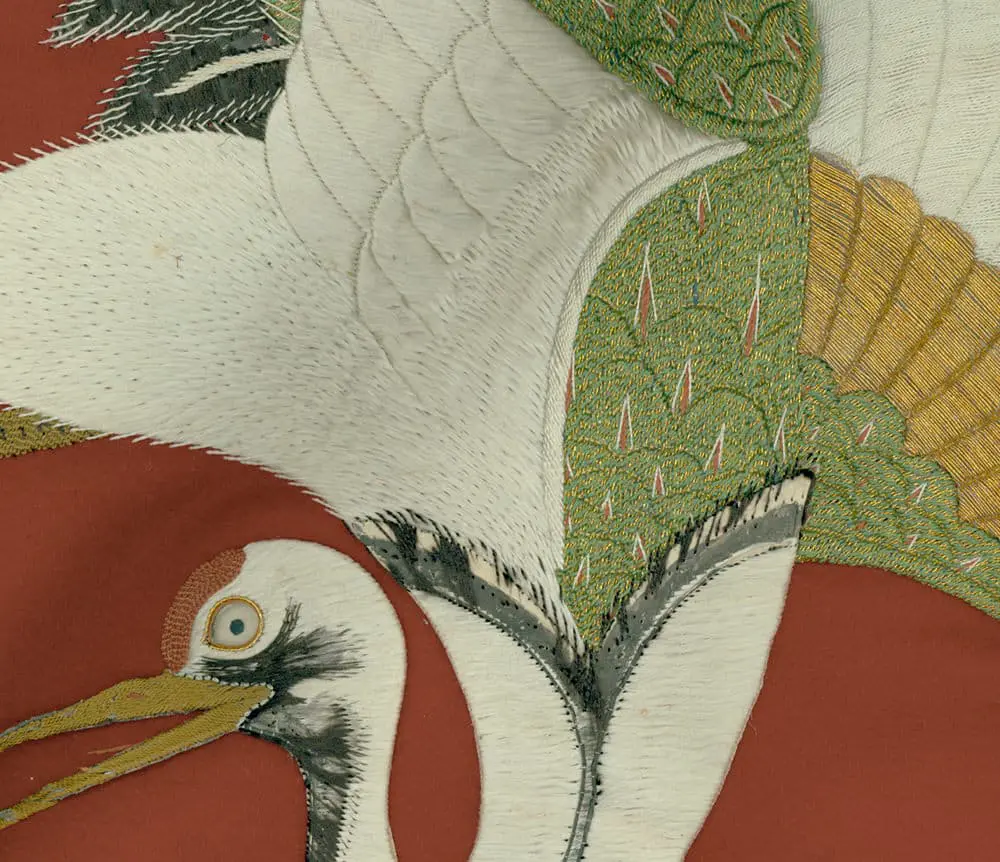
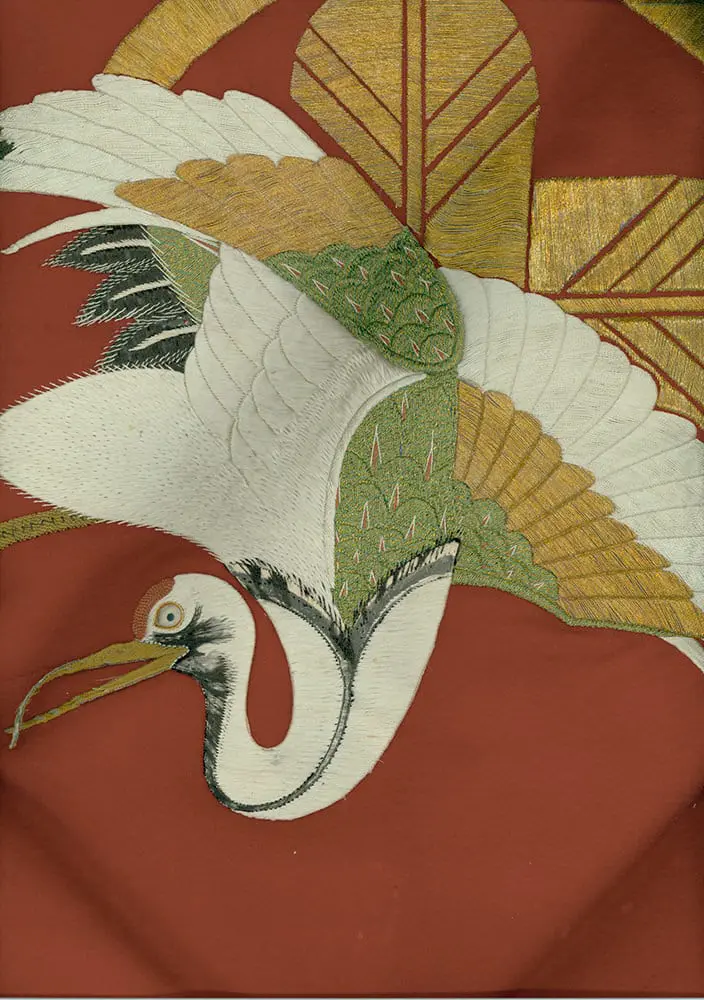
This distinctive fukusa (gift cover), dating to the Meiji period (1868–1912), is a bold example of symbolic heraldry and naturalism. Measuring 26 inches by 26 inches (66 cm x 66 cm), the textile is composed of relatively coarse metallic and silk embroidery set against a sturdy red bast-fiber ground.
The central composition features a large mandarin crane, a revered symbol of good fortune and longevity, captured in a dynamic descending flight. Layered behind the crane is a prominent family crest (mon) depicting falcon feathers (taka-no-ha) enclosed within a circle. In Japanese culture, falcon feathers are deeply associated with the military class due to the bird’s predatory prowess, and they also serve as sacred symbols for several prominent shrines. The piece is in generally good condition, though it requires minor mending where the crane’s lower beak has become unstitched from the background.

Payment Options: We primarily accept PayPal for all transactions. Credit and debit cards are not accepted. If you prefer to pay by personal check instead of PayPal, please note this preference in the "Additional comments" field when placing your order.Ordering Process
To receive your PayPal invoice, simply fill out the form.
Shipping Details: We ship all orders to the address associated with your PayPal payment. Please ensure your PayPal shipping address is current and accurate.A phone number is required during checkout, as our shipping carrier may need to contact you regarding delivery questions.Shipping RatesUnited States and Canada: $20International destinations (air mail): $40
