Copyright © 2026 Yorke Antique Textiles
.avif)


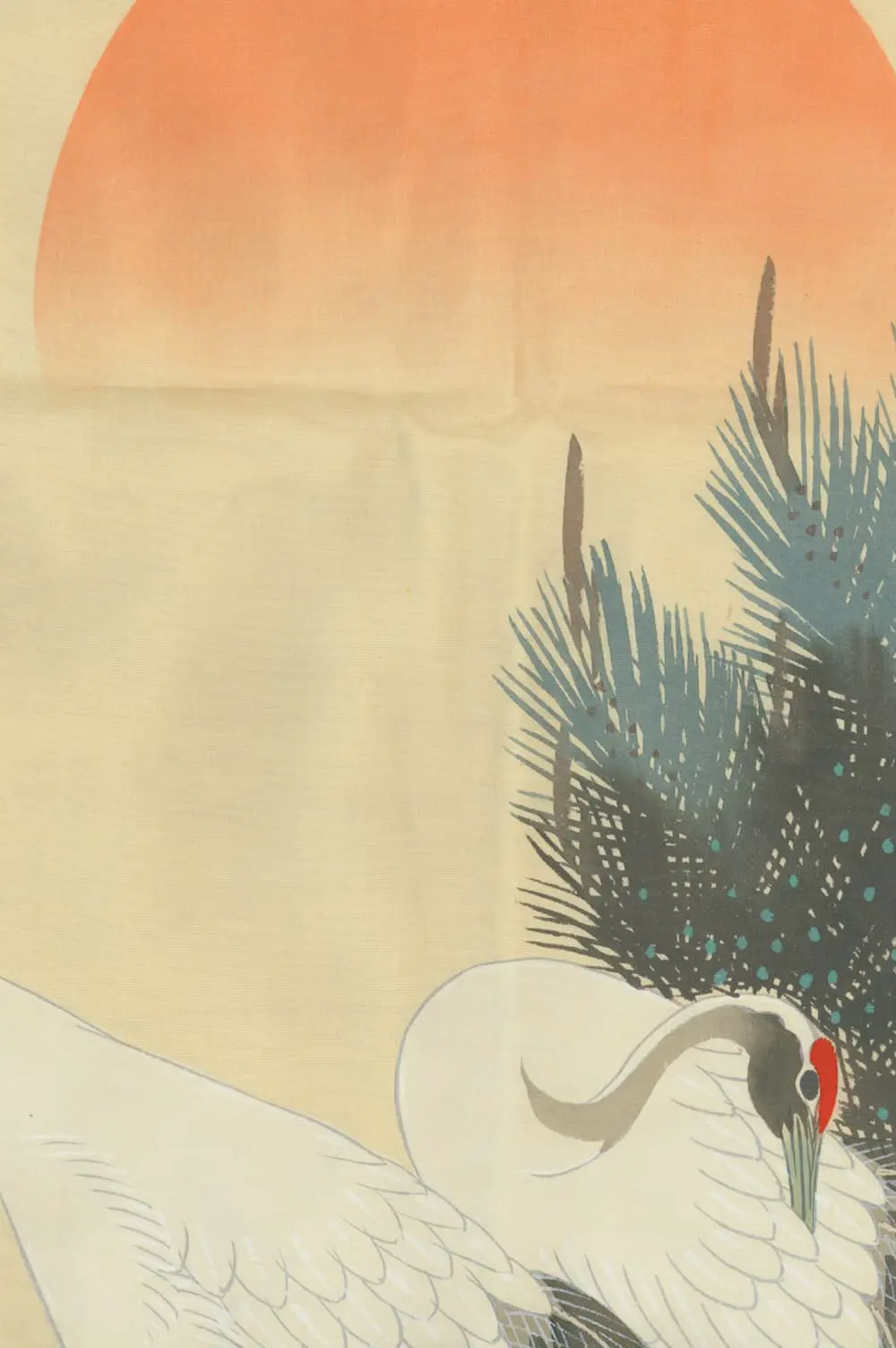
This substantial silk fukusa (gift cover), dating to the Meiji period (1868–1912), is a vibrant example of auspicious Japanese textile design. Measuring 26 inches by 26 inches (66 cm x 66 cm), the cloth features two yuzen-dyed cranes standing amidst a cluster of young pine trees under a warm, glowing sun.
The mandarin crane (tancho) is a powerful symbol of good fortune, fidelity, and a long life, while the pine (matsu)—an evergreen capable of living for centuries—is traditionally considered the dwelling place of the gods. One crane is depicted with its head raised in a call, while the other preens its feathers, both rendered with fine embroidery highlights that add texture to their wings. The pine needles are meticulously detailed with dark, rhythmic brushwork and subtle white highlights, creating a sense of volume against the cream silk ground. The textile remains in very good condition and is complete with its original four sage-green silk tassels.

Payment Options: We primarily accept PayPal for all transactions. Credit and debit cards are not accepted. If you prefer to pay by personal check instead of PayPal, please note this preference in the "Additional comments" field when placing your order.Ordering Process
To receive your PayPal invoice, simply fill out the form.
Shipping Details: We ship all orders to the address associated with your PayPal payment. Please ensure your PayPal shipping address is current and accurate.A phone number is required during checkout, as our shipping carrier may need to contact you regarding delivery questions.Shipping RatesUnited States and Canada: $20International destinations (air mail): $40
