Copyright © 2026 Yorke Antique Textiles
.avif)

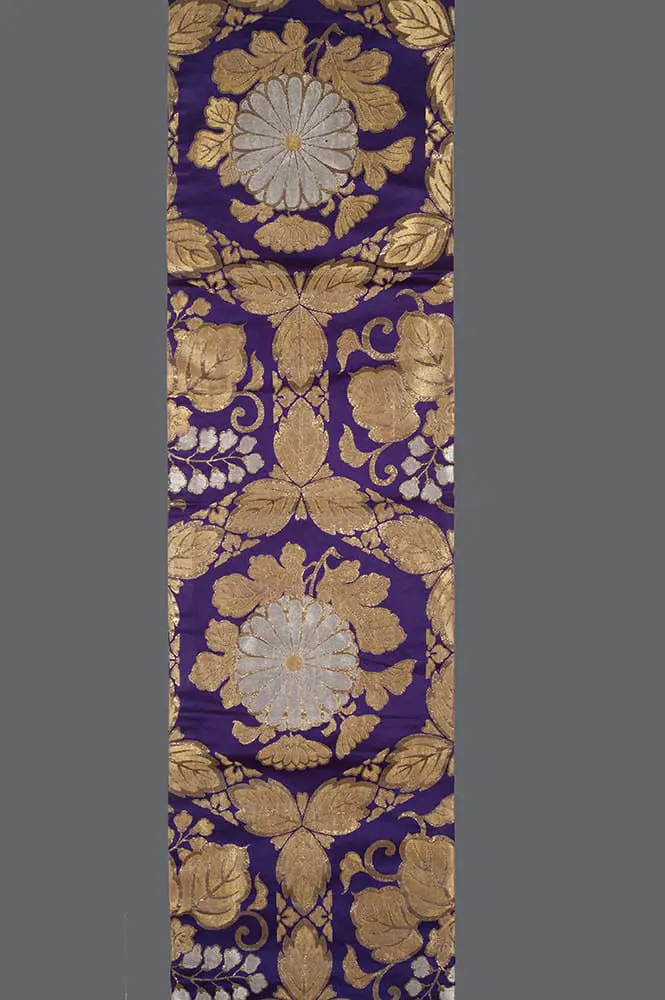
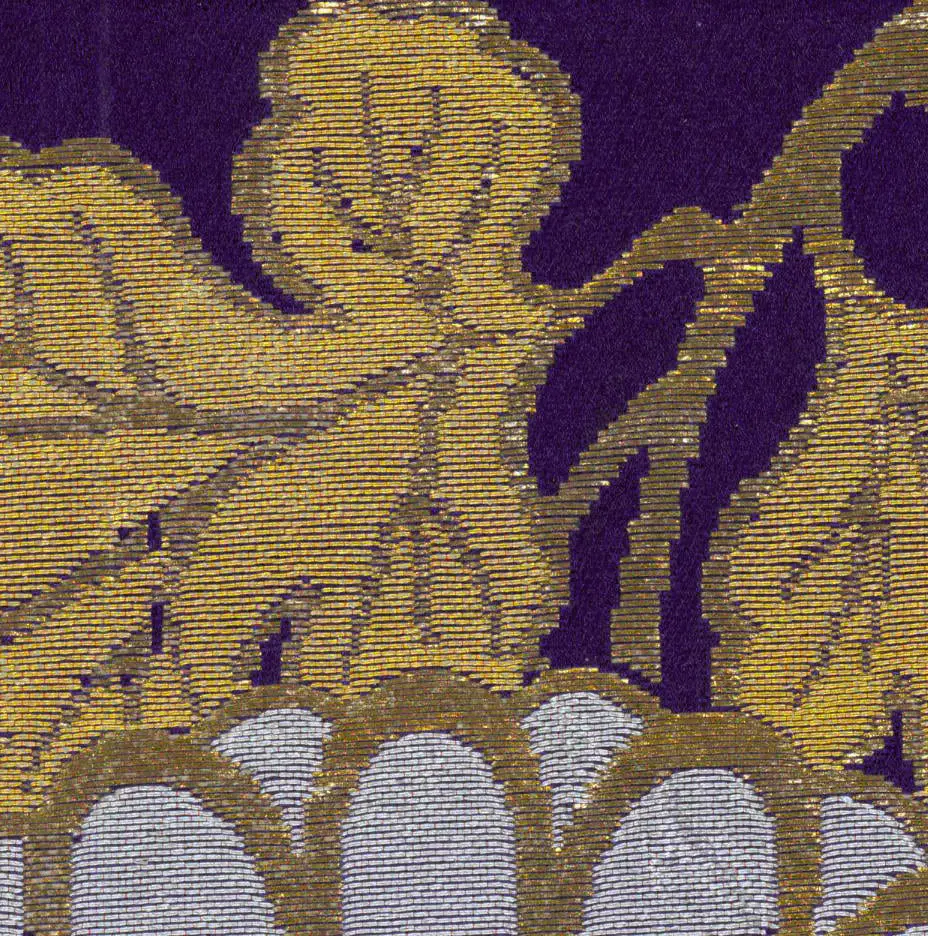

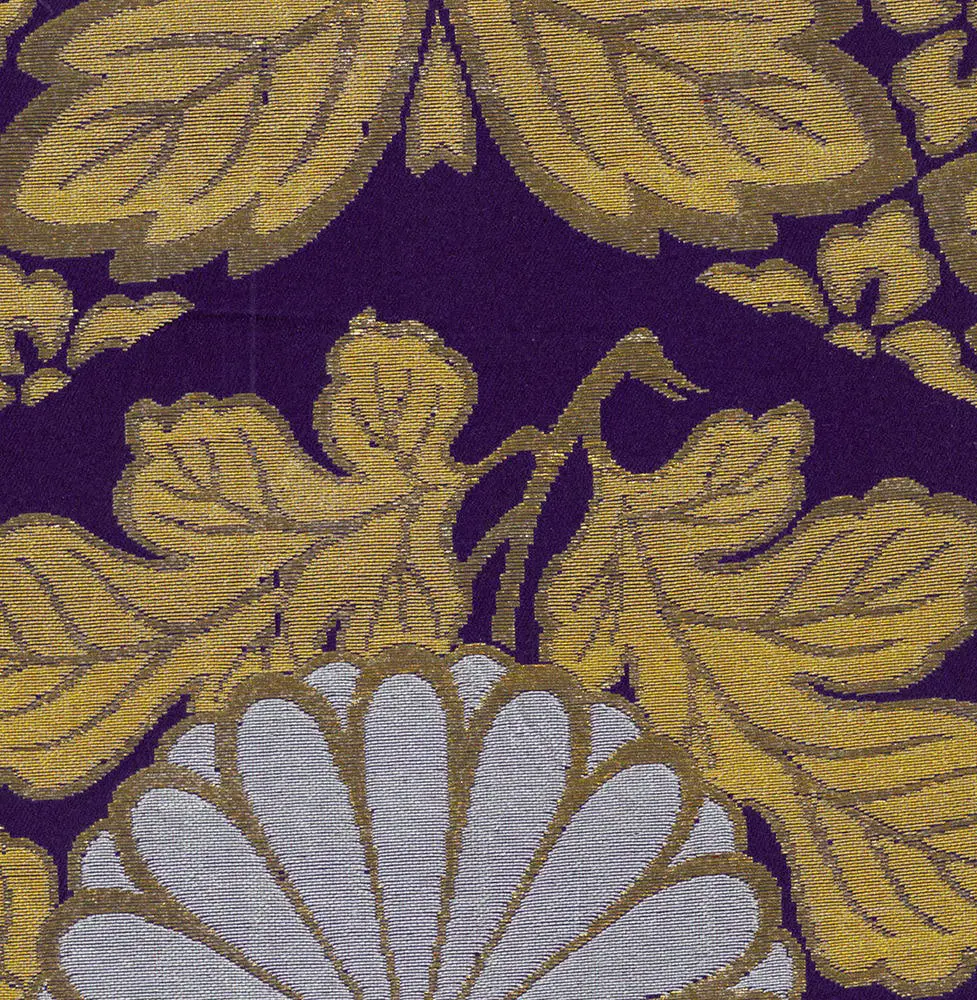
This magnificent maru obi originates from Japan and dates to the mid-20th century. Measuring approximately 170 inches in length and 13 inches in width (432 cm x 33 cm), it is a premier example of the most formal type of Japanese sash. The textile is hand-woven from fine silk using a complex brocade technique, which allows for the same intricate pattern to be displayed on both sides of the obi—a defining characteristic of the maru style that ensures its high status and significant weight. Historically, such elaborate obis were worn by brides, geisha, and apprentice geisha (maiko) for the most auspicious and ceremonial occasions.
The visual composition is dominated by a rich, multi-colored palette of deep purple, vibrant orange, and gold, featuring a rhythmic array of formal chrysanthemum (kiku) and paulownia (kiri) motifs. The chrysanthemum is the celebrated state flower of Japan and a symbol of the Imperial Family, representing longevity, rejuvenation, and the sun. These are paired with paulownia leaves and blossoms, another imperial emblem that signifies good fortune and the favor of the gods. The motifs are often organized within hexagonal frames (kikkō) or amidst stylized cloud patterns, creating a dense and auspicious narrative of protection and imperial authority.

Payment Options: We primarily accept PayPal for all transactions. Credit and debit cards are not accepted. If you prefer to pay by personal check instead of PayPal, please note this preference in the "Additional comments" field when placing your order.Ordering Process
To receive your PayPal invoice, simply fill out the form.
Shipping Details: We ship all orders to the address associated with your PayPal payment. Please ensure your PayPal shipping address is current and accurate.A phone number is required during checkout, as our shipping carrier may need to contact you regarding delivery questions.Shipping RatesUnited States and Canada: $20International destinations (air mail): $40
