Copyright © 2026 Yorke Antique Textiles
.avif)

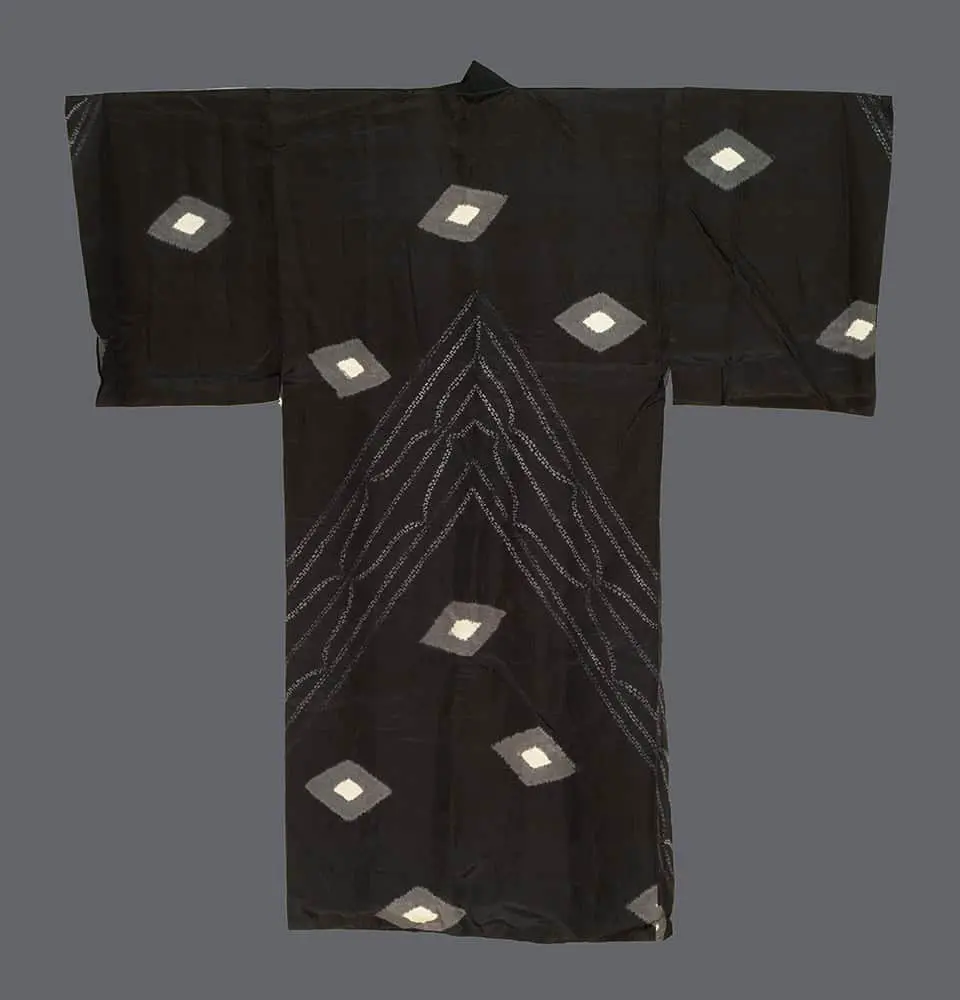
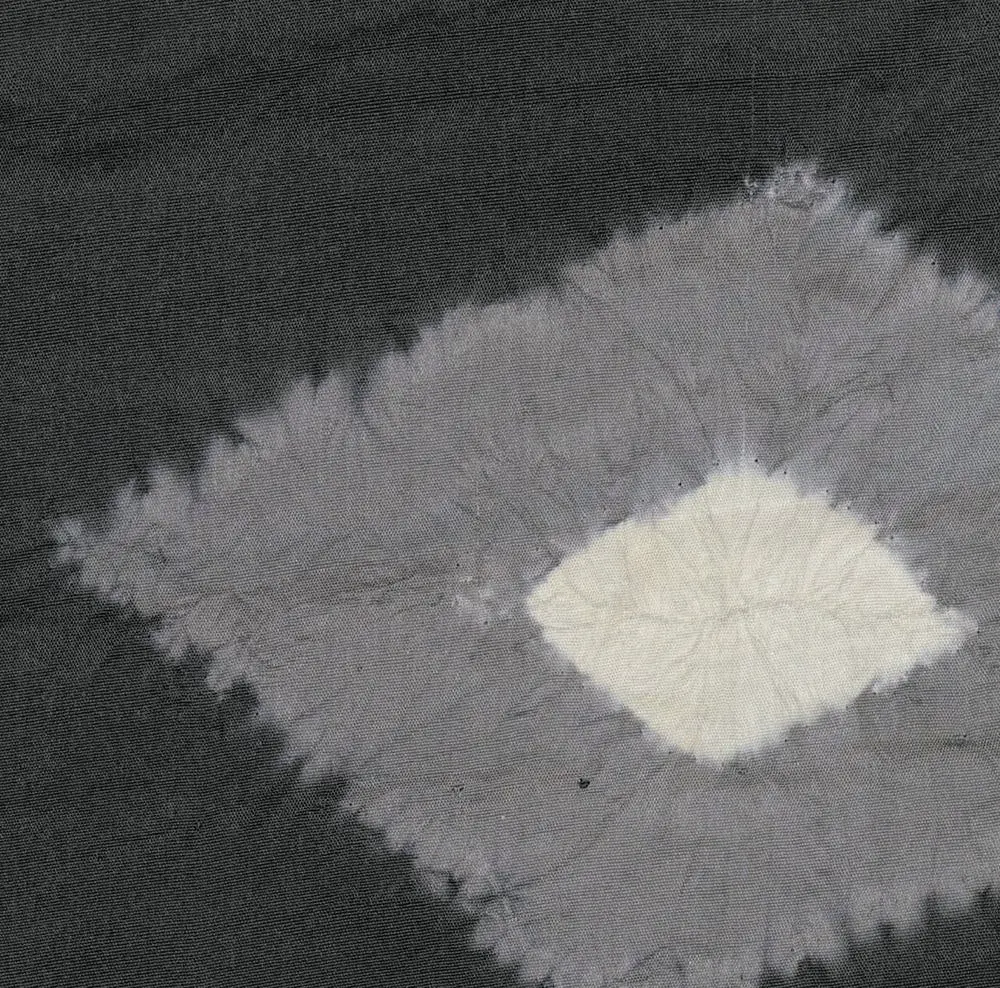
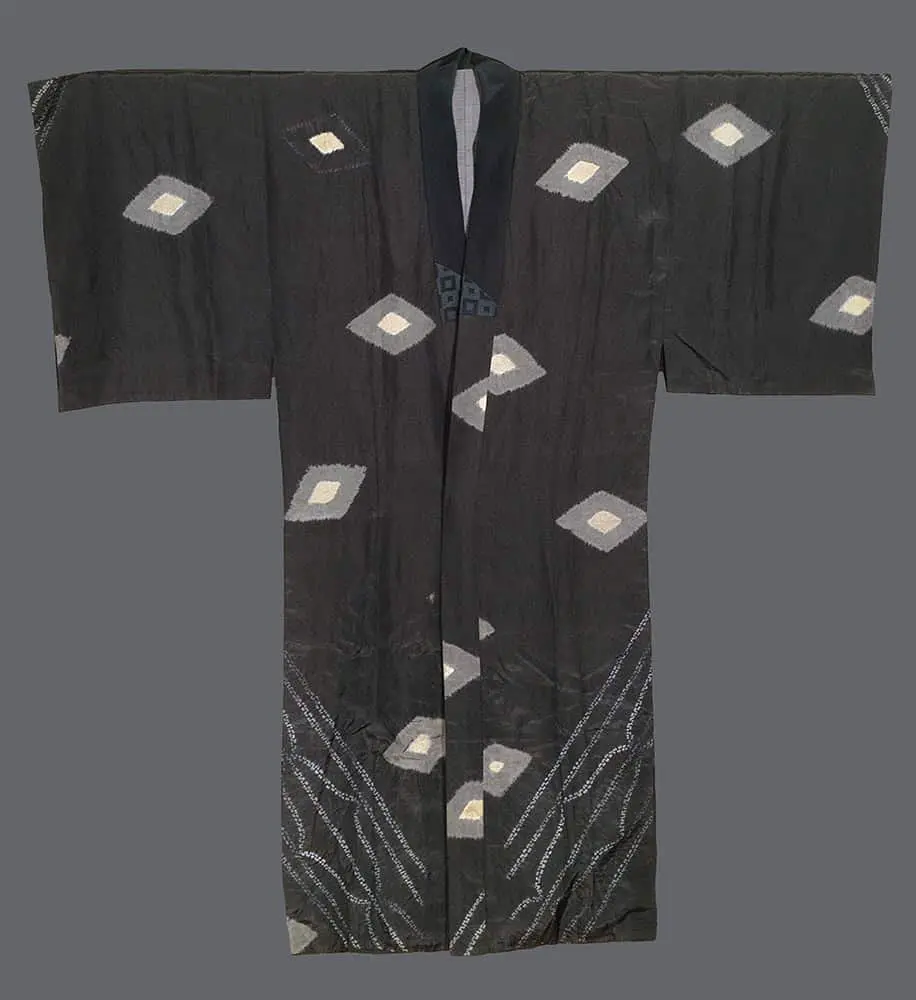
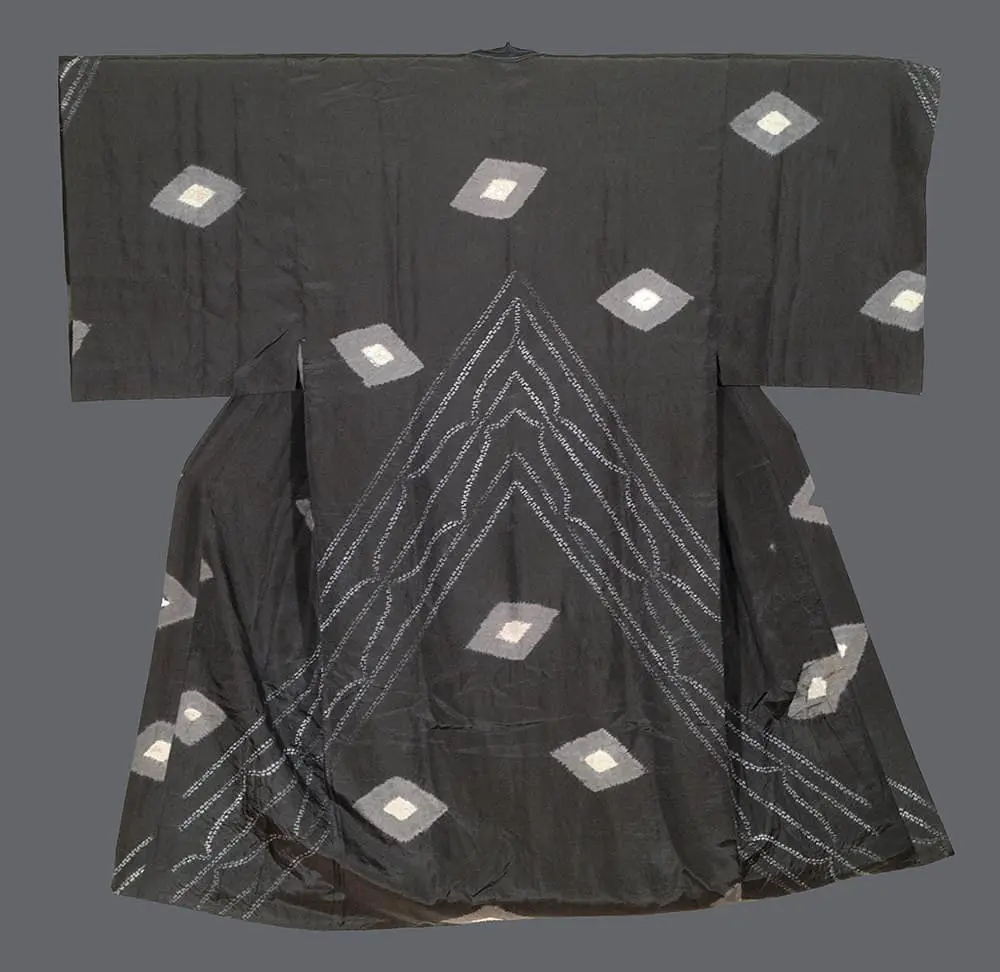
This men's silk juban (undergarment) demonstrates the sophisticated application of shibori resist-dyeing techniques to create a design of elegant restraint. Against the deep charcoal-gray ground, geometric motifs emerge in graduated tones of gray and white, displaying the characteristic soft, organic edges that distinguish hand-bound shibori from printed patterns.
Scattered across the upper portion, diamond shapes created through bound-resist technique display concentric gradations—white centers surrounded by gray halos fading into the dark ground. These individual motifs, likely produced through kumo (spider) or similar point-binding methods, have the slightly irregular quality that evidences handcraft.
The lower back features a striking large-scale geometric composition: nested chevron lines created through nui-shibori (stitch-resist) technique form a dramatic mountain or arrow-like shape. The dotted, slightly broken quality of these lines reveals where running stitches gathered the fabric before dyeing, creating resist patterns with distinctive textural character.
As an undergarment, the juban allowed men considerable creative freedom, since only glimpses at collar and sleeve openings would appear beneath formal outer garments. This permitted bold or personal designs that might be considered inappropriate for public display. The monochromatic palette of gray, white, and charcoal demonstrates refined taste, while the combination of scattered small motifs with the dramatic central geometric form creates visual interest that would have pleased the wearer even if largely hidden from view.
It measures 53 inches (135 cm) from sleeve-end to sleeve-end and stands at 52 inches (132 cm) in height.

Payment Options: We primarily accept PayPal for all transactions. Credit and debit cards are not accepted. If you prefer to pay by personal check instead of PayPal, please note this preference in the "Additional comments" field when placing your order.Ordering Process
To receive your PayPal invoice, simply fill out the form.
Shipping Details: We ship all orders to the address associated with your PayPal payment. Please ensure your PayPal shipping address is current and accurate.A phone number is required during checkout, as our shipping carrier may need to contact you regarding delivery questions.Shipping RatesUnited States and Canada: $20International destinations (air mail): $40
