Copyright © 2026 Yorke Antique Textiles
.avif)


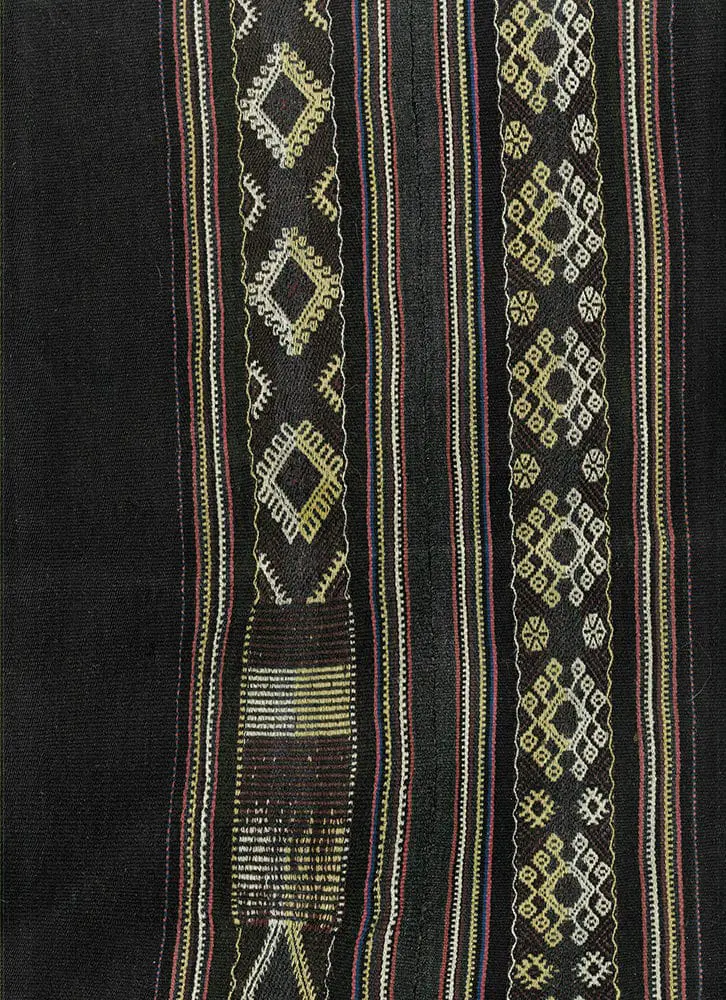
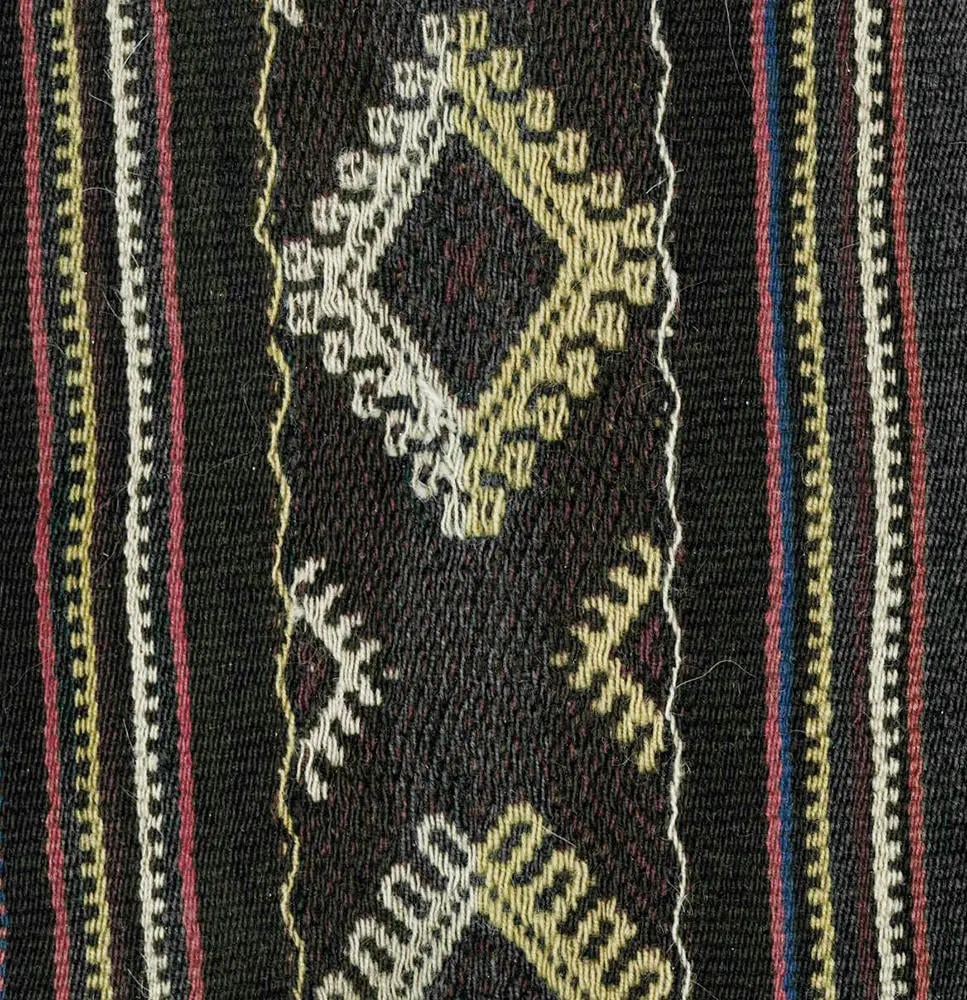
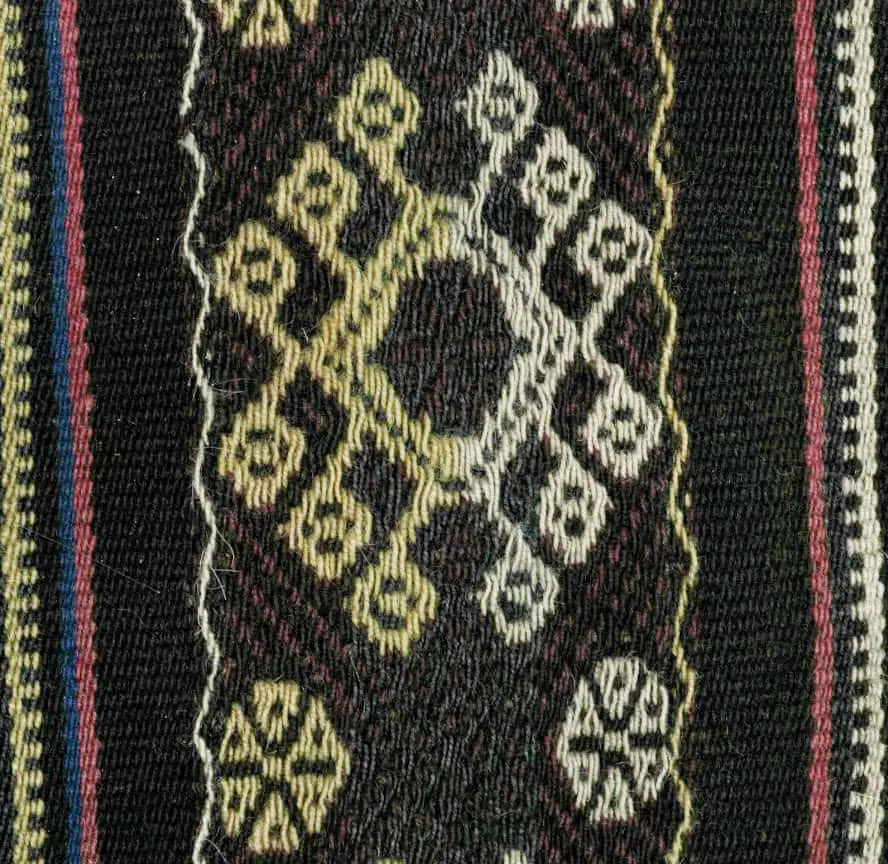
This hand-woven ceremonial woman’s lliklla (the Quechua term for a cape and carrying cloth) originates from the Macha weaving region in the northern Department of Potosí, Bolivia. Dating to the 1930s, this garment measures approximately 33 inches by 40 inches (84 cm x 102 cm) and is composed of two identical panels joined together, a traditional construction that creates a central decorative seam. The cloth is woven from finely spun camelid wool, prized for its durability and the deep, saturated tones of its natural and dyed fibers.
The composition is characterized by two broad, dark brown or charcoal-colored "pampa" (plain) fields, which provide a grounding contrast to the centralized decorative bands. These vertical bands, known as pallay, feature intricate geometric diamond and lozenge motifs in cream and ochre, meticulously executed using a complementary-warp technique. The verticality of the design is further emphasized by narrow, multi-colored stripes in green, red, and yellow that frame the primary patterned bands. Small, localized areas of horizontal striping near the bottom of the pallay registers indicate subtle regional variations specific to Macha weavers during the early 20th century.

Payment Options: We primarily accept PayPal for all transactions. Credit and debit cards are not accepted. If you prefer to pay by personal check instead of PayPal, please note this preference in the "Additional comments" field when placing your order.Ordering Process
To receive your PayPal invoice, simply fill out the form.
Shipping Details: We ship all orders to the address associated with your PayPal payment. Please ensure your PayPal shipping address is current and accurate.A phone number is required during checkout, as our shipping carrier may need to contact you regarding delivery questions.Shipping RatesUnited States and Canada: $20International destinations (air mail): $40
