Copyright © 2026 Yorke Antique Textiles
.avif)

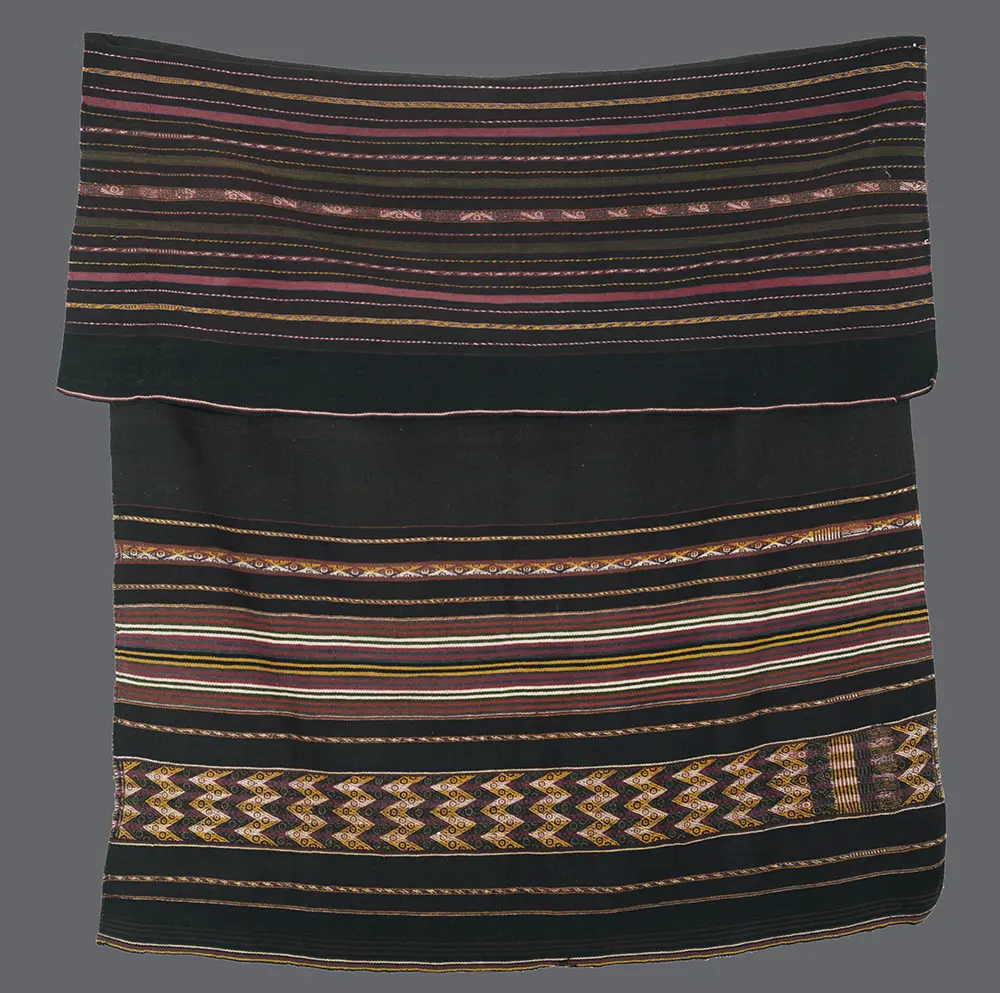
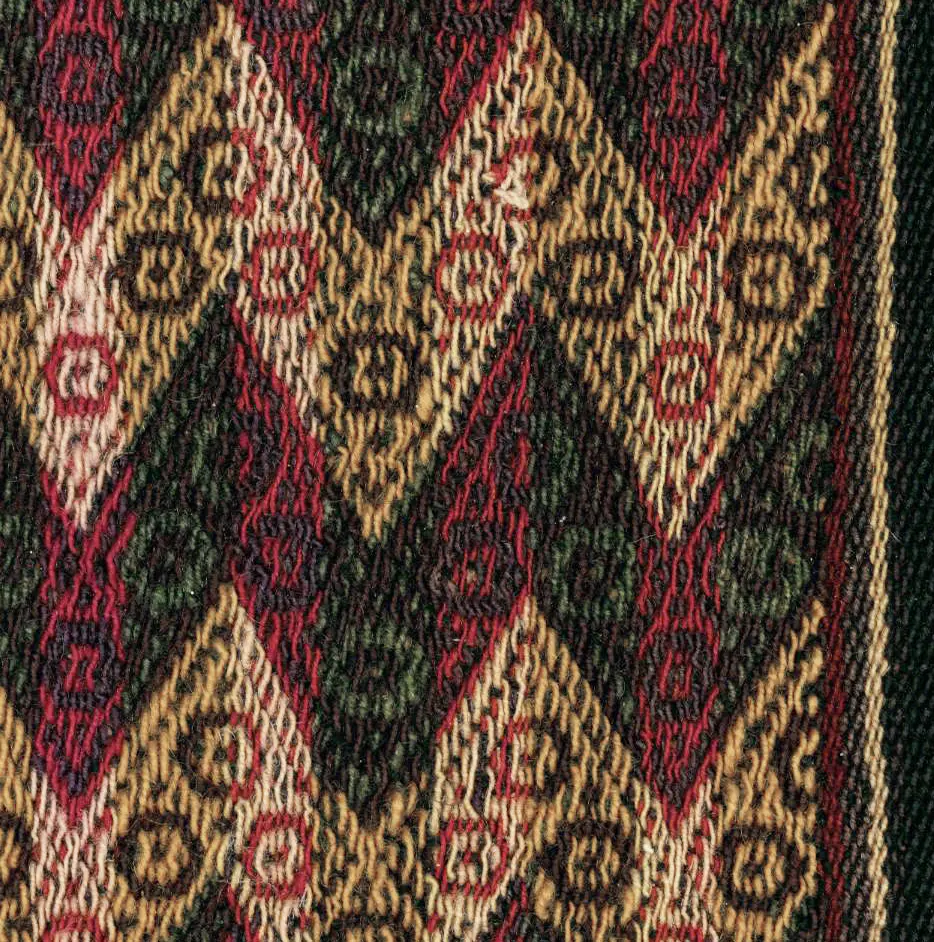
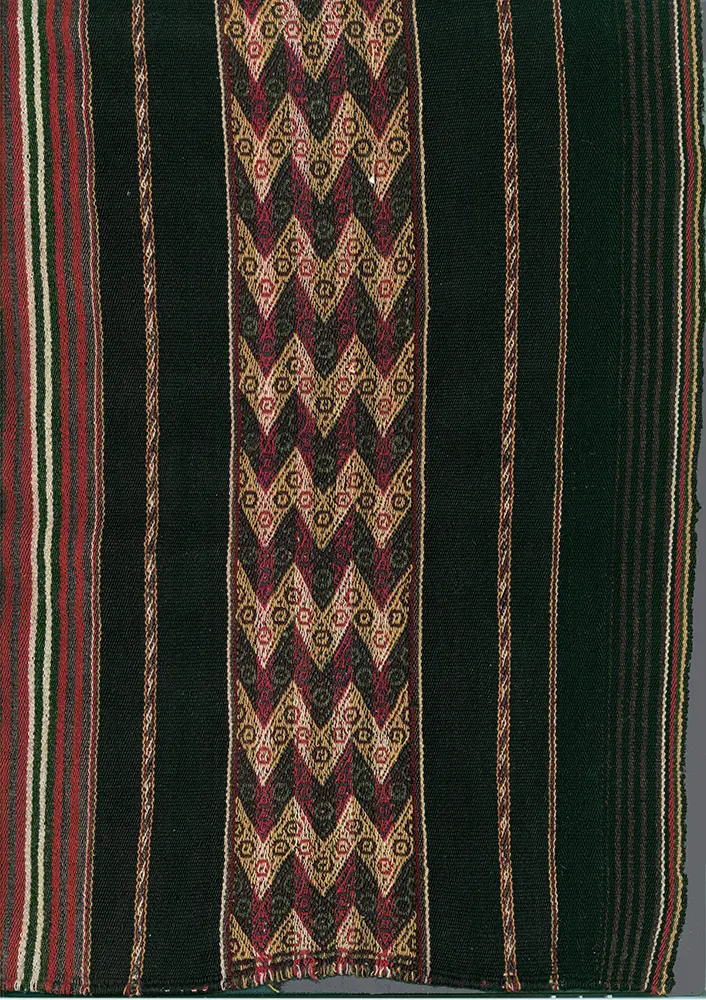
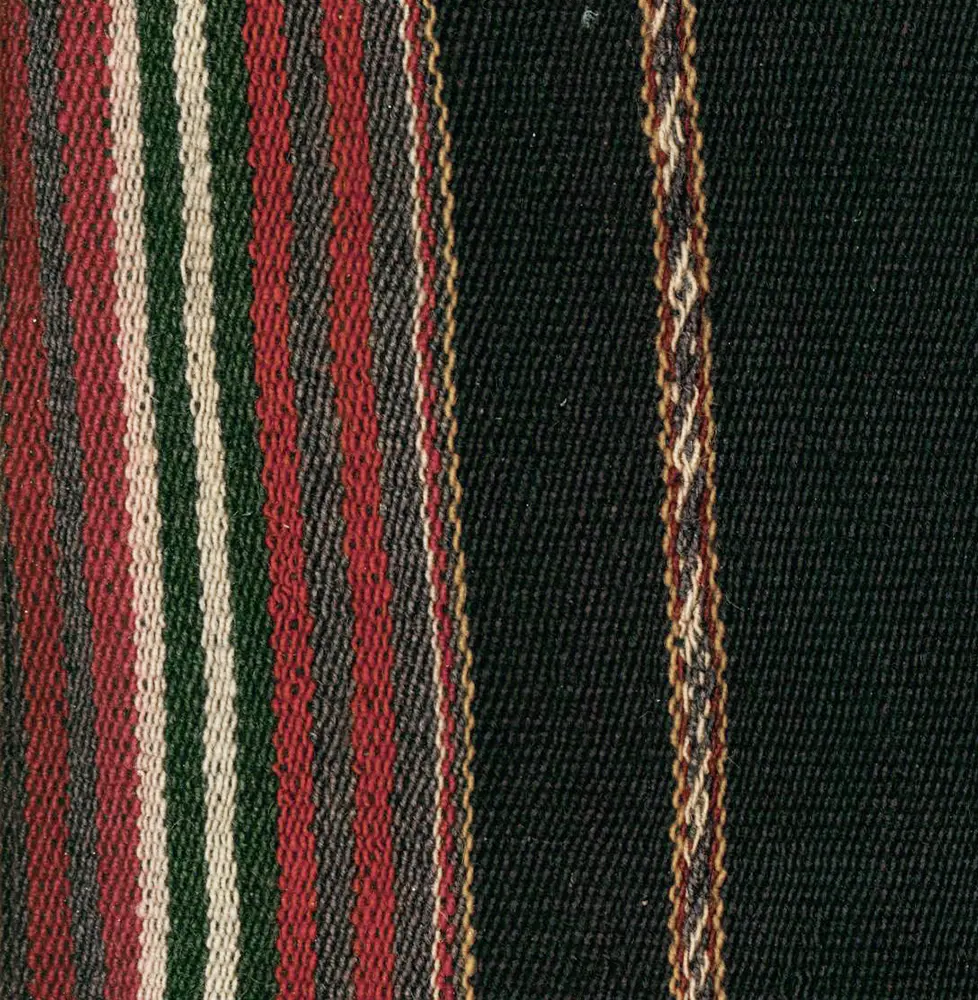
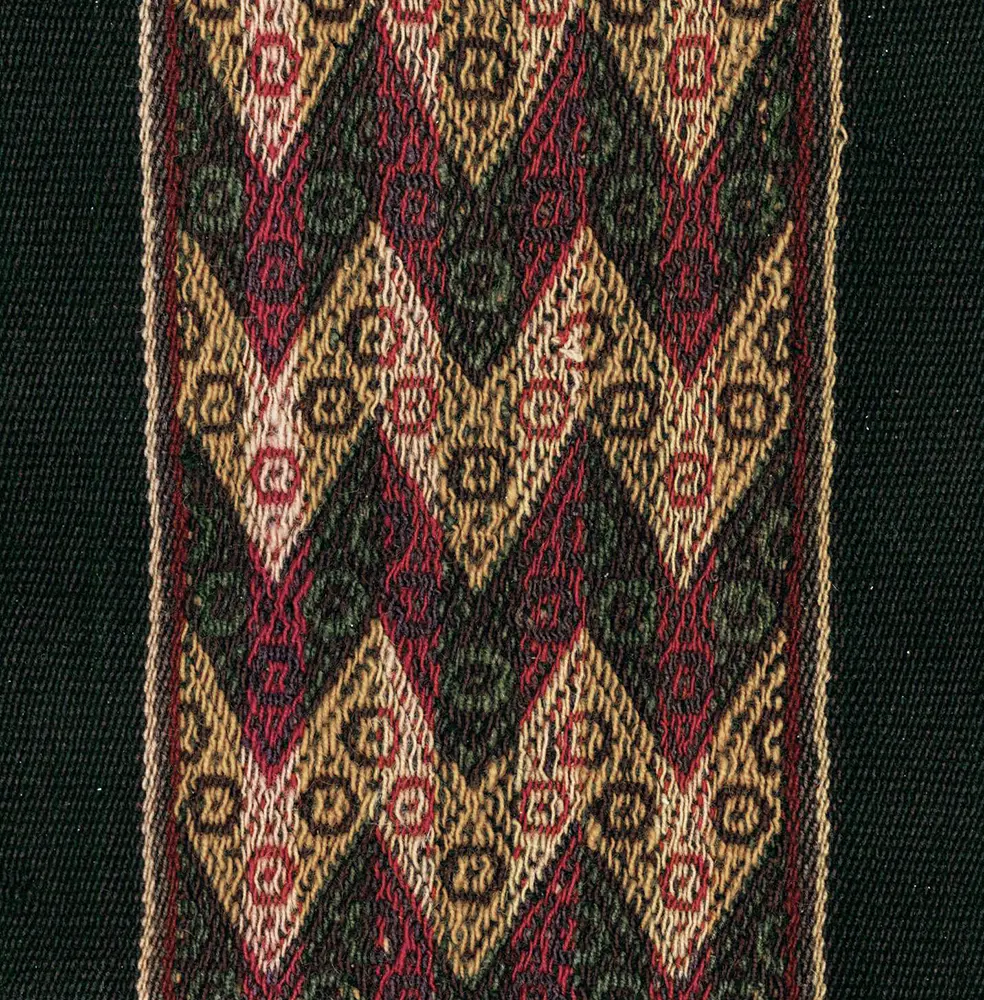
This ceremonial woman’s aksu (the Quechua term for a mantle or overskirt) originates from the Macha weaving region in the northern Department of Potosí, Bolivia. Dating from the early 20th century (1920–1940), this textile is expertly hand-woven using fine alpaca fiber, a material prized in the Andean highlands for its warmth, durability, and natural luster. The piece is traditionally constructed of two joined panels, and the gallery image highlights the folded top section, showcasing the transition between the functional plain-weave areas and the dense decorative work.
The aesthetic of the Macha region is defined by deep, light-absorbent pampa (plain) fields, typically in dark charcoal or indigo, which serve as a profound backdrop for vertical decorative bands known as pallay. These bands feature the signature "limi linku" or undulating wave pattern, which often encases multiple "eyes" or diamond-shaped motifs—distinctive pre-Columbian Aymara symbols that persist in Macha weaving despite the community's adoption of the Quechua language. The color palette is earthy and sophisticated, utilizing naturally dyed reds, ochres, and creams to create a rhythmic, high-contrast effect along the edges of the garment.

Payment Options: We primarily accept PayPal for all transactions. Credit and debit cards are not accepted. If you prefer to pay by personal check instead of PayPal, please note this preference in the "Additional comments" field when placing your order.Ordering Process
To receive your PayPal invoice, simply fill out the form.
Shipping Details: We ship all orders to the address associated with your PayPal payment. Please ensure your PayPal shipping address is current and accurate.A phone number is required during checkout, as our shipping carrier may need to contact you regarding delivery questions.Shipping RatesUnited States and Canada: $20International destinations (air mail): $40
