Copyright © 2026 Yorke Antique Textiles
.avif)

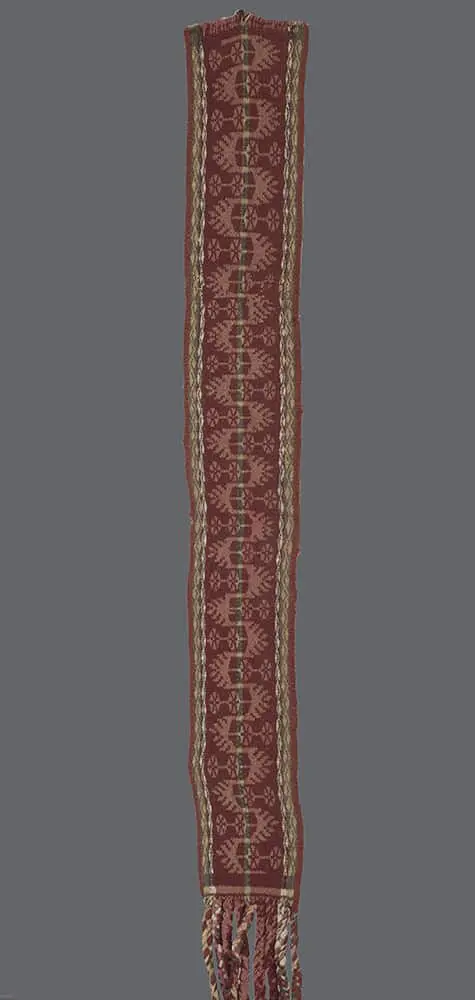
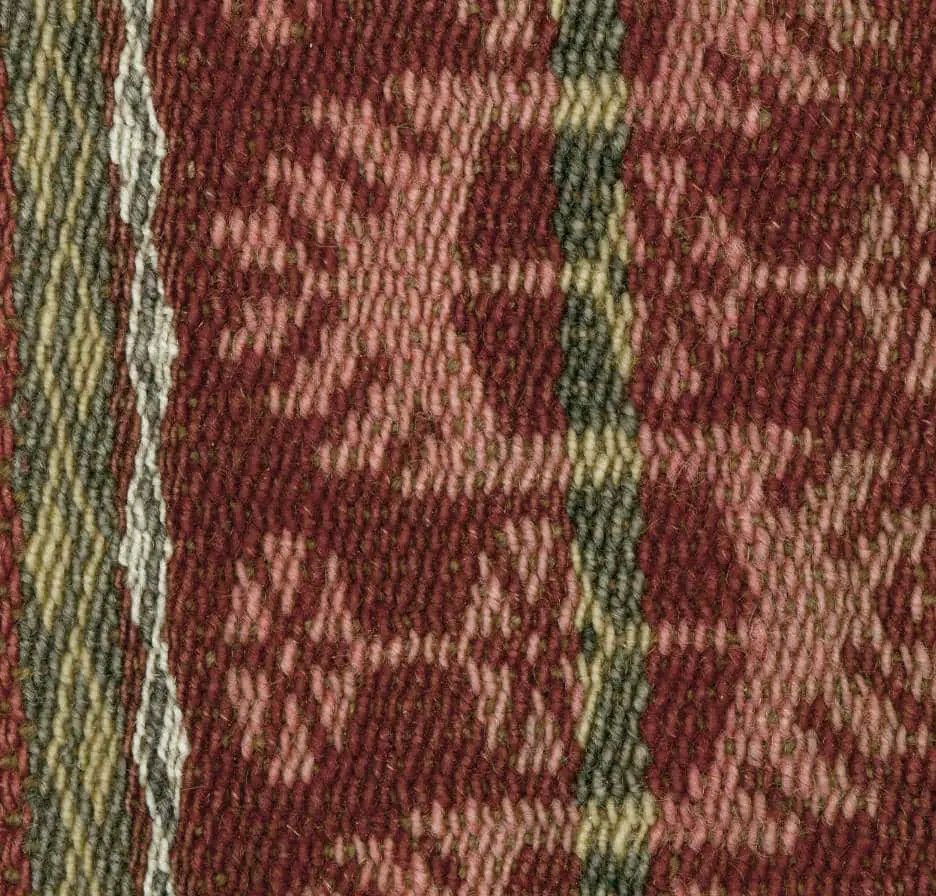
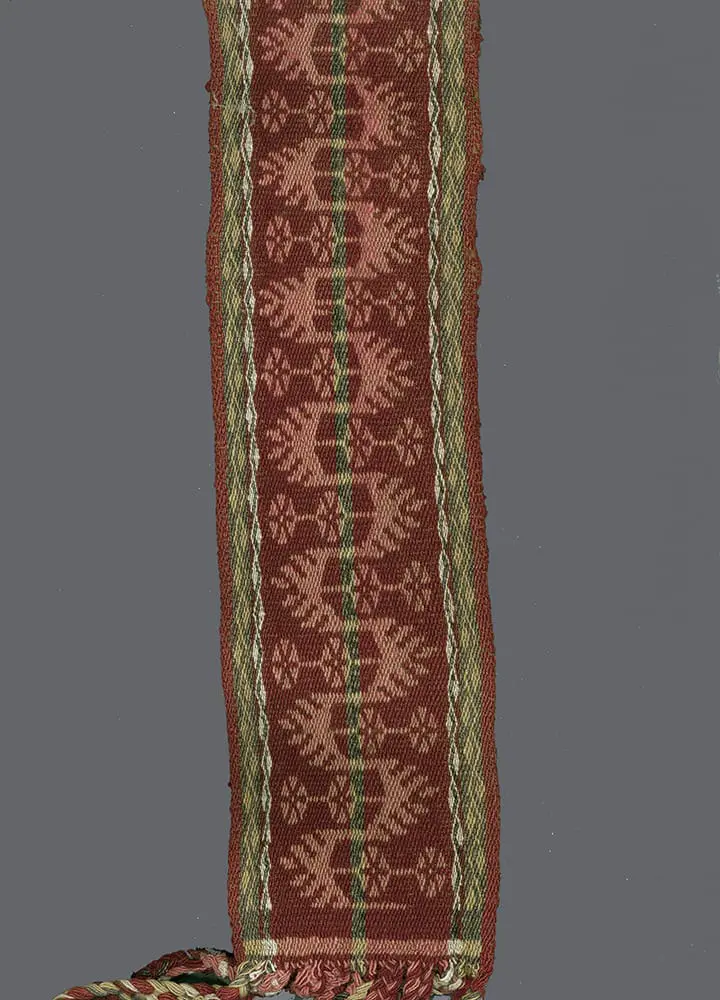
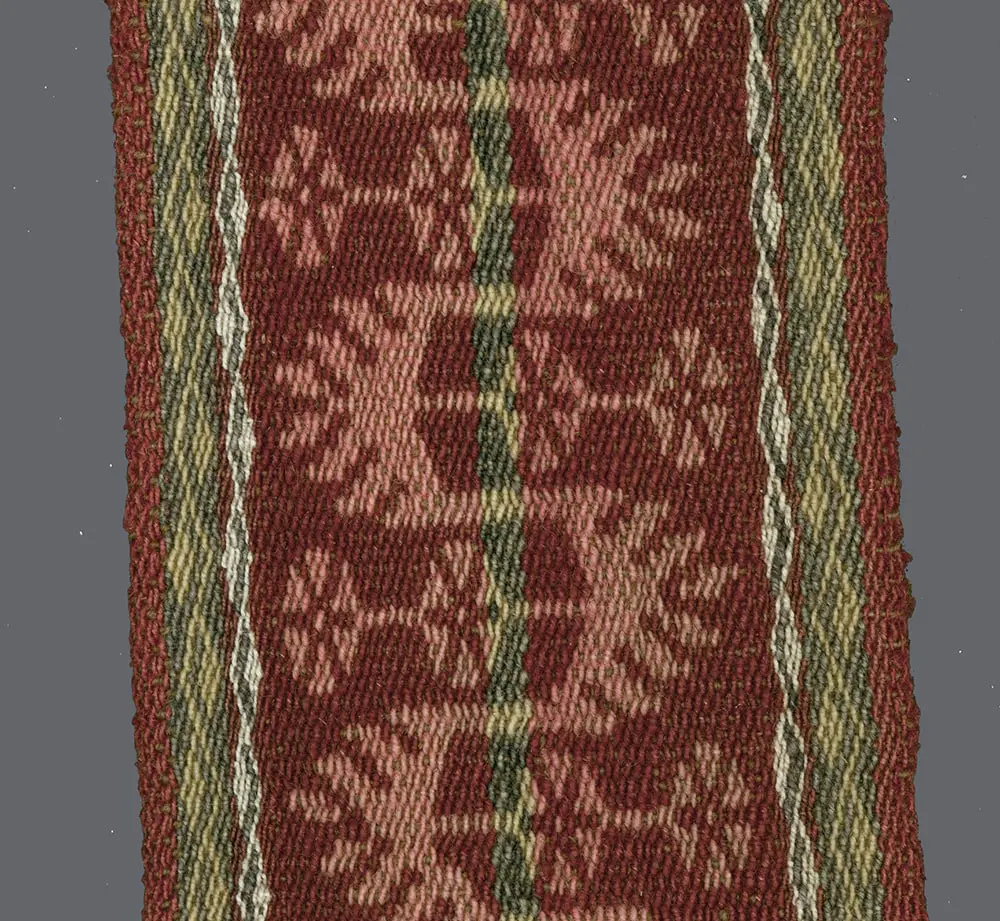
This exceptional woman’s belt, known locally as a wak'a, originates from the Leque weaving region in the Department of Cochabamba, Bolivia. Dating to the early 20th century (1910–1930), the textile is a masterwork of the double-cloth technique, which creates a structurally complex, reversible fabric with mirrored designs. The piece is expertly woven using fine sheep's wool for the warps and lustrous alpaca for the wefts, resulting in a durable yet soft handle. It measures 4.5 inches in width and 36 inches in length (11.43 cm x 91.44 cm), featuring long, hand-braided tassels at the terminal end.
The aesthetic of the belt is defined by a dense, vertical progression of stylized botanical and avian motifs characteristic of the Leque region. The central design field is dominated by a rich madder-red ground, decorated with repeating "tree of life" or floral stalks in a muted rose-tan. These vertical registers are framed by thin, serrated borders in alternating shades of cream, green, and brown, which provide an architectural structure to the flowing organic patterns. The use of alpaca weft gives the motifs a subtle sheen, elevating the ceremonial quality of the garment.

Payment Options: We primarily accept PayPal for all transactions. Credit and debit cards are not accepted. If you prefer to pay by personal check instead of PayPal, please note this preference in the "Additional comments" field when placing your order.Ordering Process
To receive your PayPal invoice, simply fill out the form.
Shipping Details: We ship all orders to the address associated with your PayPal payment. Please ensure your PayPal shipping address is current and accurate.A phone number is required during checkout, as our shipping carrier may need to contact you regarding delivery questions.Shipping RatesUnited States and Canada: $20International destinations (air mail): $40
