Copyright © 2026 Yorke Antique Textiles
.avif)

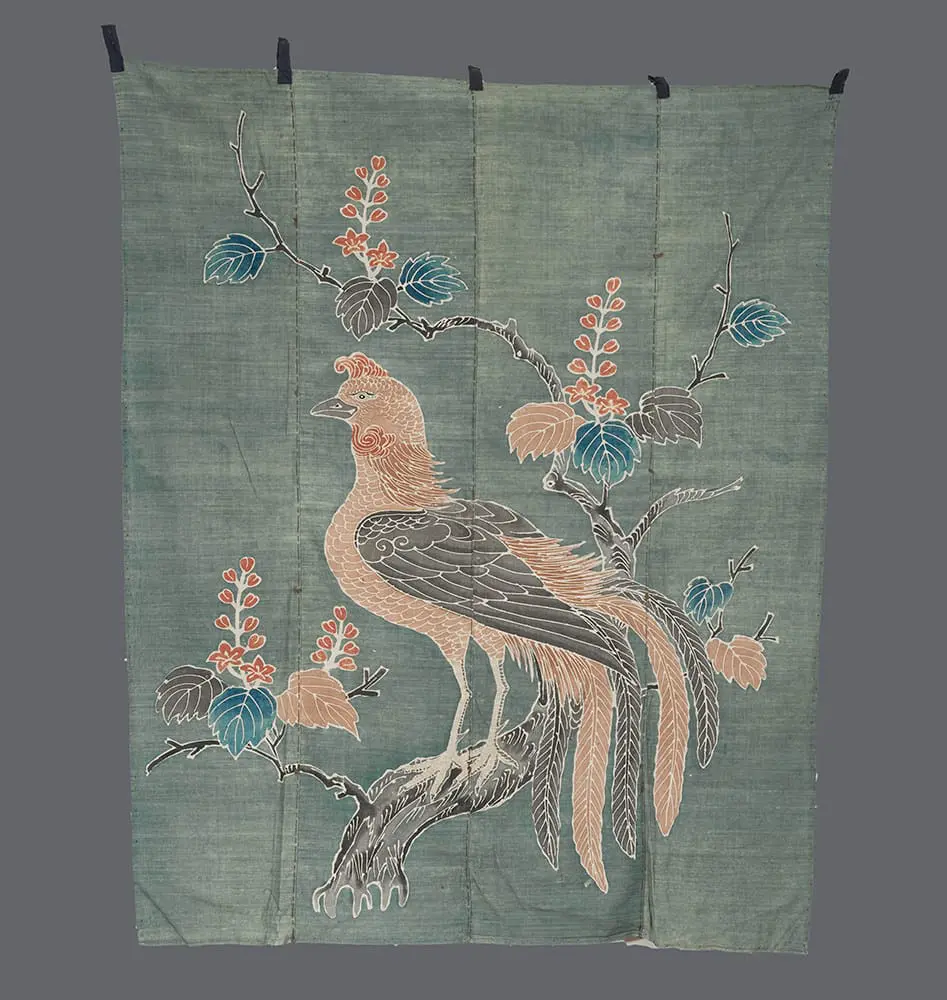
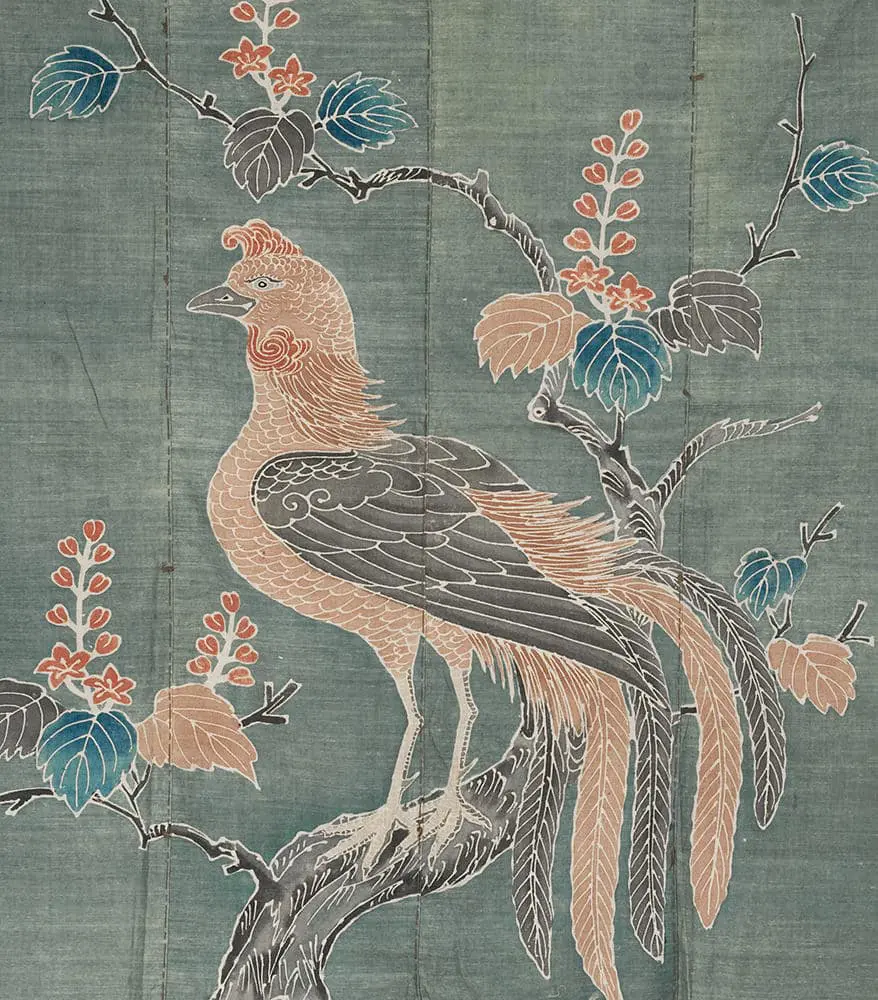


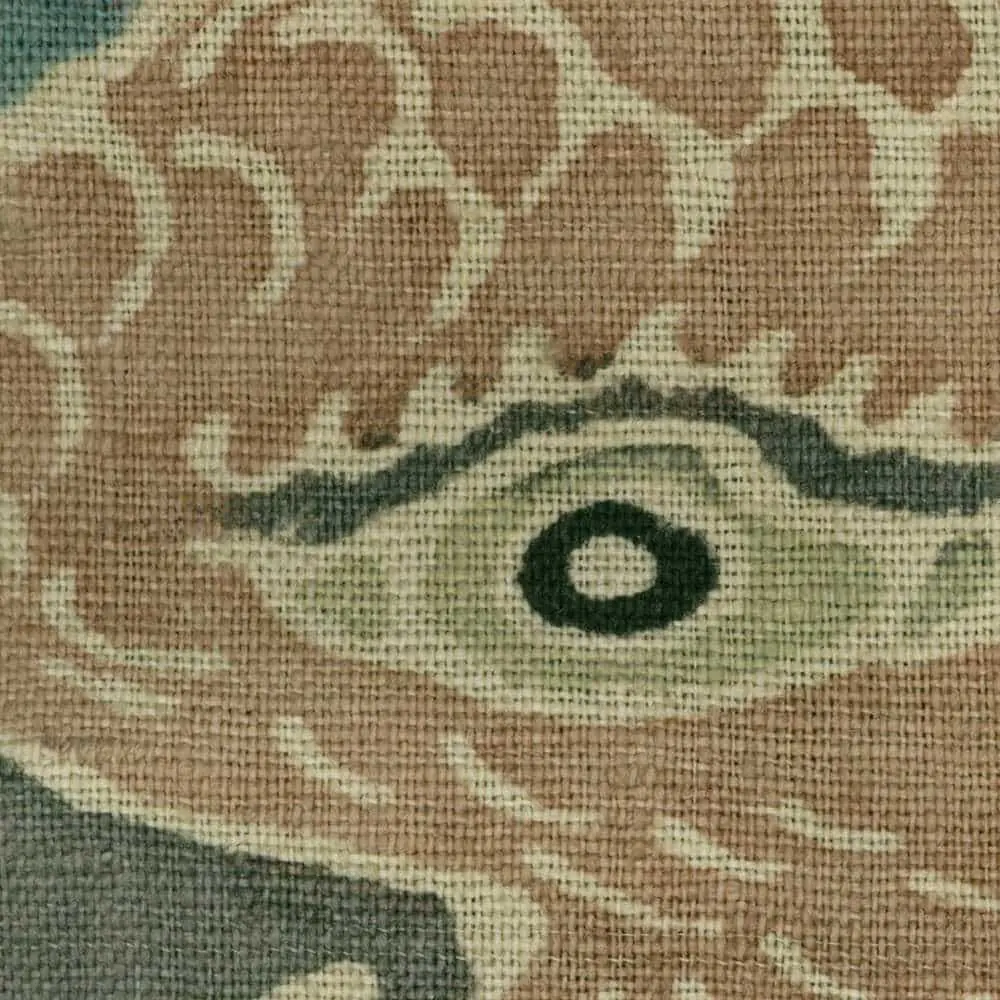


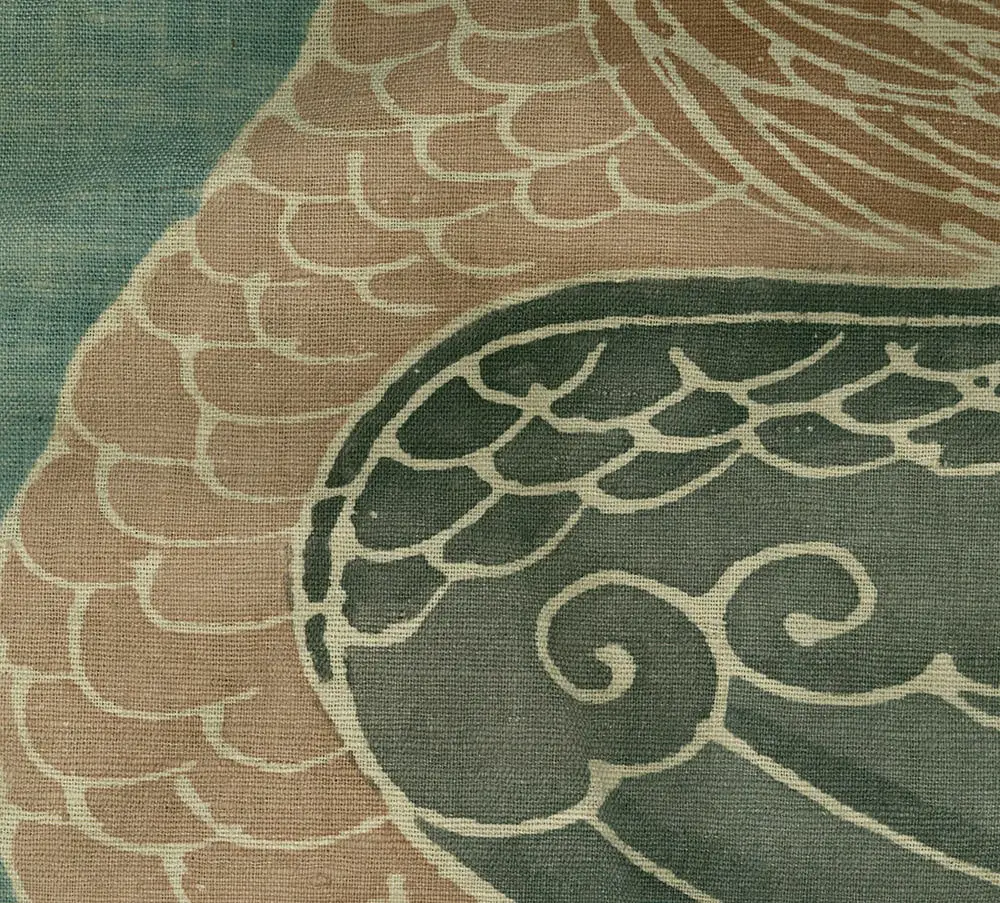

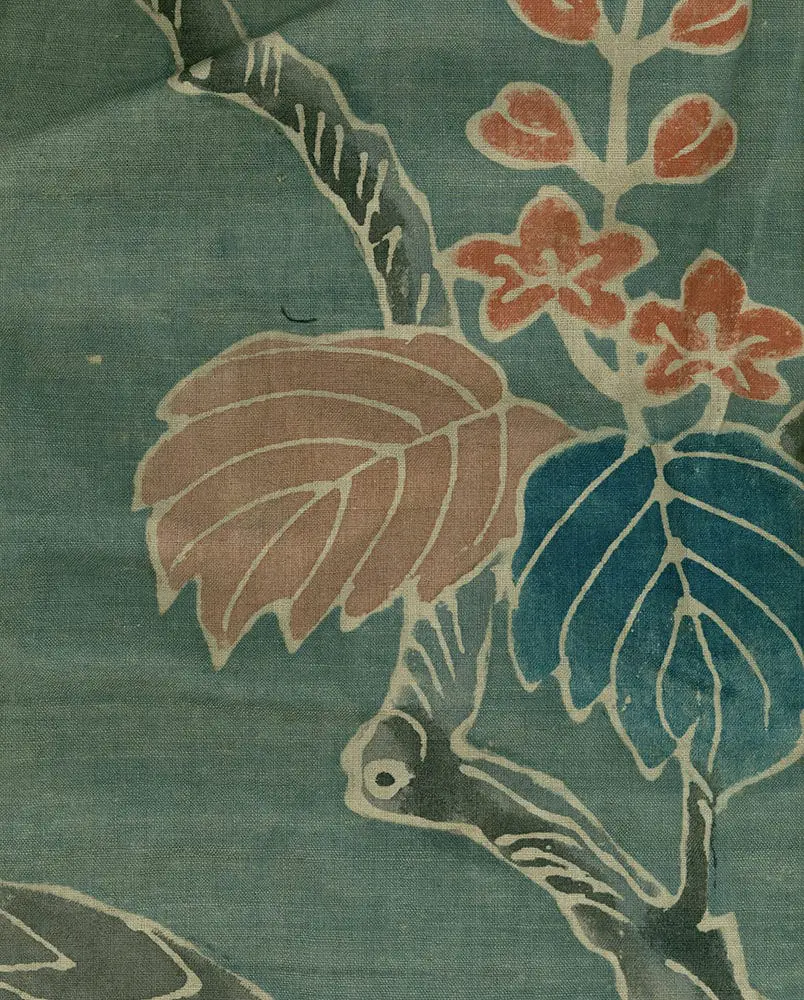

This monumental futonji (sleeping blanket cover), dating to the mid-to-late Edo period (1775–1840), is a masterful example of traditional Japanese folk textile art. Measuring 61 inches by 48 inches (155 cm x 122 cm), the cover is constructed from four panels of hand-spun, hand-woven cotton.
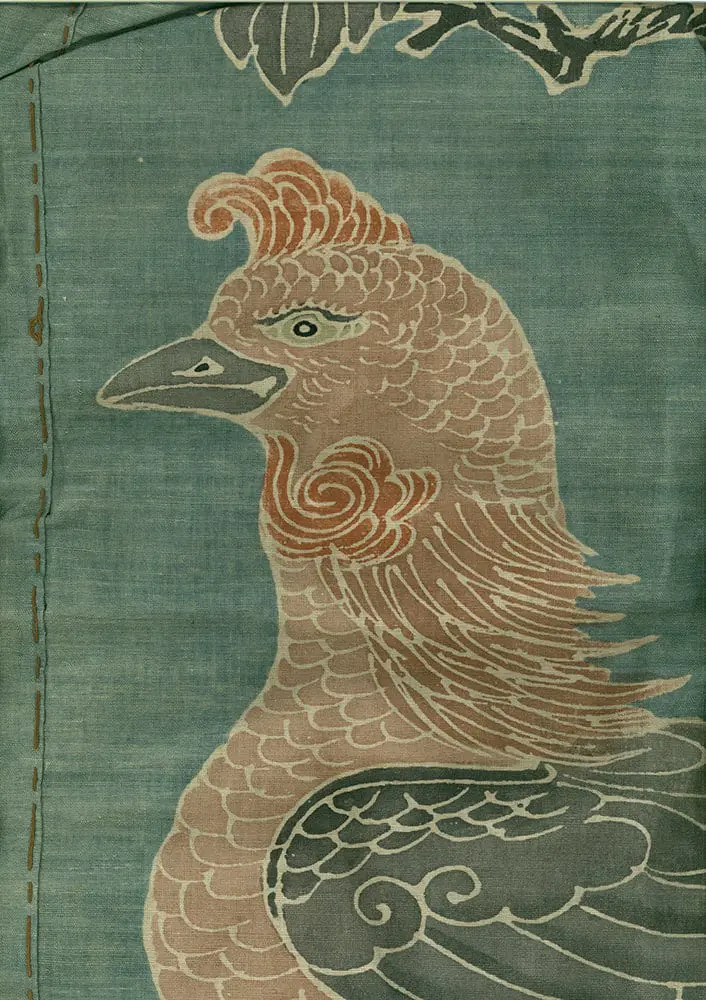
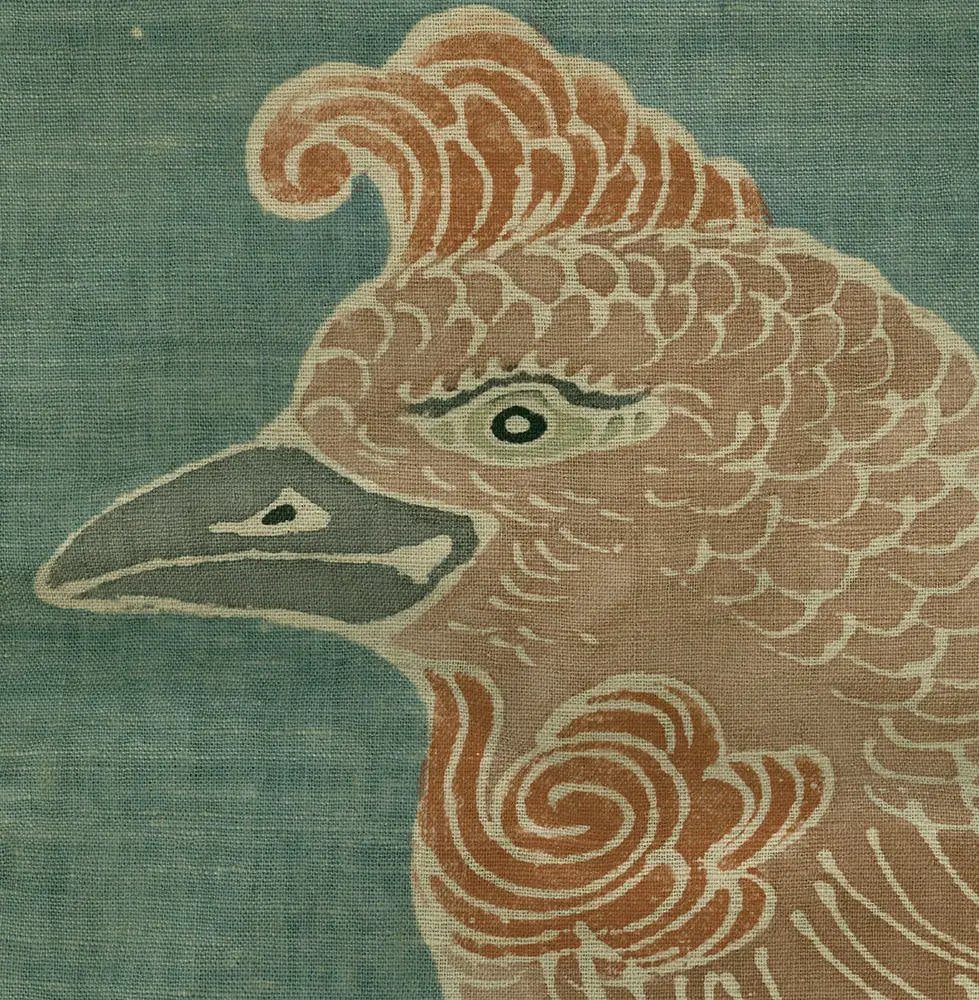
The central motif features a majestic phoenix (ho-o) perched upon the branch of a paulownia tree. According to Japanese legend, the phoenix is a celestial bird that descends to earth only to alight upon the paulownia, appearing as an omen of peace and prosperity. As a composite creature, the phoenix embodies five core virtues: benevolence, righteousness, propriety, sincerity, and truthfulness. This imagery made it a highly cherished motif for bridal textiles. The design was achieved using the tsutsugaki technique—hand-drawing patterns with a rice-paste resist before dyeing. The palette includes earthy tones of red, orange, charcoal, and varying shades of blue against a distinctive greenish-blue base. Despite graceful fading consistent with its age, the piece remains in very good condition.

Payment Options: We primarily accept PayPal for all transactions. Credit and debit cards are not accepted. If you prefer to pay by personal check instead of PayPal, please note this preference in the "Additional comments" field when placing your order.Ordering Process
To receive your PayPal invoice, simply fill out the form.
Shipping Details: We ship all orders to the address associated with your PayPal payment. Please ensure your PayPal shipping address is current and accurate.A phone number is required during checkout, as our shipping carrier may need to contact you regarding delivery questions.Shipping RatesUnited States and Canada: $20International destinations (air mail): $40
