Copyright © 2026 Yorke Antique Textiles
.avif)


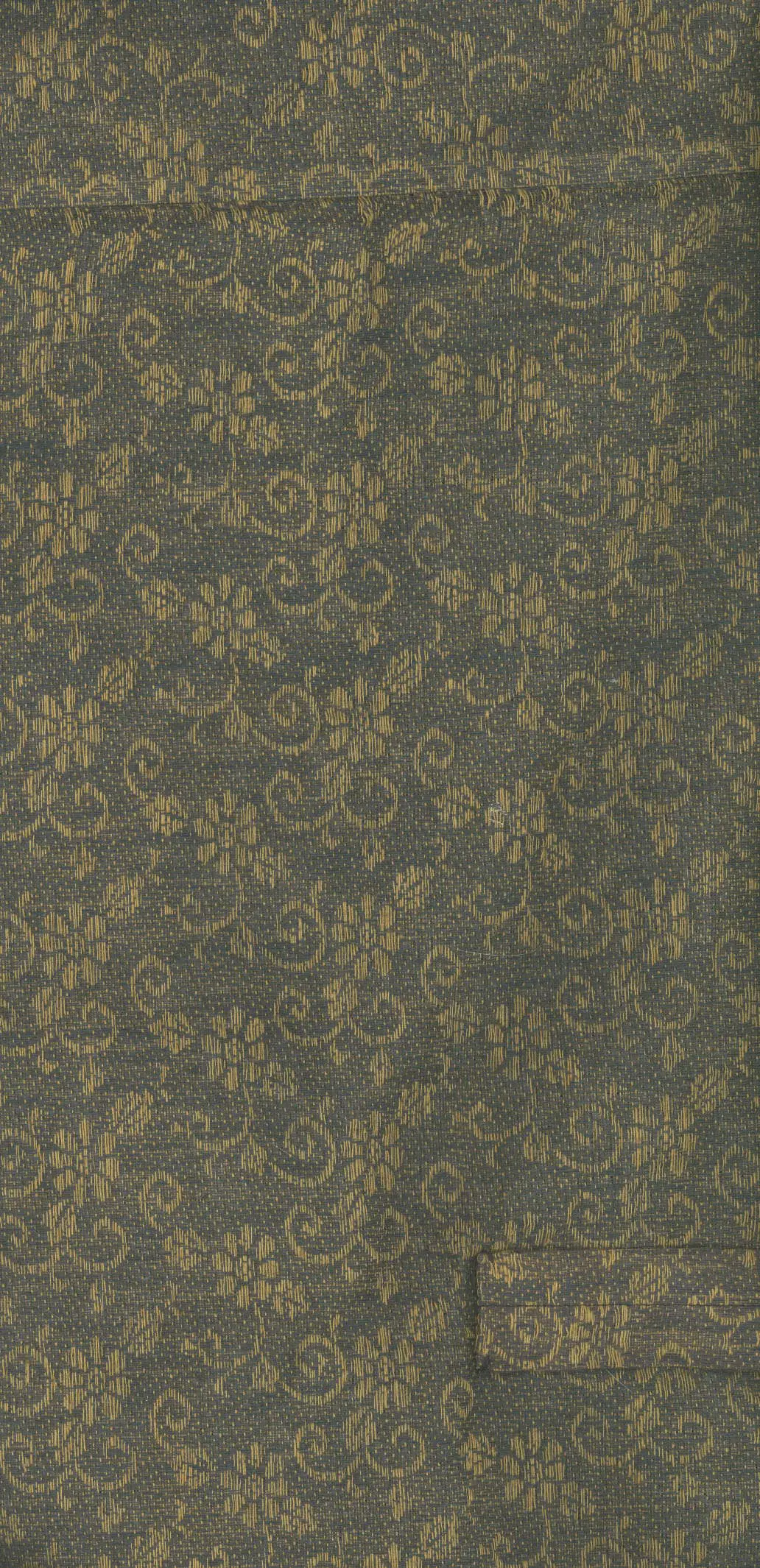
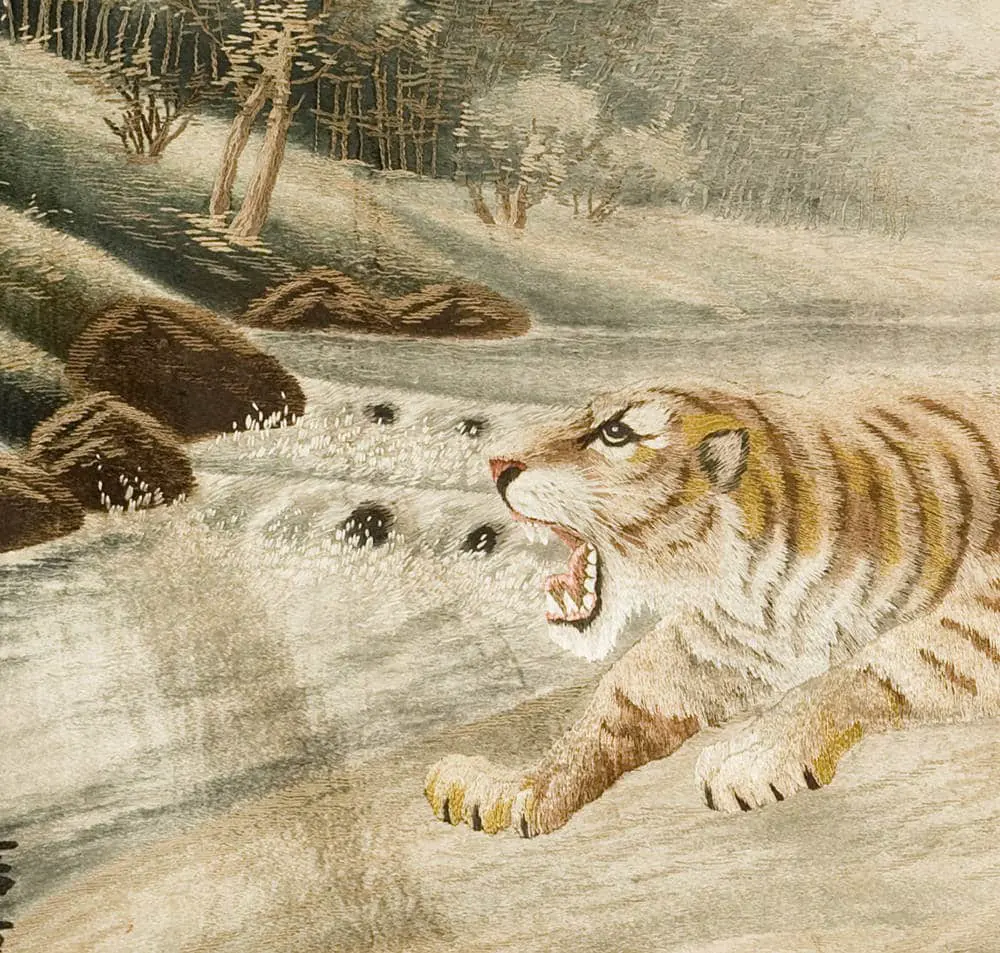
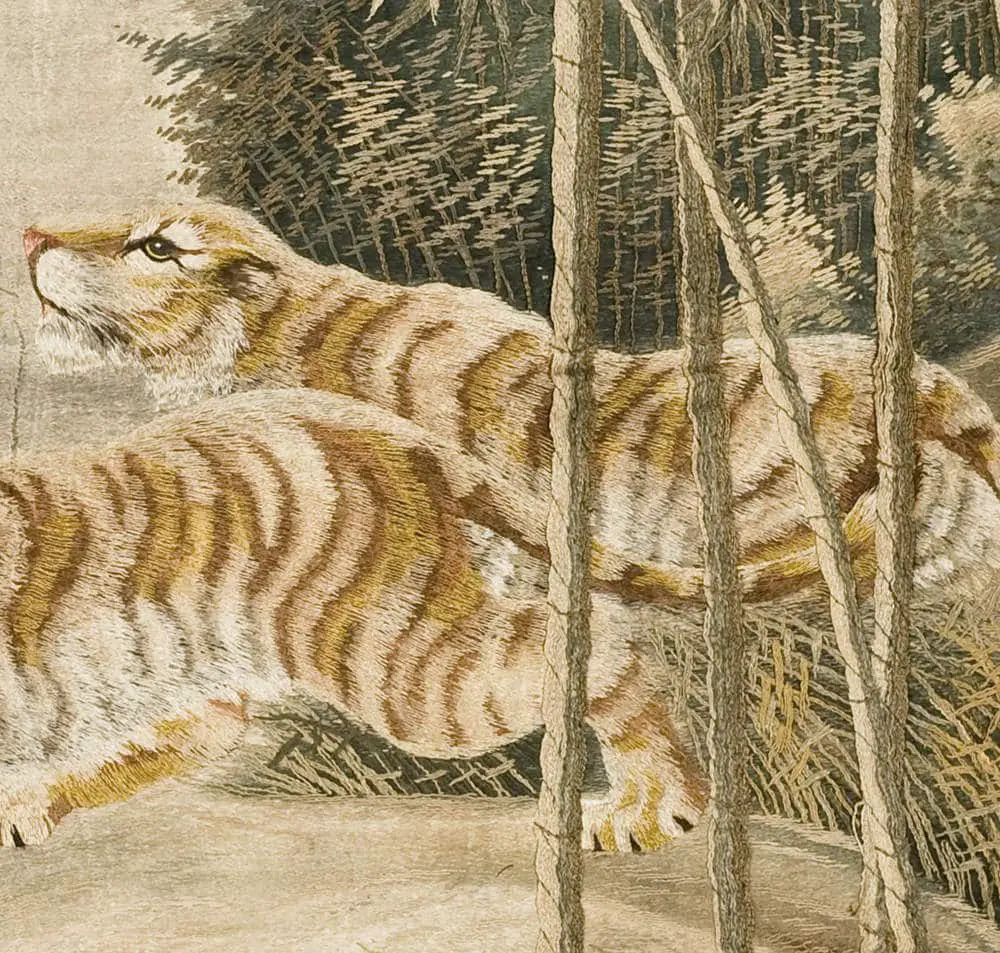
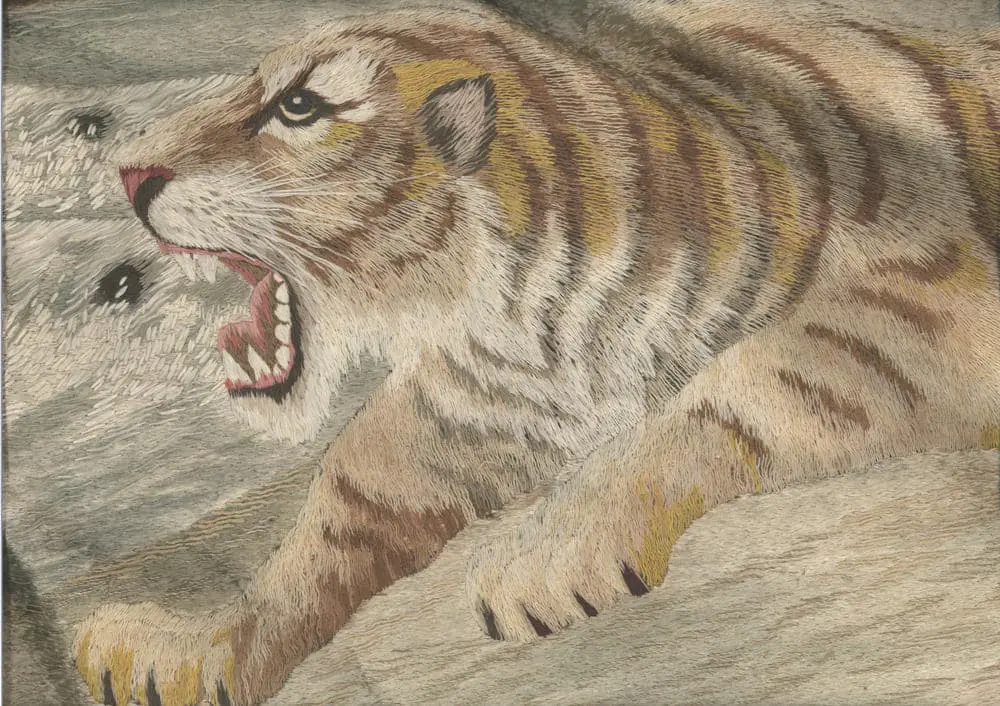
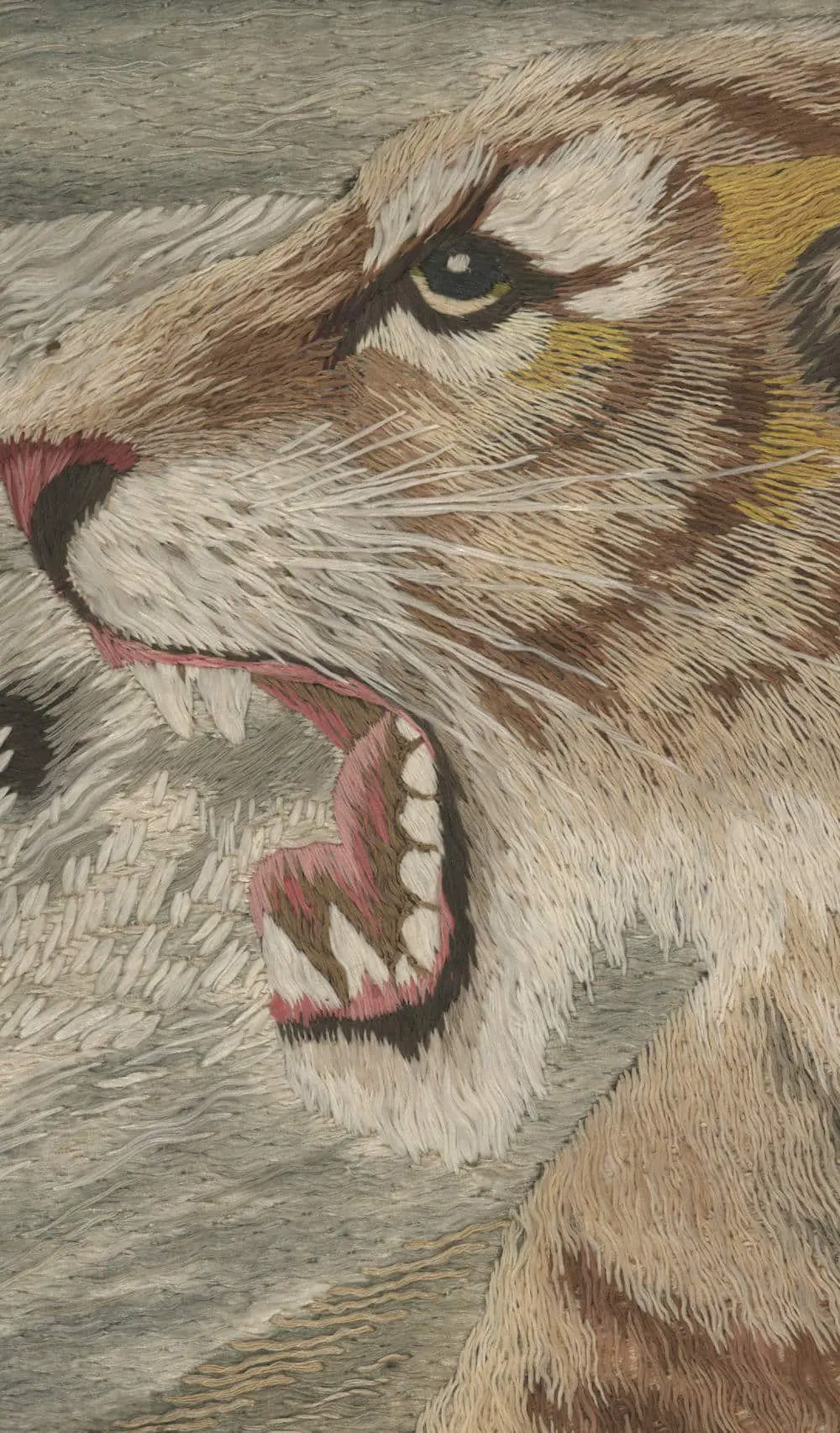
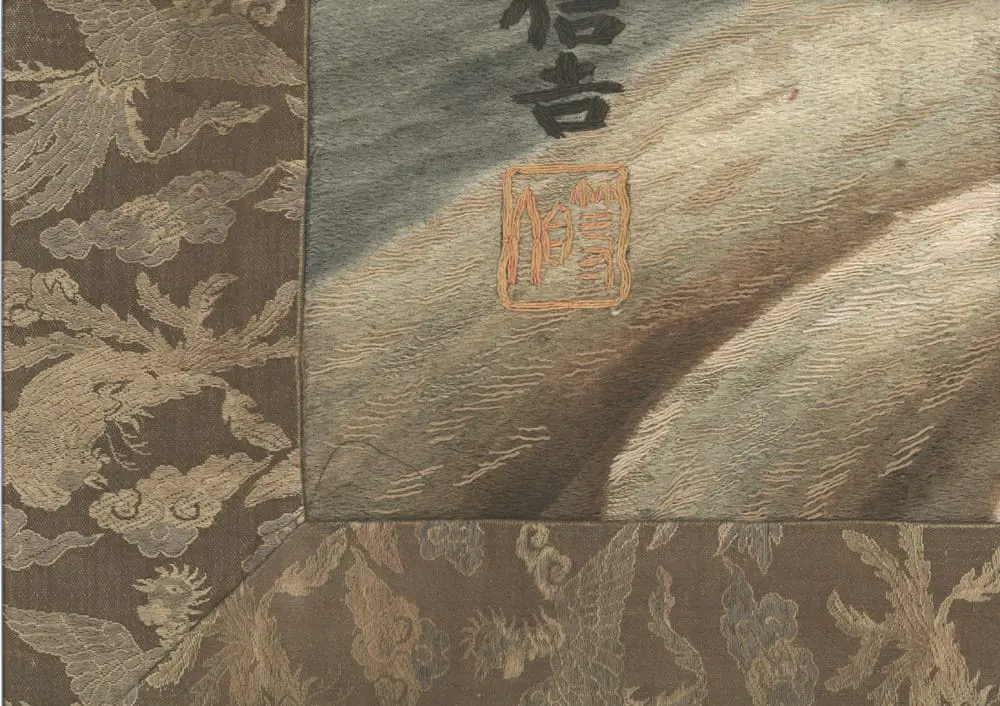
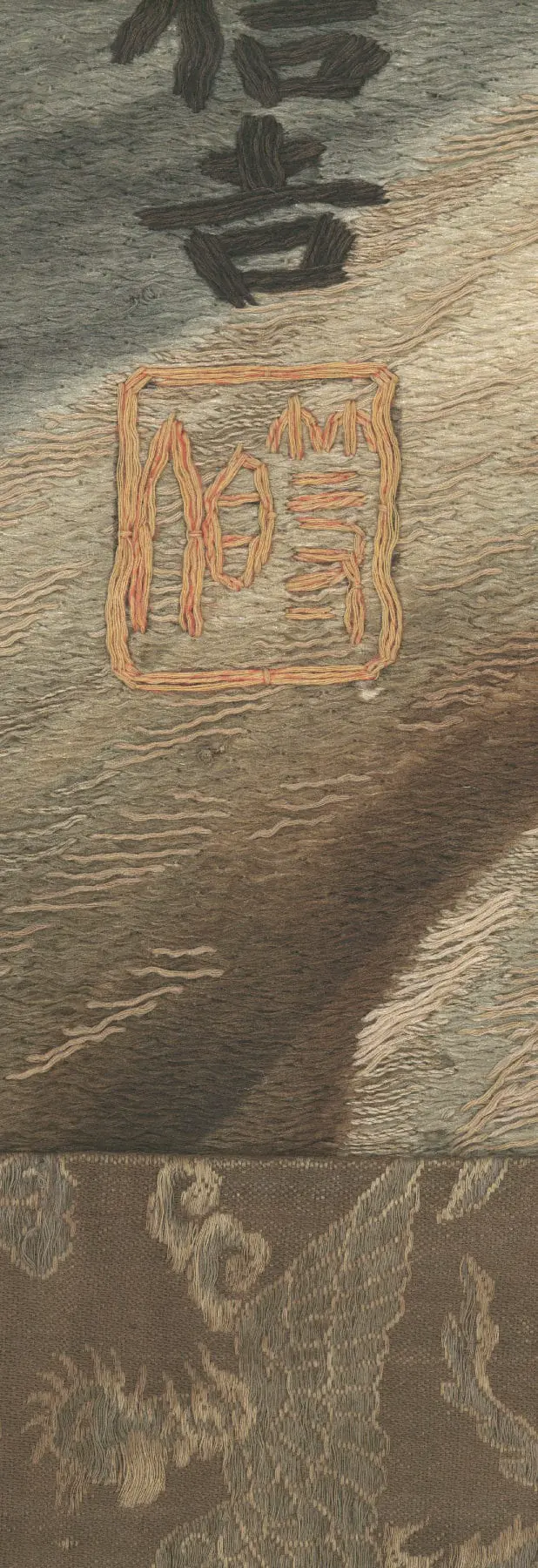
This monumental fully-embroidered silk panel, dating to the mid-Meiji period (1875–1900), is a masterpiece of Japanese textile artistry, likely produced in a prestigious specialty workshop. Measuring 84 inches by 60 inches (213 cm by 152 cm), the work features an embroidered "signature" in the lower-left corner, a mark of high-caliber craftsmanship from the era's renowned workshops. It is framed by a decorative woven border and supported by a sturdy dark green lining, remaining in excellent condition.
The central imagery depicts two powerful tigers moving through a dense bamboo grove beside a rushing mountain stream. In Japanese Zen philosophy and Buddhist teaching, this pairing represents a profound dichotomy: the tiger symbolizes bravery, spiritual force, and determination, while the bamboo represents humility, flexibility, and longevity. Together, they reflect the perpetual movement and balance of the world. This symbolism was deeply favored by the Samurai class, who saw the tiger as a representation of their own ethos, protected by and finding shelter within the flexible bamboo.

Payment Options: We primarily accept PayPal for all transactions. Credit and debit cards are not accepted. If you prefer to pay by personal check instead of PayPal, please note this preference in the "Additional comments" field when placing your order.Ordering Process
To receive your PayPal invoice, simply fill out the form.
Shipping Details: We ship all orders to the address associated with your PayPal payment. Please ensure your PayPal shipping address is current and accurate.A phone number is required during checkout, as our shipping carrier may need to contact you regarding delivery questions.Shipping RatesUnited States and Canada: $20International destinations (air mail): $40
