Copyright © 2026 Yorke Antique Textiles
.avif)

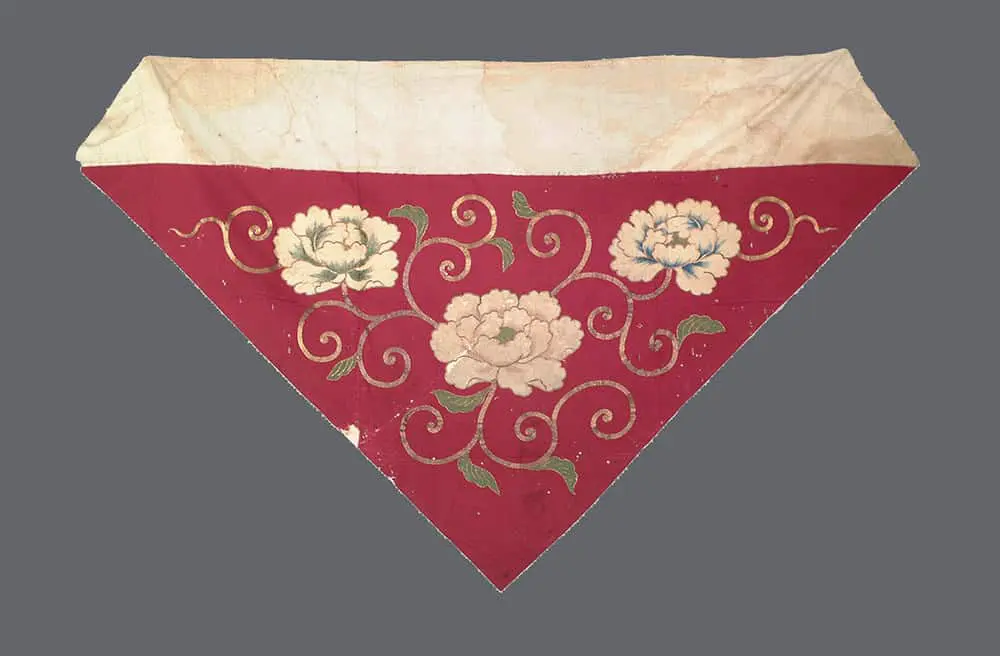
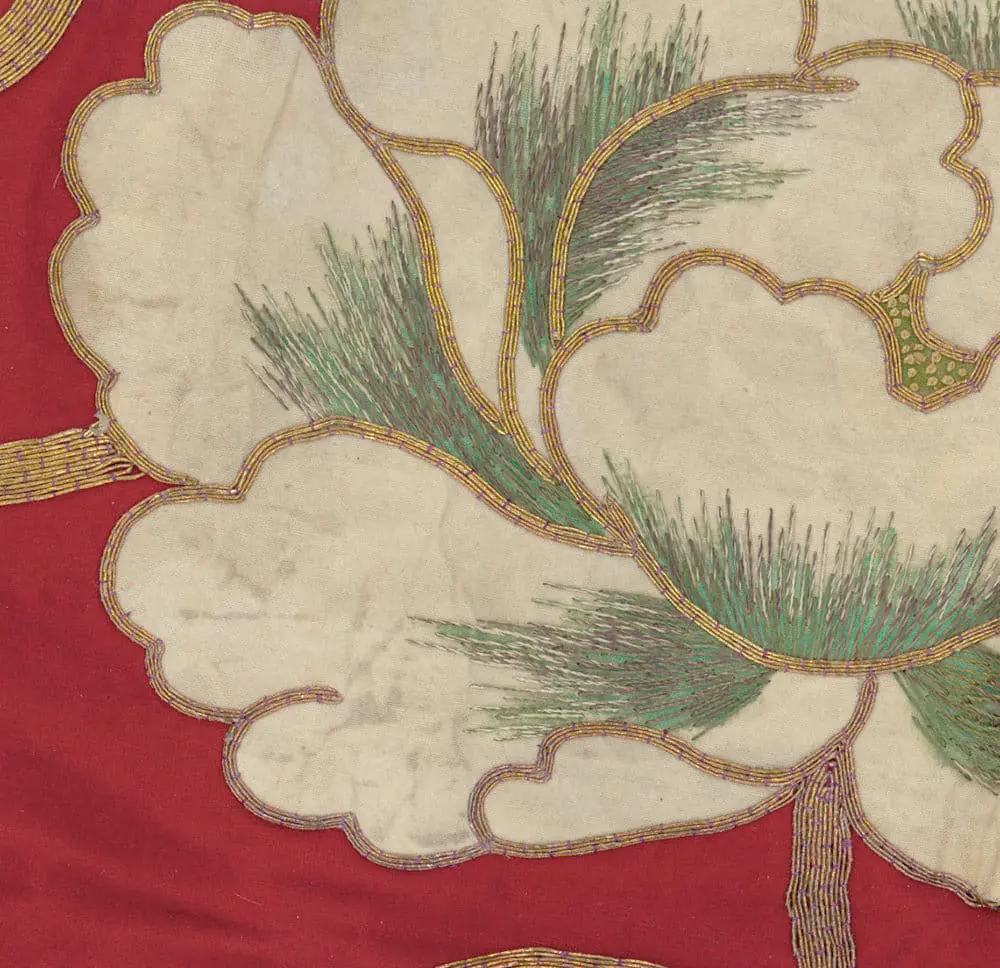
This expansive triangular uchishiki (Buddhist altar cloth) is a rare, dated example of Japanese temple textile art from the early Meiji period, specifically circa 1878. The date is preserved in Japanese kanji characters on the reverse side of the piece. Measuring 78 inches by 49 inches (198 cm x 124 cm), the cloth features a vibrant red background made of bast fiber, a traditional plant-based material. The central decoration consists of three large, lush peonies rendered as embroidered appliques. These floral motifs are connected by a flowing, symmetrical vine of golden scrolling tendrils and green leaves.
The peony, or botan, is a powerful symbol in Japan representing nobility, honor, and wealth. Historically, tree peonies were introduced to Japan in the 8th century by the Buddhist monk Kūkai (Kōbō Daishi) for their medicinal properties before becoming a mainstay of religious and imperial iconography. This piece is finished with a wide band of thick white silk damask along the top edge. While the uchishiki is in fair condition, it shows its age through several holes and visible staining, particularly across the white silk border.

Payment Options: We primarily accept PayPal for all transactions. Credit and debit cards are not accepted. If you prefer to pay by personal check instead of PayPal, please note this preference in the "Additional comments" field when placing your order.Ordering Process
To receive your PayPal invoice, simply fill out the form.
Shipping Details: We ship all orders to the address associated with your PayPal payment. Please ensure your PayPal shipping address is current and accurate.A phone number is required during checkout, as our shipping carrier may need to contact you regarding delivery questions.Shipping RatesUnited States and Canada: $20International destinations (air mail): $40
