Copyright © 2026 Yorke Antique Textiles
.avif)

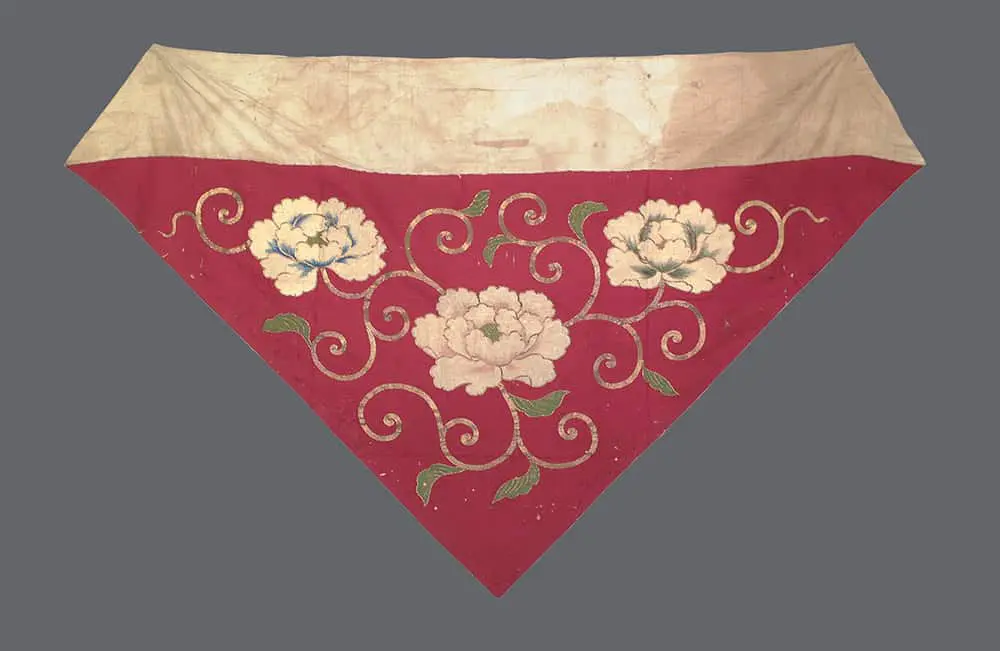
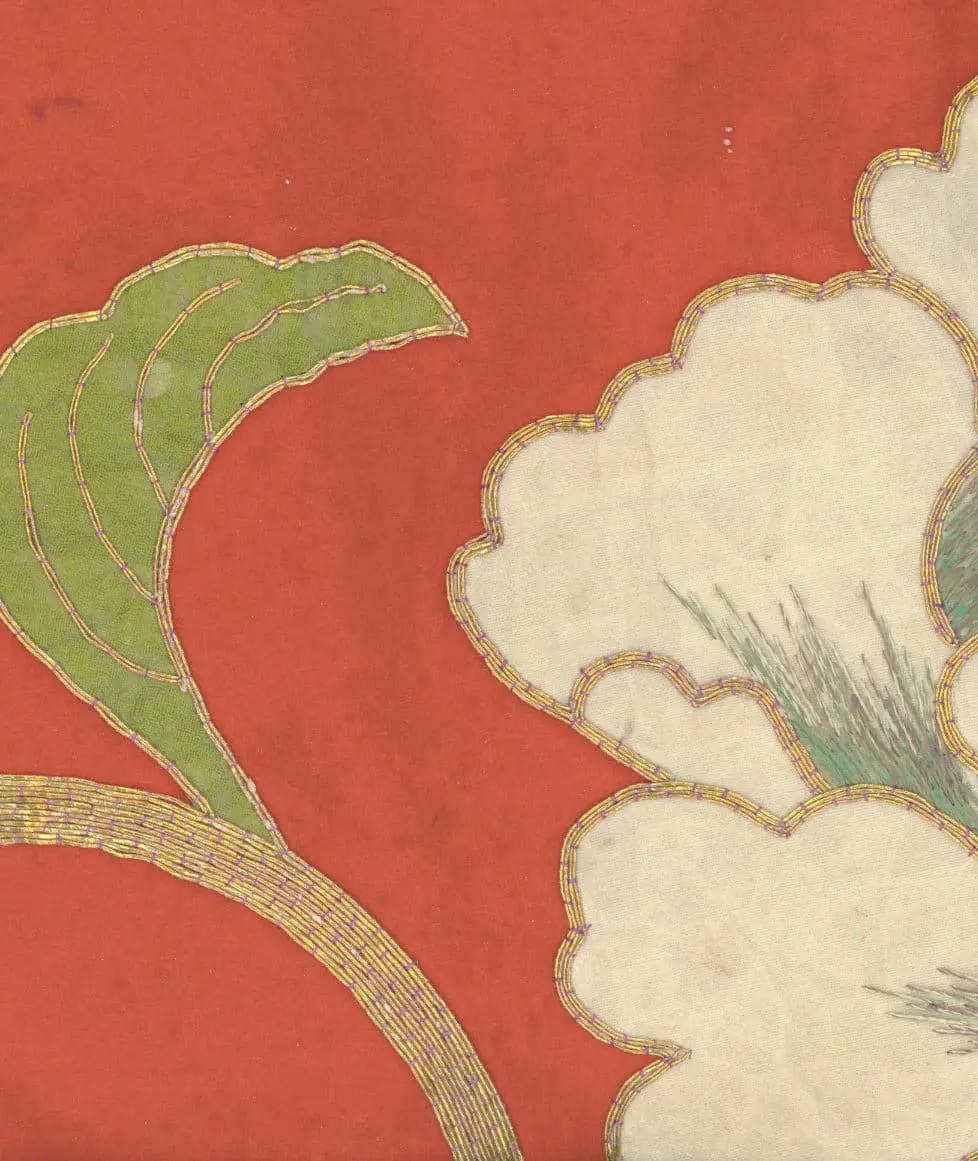
A monumental textile panel, dated to circa 1878 in the early Meiji period, showcases bold auspicious imagery on a grand scale. Measuring 80 inches by 49 inches (203 cm x 124 cm), this panel was likely created as temple or ceremonial hangings. The ground is a vibrant red bast-fiber fabric, a durable material often used for significant public or religious displays.
The central motif features large, white peonies rendered with embroidered applique. In Japan, the peony is revered as the "King of Flowers" and serves as a potent symbol of nobility, wealth, and high social standing. The history of the flower in Japan dates back to the 8th century, when the Buddhist monk Kong Hai (Kobo Daishi) introduced tree peonies from China for medicinal use. On this panel, the blossoms are framed by swirling gold-thread vines and green leaves, adding a sense of rhythmic movement to the composition. Despite it's age, the panel remains in good condition, with only minor wear and small holes in the lower red background.

Payment Options: We primarily accept PayPal for all transactions. Credit and debit cards are not accepted. If you prefer to pay by personal check instead of PayPal, please note this preference in the "Additional comments" field when placing your order.Ordering Process
To receive your PayPal invoice, simply fill out the form.
Shipping Details: We ship all orders to the address associated with your PayPal payment. Please ensure your PayPal shipping address is current and accurate.A phone number is required during checkout, as our shipping carrier may need to contact you regarding delivery questions.Shipping RatesUnited States and Canada: $20International destinations (air mail): $40
