Copyright © 2026 Yorke Antique Textiles
.avif)

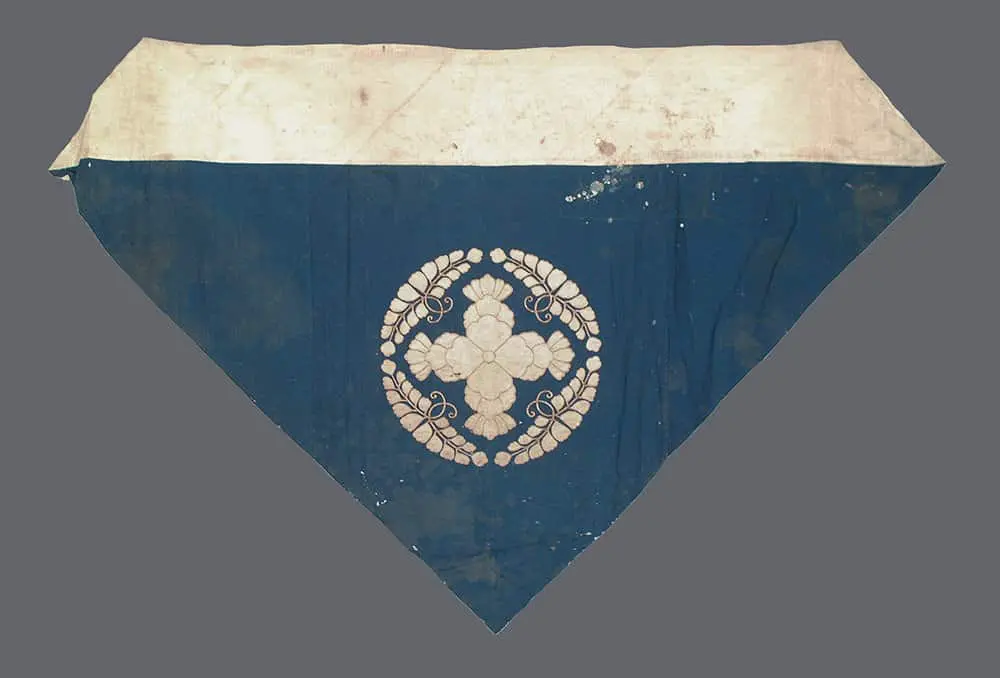
This monumental triangular uchishiki (Buddhist altar cloth), dating to approximately 1876 (Meiji 9), is a significant historical textile with documented provenance. Measuring an impressive 78 inches by 50 inches (198 cm x 127 cm), it consists of a deep indigo-blue cotton field topped with a broad band of cream-colored silk.
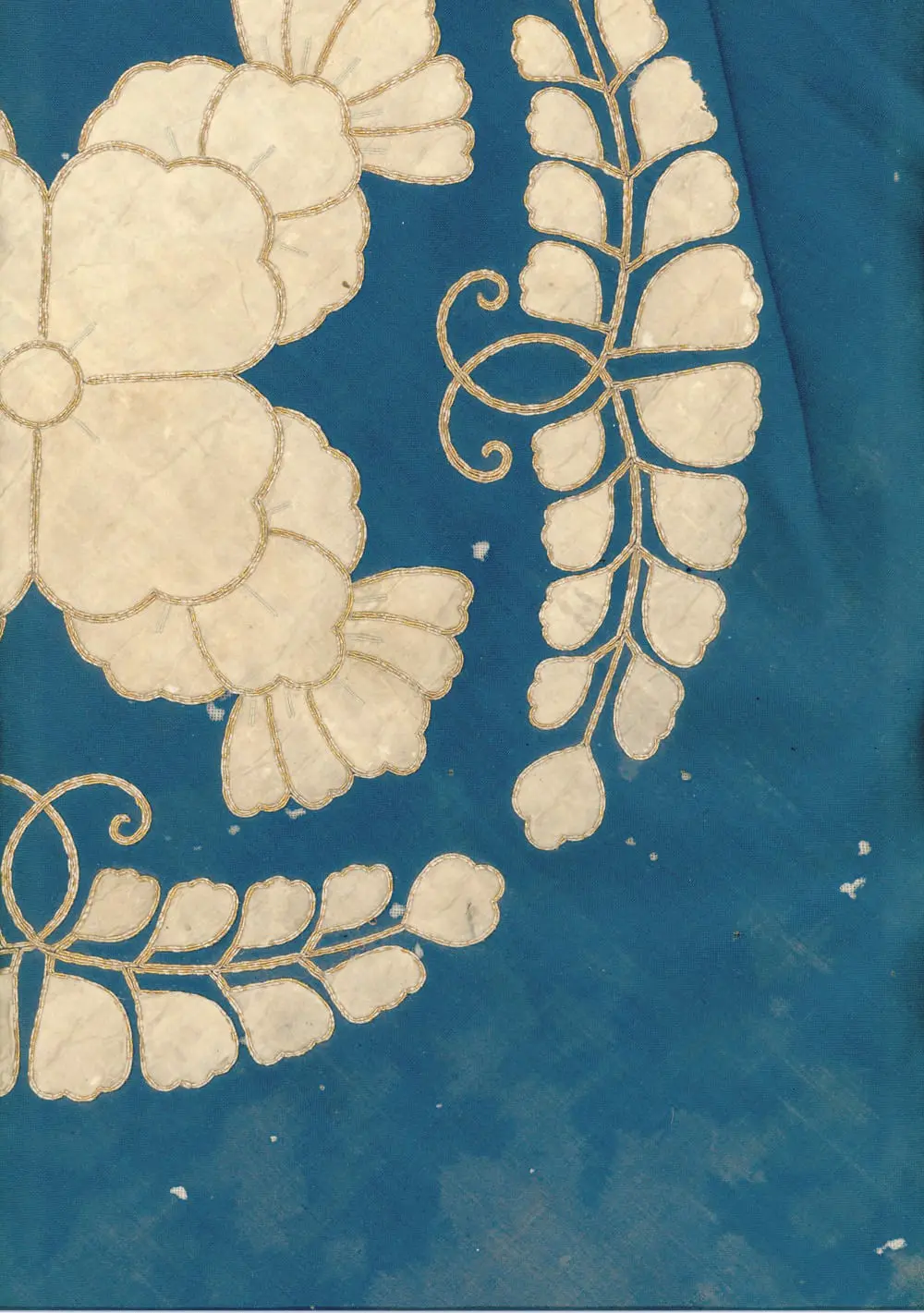
The focal point is a large, prominently placed wisteria family crest (fuji-mon) at the center of the blue field. The crest is meticulously executed using metallic couching, where gold or silver threads are laid onto the surface and secured with fine silk stitches to create a luminous, textured effect. In Japanese culture, the wisteria is a powerful symbol of love and resilience, famously depicted in the kabuki drama Fuji Musume (Wisteria Maiden). Its weeping branches represent the heart's ability to endure sorrow and flourish through adversity.
The reverse side of the lining features kanji characters indicating that the piece was dedicated for a Buddhist altar in 1876. The textile remains in good condition, though it displays some small holes in the background cotton that reflect its age and ritual history.

Payment Options: We primarily accept PayPal for all transactions. Credit and debit cards are not accepted. If you prefer to pay by personal check instead of PayPal, please note this preference in the "Additional comments" field when placing your order.Ordering Process
To receive your PayPal invoice, simply fill out the form.
Shipping Details: We ship all orders to the address associated with your PayPal payment. Please ensure your PayPal shipping address is current and accurate.A phone number is required during checkout, as our shipping carrier may need to contact you regarding delivery questions.Shipping RatesUnited States and Canada: $20International destinations (air mail): $40
