Copyright © 2026 Yorke Antique Textiles
.avif)

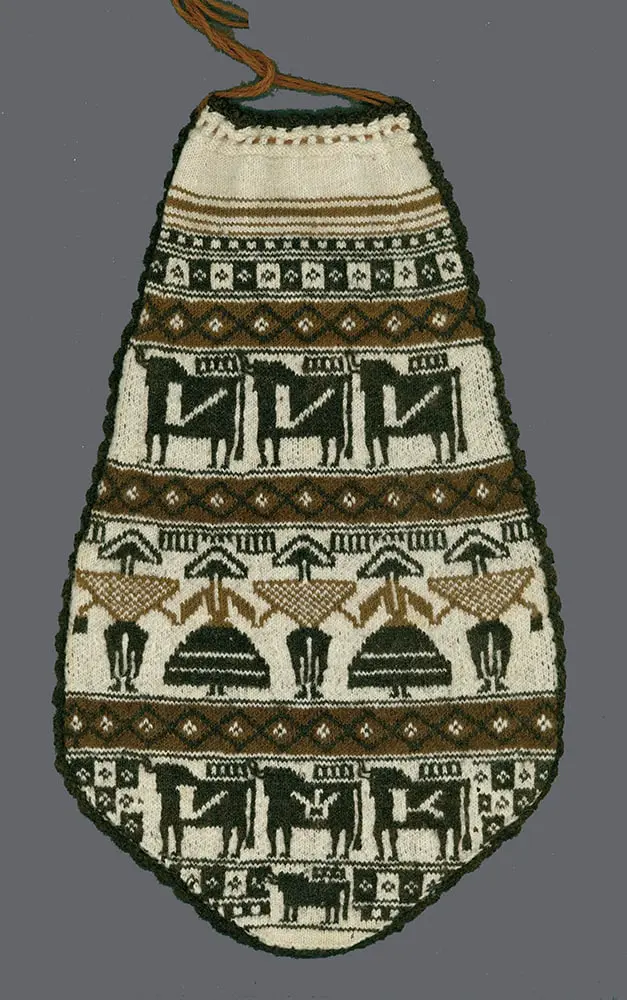
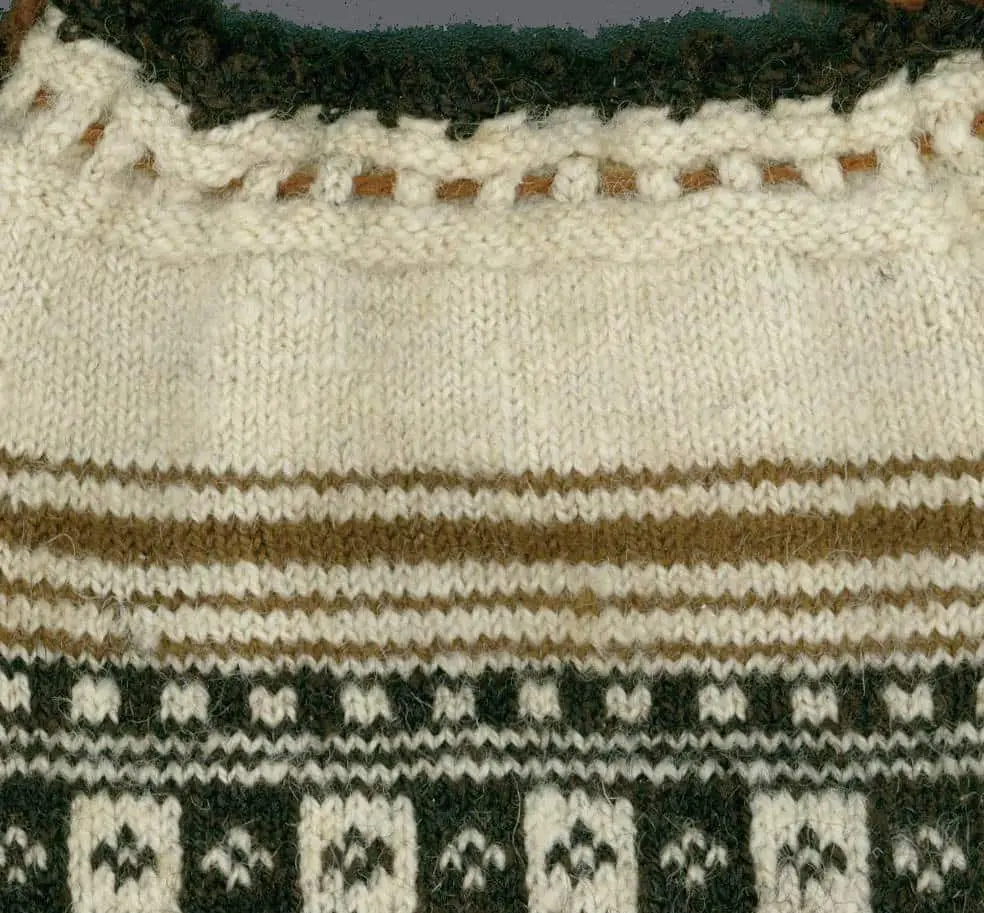
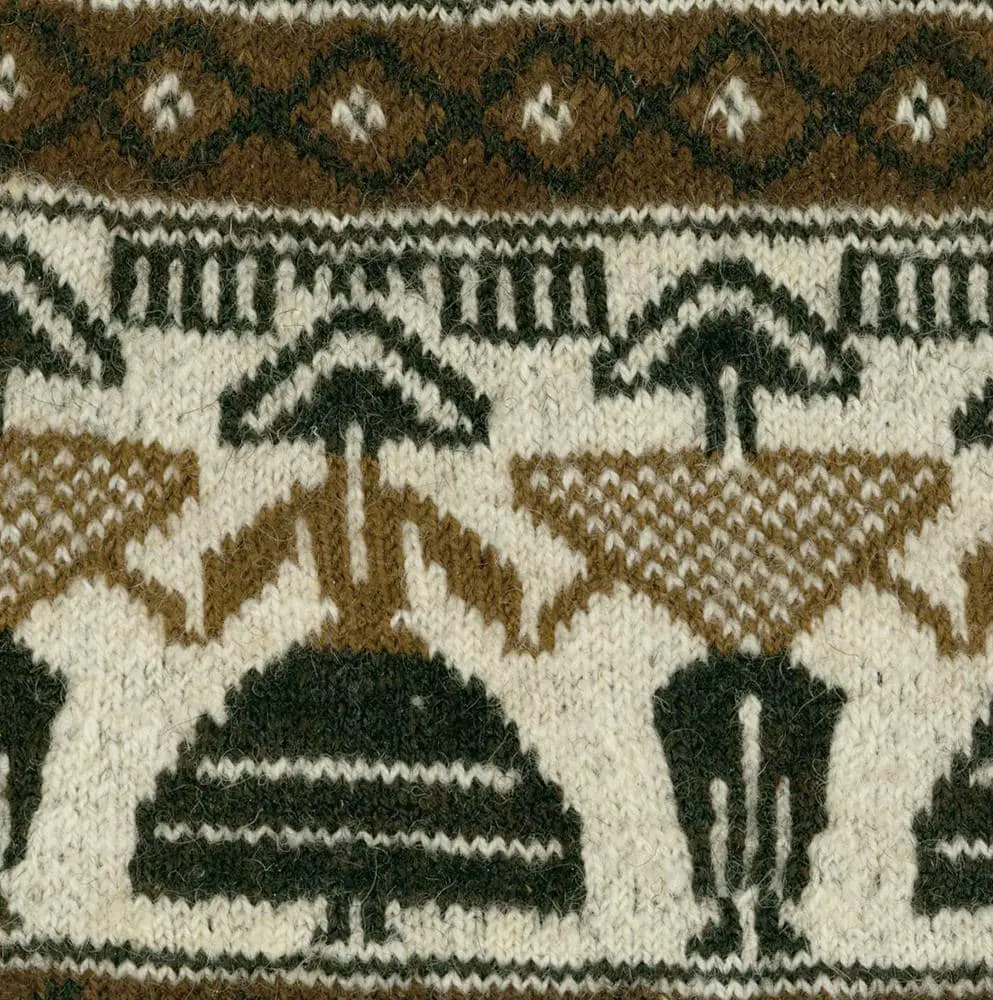
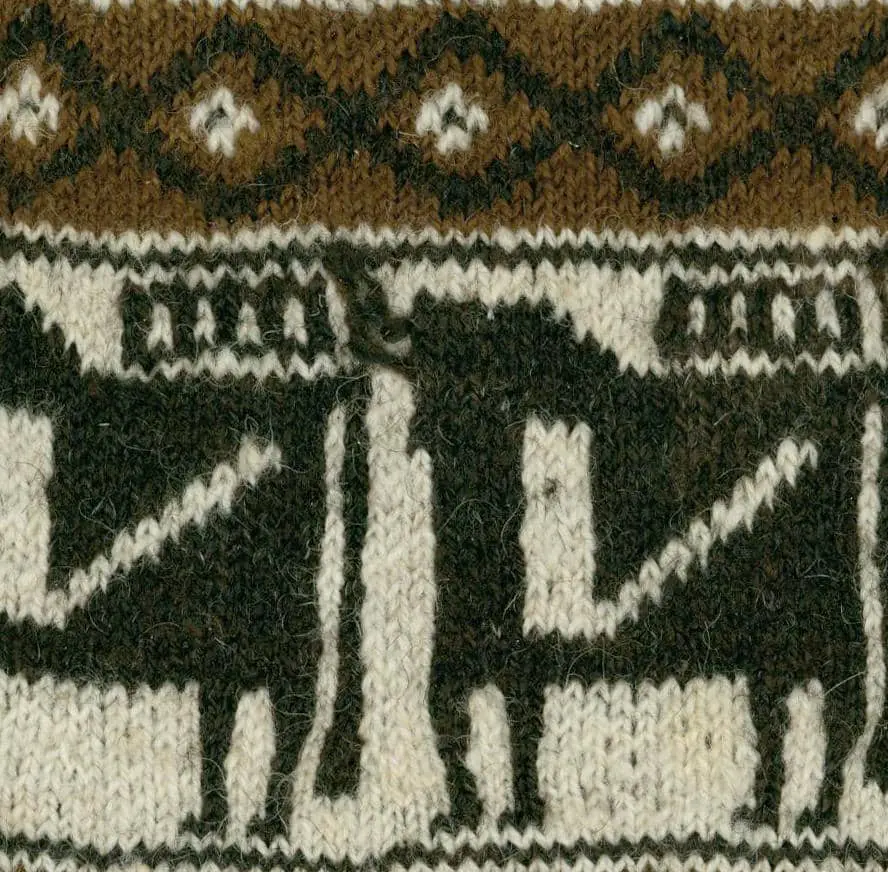
This large and finely knitted ceremonial bag originates from the Department of La Paz, Bolivia, likely from the regions south or east of the shores of Lake Titicaca. Dating to the 1930s or 1940s, it measures approximately 8.5 inches by 13 inches (22 cm x 33 cm). Unlike the more common woven chuspas (coca bags), this piece is a rare example of a woman's ceremonial container, intricately hand-knitted with high-tension camelid wool. The bag is composed of three horizontal decorative bands, separated by narrow monochromatic stripes.
The central register features a rhythmic progression of stylized human figures and bulls, rendered in a high-contrast palette of cream and dark charcoal. These figures are depicted in a "heraldic" pose, flanked by floral or solar motifs that denote a special-occasion or ceremonial status. The top and bottom bands repeat smaller geometric icons, including diamonds and zigzags, which are traditional to the Aymara communities of the Lake Titicaca basin. The top of the bag is finished with a series of small, knitted loops, likely used to draw the container closed or to secure it to a wider sash or belt.

Payment Options: We primarily accept PayPal for all transactions. Credit and debit cards are not accepted. If you prefer to pay by personal check instead of PayPal, please note this preference in the "Additional comments" field when placing your order.Ordering Process
To receive your PayPal invoice, simply fill out the form.
Shipping Details: We ship all orders to the address associated with your PayPal payment. Please ensure your PayPal shipping address is current and accurate.A phone number is required during checkout, as our shipping carrier may need to contact you regarding delivery questions.Shipping RatesUnited States and Canada: $20International destinations (air mail): $40
