Copyright © 2026 Yorke Antique Textiles
.avif)

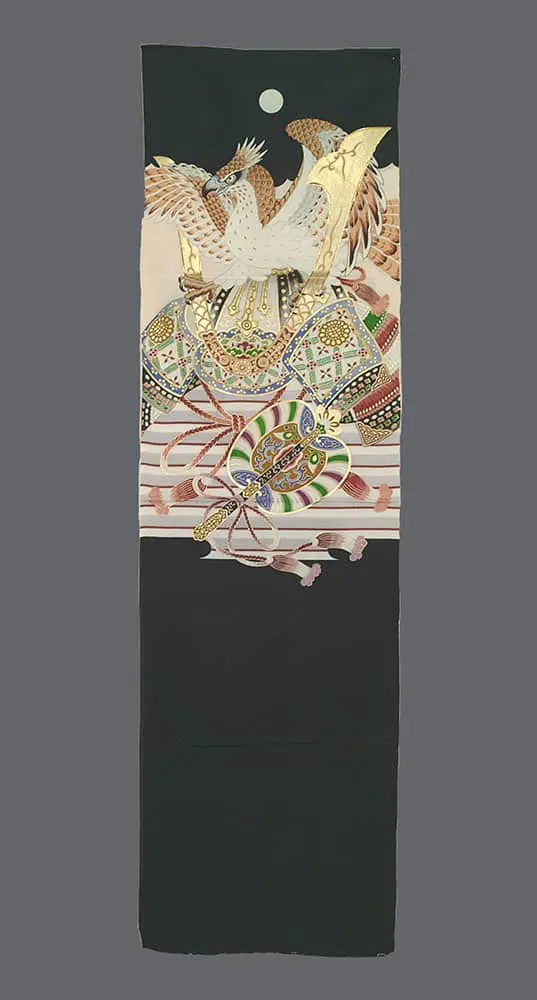
This magnificent silk panel originates from Japan and dates to the late Showa period (1970–1980). Measuring approximately 14 inches by 70 inches (35.5 cm x 178 cm), the textile was originally designed for a miyamairi kimono—the formal garment used for a baby boy’s first visit to a Shinto shrine. The composition features a bold, vertical layout with a central black field separating a vibrant, highly detailed scene from the solid lower portion of the garment.
The visual narrative is dominated by a powerful hawk (taka) perched atop a traditional samurai kabuto (helmet), motifs traditionally chosen to represent strength, keen vision, and the hope that the boy will grow into a man of noble character. The hawk is rendered with exquisite detail, its white and brown plumage highlighted with shimmering gold foil and delicate hand-painting. Below the hawk, a ceremonial gunbai (war fan) is depicted with intricate multi-colored patterns and tassels, further emphasizing the martial and protective themes of the piece. These auspicious symbols are set against a cream background with horizontal grey stripes, creating a dynamic sense of depth and movement.

Payment Options: We primarily accept PayPal for all transactions. Credit and debit cards are not accepted. If you prefer to pay by personal check instead of PayPal, please note this preference in the "Additional comments" field when placing your order.Ordering Process
To receive your PayPal invoice, simply fill out the form.
Shipping Details: We ship all orders to the address associated with your PayPal payment. Please ensure your PayPal shipping address is current and accurate.A phone number is required during checkout, as our shipping carrier may need to contact you regarding delivery questions.Shipping RatesUnited States and Canada: $20International destinations (air mail): $40
