Copyright © 2026 Yorke Antique Textiles
.avif)

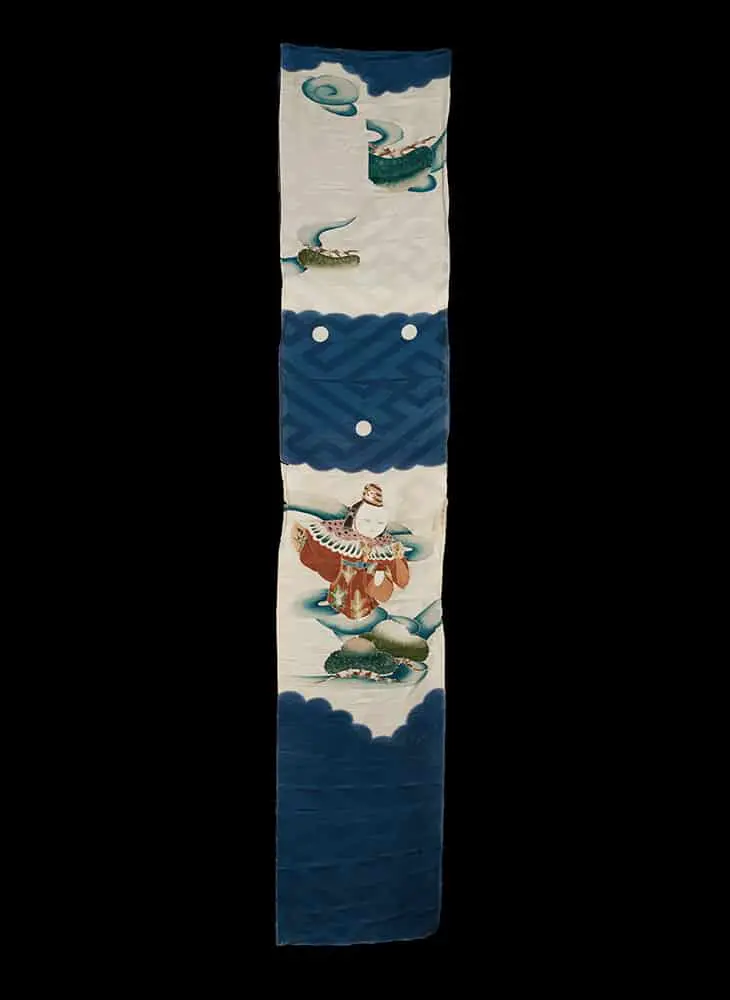
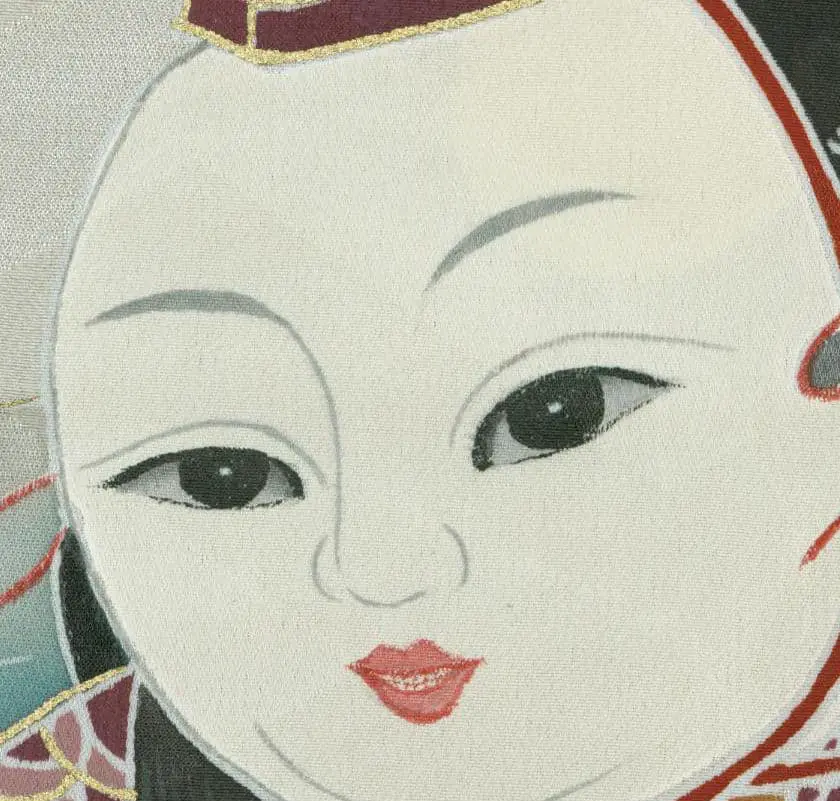
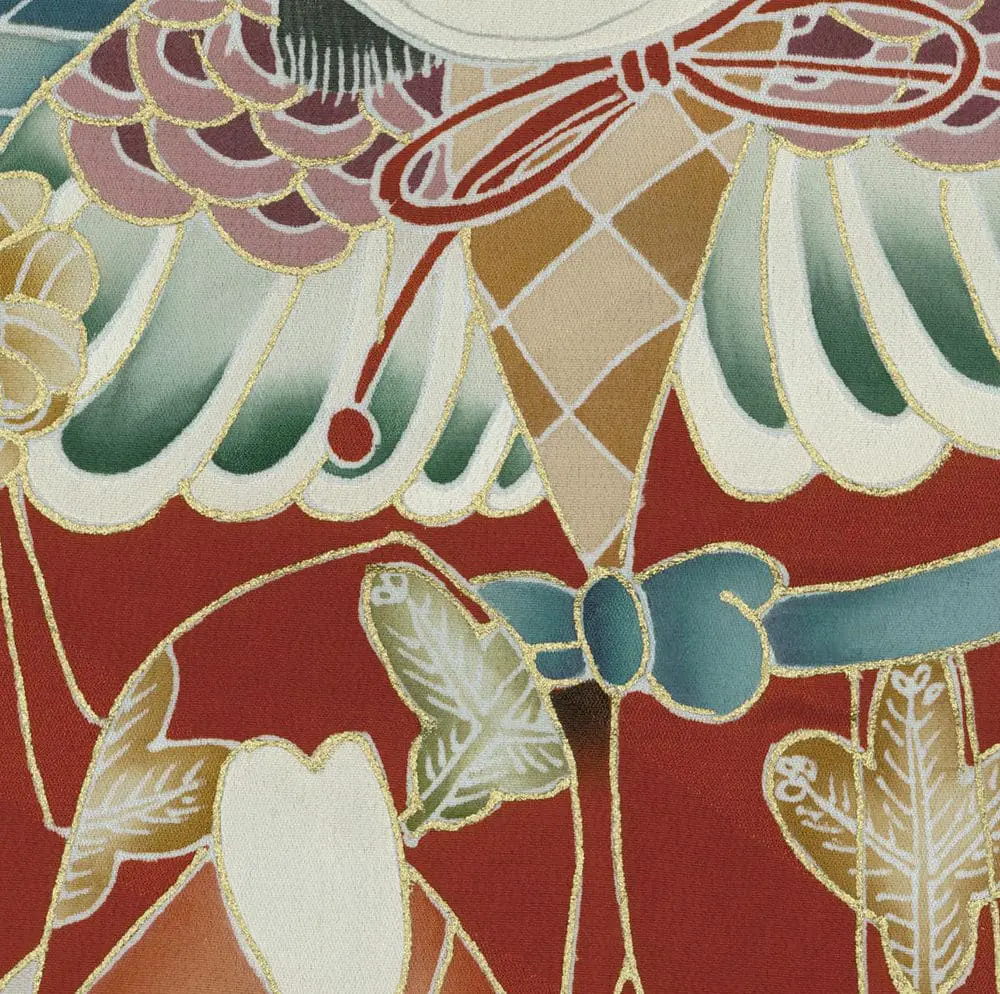
This exquisite silk panel originates from Japan and dates to the late Showa period (1970–1980). Measuring approximately 14 inches by 70 inches (35.5 cm x 178 cm), the textile is a section of rinzu silk—a luxurious damask weave known for its soft luster and woven background patterns. Originally intended for a miyamairi kimono for a baby boy's first shrine visit, the panel is in very good condition and features a complex, tiered composition of symbolic imagery. The design is punctuated by horizontal bands of deep teal-blue featuring white circular mon (family crests) set against a woven sayagata (key fret) background.
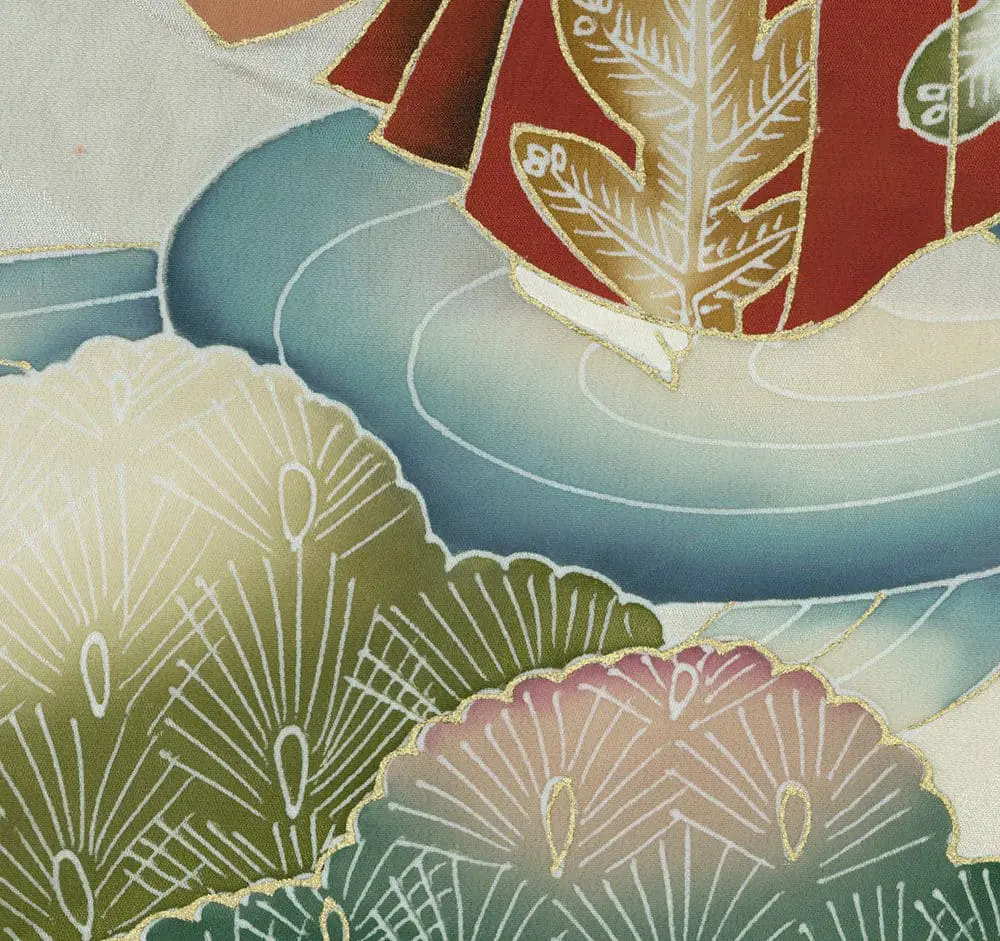
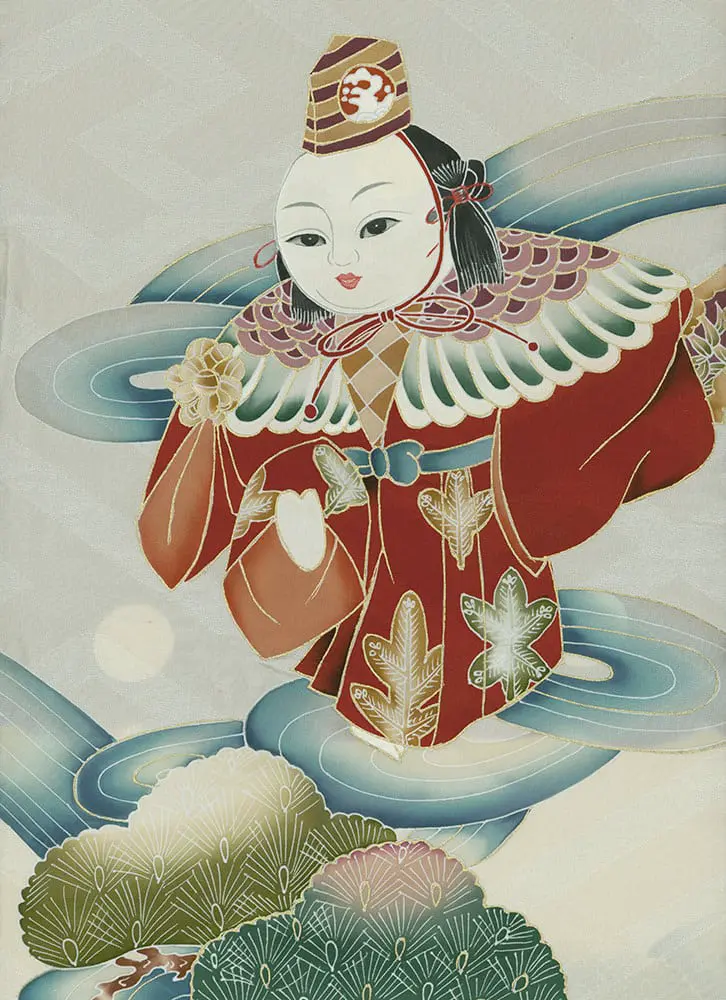
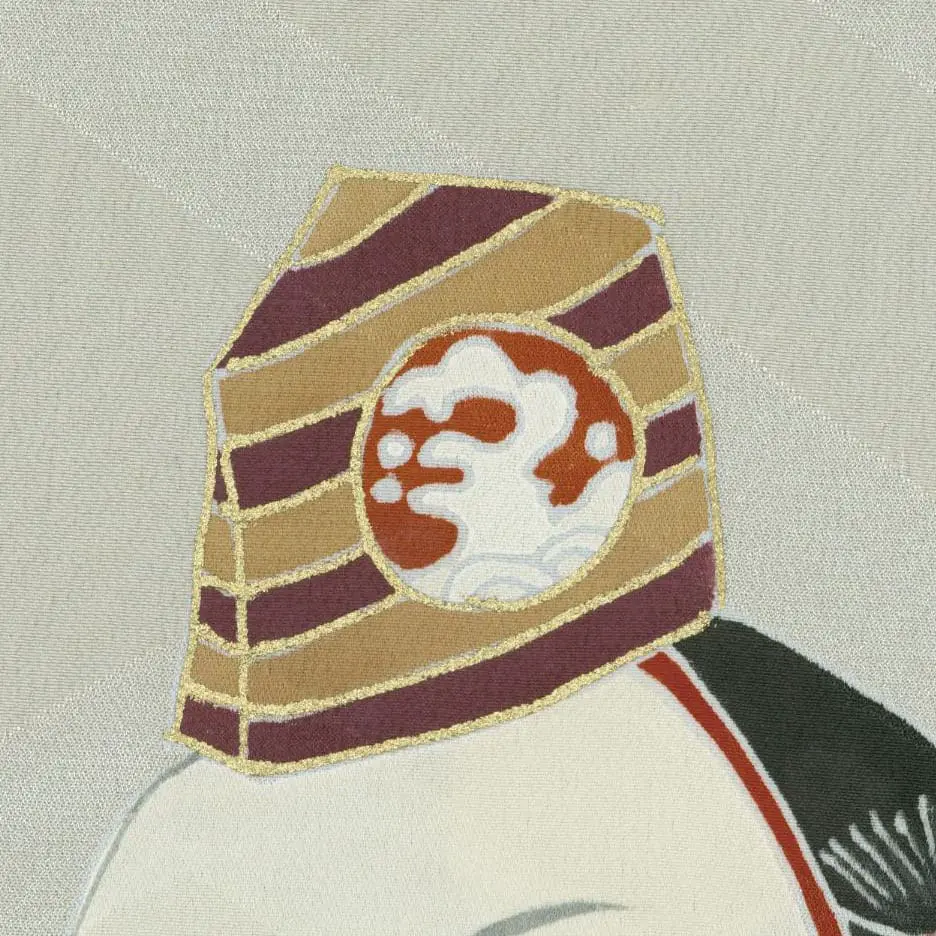
The visual narrative centers on a hand-painted Sambaso dancer, a character from the traditional Noh and Kabuki theater associated with the "Dance of the Three Ages". The dancer is depicted in ceremonial robes and a distinctive tall hat, appearing amidst swirling blue clouds and pine trees (matsu). In the context of a boy's ceremonial garment, the Sambaso dancer serves as a powerful auspicious symbol intended to bring long life, bountiful harvests, and general good fortune to the child. The upper registers of the panel continue this theme with additional stylized clouds and pine boughs, creating a sense of celestial protection that spans the entire length of the textile.

Payment Options: We primarily accept PayPal for all transactions. Credit and debit cards are not accepted. If you prefer to pay by personal check instead of PayPal, please note this preference in the "Additional comments" field when placing your order.Ordering Process
To receive your PayPal invoice, simply fill out the form.
Shipping Details: We ship all orders to the address associated with your PayPal payment. Please ensure your PayPal shipping address is current and accurate.A phone number is required during checkout, as our shipping carrier may need to contact you regarding delivery questions.Shipping RatesUnited States and Canada: $20International destinations (air mail): $40
