Copyright © 2026 Yorke Antique Textiles
.avif)

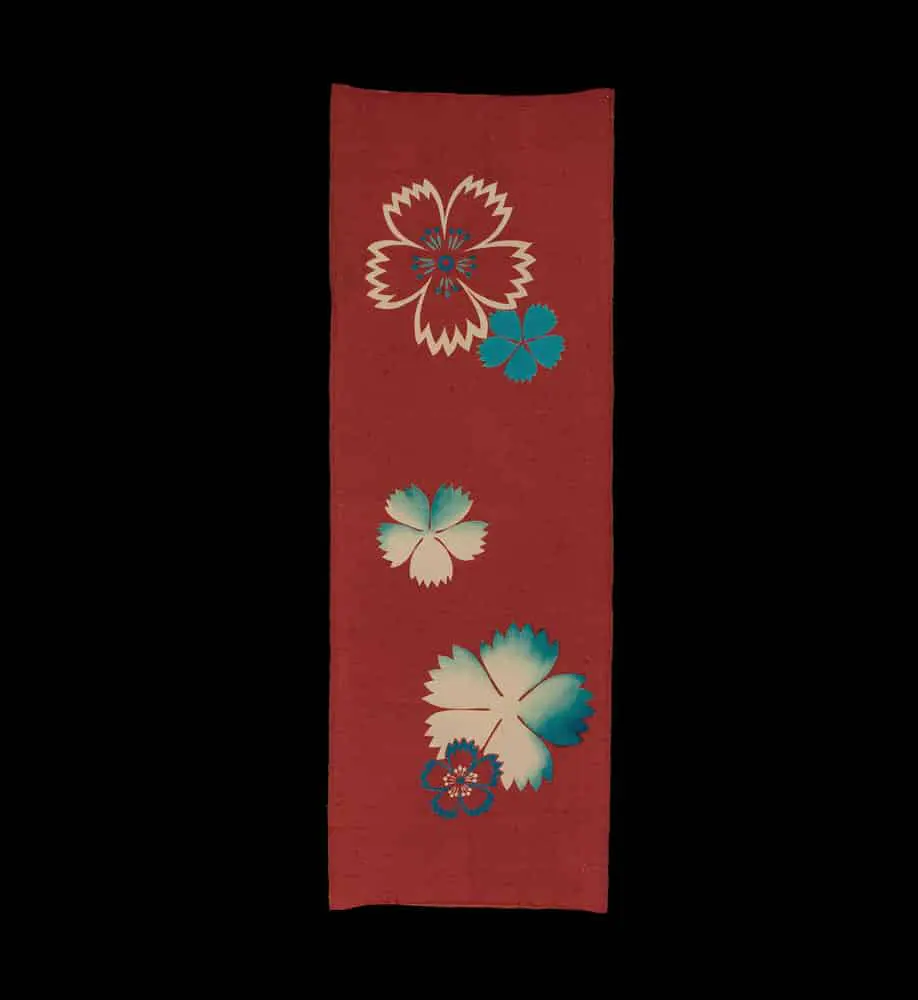
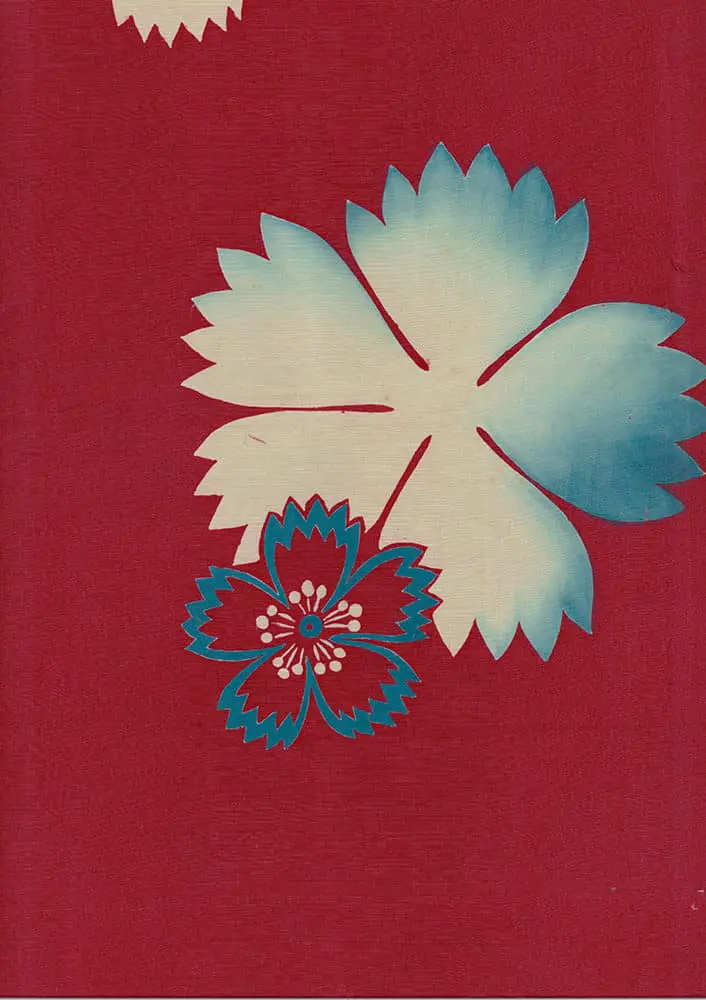
This vibrant textile originates from the Taisho period (1912–1926) and is a scholarly example of the bold, graphic color-play that defined the pre-war era. Measuring 14.5 inches by 43 inches (37 cm x 109 cm), the piece represents a complete panel from a disassembled kimono, preserved in very good condition. The substrate is a high-quality silk dyed in a saturated crimson or deep terracotta red, featuring a subtle horizontal weave that provides a rhythmic structural foundation and an excellent drape.
The visual narrative is dominated by large-scale nadeshiko (fringed pink) blossoms, rendered in a striking, modernist style. The flowers are executed with crisp white centers that transition into a luminous teal or turquoise gradient toward the serrated petal edges. One primary blossom is uniquely outlined in a darker blue, while others feature soft watercolor-like "bleeding" of teal into the white, a technique that creates a sense of three-dimensional depth. This daring use of complementary colors—saturated red against cool turquoise—is a hallmark of the "Taisho Roman" aesthetic, which favored energetic and non-traditional color palettes.

Payment Options: We primarily accept PayPal for all transactions. Credit and debit cards are not accepted. If you prefer to pay by personal check instead of PayPal, please note this preference in the "Additional comments" field when placing your order.Ordering Process
To receive your PayPal invoice, simply fill out the form.
Shipping Details: We ship all orders to the address associated with your PayPal payment. Please ensure your PayPal shipping address is current and accurate.A phone number is required during checkout, as our shipping carrier may need to contact you regarding delivery questions.Shipping RatesUnited States and Canada: $20International destinations (air mail): $40
