Copyright © 2026 Yorke Antique Textiles
.avif)

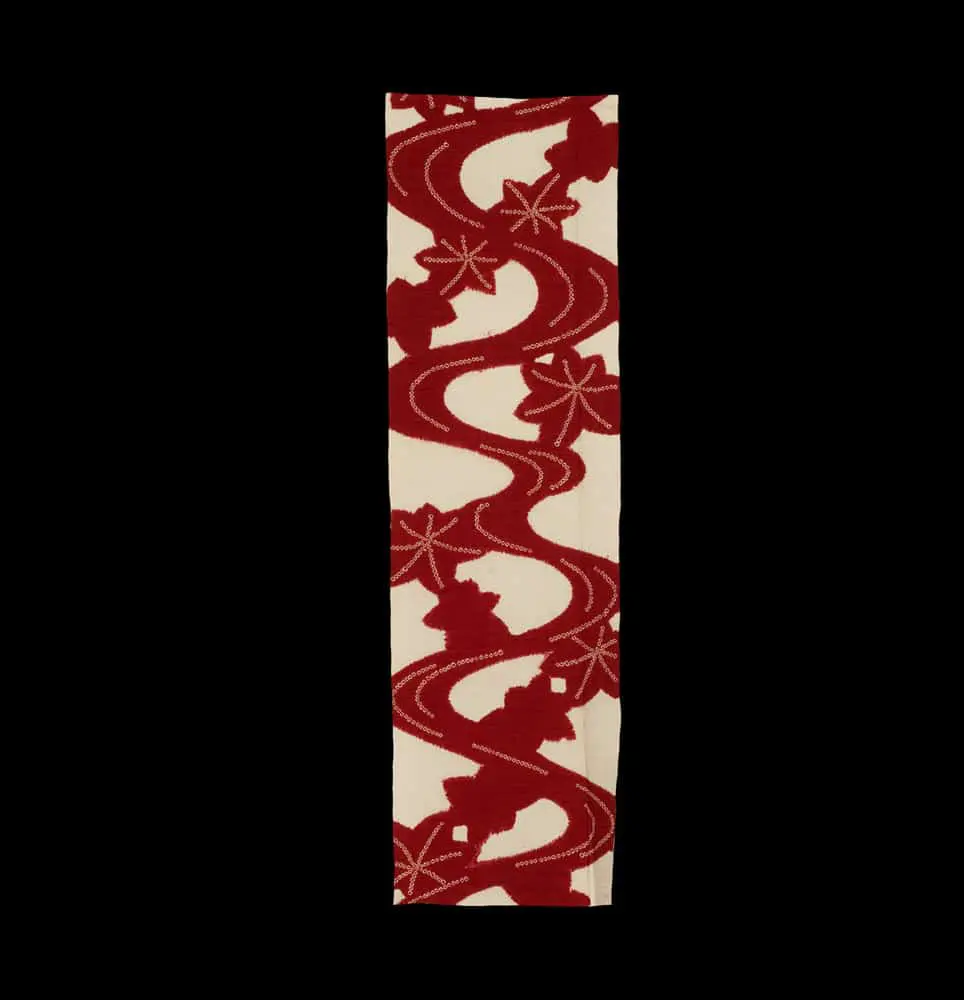
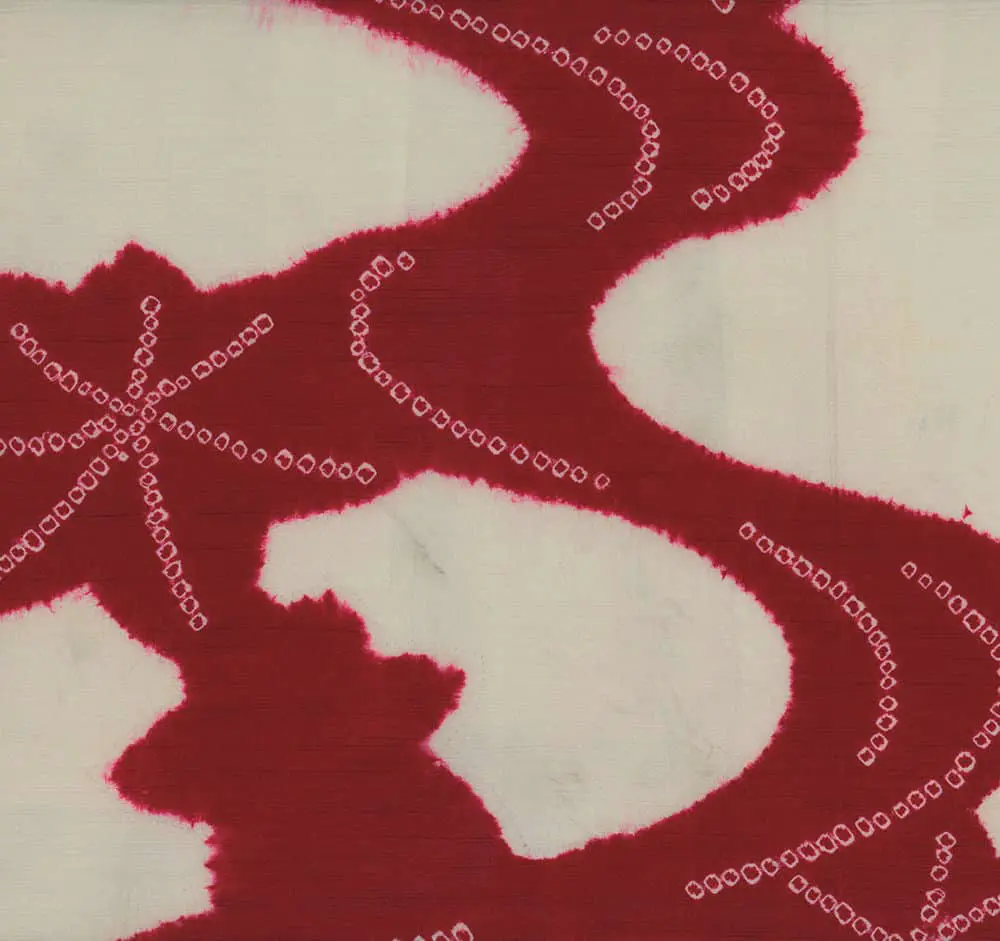
This striking textile originates from Japan’s late Showa period (1970–1980) and represents a significant section extracted from a formal silk kimono. Measuring 14 inches by 48 inches (36 cm x 122 cm), the panel is crafted from high-quality silk featuring a bold, two-tone composition of deep crimson red and crisp white. The piece remains in very good condition, showing only a single fold line as evidence of its history within a structured garment.
The visual narrative is dominated by a vertical, undulating stream pattern meticulously crafted using the shibori (resist-dyeing) technique. The winding river motif is defined by hundreds of tiny, hand-tied knots that created a characteristic "ring" effect when dyed, resulting in white borders that separate the red stream from the white ground. Interspersed along the winding water are stylized maple leaves (momiji), which are also outlined with delicate shibori dots. This scholarly arrangement utilizes the kanoko (fawn-spot) shibori method to create a high-contrast, graphic representation of a classic autumnal landscape, reflecting the era's mastery of traditional hand-dyeing in bold, modern scales.

Payment Options: We primarily accept PayPal for all transactions. Credit and debit cards are not accepted. If you prefer to pay by personal check instead of PayPal, please note this preference in the "Additional comments" field when placing your order.Ordering Process
To receive your PayPal invoice, simply fill out the form.
Shipping Details: We ship all orders to the address associated with your PayPal payment. Please ensure your PayPal shipping address is current and accurate.A phone number is required during checkout, as our shipping carrier may need to contact you regarding delivery questions.Shipping RatesUnited States and Canada: $20International destinations (air mail): $40
