Copyright © 2026 Yorke Antique Textiles
.avif)



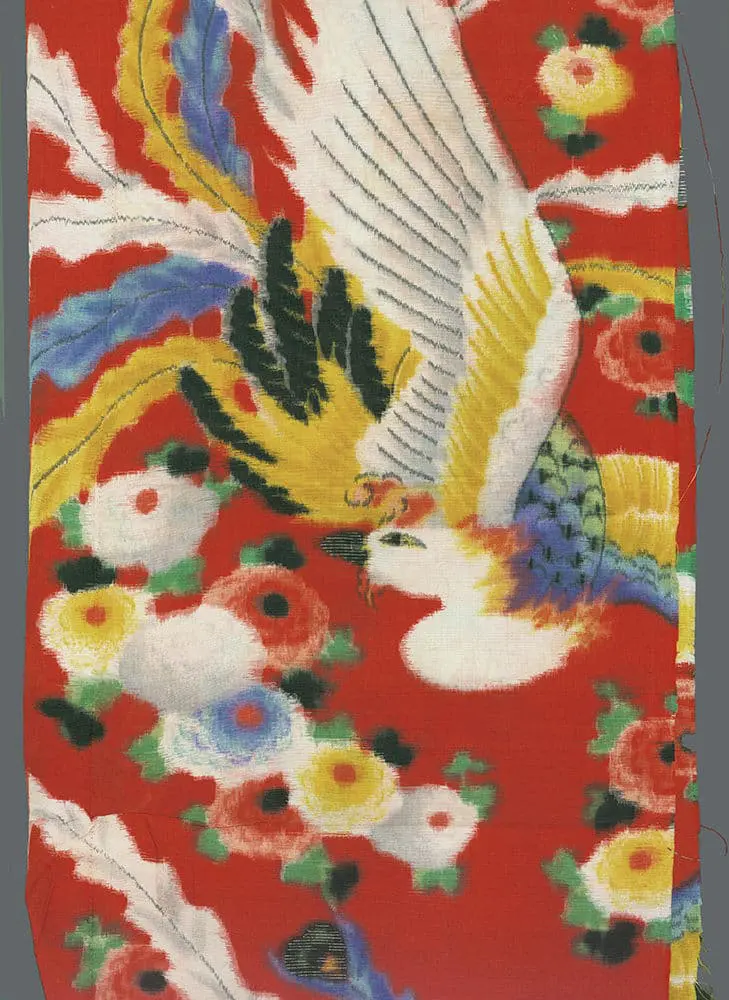
This vibrant textile originates from Japan’s early Showa period (1926–1940) and is a scholarly example of the bold, graphic meisen silks that defined the pre-war era's "Modern Girl" aesthetic. Measuring 11 inches by 48 inches (28 cm x 122 cm), this panel was originally part of an haori (short kimono coat). The silk is in very good condition for its age, though it bears authentic marks of its history, including a small darkish teardrop mark, two tiny pin-sized holes, and a small butterfly-shaped cluster of pinholes on the upper phoenix's breast where an ornament or insignia may have once been attached.
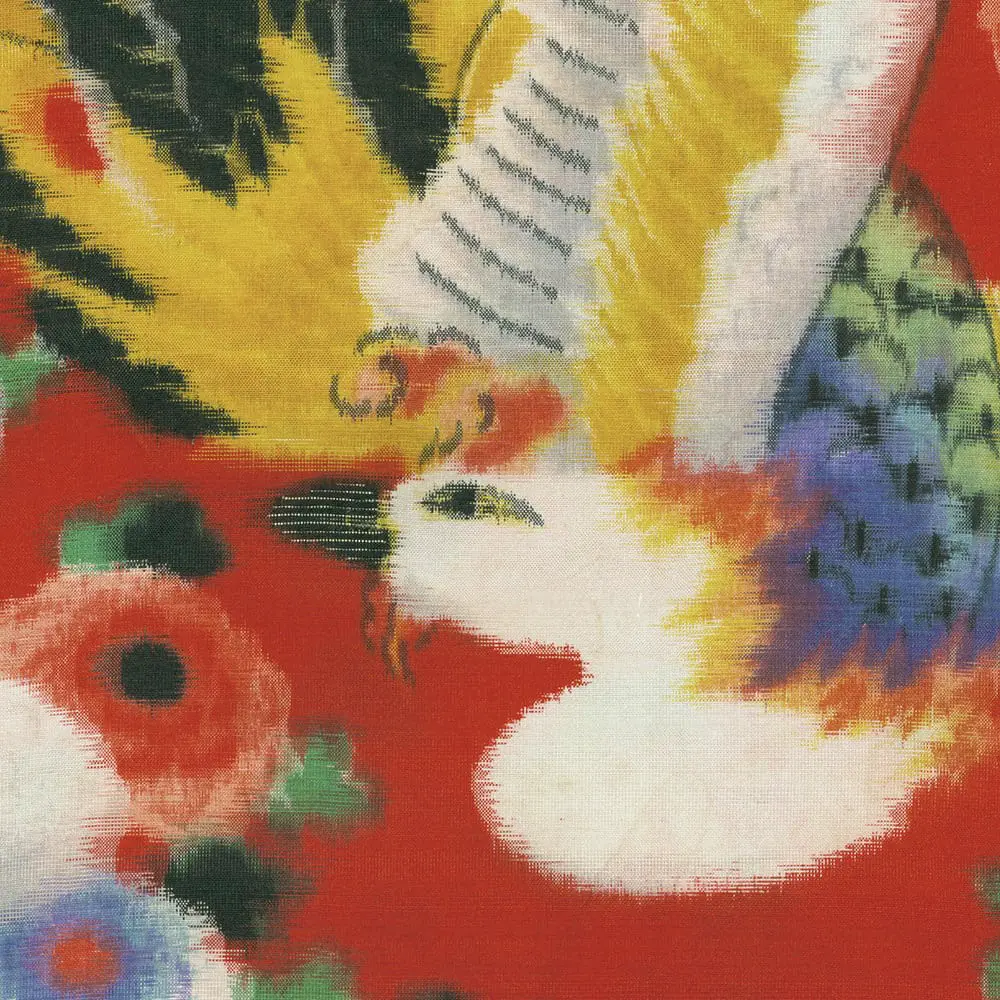
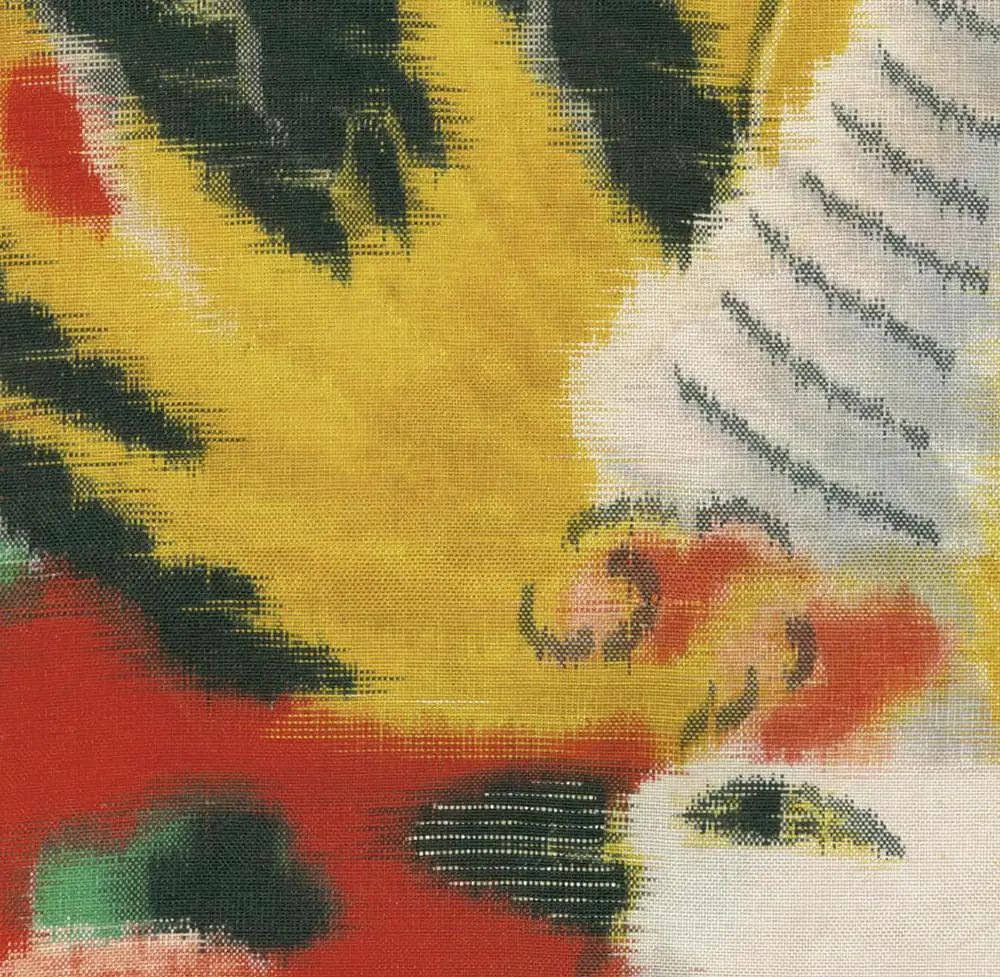
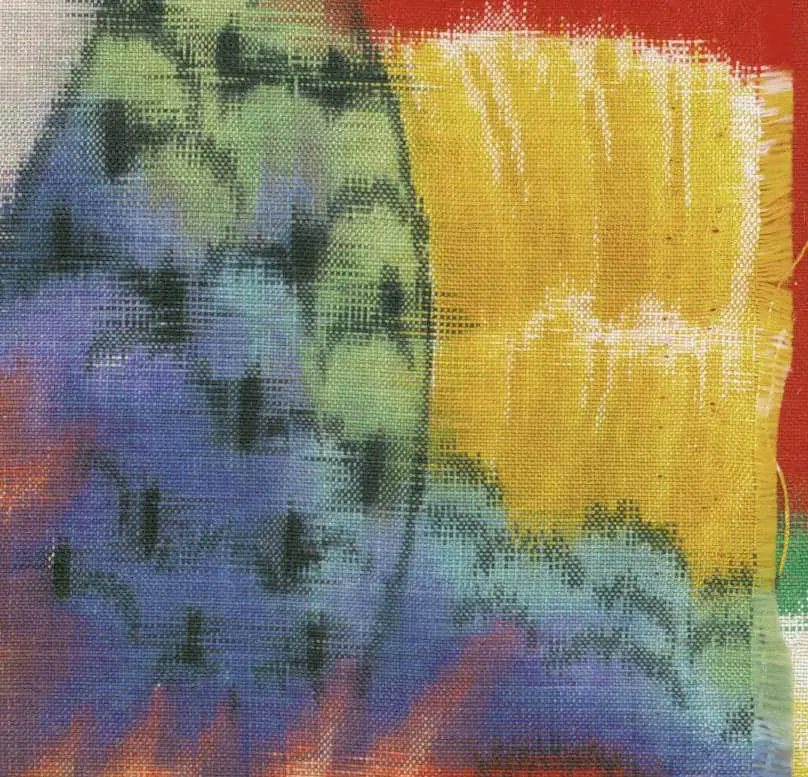
The visual narrative is set against a saturated scarlet background, providing a high-contrast substrate for a lush array of multi-colored flowers and the mythical ho-o (phoenix). The phoenix is rendered with ivory plumage on the head and breast, while the wings and sweeping tail feathers feature a dynamic palette of sunflower yellow, peacock greens, and sky blues. Striking black accents and grey details provide graphic definition, while subtle metallic threads are woven into the beak and the "eyes" of the peacock-style tail feathers. This combination of traditional auspicious symbols with the bright, almost neon pigments of the early 20th century perfectly captures the exuberant spirit of the era.

Payment Options: We primarily accept PayPal for all transactions. Credit and debit cards are not accepted. If you prefer to pay by personal check instead of PayPal, please note this preference in the "Additional comments" field when placing your order.Ordering Process
To receive your PayPal invoice, simply fill out the form.
Shipping Details: We ship all orders to the address associated with your PayPal payment. Please ensure your PayPal shipping address is current and accurate.A phone number is required during checkout, as our shipping carrier may need to contact you regarding delivery questions.Shipping RatesUnited States and Canada: $20International destinations (air mail): $40
