Copyright © 2026 Yorke Antique Textiles
.avif)

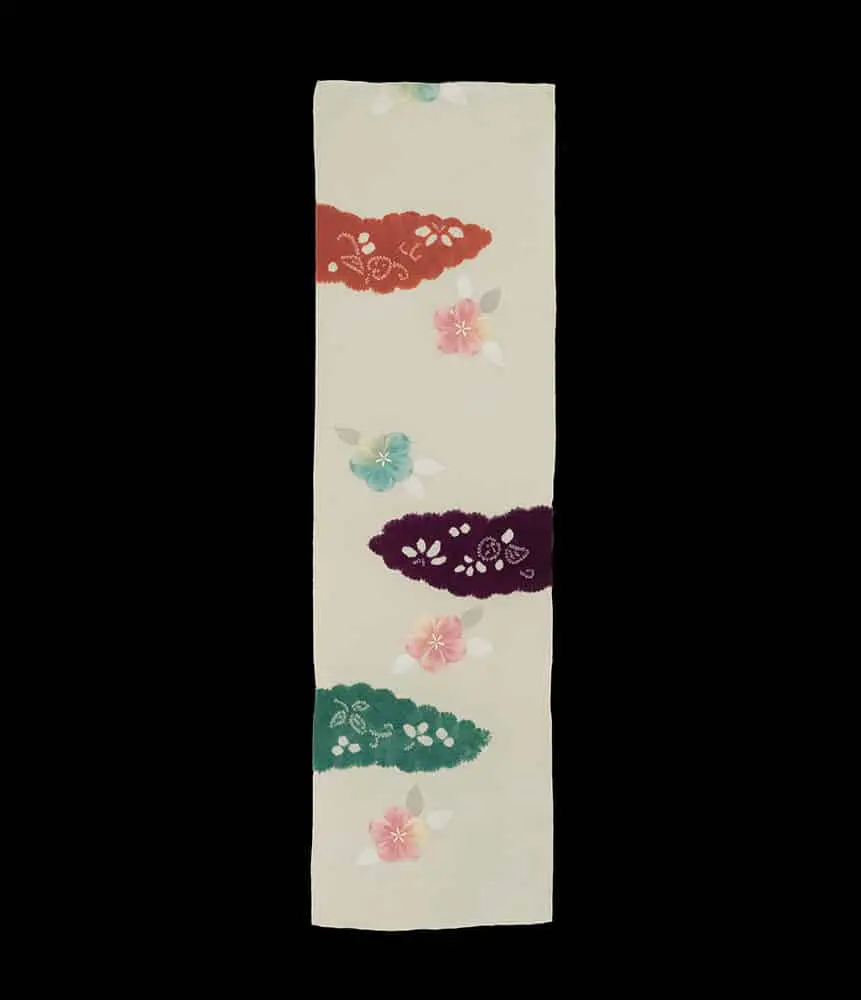


This delicate textile originates from Japan’s late Showa period (1950–1970) and is a scholarly example of the refined, multi-technique layering used in high-quality feminine attire. The piece is crafted from premium rinzu (silk damask), featuring a subtle all-over woven pattern that lends a rhythmic structural depth to the substrate. This ivory silk is soft to the touch and possesses a graceful, elegant drape. Representing a complete panel from a disassembled kimono, the textile serves as a physical record of mid-century celebratory aesthetics.
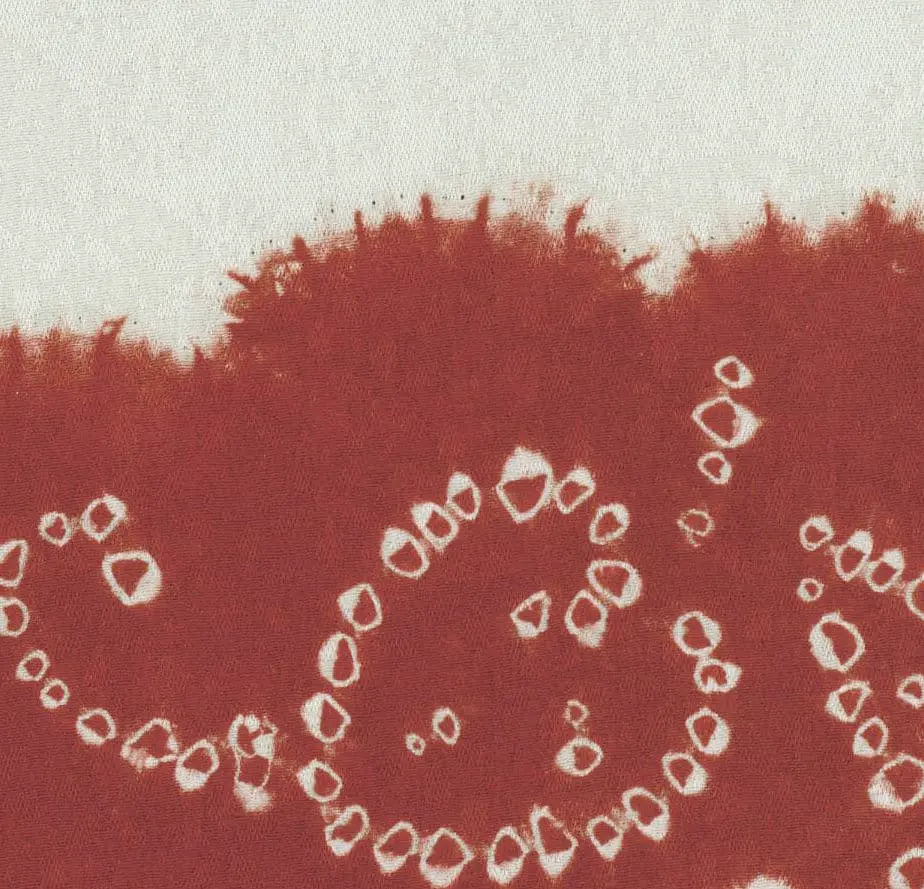
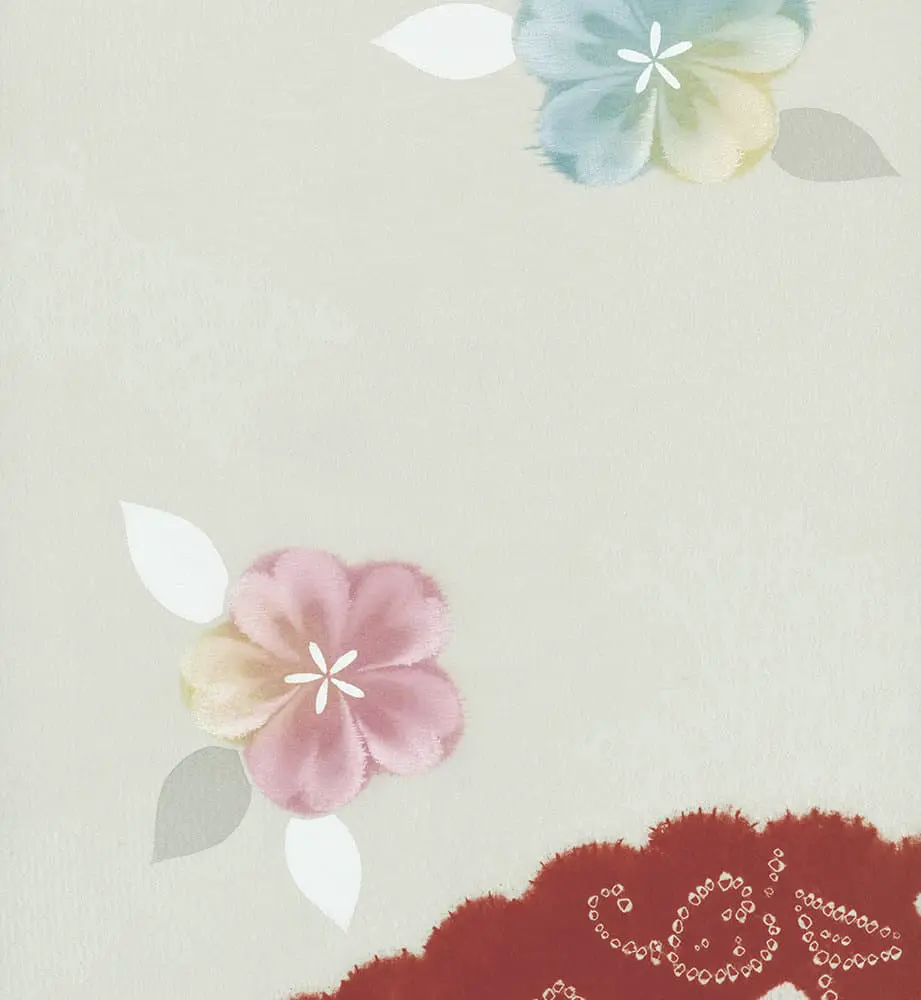
The visual narrative is defined by bold, saturated shibori (resist-dyeing) patches in deep rust red, plum purple, and forest green. These textured color clouds are adorned with tiny white resist-dyed floral accents, creating a sharp contrast against the vibrant pigments. Interspersed between these graphic blocks are delicate, hand-painted watercolor ume (plum) blossoms rendered in soft pink and teal. The plum blossom is a classical symbol of resilience and the arrival of spring, and its painterly execution here provides a soft, atmospheric balance to the heavy, textured shibori elements.

Payment Options: We primarily accept PayPal for all transactions. Credit and debit cards are not accepted. If you prefer to pay by personal check instead of PayPal, please note this preference in the "Additional comments" field when placing your order.Ordering Process
To receive your PayPal invoice, simply fill out the form.
Shipping Details: We ship all orders to the address associated with your PayPal payment. Please ensure your PayPal shipping address is current and accurate.A phone number is required during checkout, as our shipping carrier may need to contact you regarding delivery questions.Shipping RatesUnited States and Canada: $20International destinations (air mail): $40
