Copyright © 2026 Yorke Antique Textiles
.avif)

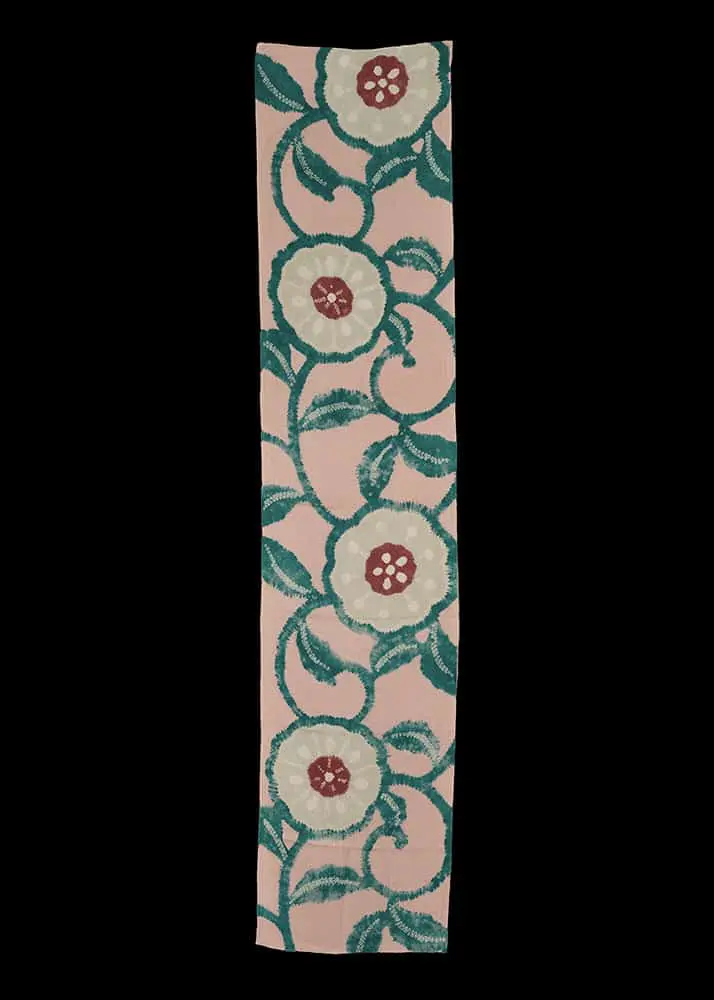
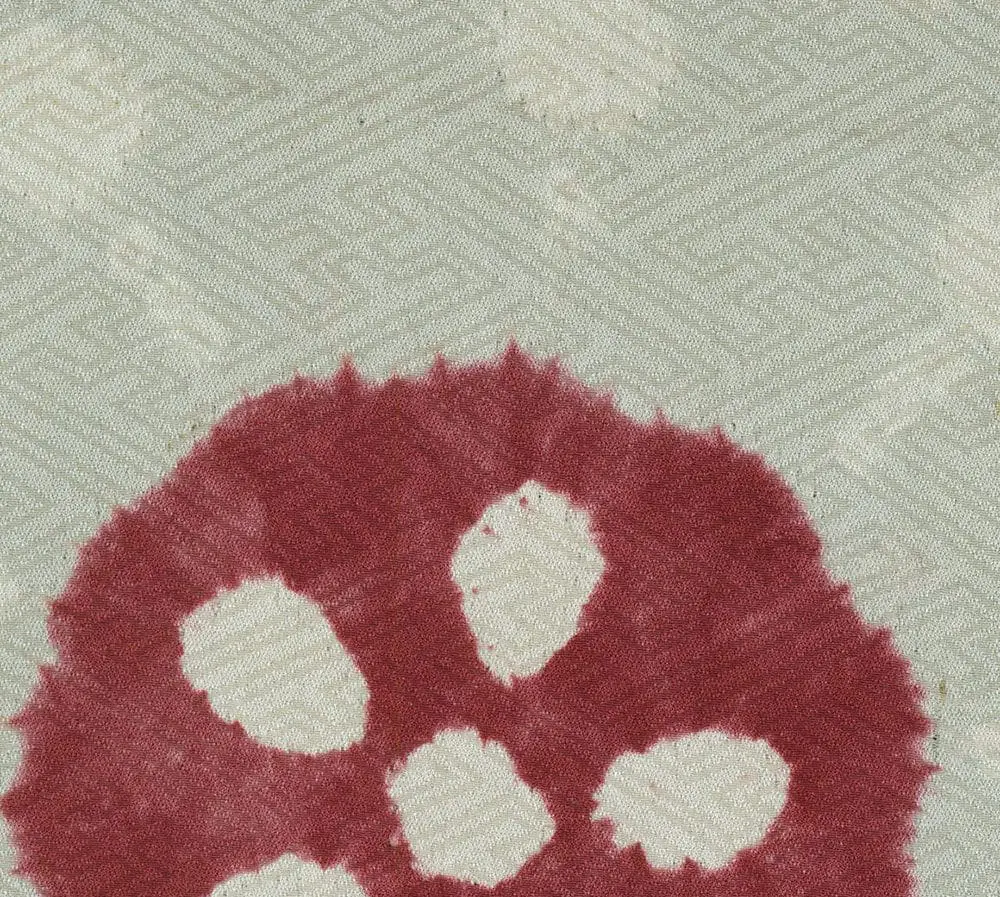
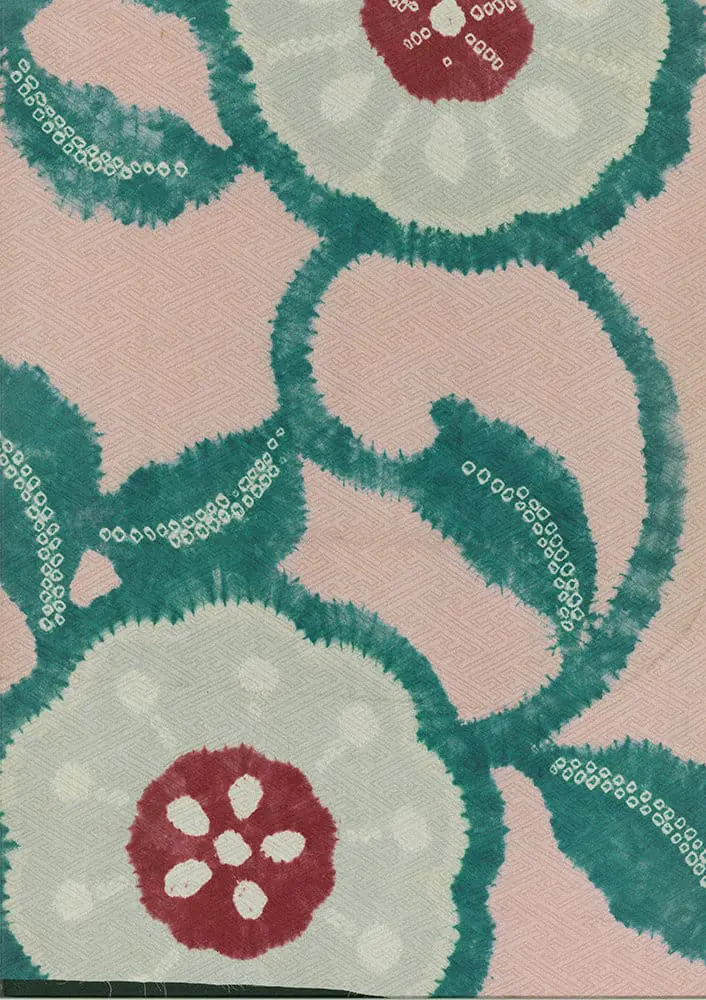
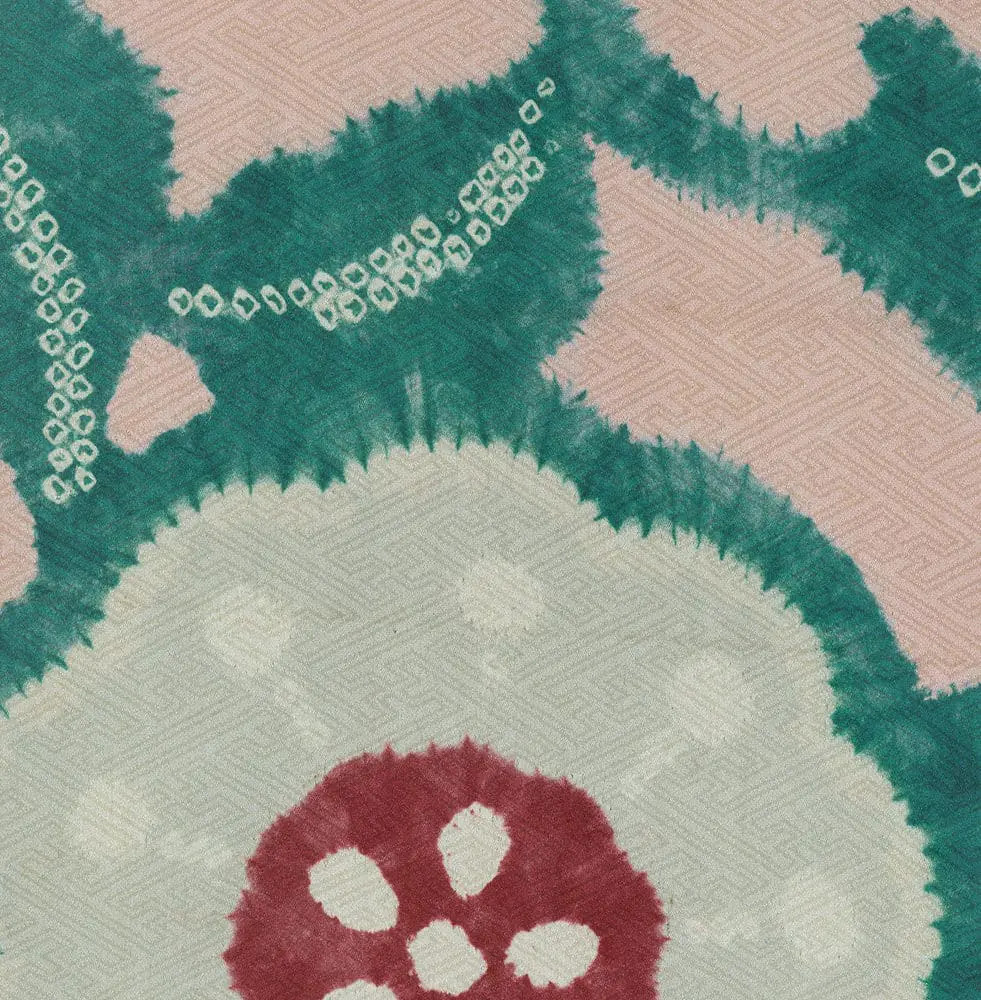
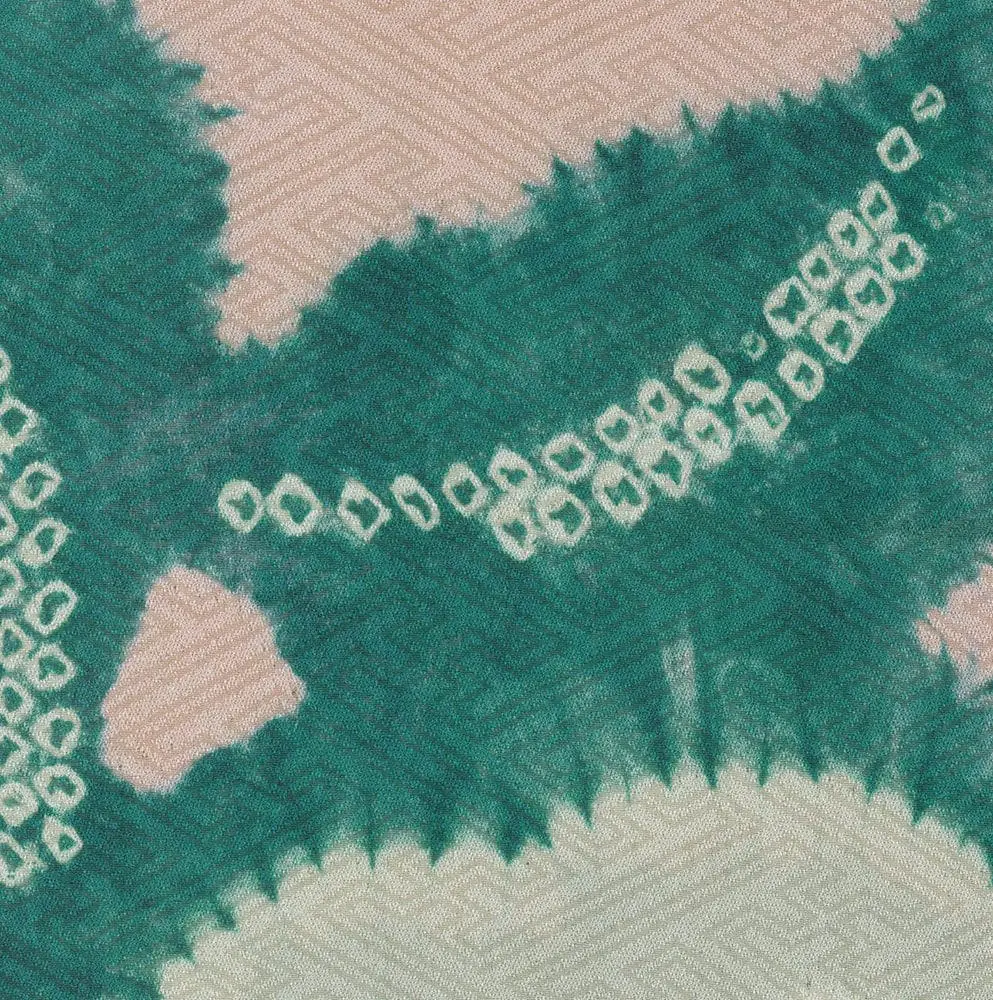
This exquisite textile originates from the Taisho period (1912–1926) and is a scholarly example of the bold, oversized botanical motifs that defined the pre-war era's romantic aesthetic. Measuring 13.5 inches by 64 inches (34 cm x 163 cm), the piece represents a complete panel from a disassembled kimono, preserved in excellent condition. The substrate is a premium rinzu (silk damask), which provides a lustrous, tonal background weave that adds structural depth to the delicate pink ground.
The visual narrative is dominated by large-scale kiku (chrysanthemum) blossoms and scrolling vines executed in the shibori (resist-dyeing) technique. The chrysanthemums feature cream-colored petals with deep burgundy centers, while the connecting vines and leaves are rendered in a vibrant forest green. The use of shibori creates a characteristically soft, blurred edge to the patterns, lending a tactile, "pebbled" texture to the fabric's surface. As a symbol of the Imperial House and a signifier of longevity and rejuvenation, the chrysanthemum is a classical motif, here reimagined with the energetic scale and color sensibilities characteristic of the early 20th century.

Payment Options: We primarily accept PayPal for all transactions. Credit and debit cards are not accepted. If you prefer to pay by personal check instead of PayPal, please note this preference in the "Additional comments" field when placing your order.Ordering Process
To receive your PayPal invoice, simply fill out the form.
Shipping Details: We ship all orders to the address associated with your PayPal payment. Please ensure your PayPal shipping address is current and accurate.A phone number is required during checkout, as our shipping carrier may need to contact you regarding delivery questions.Shipping RatesUnited States and Canada: $20International destinations (air mail): $40
