Copyright © 2026 Yorke Antique Textiles
.avif)

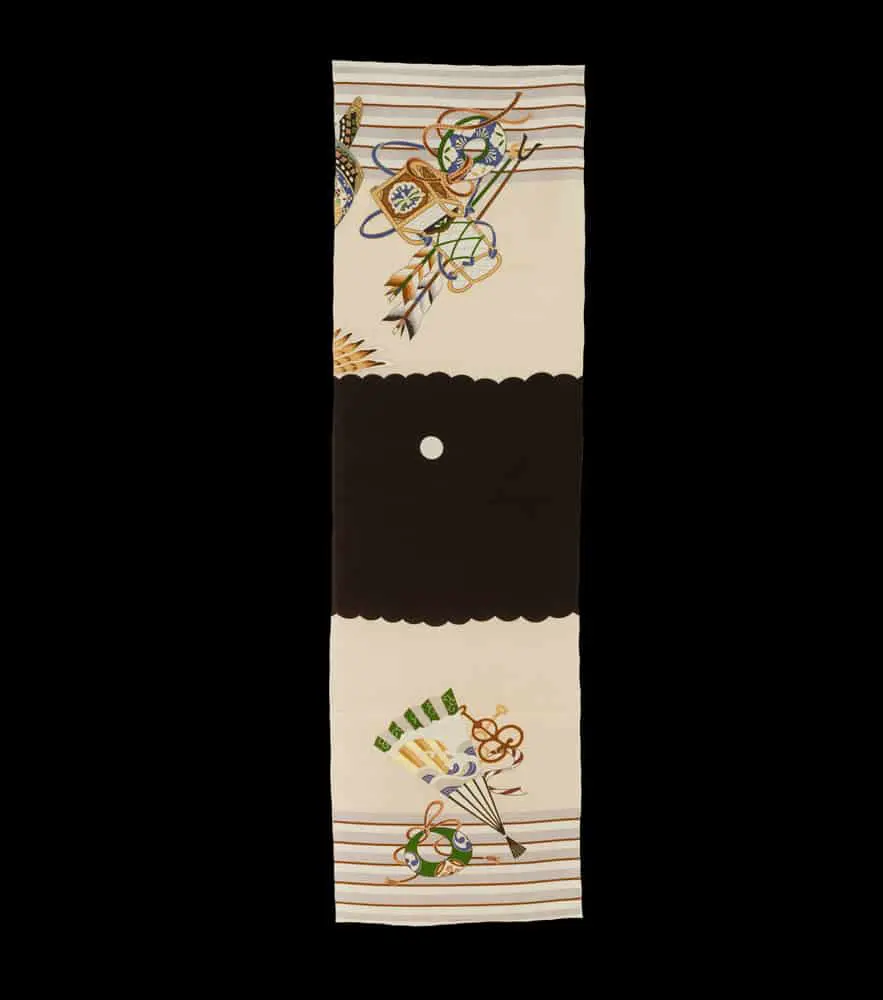
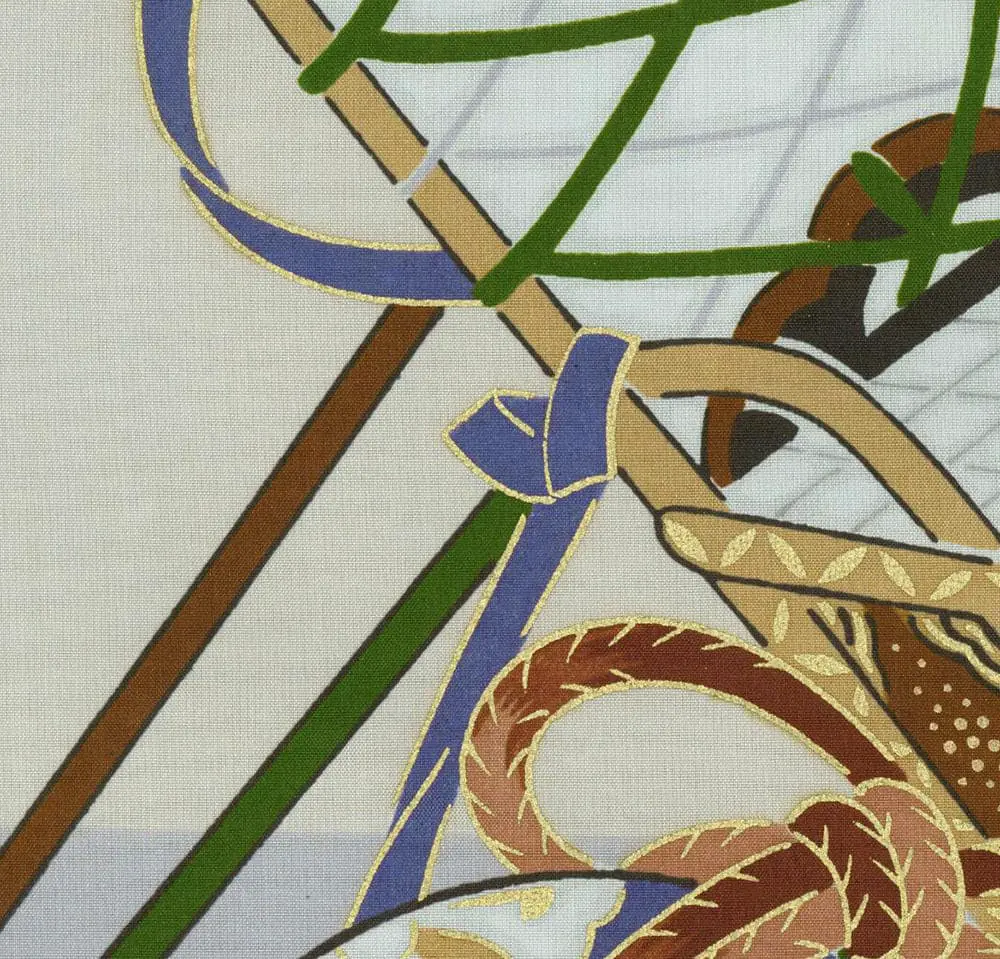
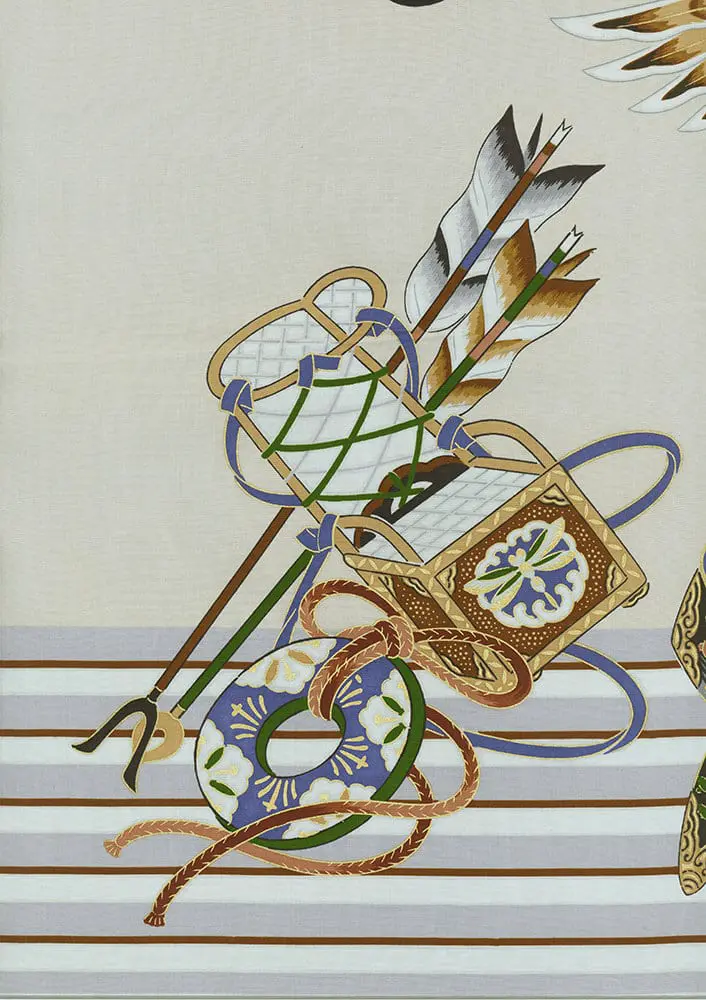
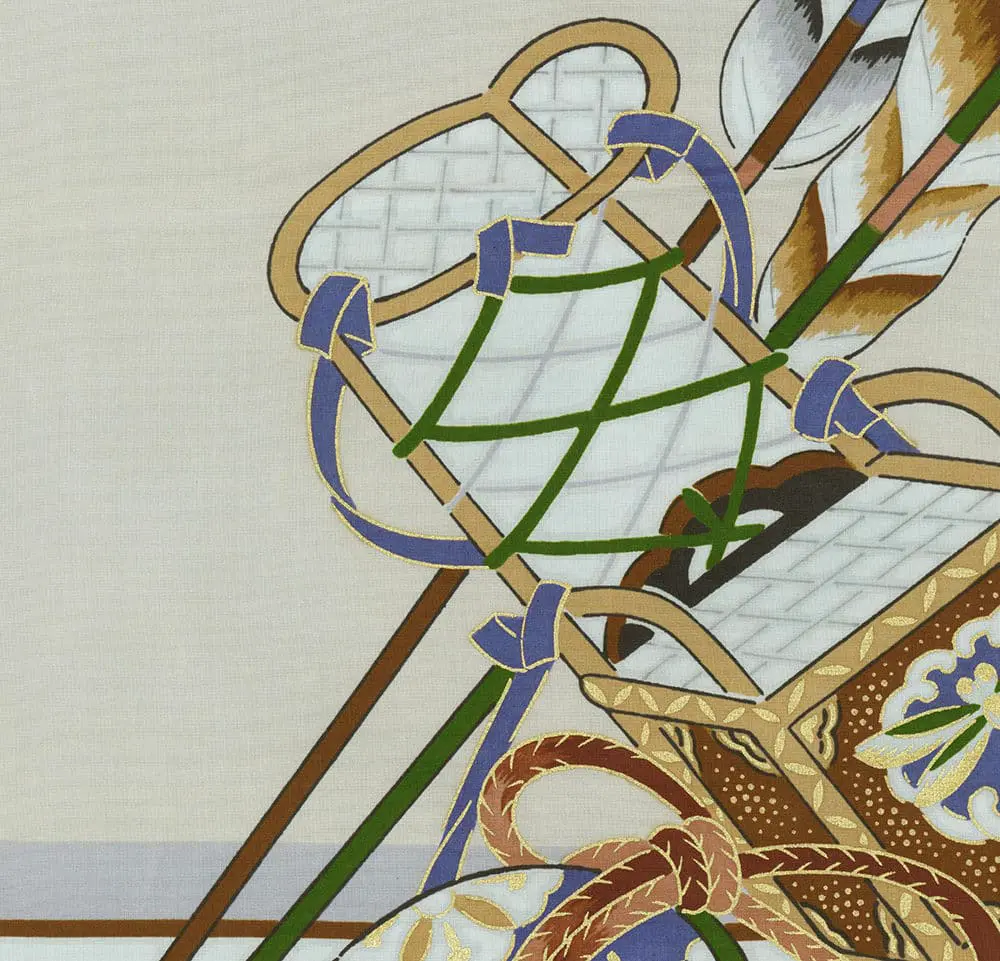
This hand-painted silk panel originates from Japan and dates to the mid-Showa period (1960–1980). Measuring 13 inches by 60 inches (33 cm x 152 cm), this textile was originally part of a miyamairi kimono—a ceremonial garment worn by infant boys during their first shrine visit to be placed under the protection of the local deity. The panel features a sophisticated color-blocked design with a central dark field separating two cream-colored sections adorned with dynamic, multi-colored motifs.
The visual narrative is centered on auspicious toys and samurai attributes, symbols traditionally chosen to wish for a boy's health, bravery, and future success. The upper section features a hamaya (demon-breaking arrow) decorated with colorful tassels and a drum, symbols of protection and festive celebration. The lower section displays a folding fan (sensu), which represents expanding future possibilities, paired with ceremonial ribbons and charms. These motifs are rendered with precise hand-painting and likely accented with subtle embroidery or gold leaf, reflecting the high-status craftsmanship required for a child’s inaugural formal rite of passage.

Payment Options: We primarily accept PayPal for all transactions. Credit and debit cards are not accepted. If you prefer to pay by personal check instead of PayPal, please note this preference in the "Additional comments" field when placing your order.Ordering Process
To receive your PayPal invoice, simply fill out the form.
Shipping Details: We ship all orders to the address associated with your PayPal payment. Please ensure your PayPal shipping address is current and accurate.A phone number is required during checkout, as our shipping carrier may need to contact you regarding delivery questions.Shipping RatesUnited States and Canada: $20International destinations (air mail): $40
