Copyright © 2026 Yorke Antique Textiles
.avif)

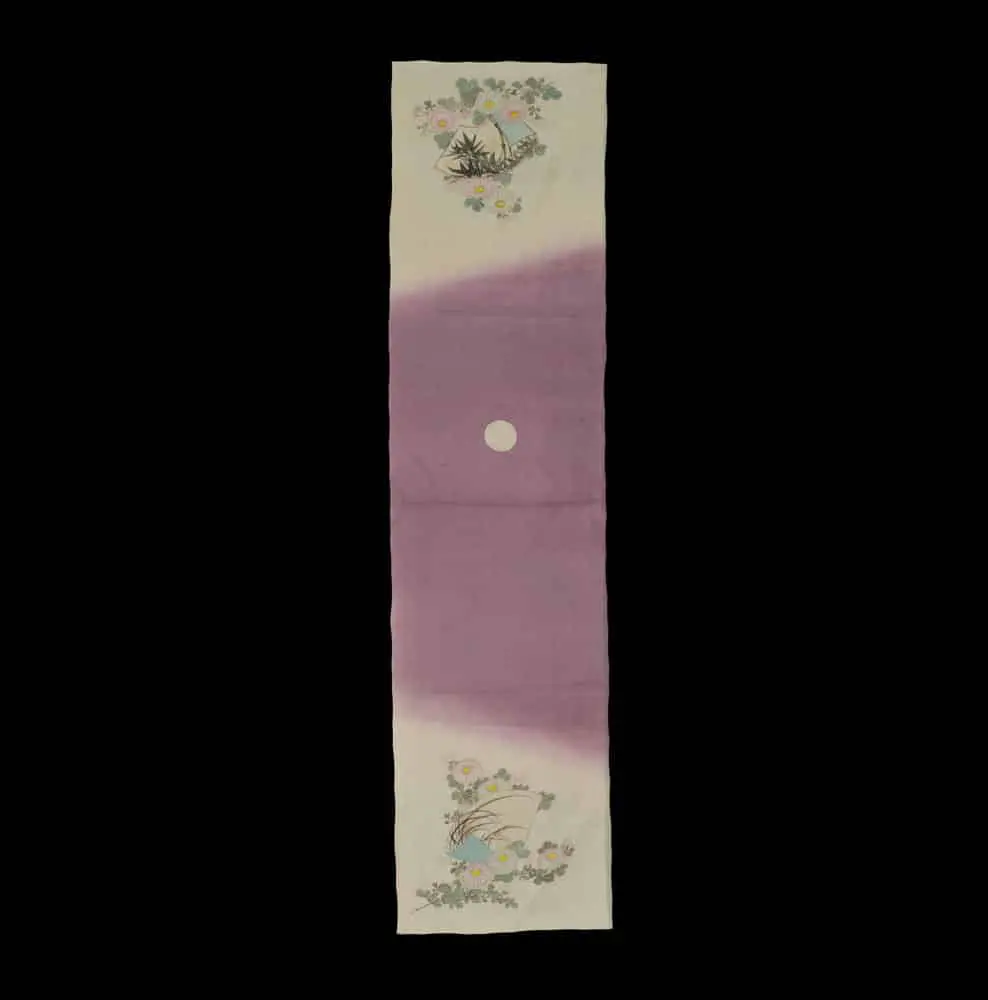
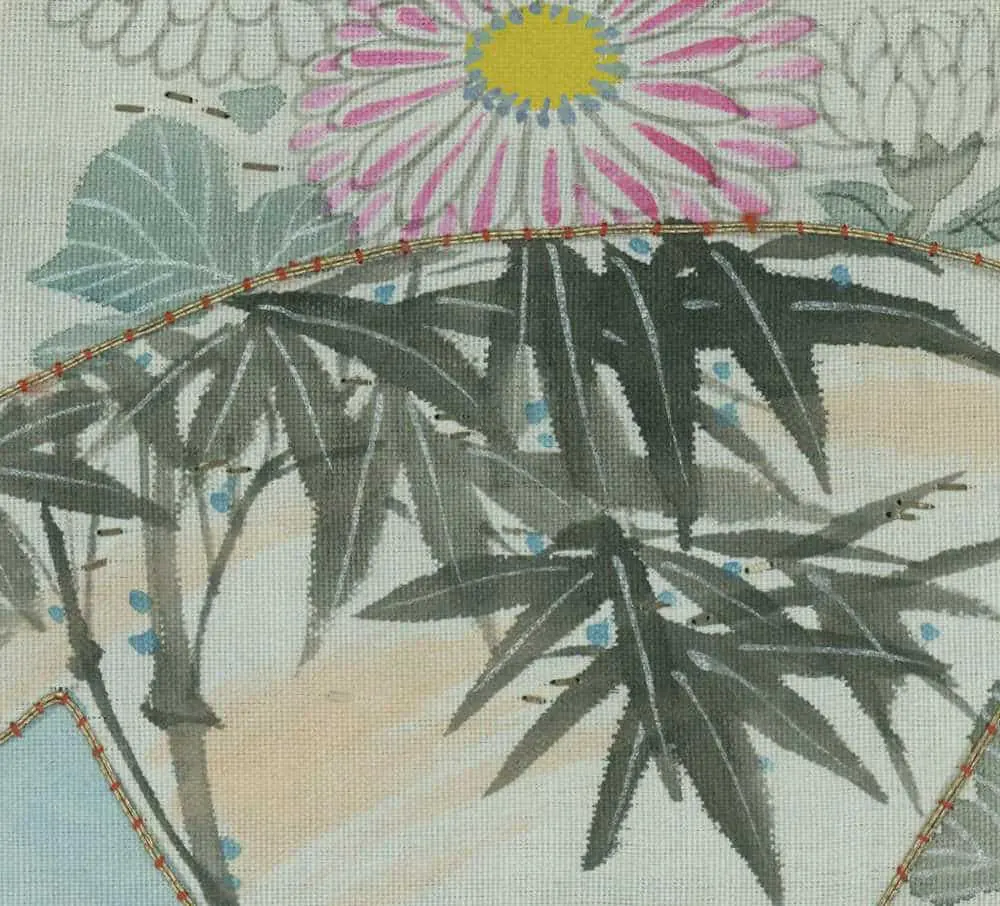
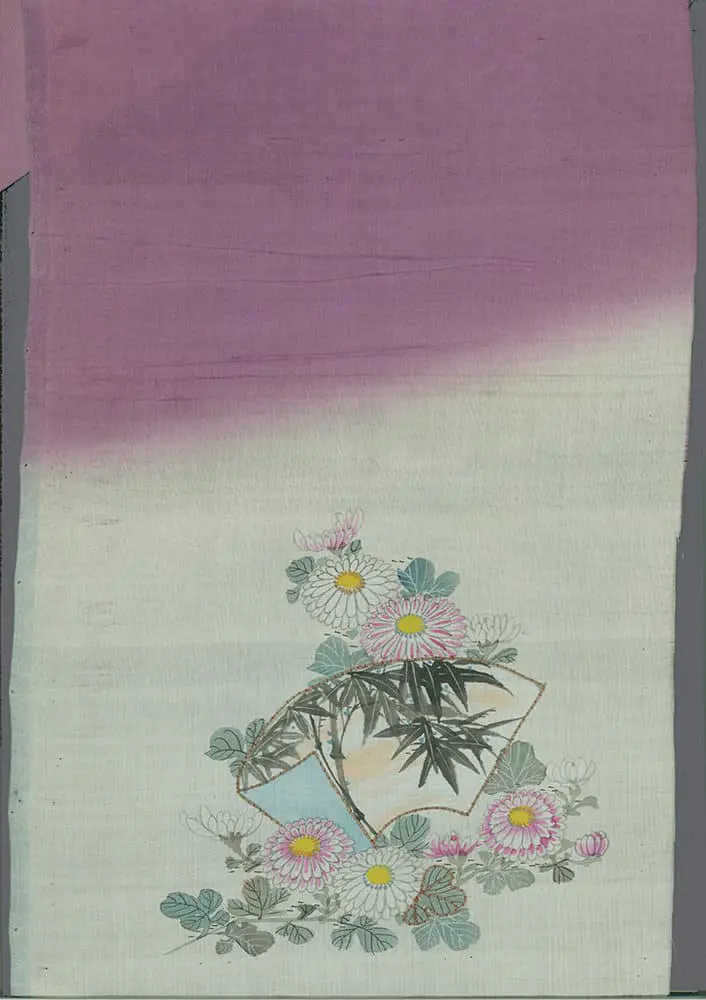
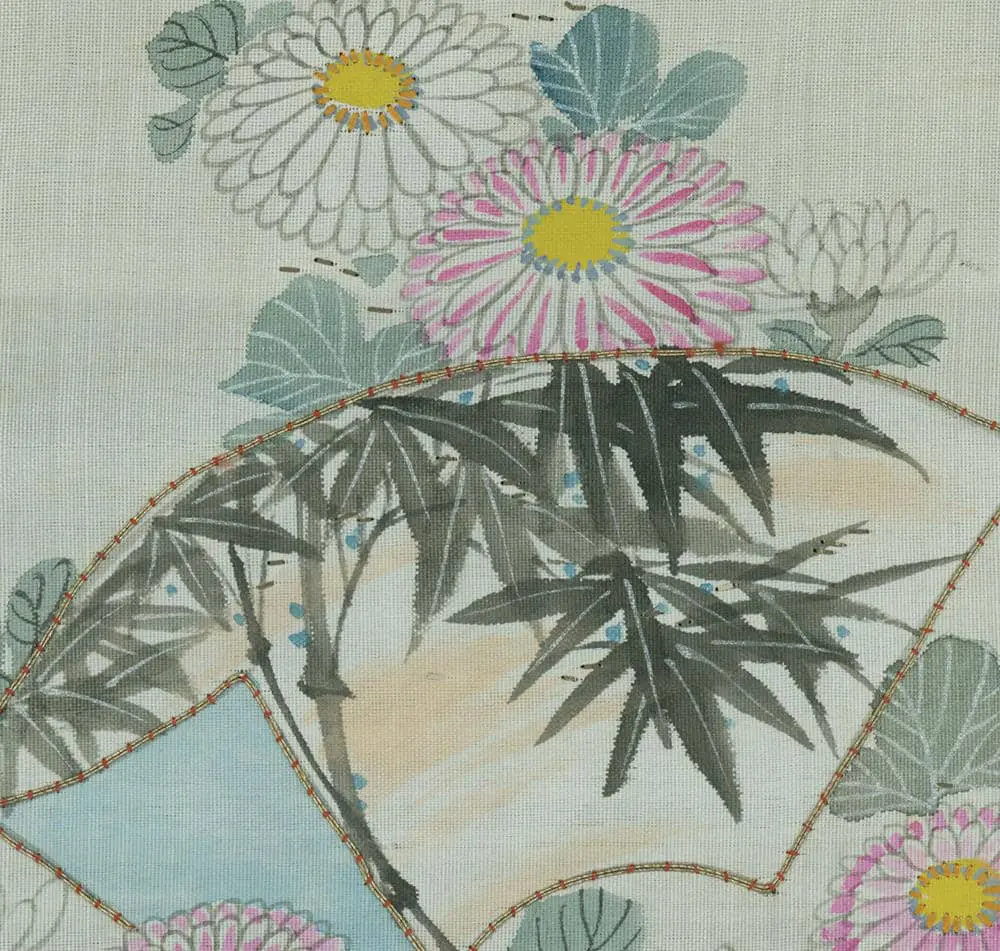
This rare and evocative textile originates from Japan’s late Meiji period (1868–1912), an era marked by the convergence of centuries-old craftsmanship and a burgeoning modern aesthetic. Measuring 14 inches (36 cm) in width and approximately 120 inches (305 cm) in length, this exceptionally long panel was originally hand-painted for a woman's kimono but remains unused in its original bolt-like form. The material is a remarkably fine silk with a thin, delicate texture that is often compared to rice paper, a characteristic typical of high-quality summer or undergarment silks from the late 19th century. While in very good condition, the panel exhibits small moth holes and a faint patina, which serve as scholarly markers of its over century-long history.
The visual narrative is set against a pale, ethereal background and features a series of hand-painted landscapes rendered in the yuzen (resist-dyeing) style. The scenery depicts a traditional "sansuiga" (mountain and water) landscape, characterized by soft ink-wash tones of grey, charcoal, and subtle blue that evoke the misty atmosphere of the Japanese countryside. Prominently featured near the top of the panel is a white mon (family crest), which would have been positioned at the back of the neck in the finished garment to signify the wearer's lineage and the kimono's high level of formality. This combination of a singular family emblem and a refined, wide-spanning landscape reflects the Meiji-era preference for understated elegance and "tagasode" (poetic longing) in women’s formal attire.

Payment Options: We primarily accept PayPal for all transactions. Credit and debit cards are not accepted. If you prefer to pay by personal check instead of PayPal, please note this preference in the "Additional comments" field when placing your order.Ordering Process
To receive your PayPal invoice, simply fill out the form.
Shipping Details: We ship all orders to the address associated with your PayPal payment. Please ensure your PayPal shipping address is current and accurate.A phone number is required during checkout, as our shipping carrier may need to contact you regarding delivery questions.Shipping RatesUnited States and Canada: $20International destinations (air mail): $40
