Copyright © 2026 Yorke Antique Textiles
.avif)

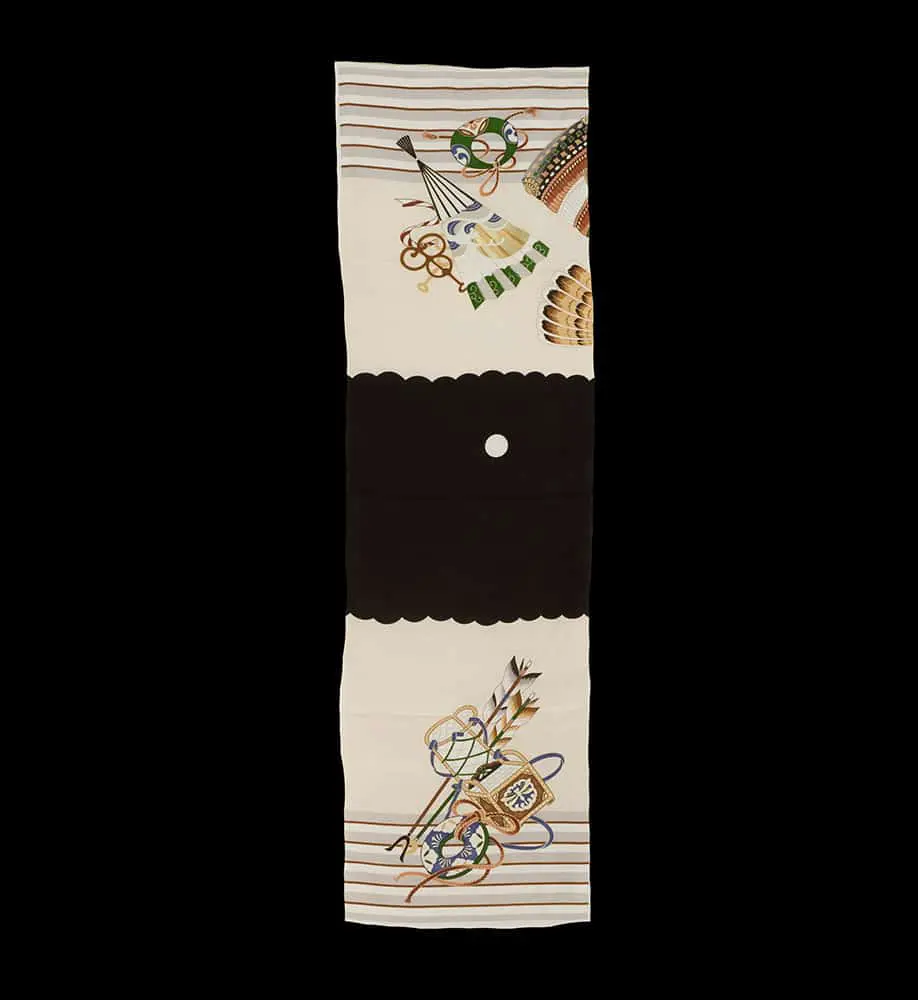
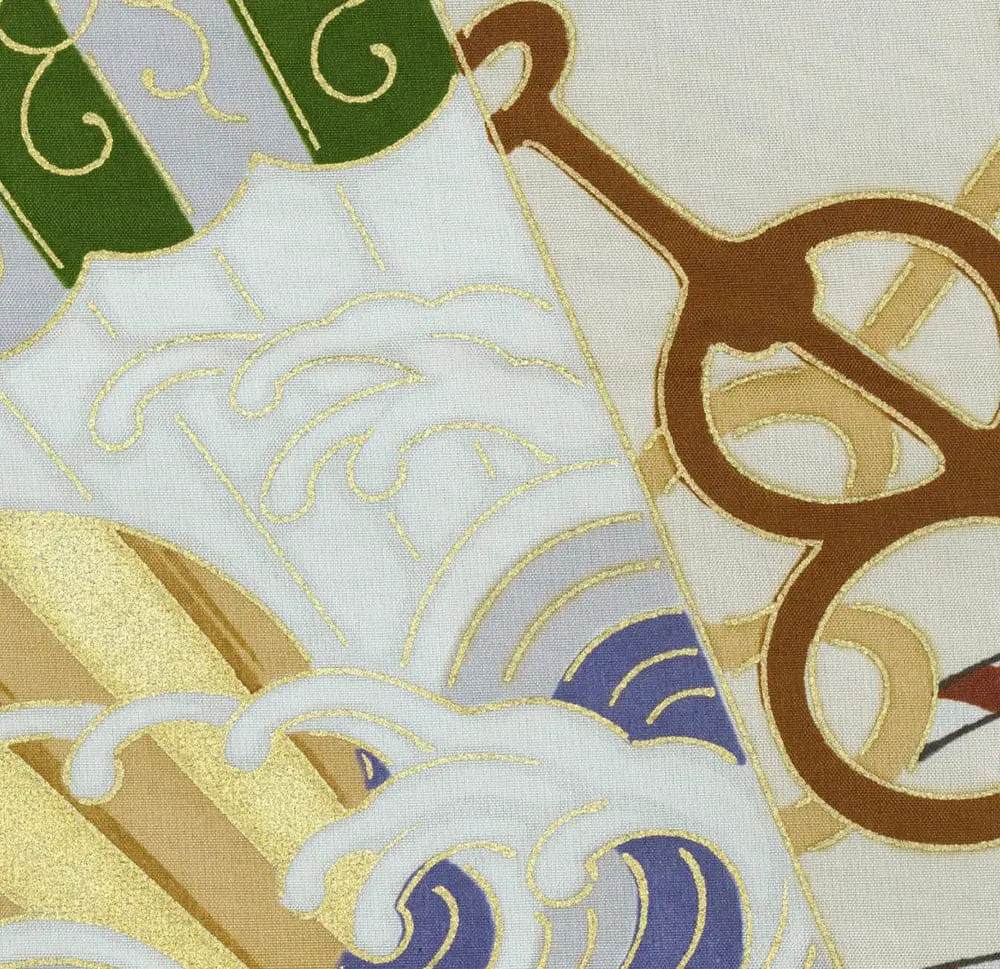

This significant textile originates from Japan’s late Showa period (1960–1980) and was originally crafted as a primary component for a miyamairi kimono, the formal garment worn by infant boys during their first shrine visit. Measuring 13 inches by 60 inches (33 cm x 152 cm), the panel is made of high-quality white silk featuring a central horizontal band of deep black with scalloped edges. Positioned within this black field is a single white mon (family crest), marking the garment's ceremonial importance.
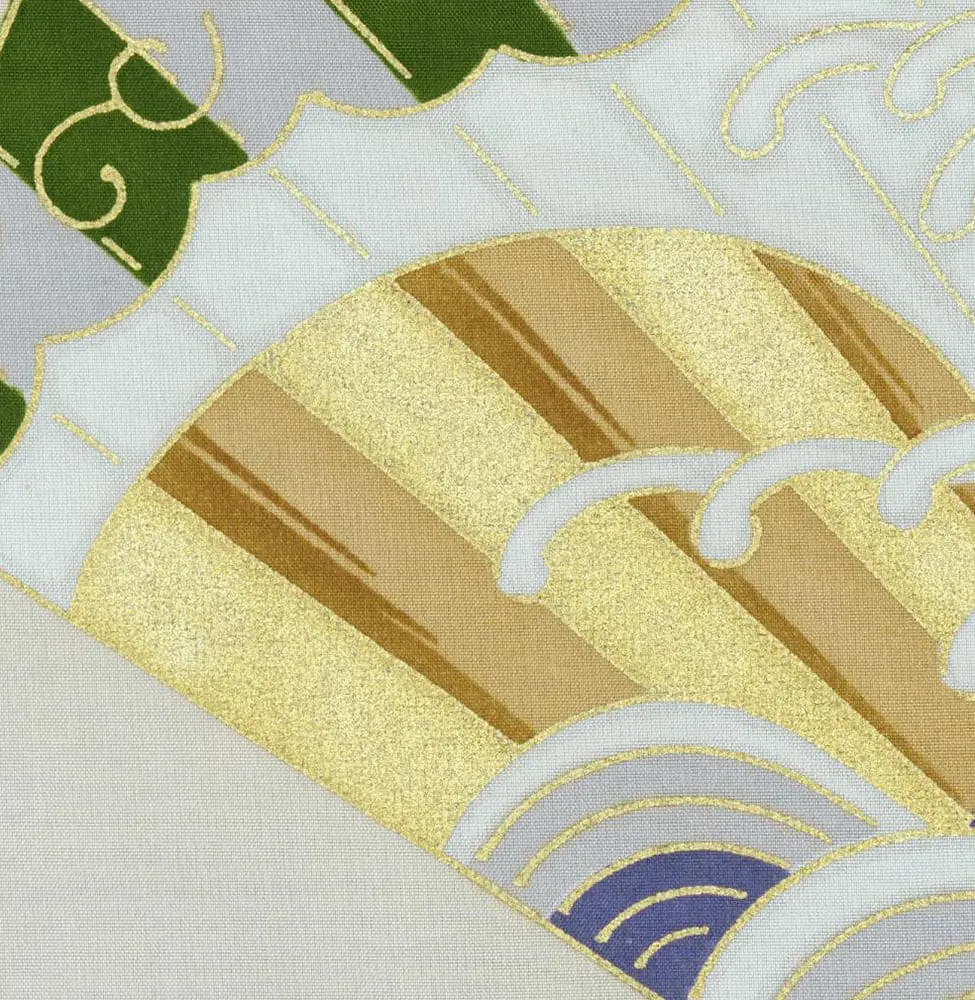
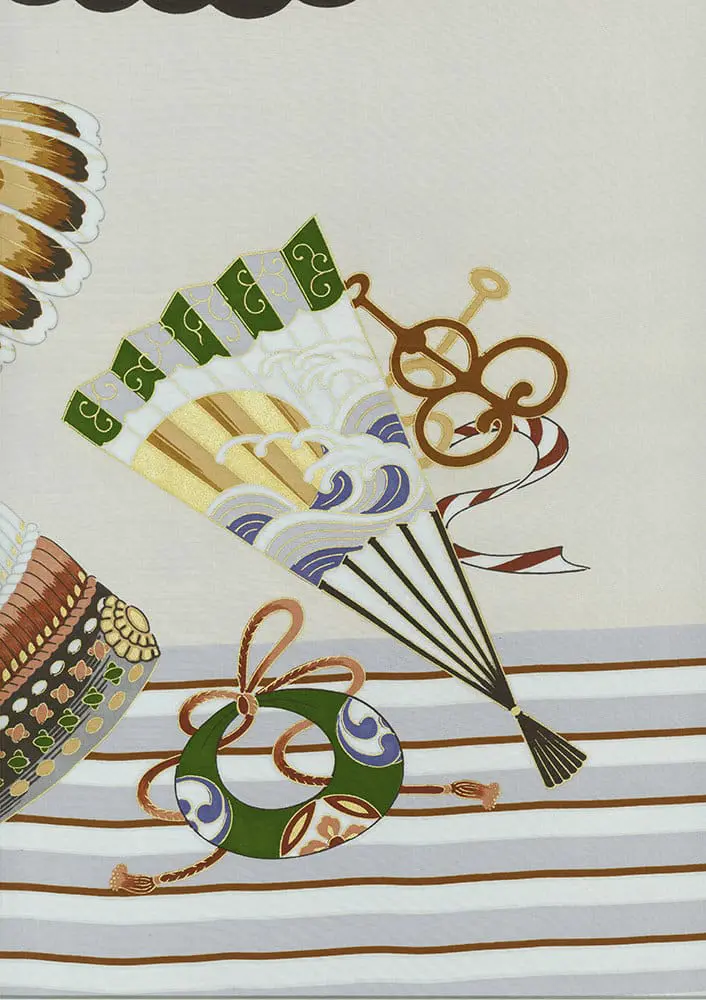
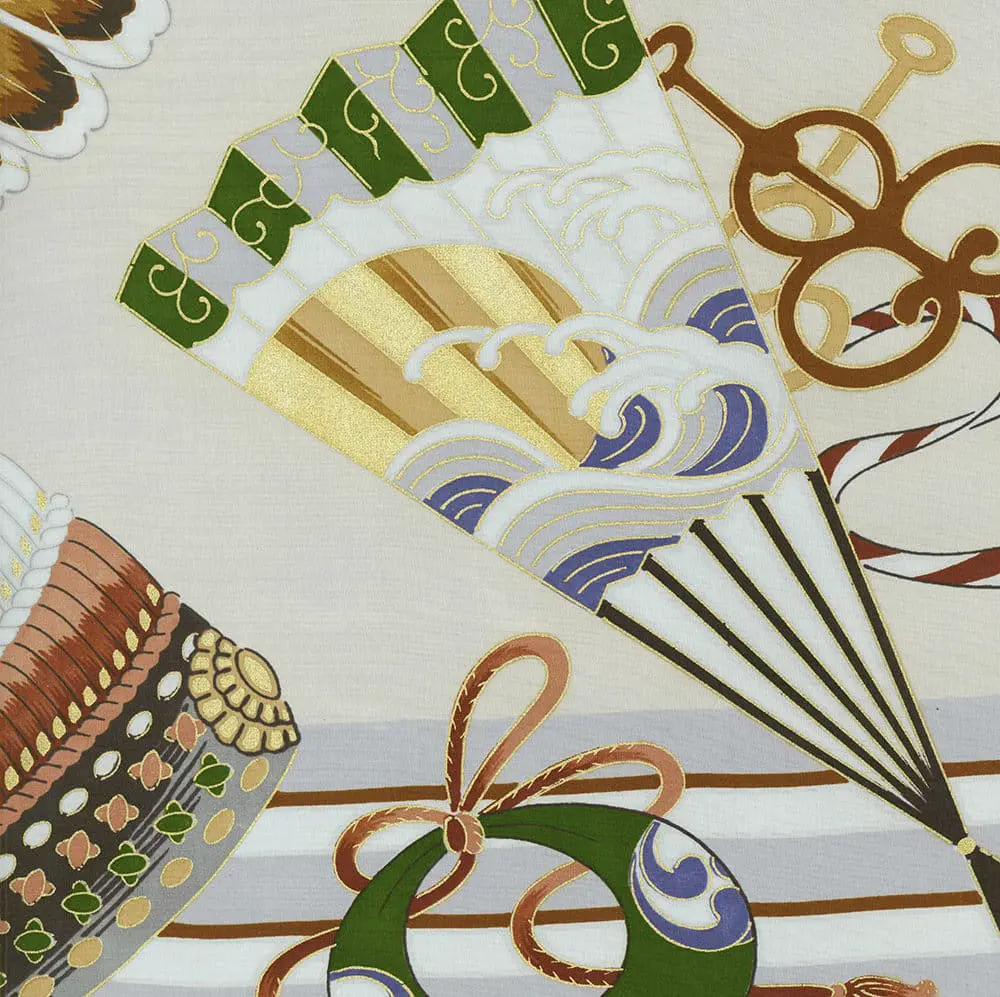
The visual narrative is composed of hand-painted auspicious motifs specifically chosen to symbolize strength and protection for a young boy. The upper section features a stylized folding fan (sensu), a lucky mallet (uchide no kozuchi), and an ornamental shimenawa rope, while the lower section depicts a traditional drum (taiko) and fletched arrows (hamaya) used to ward off evil. These elements are rendered in a vibrant palette of gold, forest green, and navy blue, accented by horizontal grey stripes at the top and bottom borders. This scholarly arrangement of samurai-class symbols reflects the parental hope for the child's healthy and prosperous future.

Payment Options: We primarily accept PayPal for all transactions. Credit and debit cards are not accepted. If you prefer to pay by personal check instead of PayPal, please note this preference in the "Additional comments" field when placing your order.Ordering Process
To receive your PayPal invoice, simply fill out the form.
Shipping Details: We ship all orders to the address associated with your PayPal payment. Please ensure your PayPal shipping address is current and accurate.A phone number is required during checkout, as our shipping carrier may need to contact you regarding delivery questions.Shipping RatesUnited States and Canada: $20International destinations (air mail): $40
