Copyright © 2026 Yorke Antique Textiles
.avif)

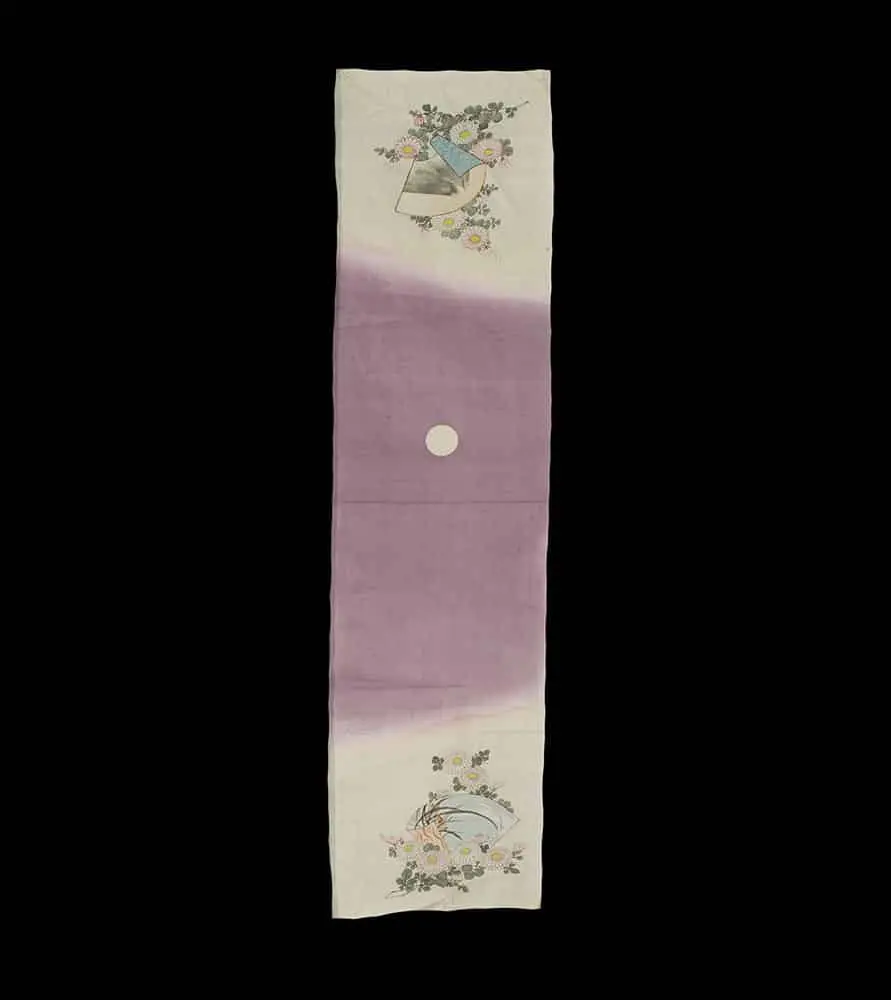


This exquisite textile originates from Japan’s Meiji period (1868–1912) and was originally a primary component of a miyamairi or ceremonial kimono for a young girl. Measuring 13 inches by 60 inches (33 cm x 152 cm), the panel is crafted from high-quality silk featuring a dramatic purple and white color-block design. The central portion of the panel is dyed a deep, regal purple, which transitions into crisp white sections at the top and bottom through a soft, hand-dyed ombre effect. A single white mon (family crest) is positioned prominently in the purple field, signifying the garment's high status and formal use.
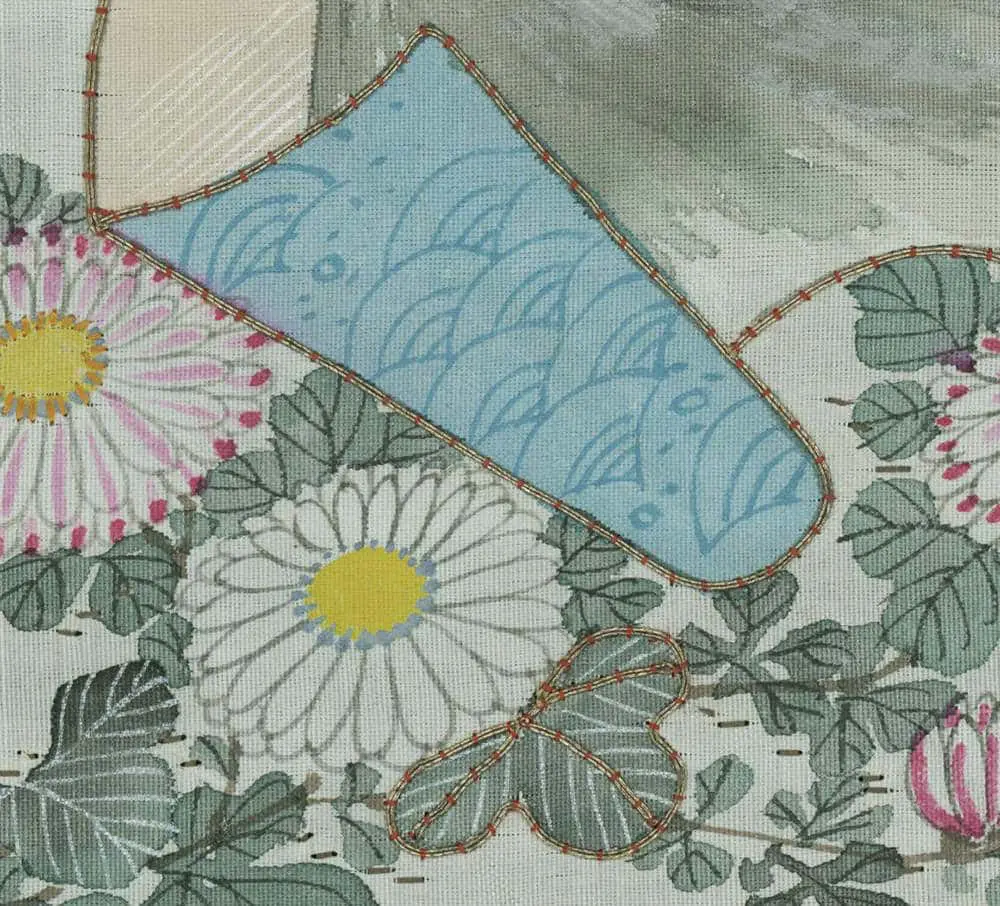
The visual narrative is concentrated in the white sections, featuring delicate yuzen-painted floral and fan motifs. These arrangements include blooming chrysanthemums (kiku) and stylized folding fans (sensu), which are decorated with internal landscapes of bamboo and pine. To further elevate the artistry, the painter has utilized metallic couching, where fine gold-colored threads are stitched onto the surface to outline the petals and fan ribs, adding a shimmering, three-dimensional texture. This scholarly combination of sophisticated dyeing and labor-intensive needlework exemplifies the luxury of Meiji-era children's ceremonial wear.

Payment Options: We primarily accept PayPal for all transactions. Credit and debit cards are not accepted. If you prefer to pay by personal check instead of PayPal, please note this preference in the "Additional comments" field when placing your order.Ordering Process
To receive your PayPal invoice, simply fill out the form.
Shipping Details: We ship all orders to the address associated with your PayPal payment. Please ensure your PayPal shipping address is current and accurate.A phone number is required during checkout, as our shipping carrier may need to contact you regarding delivery questions.Shipping RatesUnited States and Canada: $20International destinations (air mail): $40
