Copyright © 2026 Yorke Antique Textiles
.avif)

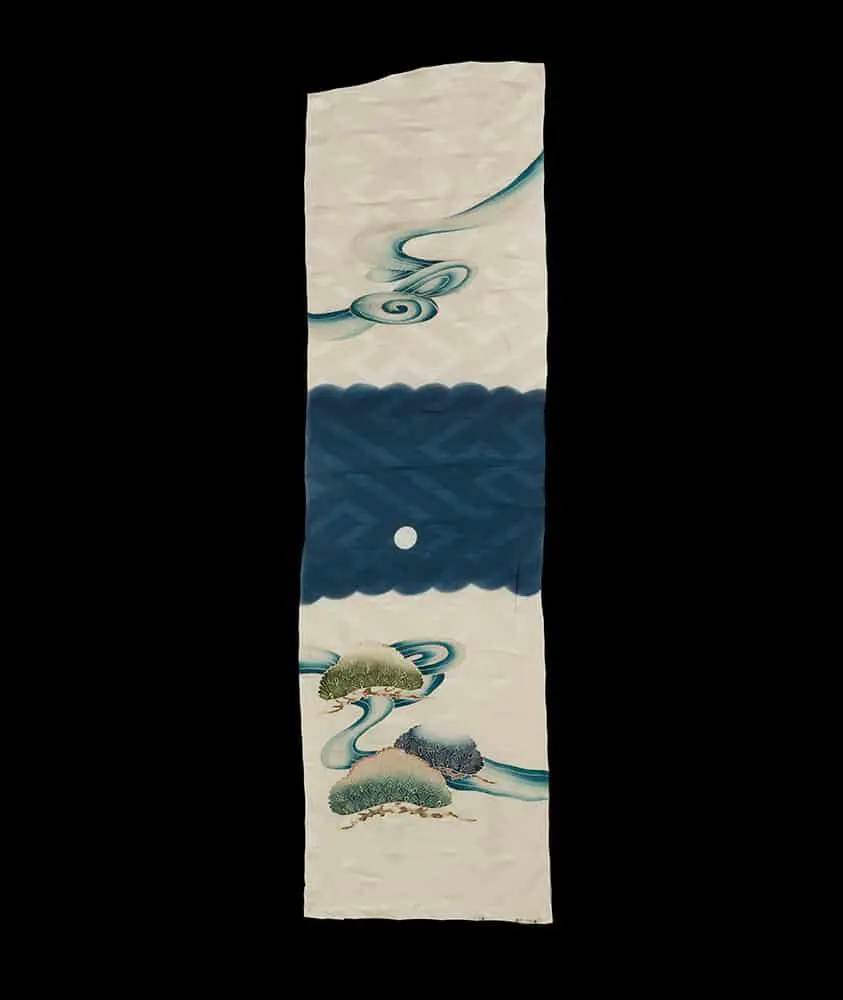
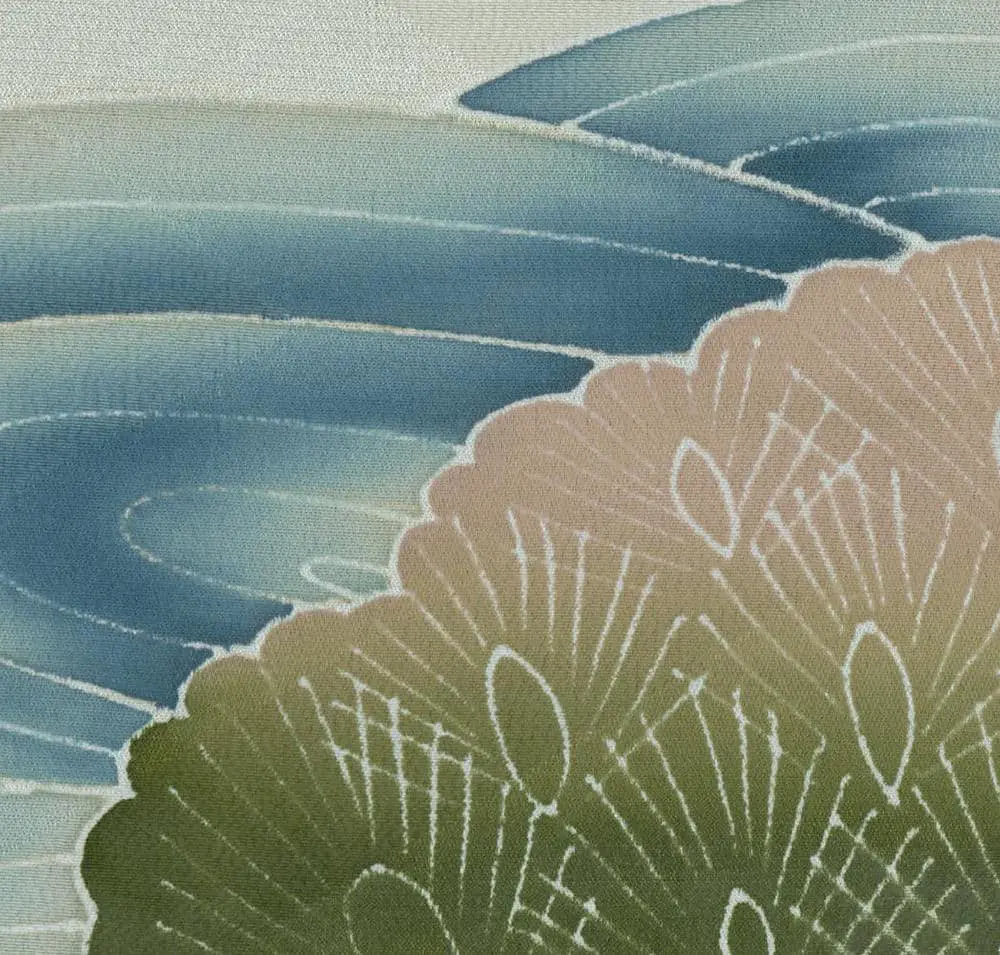
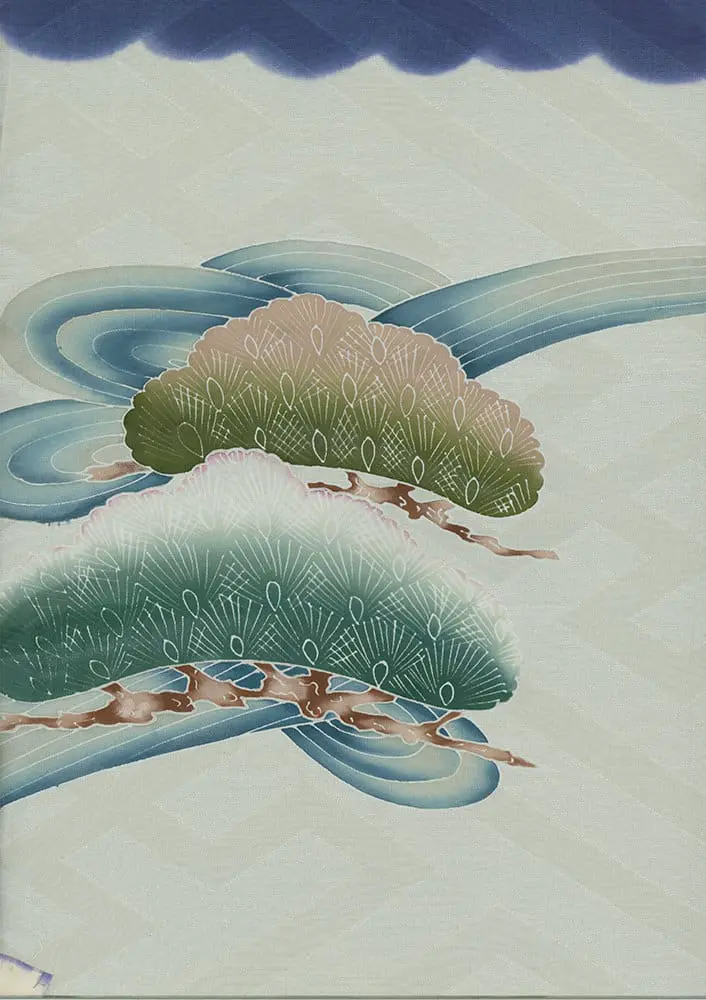
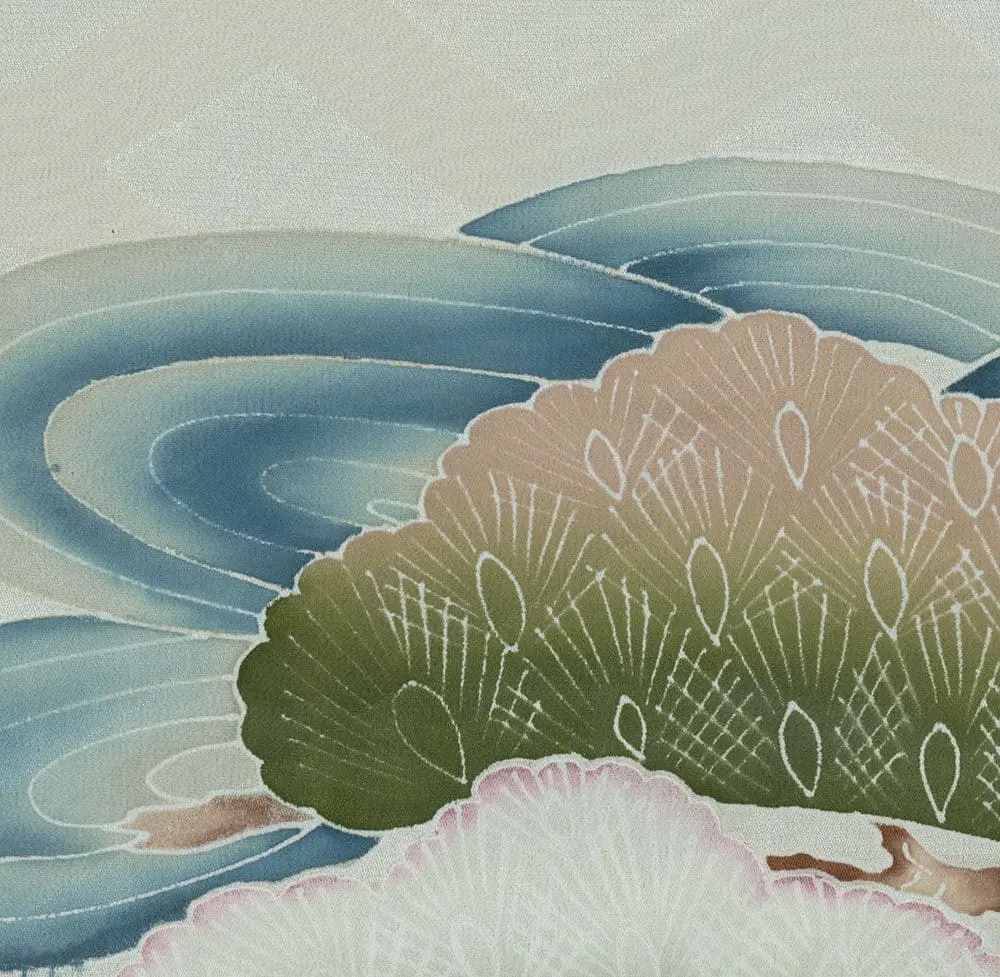
This hand-painted silk panel originates from Japan and dates to the mid-Showa period (1960–1980). Measuring 13 inches by 60 inches (33 cm x 152 cm), the textile is a section of rinzu silk, a premium damask weave favored for formal garments due to its lustrous finish and intricate self-patterned background. This piece was extracted from a miyamairi kimono, a specialized ceremonial robe used for a young girl's first visit to a Shinto shrine. The panel features a striking color-blocked arrangement, where a central horizontal band of deep teal-blue—containing a white circular mon (family crest)—is flanked by cream-colored sections.
The visual narrative is a masterful display of traditional matsu (pine) and flowing water motifs, which symbolize longevity and the continuous flow of life. In the upper section, teal and blue water currents swirl gracefully across the cream ground, while the lower section features clusters of pine trees nestled amidst similar aquatic currents. The pine boughs are rendered in varied shades of forest green and moss, accented with fine gold details. These hand-painted elements are layered over a woven sayagata (interlocking key fret) background, a traditional pattern often used on children's ceremonial wear to represent strength and the Buddhist concept of unending continuity.

Payment Options: We primarily accept PayPal for all transactions. Credit and debit cards are not accepted. If you prefer to pay by personal check instead of PayPal, please note this preference in the "Additional comments" field when placing your order.Ordering Process
To receive your PayPal invoice, simply fill out the form.
Shipping Details: We ship all orders to the address associated with your PayPal payment. Please ensure your PayPal shipping address is current and accurate.A phone number is required during checkout, as our shipping carrier may need to contact you regarding delivery questions.Shipping RatesUnited States and Canada: $20International destinations (air mail): $40
