Copyright © 2026 Yorke Antique Textiles
.avif)

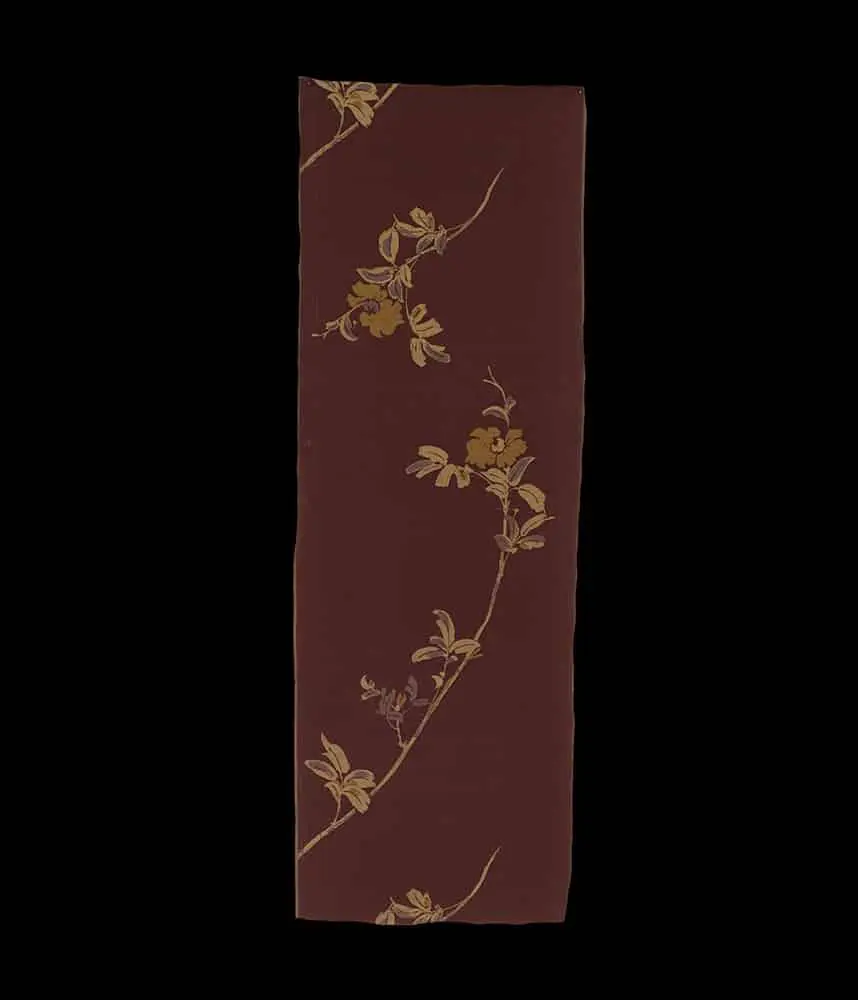
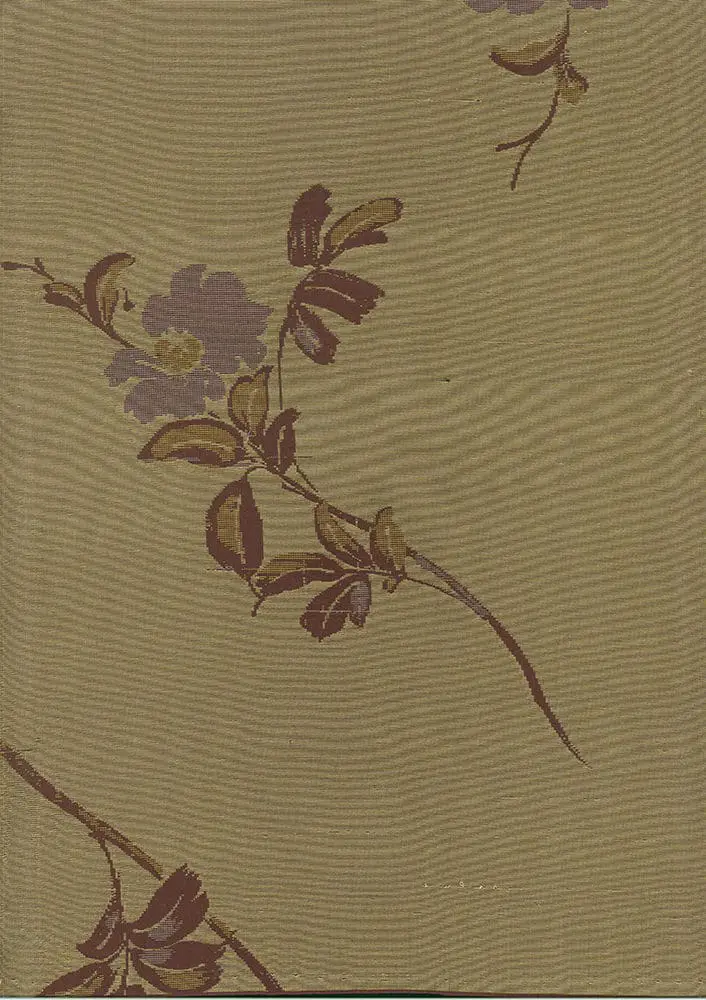
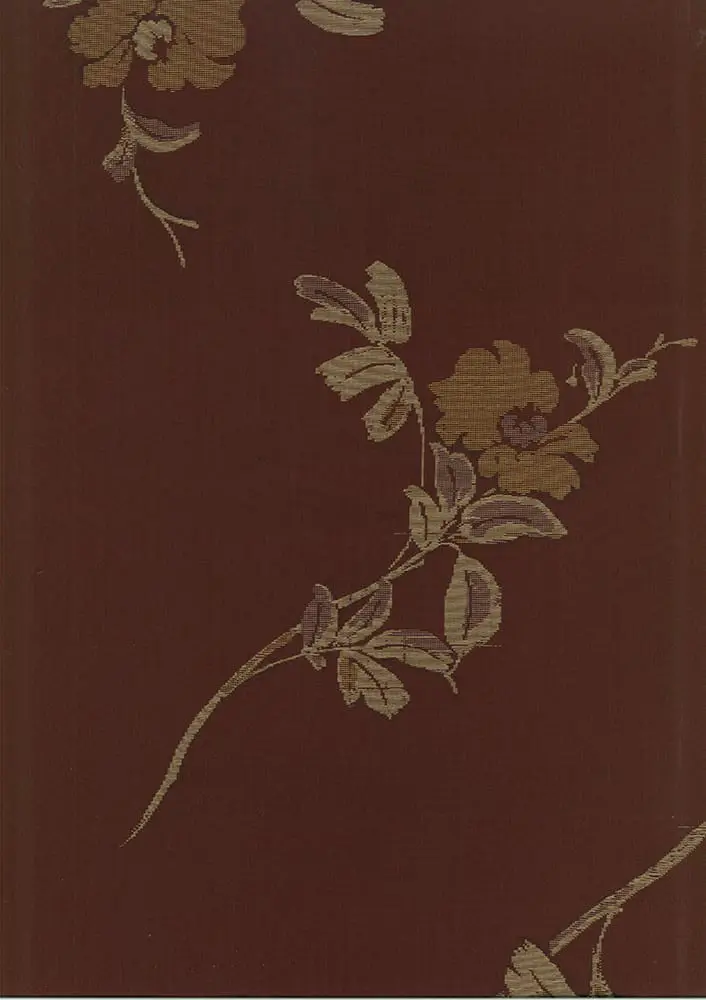


This elegant silk kimono panel originates from Japan and dates to the late 20th century (1975–2000). Measuring 13 inches by 45 inches (33 cm x 114 cm), the textile is crafted from a high-quality silk base in a rich, deep plum or aubergine hue. The panel was originally part of a formal kimono, likely a houmongi (visiting dress) or tsukage, representing the refined aesthetic of the late Showa or early Heisei era.
The visual narrative features a delicate, asymmetrical composition of climbing floral vines. The motifs are rendered in a palette of muted gold, olive, and silver threads, likely utilizing a combination of sophisticated weaving and embroidery techniques. The flowers, which resemble stylized peonies or wild roses, are depicted with a naturalistic grace, their slender stems and leaves trailing diagonally across the dark ground. This design utilizes the yohaku (empty space) principle, allowing the deep color of the silk to provide a sense of depth and quietude, highlighting the intricate details of the metallic-toned flora.

Payment Options: We primarily accept PayPal for all transactions. Credit and debit cards are not accepted. If you prefer to pay by personal check instead of PayPal, please note this preference in the "Additional comments" field when placing your order.Ordering Process
To receive your PayPal invoice, simply fill out the form.
Shipping Details: We ship all orders to the address associated with your PayPal payment. Please ensure your PayPal shipping address is current and accurate.A phone number is required during checkout, as our shipping carrier may need to contact you regarding delivery questions.Shipping RatesUnited States and Canada: $20International destinations (air mail): $40
