Copyright © 2026 Yorke Antique Textiles
.avif)


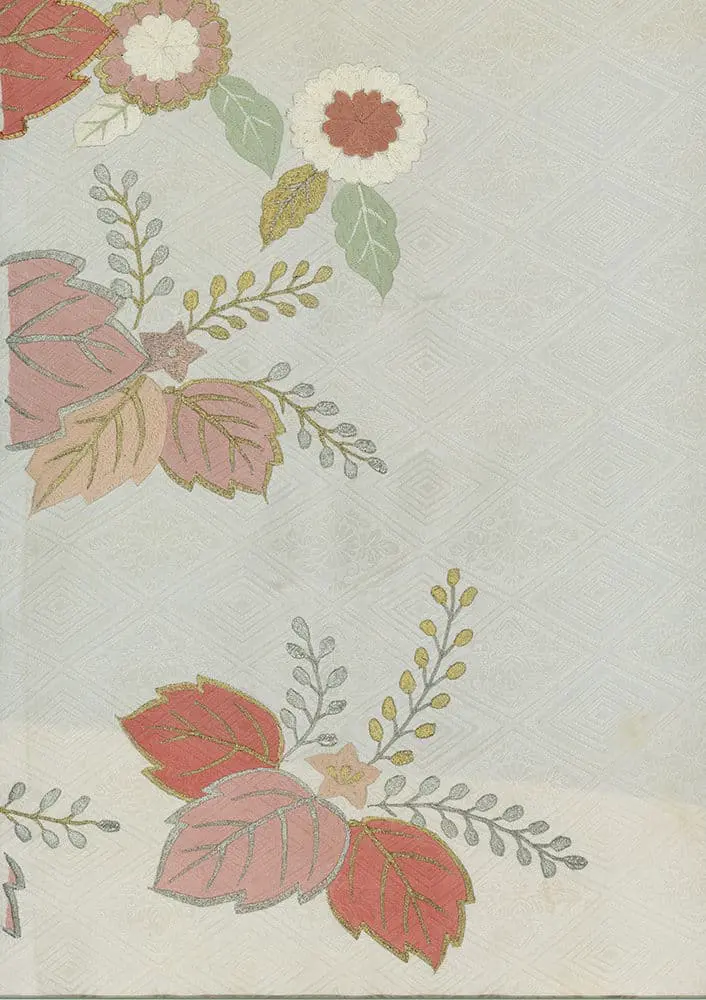
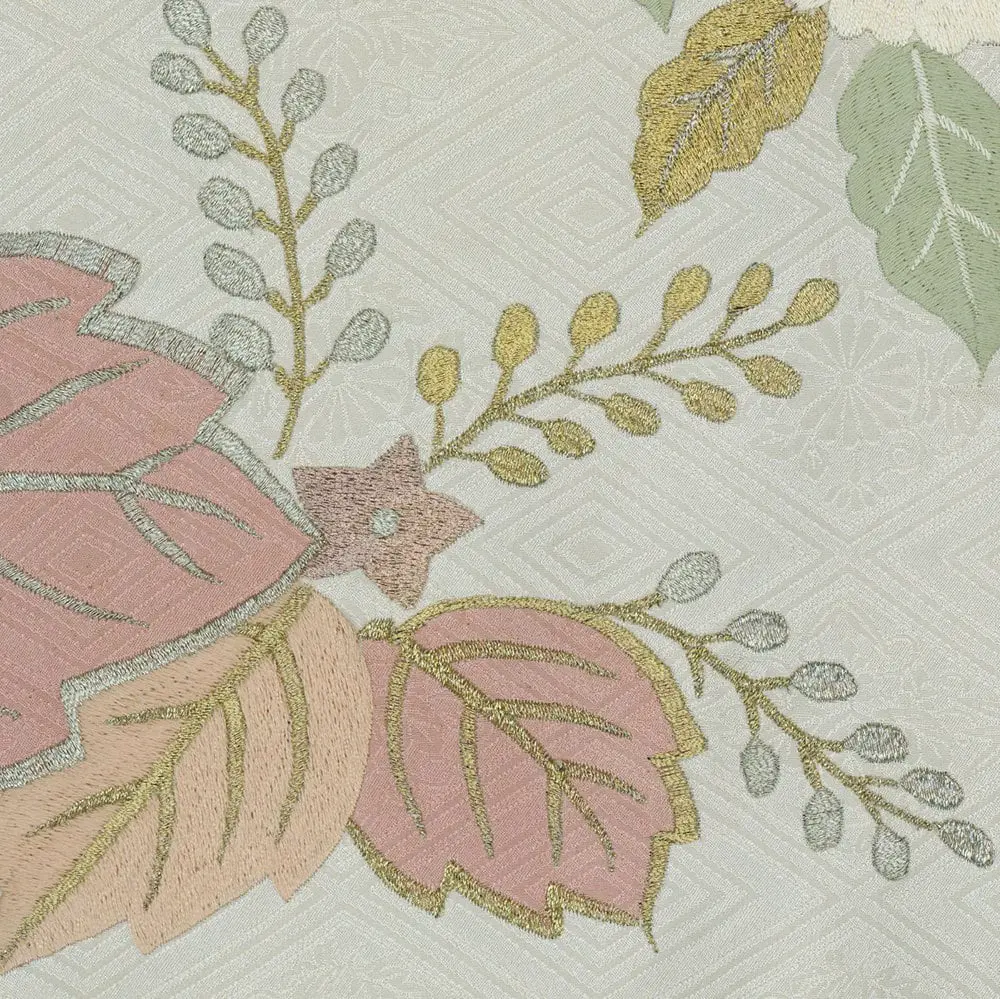
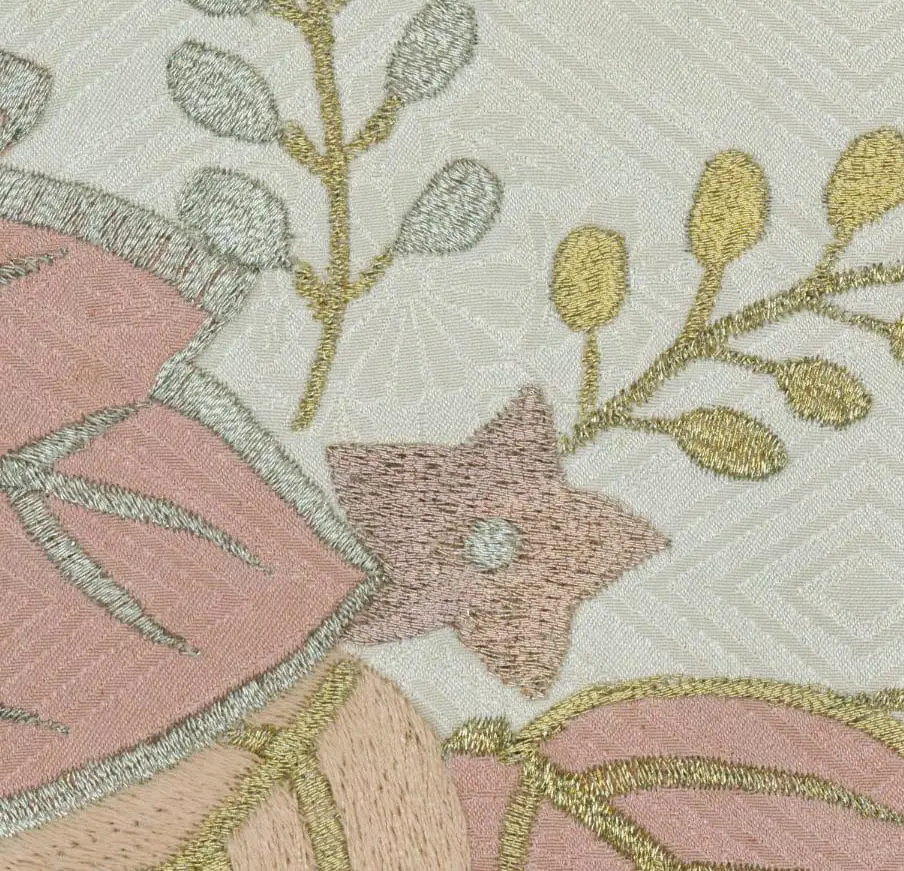
This refined silk kimono panel originates from Japan and dates to the late 20th century (1975–2000). Measuring 13 inches by 45 inches (33 cm x 114 cm), the textile is crafted from a high-quality cream-colored silk with a subtle, self-patterned weave that provides a luminous foundation. The panel was likely extracted from a formal kimono such as a houmongi, representing the elegant and understated textile traditions of the Heisei era.
The visual narrative is concentrated at the lower portion of the panel, featuring a delicate arrangement of autumnal botanical motifs. These designs are rendered in a warm palette of terracotta, dusty rose, and muted sage green, accented with shimmering silver threads. The motifs include stylized maple leaves (momiji) and small blossoms, executed with a combination of fine weaving and embroidery that gives the pattern a slight three-dimensional relief. This "bottom-heavy" composition follows traditional Japanese design principles, utilizing the vast field of cream silk as yohaku (empty space) to evoke a sense of clarity and seasonal transition.

Payment Options: We primarily accept PayPal for all transactions. Credit and debit cards are not accepted. If you prefer to pay by personal check instead of PayPal, please note this preference in the "Additional comments" field when placing your order.Ordering Process
To receive your PayPal invoice, simply fill out the form.
Shipping Details: We ship all orders to the address associated with your PayPal payment. Please ensure your PayPal shipping address is current and accurate.A phone number is required during checkout, as our shipping carrier may need to contact you regarding delivery questions.Shipping RatesUnited States and Canada: $20International destinations (air mail): $40
