Copyright © 2026 Yorke Antique Textiles
.avif)


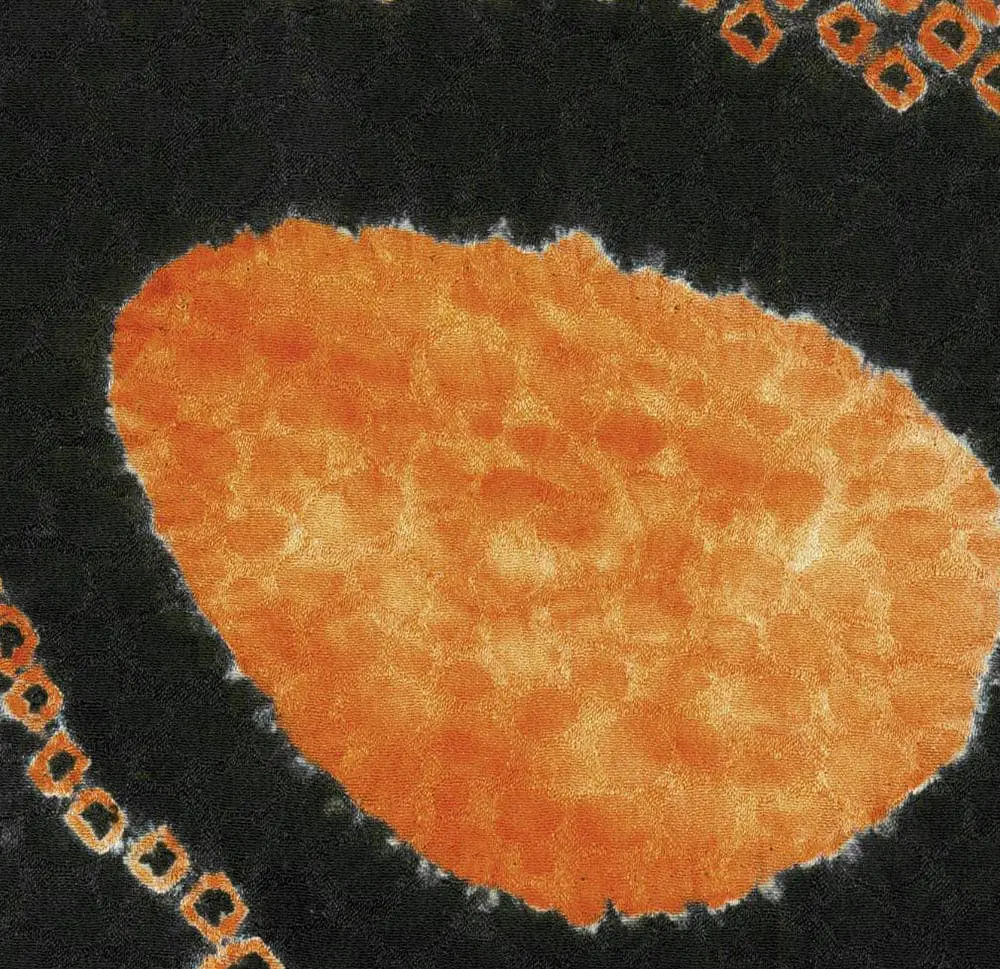
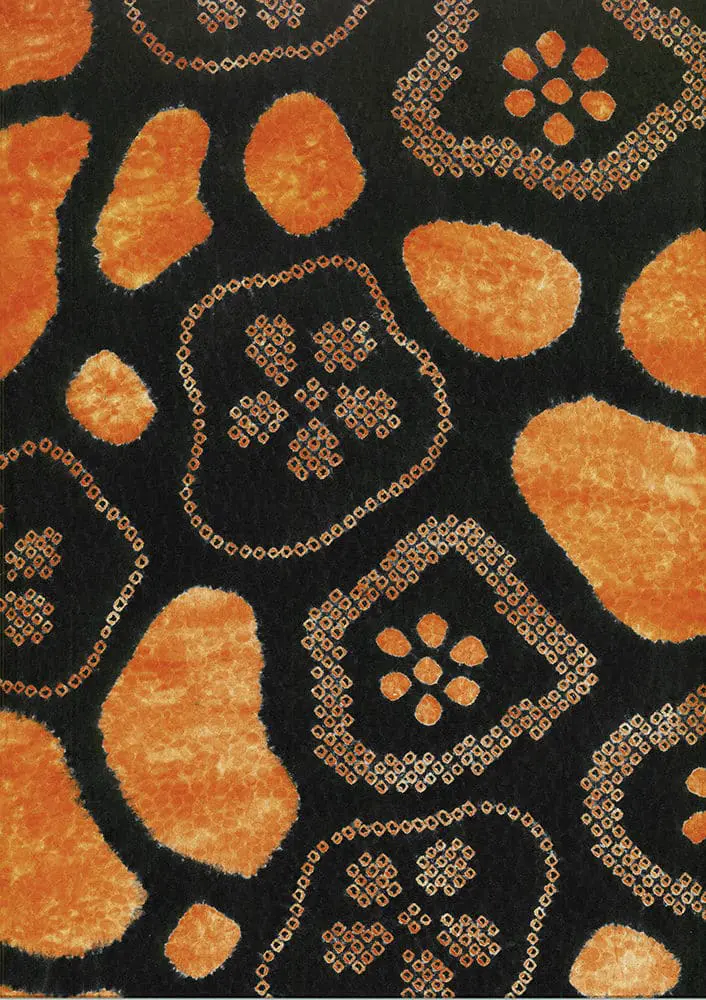

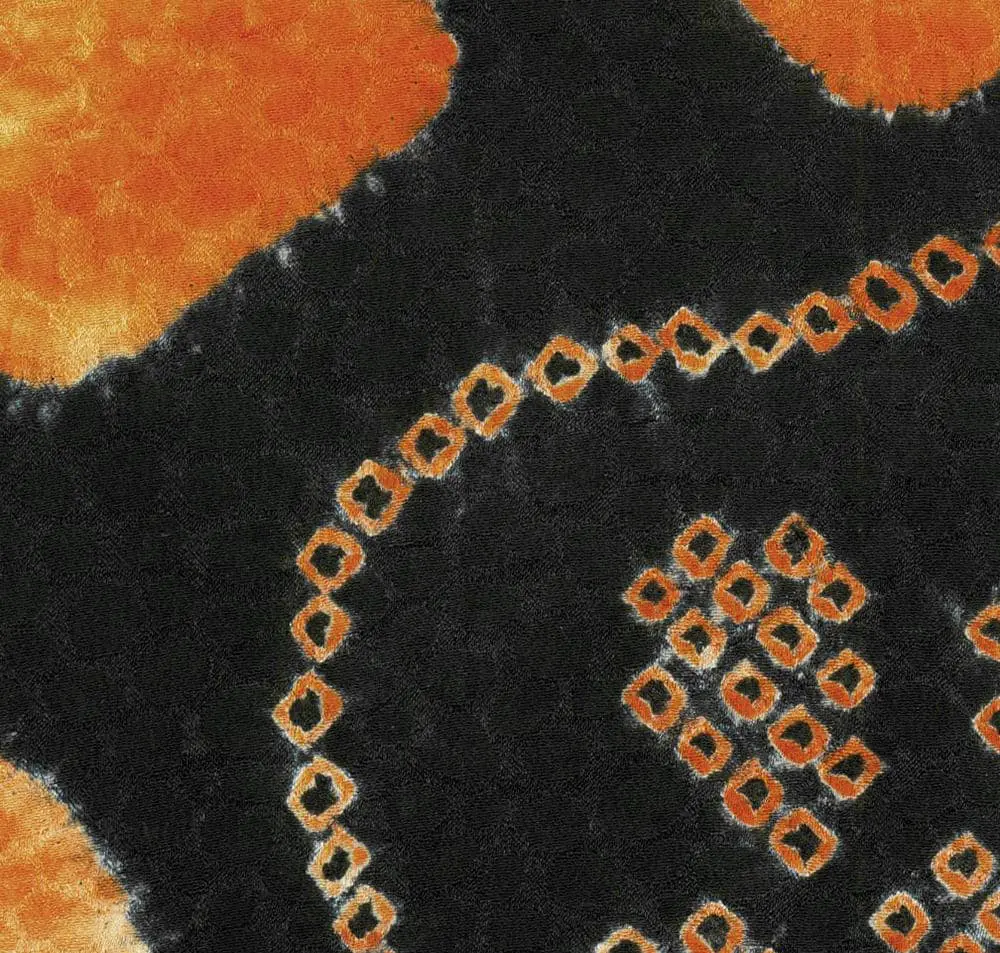
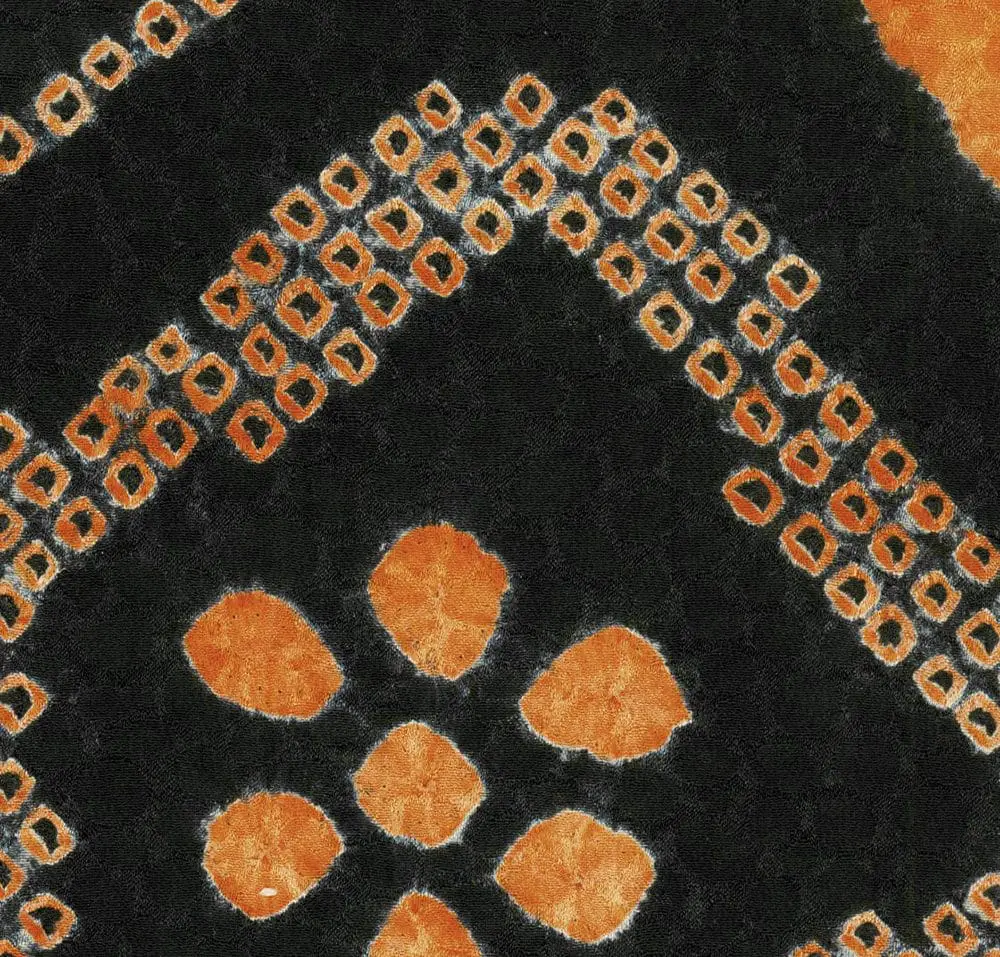
This high-impact textile originates from Japan’s late Showa period (1950–1970) and is a scholarly example of the graphic, high-contrast aesthetics that defined mid-century informal luxury. Measuring 14 inches by 60 inches (36 cm x 152 cm), the piece represents a complete panel from a disassembled kimono, preserved in excellent overall condition. Crafted from a premium textured black silk, the substrate provides a deep, matte field that emphasizes the brilliance of the surface embellishment.
The visual narrative is defined by a rhythmic, all-over shibori (resist-dyeing) pattern in a vibrant, true orange. The design features organic, pebble-like shapes and hexagonal cells, many of which contain smaller five-dot floral clusters. This labor-intensive technique creates a unique, three-dimensional texture across the fabric's surface, as the silk retains the "memory" of the hand-tied resists. The juxtaposition of the midnight black ground with the radiant orange pops reflects the era's mastery of bold color-blocking, transforming a traditional folk-art technique into a modern, eye-catching statement.

Payment Options: We primarily accept PayPal for all transactions. Credit and debit cards are not accepted. If you prefer to pay by personal check instead of PayPal, please note this preference in the "Additional comments" field when placing your order.Ordering Process
To receive your PayPal invoice, simply fill out the form.
Shipping Details: We ship all orders to the address associated with your PayPal payment. Please ensure your PayPal shipping address is current and accurate.A phone number is required during checkout, as our shipping carrier may need to contact you regarding delivery questions.Shipping RatesUnited States and Canada: $20International destinations (air mail): $40
