Copyright © 2026 Yorke Antique Textiles
.avif)

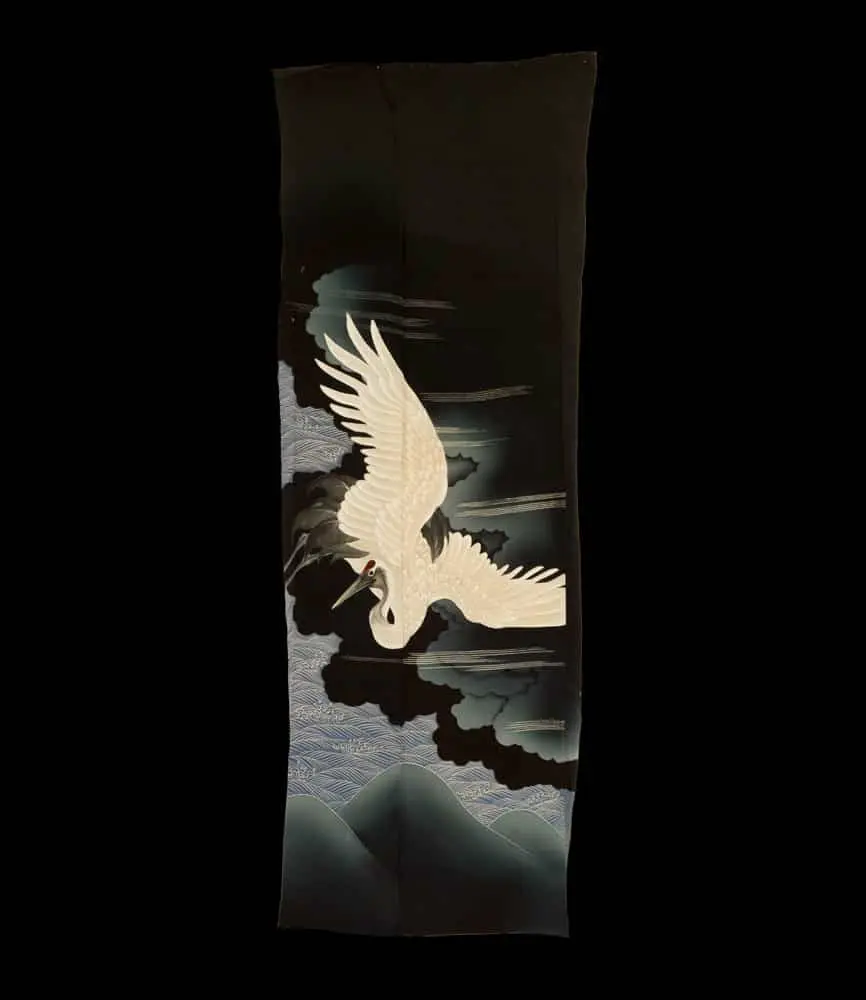

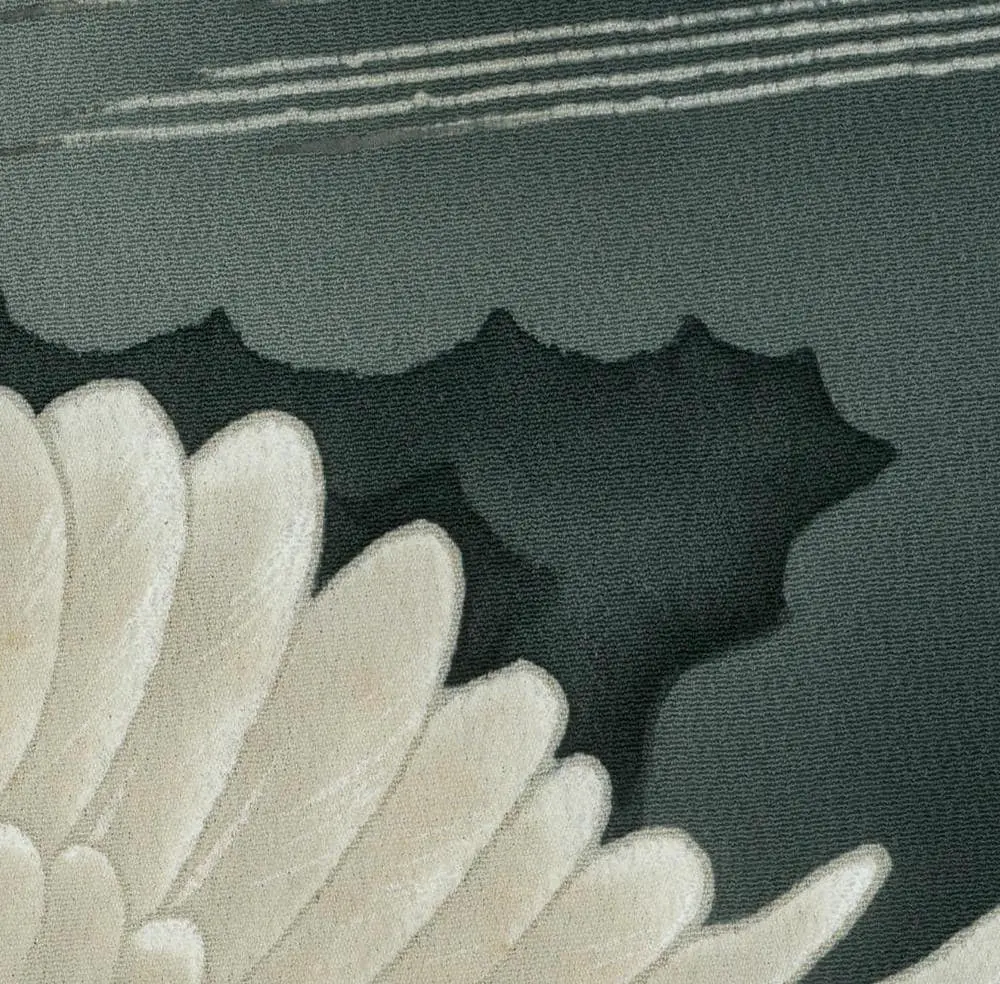
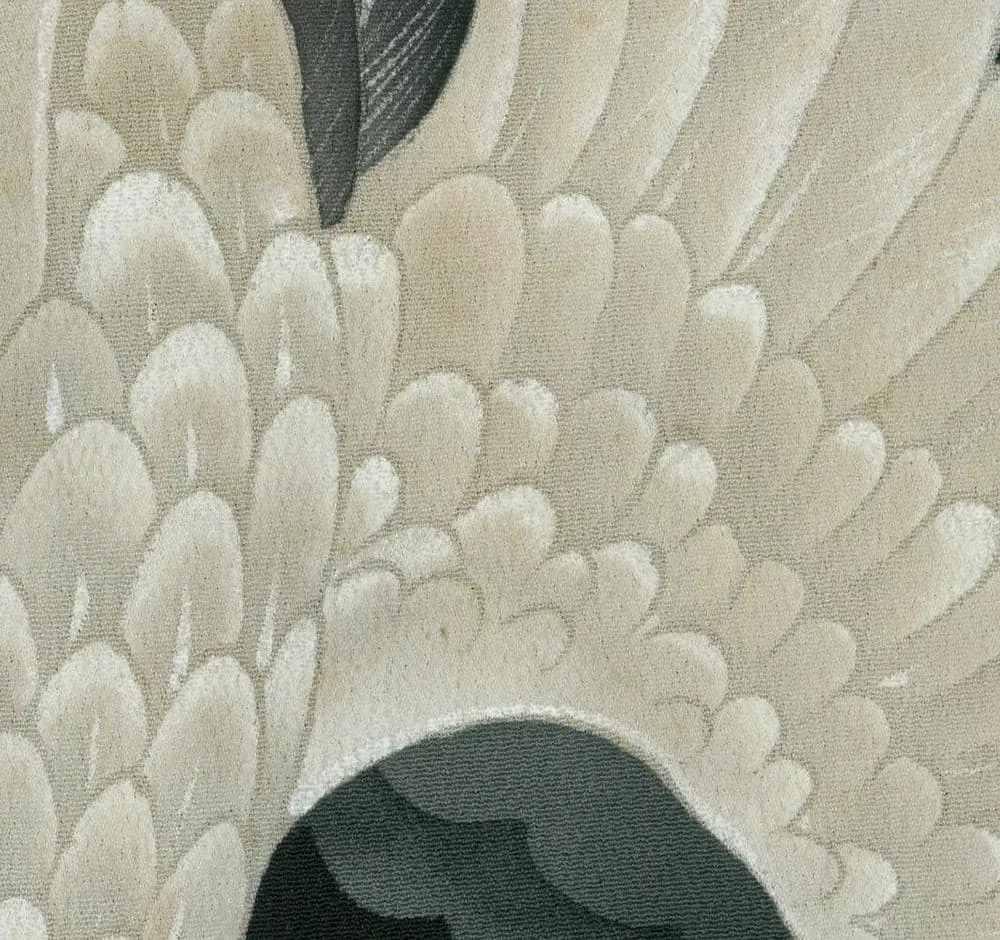
This masterful textile originates from the Taisho period (1912–1926) and serves as a scholarly example of the opulent, multi-layered craftsmanship reserved for high-status formal attire. Measuring 15 inches by 42 inches (38 cm x 107 cm), the piece represents a significant panel from a disassembled kimono, preserved in very good condition. The composition is set against a deep midnight-black silk ground, which provides a dramatic, high-contrast substrate for the celestial and terrestrial imagery.
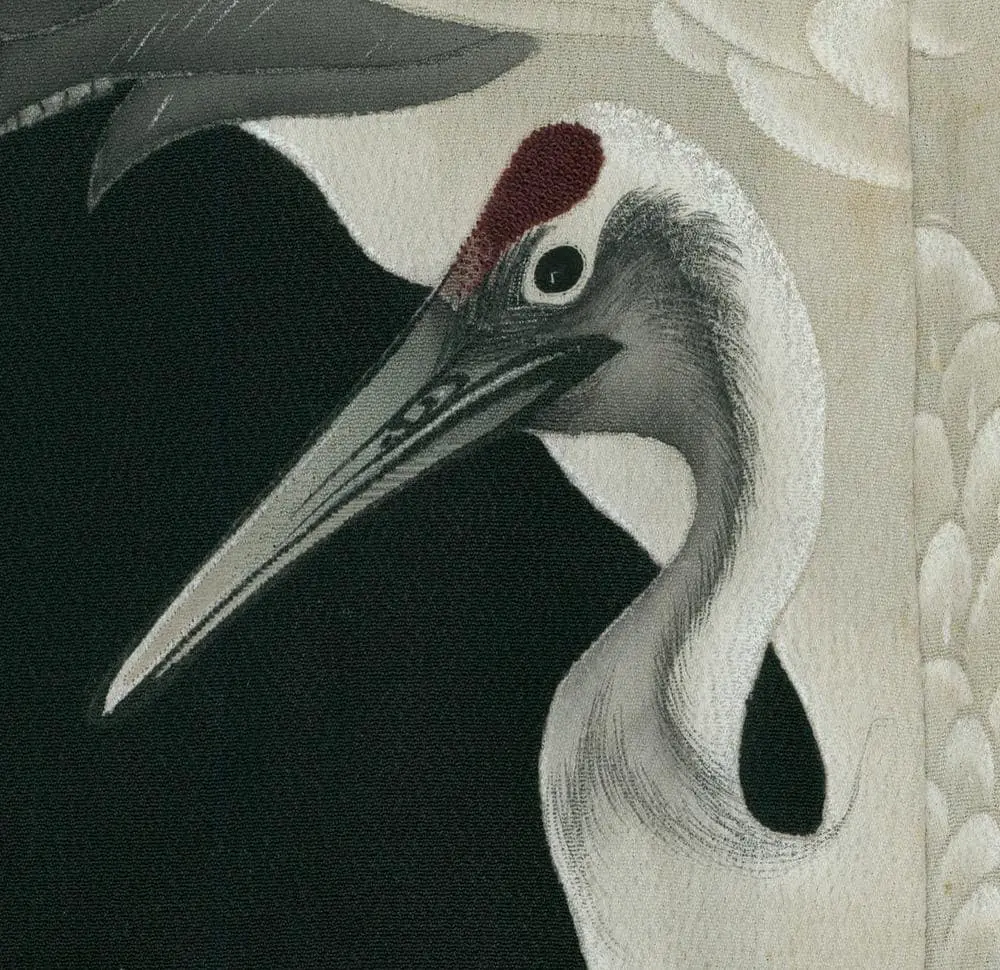
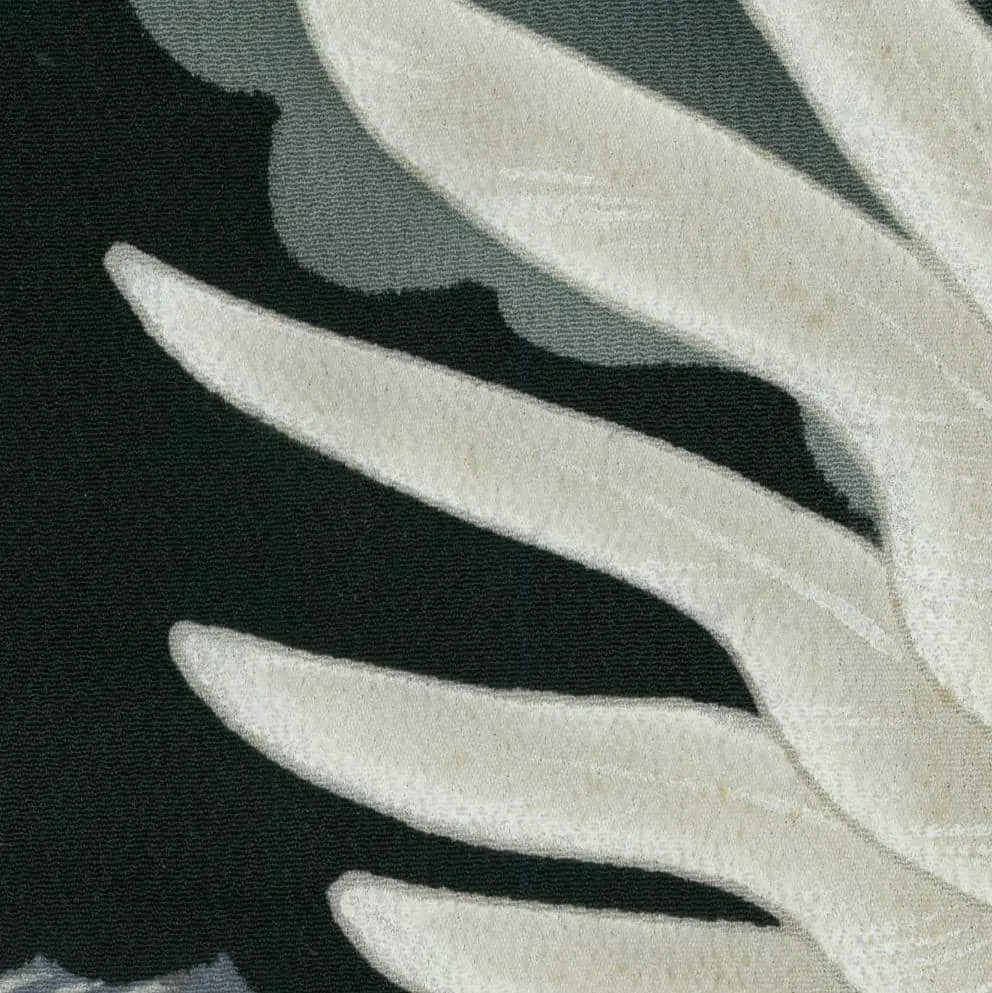
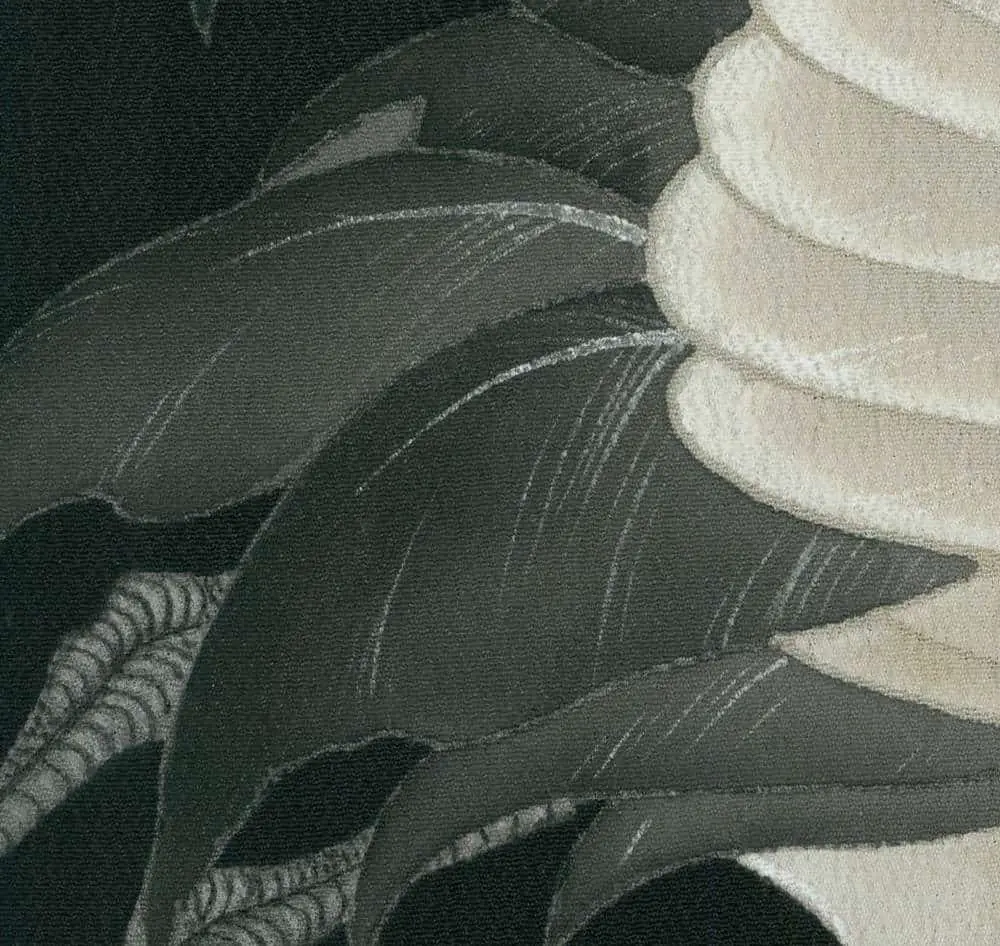
The visual narrative is dominated by a majestic, ascending tsuru (crane), a classical symbol of longevity and marital fidelity. The crane is rendered using a sophisticated combination of yuzen painting and sagara embroidery (knot stitch), which provides a dense, moss-like texture to the ivory plumage of the wings and breast. The bird soars above stylized, dark rolling mountains and a turbulent sea of grey-blue waves, all meticulously detailed with hand-painted highlights that create a sense of atmospheric depth. Above and behind the crane, swirling ink-like clouds break to reveal the night sky, reflecting the "Taisho Roman" mastery of blending traditional auspicious motifs with a moody, romanticist painterly style.

Payment Options: We primarily accept PayPal for all transactions. Credit and debit cards are not accepted. If you prefer to pay by personal check instead of PayPal, please note this preference in the "Additional comments" field when placing your order.Ordering Process
To receive your PayPal invoice, simply fill out the form.
Shipping Details: We ship all orders to the address associated with your PayPal payment. Please ensure your PayPal shipping address is current and accurate.A phone number is required during checkout, as our shipping carrier may need to contact you regarding delivery questions.Shipping RatesUnited States and Canada: $20International destinations (air mail): $40
