Copyright © 2026 Yorke Antique Textiles
.avif)

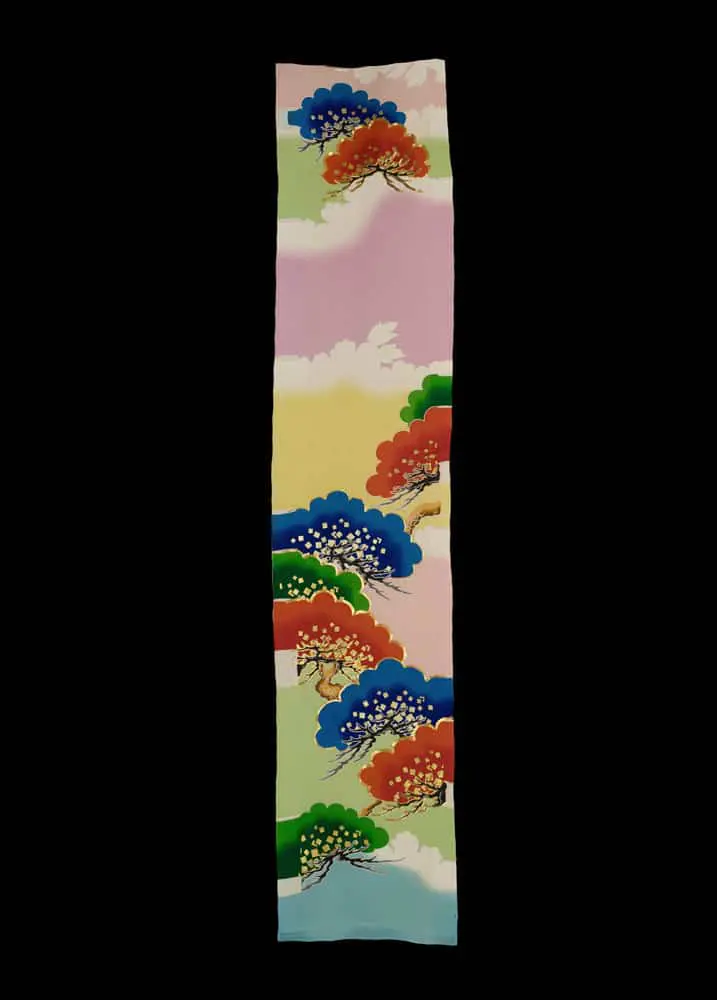
This opulent textile originates from Japan’s mid-Showa period (1940–1960) and was originally a primary component of a furisode, the highly formal, long-sleeved kimono worn by unmarried women. Measuring 14.5 inches by 71 inches (37 cm x 180 cm), the panel is crafted from high-quality silk featuring a vibrant, multi-colored ombre ground. The background transitions through a rhythmic series of soft pastel bands, including pale pink, mint green, lemon yellow, and sky blue, separated by white cloud-like borders. This scholarly use of color creates a dreamlike, celestial atmosphere that serves as a canvas for the bold motifs.
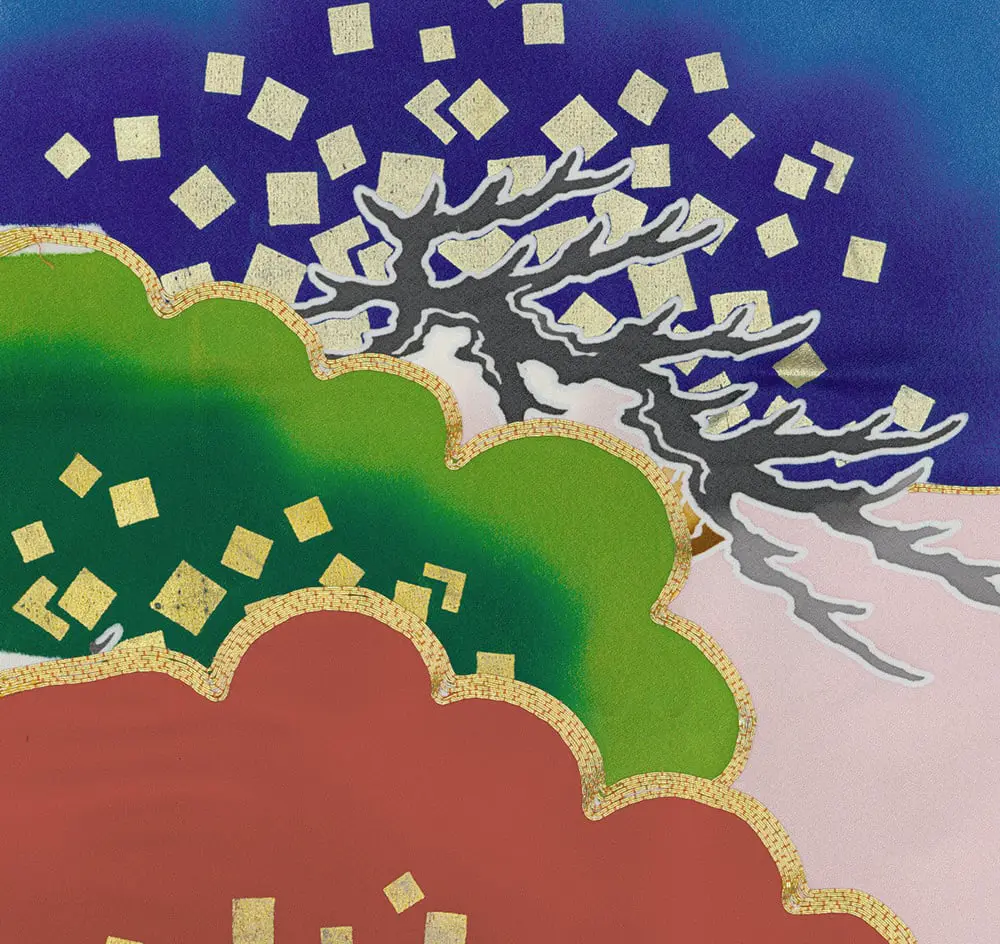
The visual narrative is centered on stylized matsu (pine tree) motifs, a revered symbol of longevity and steadfastness. These are rendered in deeply saturated primary tones of royal blue, forest green, and vermilion red. To further elevate the artistry, the panel features extensive metallic couching, with gold-colored threads stitched to define the outlines of the pine boughs, and an abundance of gold foil (kinkaku) applied as square accents within the foliage. This combination of traditional yuzen painting and shimmering metallic embellishments exemplifies the post-war era's revitalization of luxury textile arts.

Payment Options: We primarily accept PayPal for all transactions. Credit and debit cards are not accepted. If you prefer to pay by personal check instead of PayPal, please note this preference in the "Additional comments" field when placing your order.Ordering Process
To receive your PayPal invoice, simply fill out the form.
Shipping Details: We ship all orders to the address associated with your PayPal payment. Please ensure your PayPal shipping address is current and accurate.A phone number is required during checkout, as our shipping carrier may need to contact you regarding delivery questions.Shipping RatesUnited States and Canada: $20International destinations (air mail): $40
