Copyright © 2026 Yorke Antique Textiles
.avif)


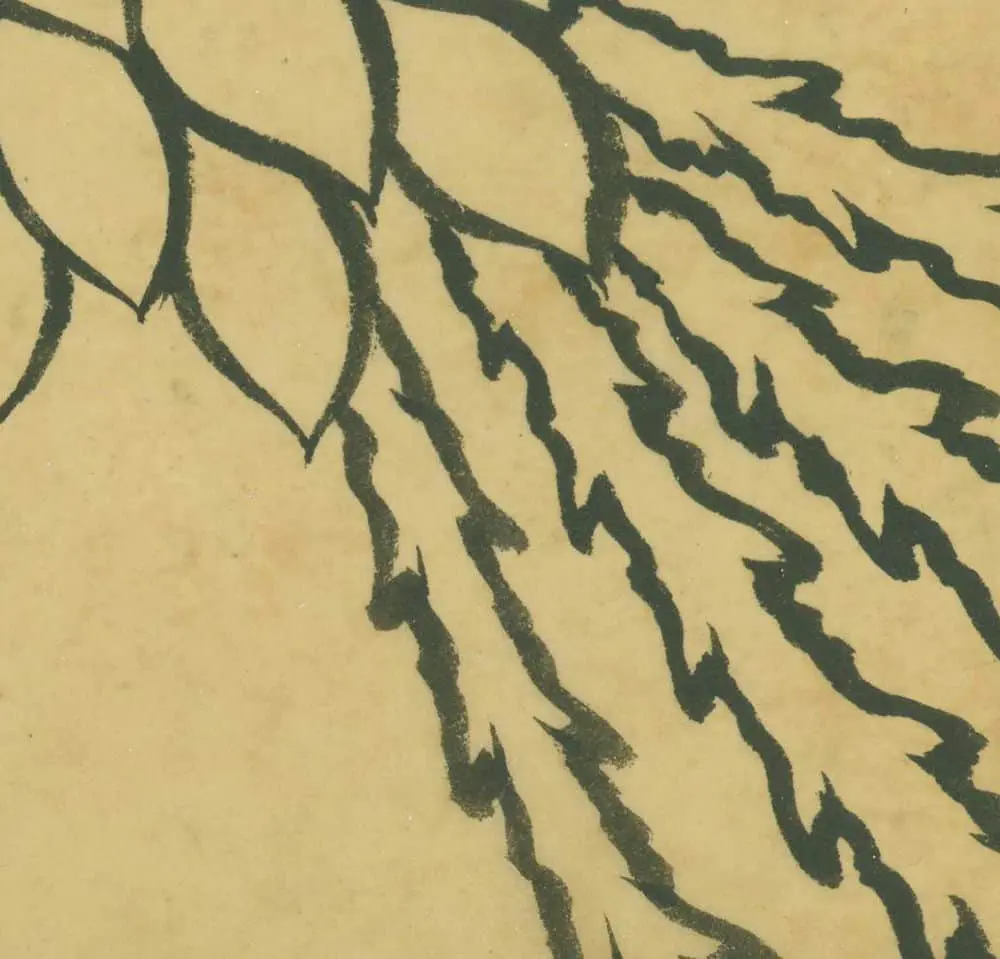

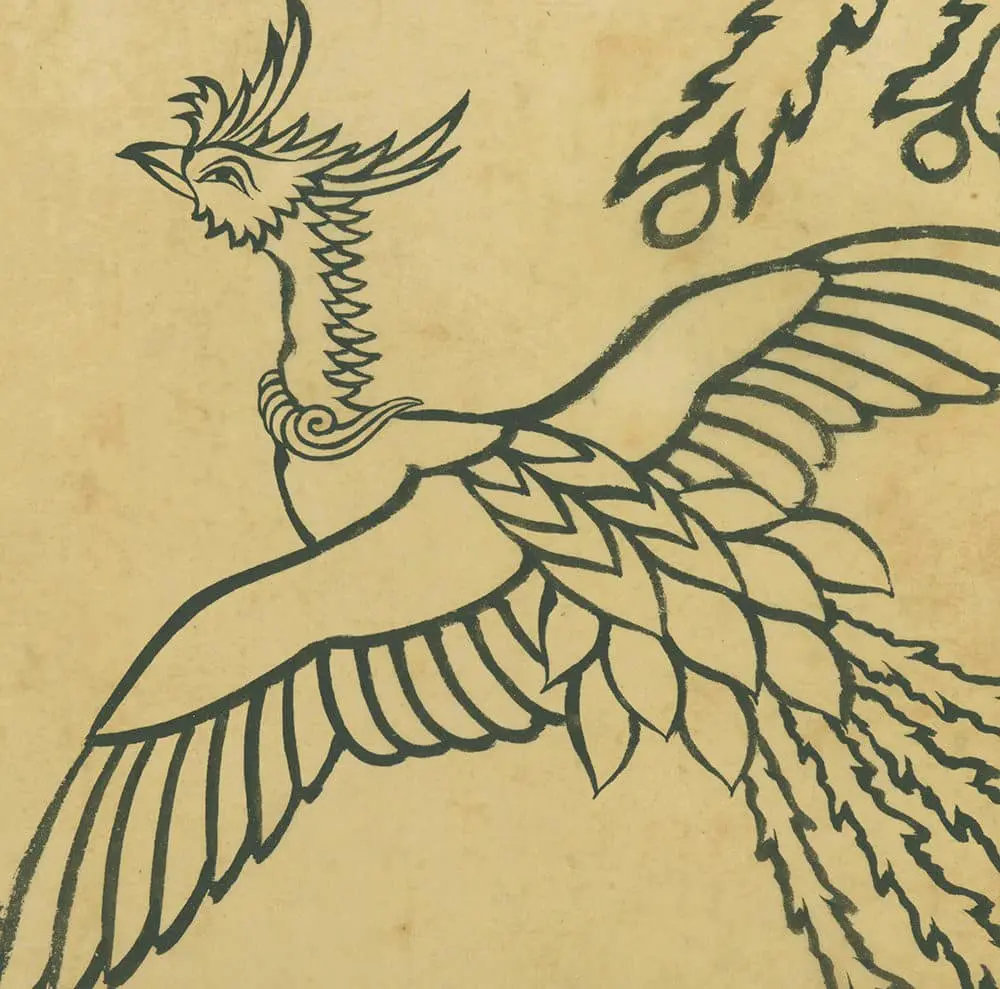
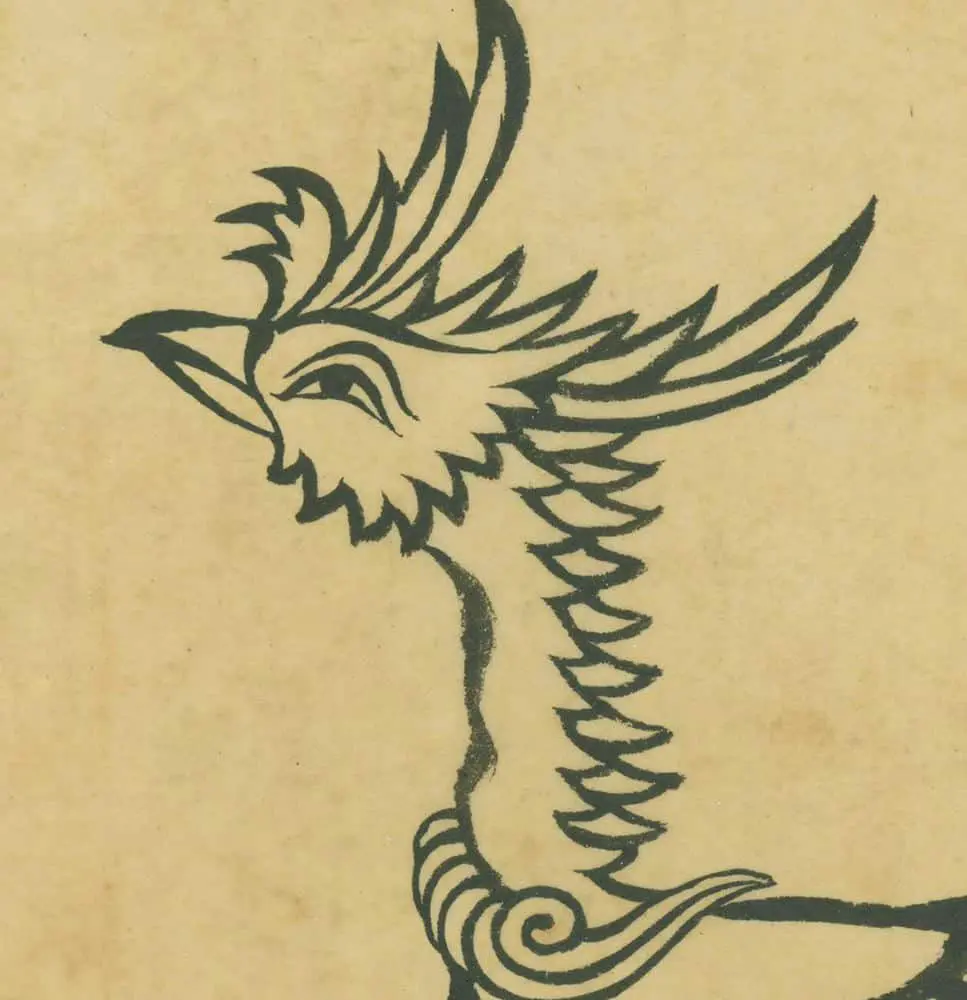
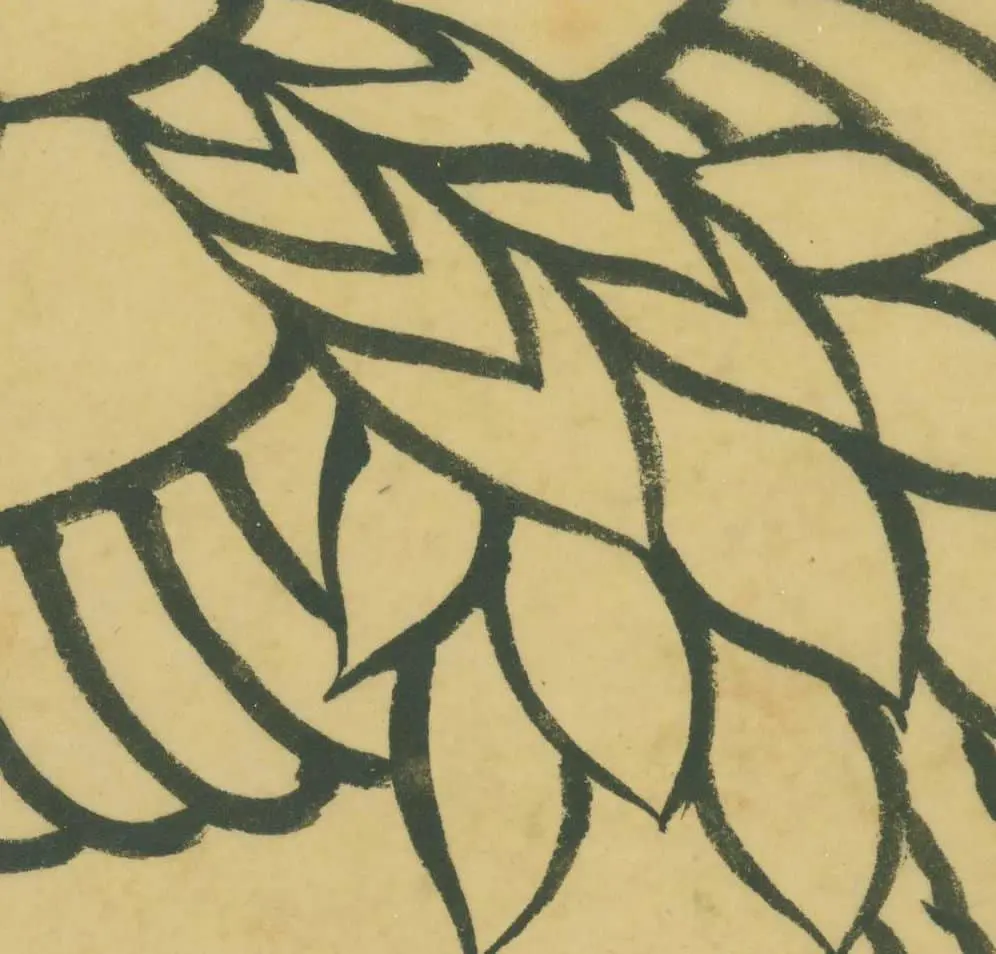
This elegant hand-painted artwork is an original kimono design from Japan, dating to the Meiji period (1868–1912). Executed on thin paper and mounted on a larger archival page, this piece likely originated from a design ledger or reference book used in Kyoto's Nishijin district, the historic heart of high-end Japanese textile production. The artwork measures approximately 14 inches by 23 inches (36 cm x 58 cm) and remains in very good condition, offering a rare glimpse into the technical drafting process of late 19th-century artisans.
The composition focuses on the majestic hō-ō (mythical phoenix), a symbol of high virtue, grace, and the imperial house. Rendered in precise, dark green ink-wash outlines, two phoenixes are shown in a dynamic, ascending flight against a natural, cream-toned paper ground. The artist has meticulously detailed the layered, scale-like feathers of the wings and the long, flowing plumage of the tails, which sweep across the page in a rhythmic, calligraphic fashion. This specific draft likely served as a "pattern-transfer" guide, where the bold outlines would be traced or referenced by weavers to ensure the correct proportions and flow of the mythical birds within a complex brocade or embroidery.
This artwork is featured on page 149 of Art Kimono: Aesthetic Revelations of Japan, 1905-1960. This book, published by Yorke Antique Textiles, can be previewed or purchased on our website here.

Payment Options: We primarily accept PayPal for all transactions. Credit and debit cards are not accepted. If you prefer to pay by personal check instead of PayPal, please note this preference in the "Additional comments" field when placing your order.Ordering Process
To receive your PayPal invoice, simply fill out the form.
Shipping Details: We ship all orders to the address associated with your PayPal payment. Please ensure your PayPal shipping address is current and accurate.A phone number is required during checkout, as our shipping carrier may need to contact you regarding delivery questions.Shipping RatesUnited States and Canada: $20International destinations (air mail): $40
