Copyright © 2026 Yorke Antique Textiles
.avif)

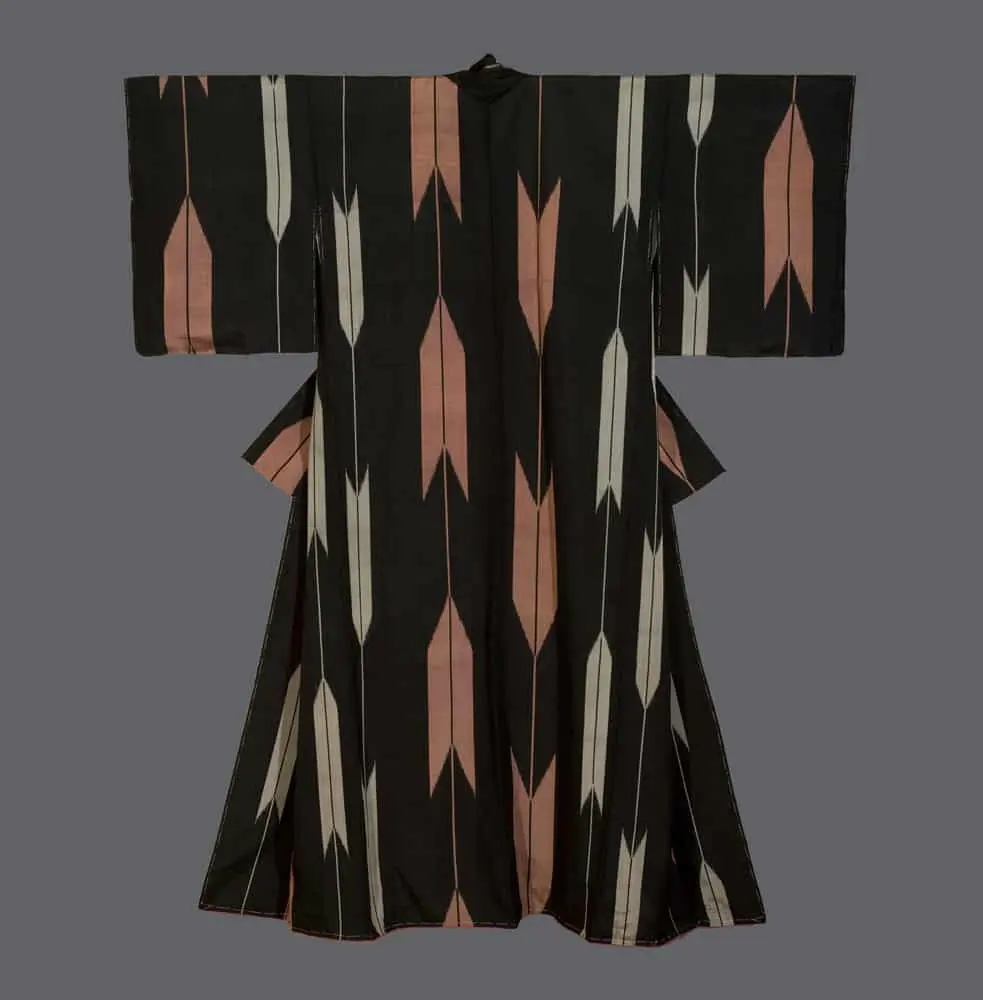


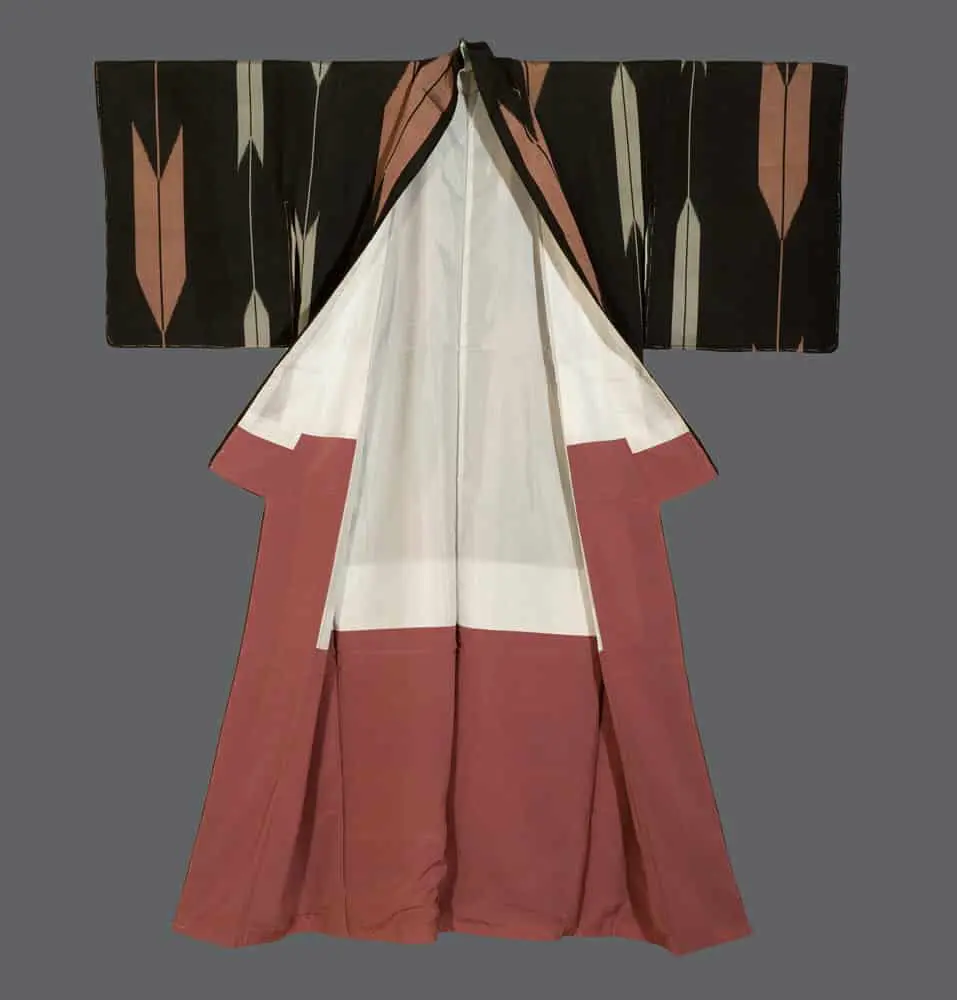


This mid-Showa period kimono features one of Japan's most beloved and auspicious geometric patterns: yabane, or arrow feathers. Rendered in meisen silk—a technique where warp and weft threads are stencil-dyed before weaving—the design displays stylized arrow fletching in alternating coral-pink and cream against a dramatic black ground. The characteristic soft-edged quality of meisen dyeing is visible in the gentle transitions at the motifs' boundaries.
The yabane pattern carries profound symbolic meaning in Japanese culture. Arrows, once released, fly straight forward without returning—making this motif especially popular for young women and brides, symbolizing their journey into a new life from which they will not turn back. The pattern also represents determination, protection from evil, and wishes for success in one's endeavors. Historically associated with New Year celebrations and coming-of-age ceremonies, yabane-patterned garments remain popular for these occasions today.
The bold graphic arrangement here—with arrow feathers pointing in opposing directions—creates dynamic visual movement across the garment's surface. The high-contrast color scheme of warm coral and cool cream against black demonstrates the modernist sensibilities prevalent during this period, when traditional motifs were frequently reinterpreted with contemporary color palettes. The simplicity and geometric clarity of yabane made it particularly well-suited to meisen production, which excelled at bold, graphic designs accessible to a broad consumer market.
Its dimensions are 49 inches from sleeve-end to sleeve-end and 59 inches in height (124 x 150 cm).

Payment Options: We primarily accept PayPal for all transactions. Credit and debit cards are not accepted. If you prefer to pay by personal check instead of PayPal, please note this preference in the "Additional comments" field when placing your order.Ordering Process
To receive your PayPal invoice, simply fill out the form.
Shipping Details: We ship all orders to the address associated with your PayPal payment. Please ensure your PayPal shipping address is current and accurate.A phone number is required during checkout, as our shipping carrier may need to contact you regarding delivery questions.Shipping RatesUnited States and Canada: $20International destinations (air mail): $40
