Copyright © 2026 Yorke Antique Textiles
.avif)

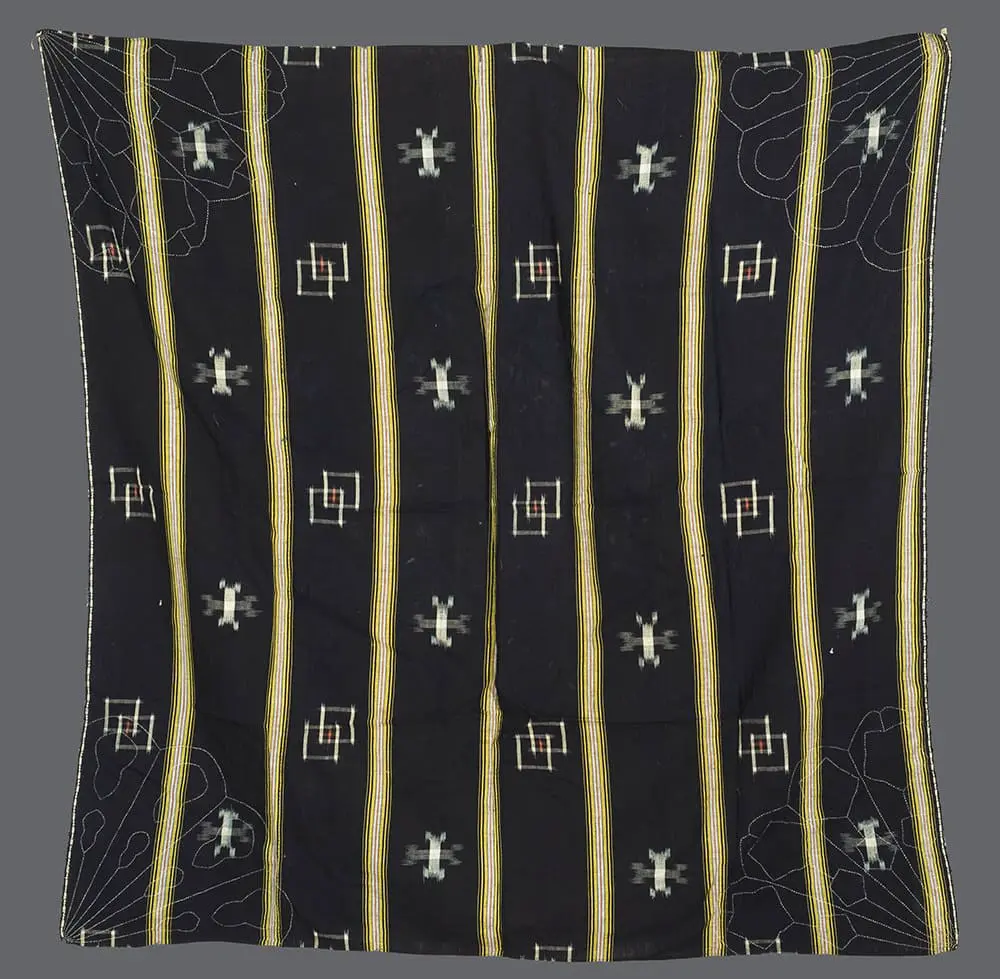

This intriguing furoshiki (traditional Japanese wrapping cloth) from Japan dates to the Taisho period (1912–1926). Measuring 54 inches by 54 inches (137 cm by 137 cm), this sizable textile is crafted from durable indigo-dyed cotton and remains in very good condition.
The cloth showcases a rhythmic kasuri (ikat) pattern, a labor-intensive technique where the yarns are resist-dyed before weaving to create specific designs. The composition features vertical bands of yellow and white stripes interspersed with white geometric motifs, including squares and stylized crosses, against a deep navy field. In the corners, delicate white stitching or sashiko creates large, fan-like or floral outlines, adding a layer of structural reinforcement and decorative detail common in functional folk textiles.

Payment Options: We primarily accept PayPal for all transactions. Credit and debit cards are not accepted. If you prefer to pay by personal check instead of PayPal, please note this preference in the "Additional comments" field when placing your order.Ordering Process
To receive your PayPal invoice, simply fill out the form.
Shipping Details: We ship all orders to the address associated with your PayPal payment. Please ensure your PayPal shipping address is current and accurate.A phone number is required during checkout, as our shipping carrier may need to contact you regarding delivery questions.Shipping RatesUnited States and Canada: $20International destinations (air mail): $40
